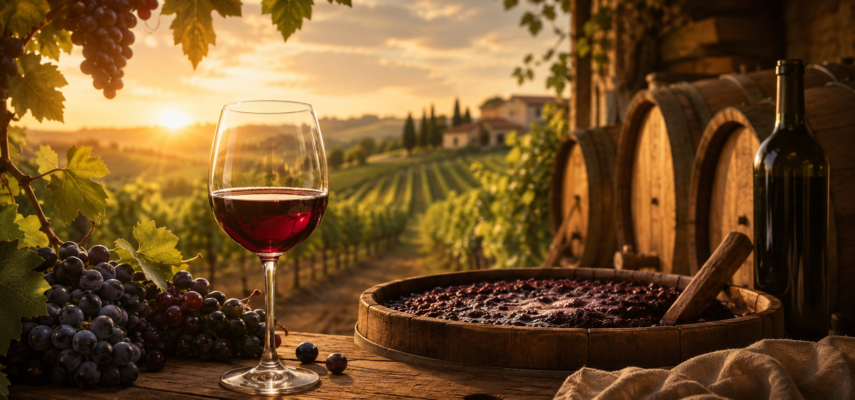
The Simple Drink With Thousands of Years of History
Wine is one of the oldest, most culturally important, and most misunderstood drinks in the world. At its simplest, wine is fermented grape juice. But that definition only gets us started.
Wine is agriculture, chemistry, geography, culture, commerce, and taste all in one glass. It can be a humble table drink poured with dinner, a luxury collectible sold at auction, a religious symbol, a marker of place, or a deeply personal sensory experience. Few products carry as much history while still feeling so alive in the present.
So, what exactly is wine?
The answer begins with grapes.
Wine Starts in the Vineyard
Wine is made from grapes, but not usually the same grapes you buy at the grocery store. Most wines are made from Vitis vinifera, a species of grapevine that includes famous varieties such as Cabernet Sauvignon, Chardonnay, Pinot Noir, Merlot, Sauvignon Blanc, Syrah, and Riesling.
Wine grapes are generally smaller, sweeter, thicker-skinned, and seedier than table grapes. That matters because wine depends on a careful balance of sugar, acid, tannin, aroma, and flavor compounds.
The grape is the raw material, but the vineyard shapes what the grape becomes. Climate, soil, sunlight, rainfall, slope, altitude, farming decisions, and harvest timing all affect the final wine. This is why two wines made from the same grape can taste completely different depending on where they are grown.
A Pinot Noir from Burgundy, France, will not taste exactly like a Pinot Noir from Oregon or California. A Sauvignon Blanc from New Zealand will often taste very different from one grown in the Loire Valley. Wine is not just a beverage made from grapes. It is also an expression of place.
Fermentation: The Moment Grape Juice Becomes Wine
The key process that turns grape juice into wine is fermentation.
During fermentation, yeast consumes the natural sugar in grape juice and converts it into alcohol and carbon dioxide. This is the central transformation behind all wine. Without fermentation, there is no wine.
In basic terms:
Grape sugar + yeast = alcohol + carbon dioxide + flavor compounds
The alcohol gives wine its structure and warmth. The carbon dioxide usually escapes during still wine production, though it is preserved in sparkling wines. The flavor compounds created during fermentation help give wine its aromas and complexity.
Winemakers can allow fermentation to happen with native yeasts from the vineyard and winery environment, or they can use selected commercial yeasts for more control. Neither approach is automatically better. The choice depends on the style of wine being made and the philosophy of the producer.
The Main Types of Wine
Most wine falls into a few broad categories: red, white, rosé, sparkling, fortified, and dessert wine.
Red Wine
Red wine is made from dark-skinned grapes. The color comes from contact between the grape juice and the skins during fermentation. This skin contact also contributes tannins, which create the dry, grippy sensation you may feel on your gums or tongue when drinking red wine.
Common red grapes include Cabernet Sauvignon, Merlot, Pinot Noir, Syrah, Grenache, Malbec, Sangiovese, Tempranillo, and Nebbiolo.
Red wines can range from light and delicate to dark, powerful, and structured.
White Wine
White wine is usually made from white or green-skinned grapes, though it can technically be made from dark grapes if the juice is separated from the skins quickly. Unlike red wine, white wine is usually fermented without extended skin contact.
Common white grapes include Chardonnay, Sauvignon Blanc, Riesling, Pinot Grigio, Chenin Blanc, Albariño, Grüner Veltliner, and Viognier.
White wines can be crisp and citrusy, rich and creamy, floral and aromatic, or sweet and honeyed.
Rosé Wine
Rosé is usually made from red grapes with limited skin contact. The skins touch the juice long enough to give the wine its pink color, but not long enough to produce the deeper color and tannin structure of a red wine.
Rosé is not simply a halfway point between red and white wine. It is its own style, often valued for freshness, fruit, and versatility with food.
Sparkling Wine
Sparkling wine contains bubbles. The bubbles come from carbon dioxide trapped in the wine, usually through a second fermentation.
Champagne is the most famous sparkling wine, but not all sparkling wine is Champagne. True Champagne comes from the Champagne region of France and follows specific production rules. Other sparkling wines include Prosecco from Italy, Cava from Spain, Crémant from France, and many sparkling wines from the United States, England, Australia, and beyond.
Fortified Wine
Fortified wine has a distilled spirit, usually grape brandy, added to it. This increases the alcohol level and can preserve sweetness depending on when the spirit is added.
Examples include Port, Sherry, Madeira, and Marsala.
Dessert Wine
Dessert wines are sweet wines usually served in smaller pours. They can be made in several ways, including harvesting grapes late, allowing grapes to freeze, drying grapes, or using grapes affected by noble rot.
Examples include Sauternes, Tokaji, ice wine, late-harvest Riesling, and some styles of Moscato.
What Gives Wine Its Flavor?
Wine flavor comes from many sources. The grape variety provides the foundation, but the final taste is shaped by climate, soil, fermentation, aging, oak use, blending, and winemaking choices.
A wine may taste fruity, floral, earthy, spicy, herbal, mineral, creamy, smoky, nutty, or savory. These flavors are not usually added. They are natural aromas and taste impressions created by the grapes, fermentation, and aging.
When someone says a wine tastes like black cherry, lemon peel, vanilla, tobacco, roses, or wet stone, that does not mean those ingredients were added to the wine. It means the wine reminds the taster of those aromas or flavors.
This is one reason wine can feel intimidating. The vocabulary can sound abstract. But at its core, wine tasting is simply paying attention.
What do you smell?
What do you taste?
Is the wine light or full?
Is it crisp or soft?
Is it dry or sweet?
Does it feel smooth, sharp, rich, fresh, bitter, or grippy?
You do not need to sound like a sommelier to understand wine. You just need to notice what is in the glass.
The Building Blocks of Wine
Most wines can be understood through a few core elements: sweetness, acidity, tannin, alcohol, body, and finish.
Sweetness
A wine can be bone dry, slightly sweet, moderately sweet, or fully sweet. Many beginners assume fruity wines are sweet, but fruitiness and sweetness are not the same thing. A wine can smell like ripe peach or blackberry and still be completely dry.
Acidity
Acidity gives wine freshness and energy. It is what makes your mouth water. Wines with high acidity often taste crisp, bright, or zesty. Acidity is especially important in white wines, sparkling wines, and food-friendly reds.
Tannin
Tannin mainly comes from grape skins, seeds, and stems, as well as oak barrels. It creates structure and dryness, especially in red wines. Cabernet Sauvignon and Nebbiolo are often high in tannin. Pinot Noir is usually lower in tannin.
Alcohol
Alcohol gives wine warmth and body. Wines with higher alcohol can feel fuller, richer, or more powerful. Lower-alcohol wines often feel lighter and fresher.
Body
Body refers to the weight or texture of wine in your mouth. A light-bodied wine may feel delicate, like skim milk. A full-bodied wine may feel richer, like whole milk or cream.
Finish
The finish is how long the flavor lasts after you swallow or spit. A short finish fades quickly. A long finish lingers. In many great wines, the finish is one of the most memorable qualities.
Wine Is Also About Place
One of the most important ideas in wine is terroir, a French term that refers to the way a place influences the wine. Terroir includes soil, climate, topography, farming, and even local tradition.
This is why wine labels often emphasize region. Bordeaux, Burgundy, Napa Valley, Barolo, Rioja, Champagne, Chablis, Chianti, and Sancerre are not just names. They are places with distinct histories, rules, grapes, climates, and styles.
In much of the Old World, especially Europe, wine is often labeled by place rather than grape. A bottle of red Burgundy is usually Pinot Noir. A bottle of Chablis is Chardonnay. A bottle of Sancerre is usually Sauvignon Blanc. Understanding this relationship between grape and place is one of the keys to understanding wine.
In much of the New World, including the United States, Australia, Chile, Argentina, New Zealand, and South Africa, wines are more commonly labeled by grape variety. A bottle might say Cabernet Sauvignon, Chardonnay, or Pinot Noir directly on the label.
Neither system is better. They simply reflect different traditions.
Wine Is Made, But It Is Also Grown
It is tempting to think of wine as something made in a winery. Technically, that is true. But great wine begins long before fermentation.
The most important decisions often happen in the vineyard: where to plant, what grape to grow, how to prune, how much fruit to leave on the vine, when to harvest, and how to manage weather, disease, and ripeness.
The winemaker then guides the grapes through fermentation, aging, blending, and bottling. Some winemakers intervene heavily, using technology and technique to shape a consistent style. Others take a lighter-touch approach, trying to preserve the character of the vineyard as transparently as possible.
Wine always sits somewhere between nature and human decision-making.
Why Wine Can Be So Expensive
Wine prices vary wildly. A bottle can cost $8 or $8,000.
The price is influenced by many factors: land cost, grape yield, labor, farming practices, winemaking methods, oak barrels, aging time, scarcity, reputation, critic scores, vintage conditions, import costs, taxes, and demand.
Expensive wine is not always better for every drinker. A famous bottle may be rare, age-worthy, historically important, or collectible, but that does not guarantee you will enjoy it more than a well-made $25 bottle.
This is one of the most important lessons in wine: price and pleasure are related, but they are not the same.
The best wine is not necessarily the most expensive wine. It is the wine that fits the moment, the meal, and the person drinking it.
Wine and Food
Wine has long been connected to food because its structure makes it especially useful at the table.
Acidity can cut through richness. Tannin can pair well with protein and fat. Sweetness can balance spice. Sparkling wine can refresh the palate. Earthy wines can complement mushrooms, herbs, and roasted vegetables. Rich white wines can pair beautifully with butter, cream, and seafood.
The old rule that white wine goes with fish and red wine goes with meat is too simple. A better approach is to match weight, intensity, and structure.
Light food usually works best with lighter wine. Rich food often needs a fuller wine. Spicy food usually benefits from lower alcohol and a touch of sweetness. Fatty food often works well with acidity or tannin.
Wine pairing is not about rigid rules. It is about balance.
Why Wine Matters
Wine has survived for thousands of years because it is more than alcohol. It is tied to farming, trade, religion, celebration, status, hospitality, and everyday life.
Wine appears at weddings, holidays, family dinners, business meals, religious ceremonies, and quiet evenings at home. It can mark special occasions, but it can also elevate ordinary ones.
Part of wine’s appeal is that it rewards curiosity. The more you learn, the more you notice. The more you notice, the more each bottle becomes a conversation — about grape, place, people, weather, history, and taste.
Wine does not need to be intimidating. At its core, wine is fermented grape juice. But in practice, it is one of the most layered and fascinating products humans have ever created.
To understand wine is to understand a simple transformation: fruit becomes drink, drink becomes culture, and culture becomes memory.
That is why wine has lasted. And that is why it is still worth learning about today.