










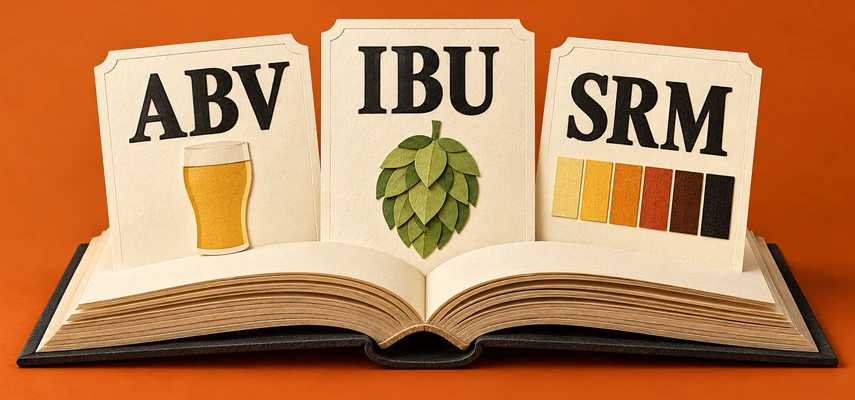
A beer menu can turn a simple order into an alphabet puzzle. ABV, IBU, OG, and SRM appear beside words such as dry, malty, conditioned, and session. The confusion comes partly from mixing measurements, production methods, and tasting impressions as though they describe the same thing.
With common beer terms explained in context, the vocabulary becomes much more manageable. Some words establish strength or color. Others identify ingredients and processes. Sensory language describes what the beer seems like in the glass, which is related to those facts without being interchangeable with them.
Start with the question each term answers. That habit is more useful than memorizing definitions in isolation, and it helps prevent a technical-looking number from becoming a misleading shortcut.
ABV: how concentrated is the alcohol?
ABV stands for alcohol by volume. It expresses alcohol as a percentage of the liquid’s volume. It does not tell how much beer is in a serving, so concentration and portion size belong together in any comparison.
For illustration, 10 fluid ounces at 6 percent alcohol by volume contains about 0.6 fluid ounces of alcohol. Five fluid ounces at the same concentration contains about 0.3. Halving the portion changes the amount, while the printed percentage remains the same.
The practical question is therefore about this beer in this serving. The words light, strong, or imperial cannot do the arithmetic. Read the actual percentage and volume rather than inferring them from a glass shape or a dark color.
The CraftBeer.com glossary provides a broader reference for ABV and other terms. Keep its technical definitions separate from any assumptions about what a beer must taste like.
IBU: a measurement associated with bitterness
IBU means International Bitterness Units. It relates to measured bittering substances in beer. It is useful production information, but it does not fully predict the intensity a particular drinker will perceive.
Balance changes the experience. A sweeter, fuller beer and a leaner, drier beer can present bitterness differently. Selecting the lowest IBU number on a menu is not a reliable way to find the softest or most enjoyable finish.
Also separate bitterness from aroma. A beer described as hoppy may emphasize a fragrant impression, a bitter finish, or both. Ask about those features independently rather than treating the word as a single fixed flavor.
If a bartender describes a beer as moderately bitter, that may answer the immediate question better than a number. The goal is to understand the available beer, not to turn every purchase into a laboratory comparison.
SRM and gravity: numbers that answer different questions
SRM describes color
SRM, the Standard Reference Method, is a system for quantifying beer color. A higher value generally describes a darker beer. It does not measure alcohol strength, sweetness, or how full the beer will feel.
A menu showing color and bitterness alongside strength is presenting several dimensions, rather than several versions of the same score. The CraftBeer.com styles study guide puts these measurements alongside the sensory descriptions they help contextualize.
OG and FG describe density at different stages
Original gravity, or OG, concerns the density of wort before fermentation relative to water. Final gravity, or FG, is the corresponding reading after fermentation. Brewers use the change, together with appropriate calculations, to estimate alcohol production and understand fermentation.
Gravity is not another name for color, and a final-gravity reading is not a simple sweetness verdict. Different remaining substances and the rest of the beer’s structure influence the impression in the glass.
The CraftBeer.com explanation of brewing gravity offers a useful technical introduction. A consumer can usually make a good choice with the finished beer’s strength and description, without needing to calculate its recipe.
Malt, mash, and wort: the grain side of brewing
Malt is grain prepared through controlled germination and drying. Mash names the mixture and process in which crushed malt meets warm water, allowing enzymes to make smaller carbohydrates, including fermentable sugars, from starch. Wort is the liquid that will become beer through fermentation.
These words describe materials and stages, rather than flavors that must all be present in a finished drink. A beer can be called malty because its grain-derived character is prominent, yet the specific impression might suggest bread, toast, caramel, or roast.
The American Homebrewers Association ingredient overview explains the role of malt, hops, yeast, and other additions. Its discussion helps connect the brewery vocabulary with what appears later on a menu.
An adjunct is an additional brewing ingredient used alongside the principal malt ingredients; context matters because usage varies. Rice, corn, oats, and sugars can serve different purposes. The word alone is not a quality assessment, and it should not be used as a substitute for evaluating the finished beer.
For a quick visual refresher, TFE Times’ craft beer ingredient overview keeps the major building blocks together. Ingredients explain possibilities, rather than guaranteeing identical results across breweries.
Fermentation, attenuation, and conditioning
Fermentation is the activity through which yeast transforms fermentable sugars, producing alcohol, carbon dioxide, and other compounds. Yeast selection and the way fermentation is managed help shape the finished beer.
Attenuation concerns the reduction in gravity during fermentation. It is often discussed as a percentage, with apparent attenuation and other technical measures requiring their own context. It does not mean a brewer simply removed a corresponding percentage of every kind of sweetness.
Conditioning describes a maturation stage or treatment that helps the beer reach its intended finished state. Bottle conditioning includes fermentation in the package, while other beers receive their carbonation through different brewery practices.
The BJCP yeast and fermentation study guide explains these connected ideas in more detail. For a drinker, the important distinction is between a process description and a promised sensory result: knowing the process is informative, but tasting still matters.
Ale, lager, and style
Ale and lager are broad fermentation categories in common modern usage. A style is a more specific description within beer culture. Neither the family nor the style name supplies every detail of an individual producer’s interpretation.
The BJCP introduction to beer styles discusses terminology and its limitations across brewing traditions. The same word can carry historical associations that do not align neatly with a modern menu category.
Treat a style name as a useful map reference. Ask about the specific beer’s strength, grain character, aroma, and finish when those determine the choice. A familiar family name should not override clear information about the actual product.
Dry hopping does not mean dry-tasting beer
Dry hopping refers to adding hops on the cooler side of brewing, commonly during or after fermentation, to develop hop character. The word dry distinguishes the technique; it does not promise a beer with no sweetness or a particular final-gravity number.
Likewise, dry in a tasting note concerns the impression of the finish. Fruity describes an association, while fruited more directly suggests a recipe addition. Read the full description before treating a sensory word as an ingredient declaration.
This distinction makes a conversation more precise. Asking whether a beer has an intense hop aroma, a dry finish, or added fruit seeks three different pieces of information. There is no reason to assume the answer to one establishes the others.
Body, mouthfeel, and balance
Body is the impression of weight or fullness. Mouthfeel is the wider texture of the beer, including carbonation, creaminess, drying grip, and warmth where present. A light-bodied beer can still have an energetic carbonated texture.
Balance concerns how the parts work together. It need not mean that sweetness and bitterness are equal or that no flavor is prominent. A deliberately hop-forward beer can be coherent while remaining very different from a softly grain-focused one.
For practical notes, name the sensation and its intensity. A description such as light body with lively carbonation communicates more than smooth alone. If a finish feels unpleasant, distinguish bitter taste from drying grip rather than applying one label to everything.
Session, imperial, draft, and other menu shorthand
Session generally signals a beer positioned for a more restrained drinking experience, often with lower strength than fuller versions of a style. Imperial commonly signals a stronger or more intensive interpretation. Neither is a substitute for the actual alcohol statement.
Draft, also spelled draught, describes service from a dispensing system rather than a sealed individual package. It is a format, not an independent guarantee of freshness or quality. The beer’s handling still matters.
When these terms appear together, unpack them one at a time. A draft imperial stout tells something about service and intended style direction; it does not yet establish the serving size or exact strength. Staff can fill in the missing details.
Use vocabulary to make a clearer choice
Imagine a hypothetical menu entry describing a dry-hopped pale ale with a light body and a firm finish. The technique suggests something about hop handling; body and finish describe sensory expectations. The ABV then supplies a separate piece of information about concentration.
After tasting, a useful response might be that the aroma appealed but the finish was too assertive. That is a clearer basis for the next recommendation than rejecting every beer containing hops or every beer called an ale.
Our existing beer styles guide can help turn that observation into another direction. Learn the words that answer real questions, and let the rest become familiar through use. A practical vocabulary grows with experience rather than arriving all at once.











