










The first beer someone recommends is often their favorite, which is not necessarily the most useful introduction for another person. An intensely bitter IPA can delight one newcomer and discourage another. A restrained lager may be exactly right for someone seeking a gentle start, while a coffee drinker may find a roasted stout more familiar.
The best beer styles for beginners are starting points that connect with existing preferences. Choose a flavor direction first, then a style that offers a manageable way to explore it. There is no compulsory ladder from pale beer to dark beer, or from simple styles to more prestigious ones.
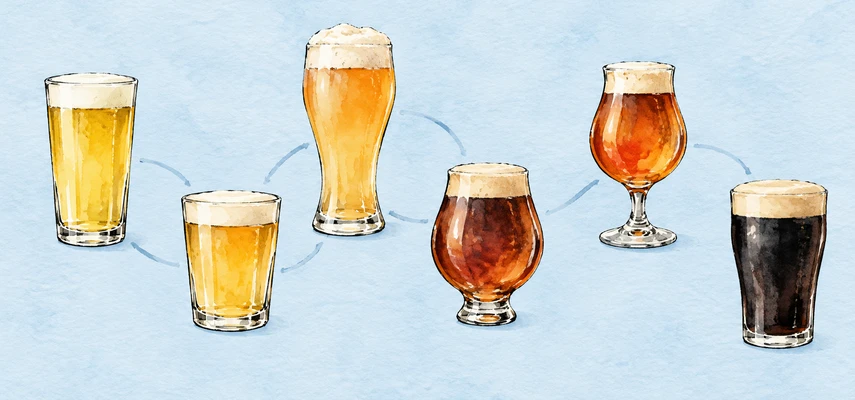
Six directions make a useful first map: soft grain character, a crisp finish, wheat-based texture, toasted malt, aromatic hops, and roast. They offer different experiences rather than a ranking of how adventurous a drinker ought to be.
Begin with preferences, not a popularity contest
Think about familiar flavors without assuming beer will reproduce another drink exactly. Someone who likes bread crust and toasted nuts might start differently from someone drawn to lemon peel or black coffee. Texture matters too: gentle carbonation and a dry finish are different preferences from sweetness and fullness.
Identify one feature to seek and one to avoid. A request for a light-bodied beer without much lingering bitterness gives staff a useful direction. Asking for something good or suitable for beginners leaves them to guess.
The existing TFE Times beer styles guide offers a broader overview. Use it alongside the descriptions below, while remembering that a style name leaves room for individual recipes and serving conditions.
Munich helles for a soft, grain-focused lager
Munich helles offers a useful starting point for someone seeking a pale lager with breadlike malt character and restrained bitterness. The finish should not be interpreted as a promise of sugary sweetness; malt aroma and a soft impression can coexist with a dry finish.
The BJCP Munich helles guideline emphasizes a rounded malt presentation supported by subtle hops. That makes helles a helpful alternative to assuming every golden lager must have the same sharp or bitter profile.
At a bar, ask whether the particular version is softly grain-focused or more assertive. At a shop, check the producer’s description and strength rather than relying on the word lager alone. For a first sample, notice the balance between the grain impression and the finish.
This can also be a useful reference beer for later exploration. Once the soft side of pale lager is familiar, another lager with a more pronounced hop finish becomes easier to describe by comparison.
Cream ale for a restrained American starting point
Cream ale generally offers a clean, pale, lively beer with relatively restrained hop character. Despite the name, the style is not defined by a creamy dessert flavor or by dairy ingredients. Check any specific product’s ingredients separately if that question matters.
The BJCP cream ale description allows some variation in body and finish while describing an overall subtle beer. It can suit someone who wants a gentle introduction without needing pronounced fruit, roast, or bitterness.
The useful comparison with helles is not about which is superior. They offer related accessible directions through different brewing traditions. Taste one on its own first, then consider a comparison on another occasion if the distinction is interesting.
When a version is heavily flavored or presented as a specialty variation, read the full description. An elaborate spin on a style may be enjoyable, but it may not answer the same question as a straightforward example.
American wheat beer for grain character and a softer impression
American wheat beer can introduce a bready or doughy grain character with lively carbonation. Its clarity can vary, and its hop expression may be restrained or more noticeable. Wheat in the name does not guarantee that every example has the same fruit or spice aroma.
The BJCP American wheat guideline distinguishes this style from German wheat beers with their characteristic fermentation expression. That distinction is useful when asking for a clean grain profile rather than a particular banana-like or clove-like impression.
For a newcomer, the practical request is for a straightforward example and a description of its finish. A wheat beer with strong added fruit, acidity, or hop intensity is a different starting experience, even when the package prominently displays the same grain name.
Notice texture as well as flavor. It may help explain why one beer feels more approachable than another, even when both have broadly similar strength and color.
British brown ale for toast, caramel, and nutty associations
British brown ale provides a route into darker malt character without automatically demanding a strongly roasted profile. Depending on the example, descriptions may suggest toast, caramel, biscuit, or nuts, with a balance that is often malt-focused.
The BJCP British brown ale guideline describes a range of interpretations. It is a useful reminder that brown does not mean one fixed level of sweetness or body.
This is a sensible starting direction for someone who enjoys toasted foods but is unsure about the roast of a stout. Ask whether the available beer finishes sweet, dry, or somewhere between, and whether its hop bitterness is prominent.
Treat a nutty aroma description as an association, not an ingredient or allergy statement. The actual recipe must answer a dietary question. No style description can establish that a particular product is suitable for a specific restriction.
American pale ale for an introduction to hop aroma
American pale ale offers a way to explore hops with supporting malt and a more substantial bitter finish than some of the gentler starting styles. Possible hop impressions include citrus, flowers, pine, or fruit, with the actual combination depending on the recipe.
The BJCP American pale ale description places hop character at the center while retaining balance. It is useful for someone interested in aroma who is willing to explore bitterness rather than avoid it entirely.
A pale ale is not guaranteed to be mild, and it should not be offered as a mandatory stage every beginner must pass. If the finish is too forceful, identify whether the aroma was appealing before rejecting the whole direction.
For example, a drinker might like a floral smell while preferring less bitterness. That observation gives staff a much clearer next recommendation than declaring all hops unpleasant. Taste a small amount where available and keep the distinction in mind.
Irish stout for a coffee-like roasted direction
Irish stout can be an inviting introduction for someone who enjoys roasted flavors. Its dark appearance should not be treated as proof of unusually high strength or a heavy, sweet body. Read the individual product’s alcohol statement and description.
The BJCP Irish stout guideline describes pronounced roast and a range of bitterness and balance. It also distinguishes the texture of nitrogen-dispensed examples from packaged versions that do not share that presentation.
This is a starting point for roast, rather than a promise that every stout tastes like the same coffee. A very strong imperial stout, a sweet flavored stout, and a more restrained Irish-style example can create very different first impressions.
Ask about the precise beer and serving format. If a silky draft sample appealed, finding the same style name on a different package may not reproduce every part of that experience.
Make the first comparison manageable
Pick one direction, then try a modest serving of a clearly identified beer. There is little benefit in buying a large mixed case before learning which feature actually appeals. A small, focused choice keeps the experiment useful and limits an unwanted purchase.
If comparing two beers, change a meaningful feature. Helles beside a more hop-forward pale ale can reveal whether bitterness is welcome. Brown ale beside stout can clarify a preference for toast or roast. These are suggested exercises, not controlled tests isolating a single ingredient.
Use matching clean glasses and note a few words before consulting someone else’s verdict. The impression may change with food, temperature, or attention, so describe the conditions rather than treating one sip as a permanent judgment.
For a meal, our existing beer and food pairing guide can help connect a beer’s intensity with the food. Begin with a familiar dish and make one comparison, instead of trying to optimize every ingredient at once.
Read strength and ingredients independently of style
A beginner-friendly recommendation still needs product-specific information. Check alcohol concentration, serving size, and any relevant ingredients. A familiar name or a smooth description should not replace those details.
Likewise, lower bitterness does not establish lower alcohol, and a sweet-smelling beer is not necessarily sweet-tasting. Separate those questions before ordering. A clear request for an appropriate portion is part of making the choice fit the occasion.
Choosing not to finish an unsuitable sample is also useful feedback. The goal is learning a preference, not completing a checklist of beers or acquiring a taste on someone else’s timetable.
Let the next choice follow the evidence
After trying a beer, record the exact product and one feature worth seeking again. Perhaps the soft grain profile appealed, while the carbonation felt too lively. Perhaps roast was enjoyable but the finish was more bitter than expected.
That small observation supplies the next direction. The best beginning is not a supposedly universal starter beer; it is a well-described glass that makes the following choice easier. Style names become useful when they connect to that experience.












