History of W.W. Grainger
- 1927 — Founded in Chicago
- 1930s–1950s — Catalogs and national distribution
- 1950s–1980s — Regional warehouses and inventory systems
- 1980s–2000 — Services and vendor‑managed programs
- 1990s–2010s — Digital catalog and e‑procurement
- 2011 — Zoro launched
- 2020 — COVID‑19 response and supply‑chain resilience
The W.W. Grainger history is less about a single invention than about a steady, service‑driven accumulation of capabilities: stock, delivery, and information. From a single Chicago address in 1927 the company that bears William W. Grainger’s name grew into a nationwide network for maintenance, repair and operations (MRO) supplies.
This account traces the company’s practical innovations—catalog sales, logistics, supplier relationships, and digital ordering—and why those moves mattered to customers and to the distribution industry at large.
Founding in Chicago (1927): William W. Grainger and the start
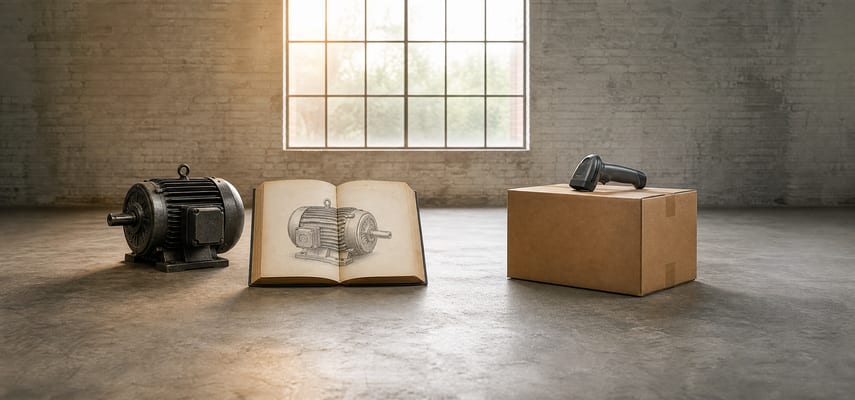
W.W. Grainger was founded by William W. Grainger in Chicago in 1927. He started the company as a wholesale electric motor sales and distribution business, and the firm was incorporated in Illinois as W.W. Grainger, Inc. in 1928.
From the start the company’s pitch was straightforward: provide the parts customers needed quickly, reliably and with a knowledge of industrial equipment that most general merchants lacked. The business was originally established to supply wholesale electric motors to local businesses, a focused purpose that later broadened as Grainger expanded its assortment and geographic reach.
Catalogs and the rise of a national distributor (1930s–1950s)
As Grainger expanded, catalogs became a central selling tool. They helped customers identify products and technical specifications before placing orders.
Over time, Grainger’s catalog broadened beyond its original focus on electric motors to cover a wide range of MRO products. Two features made the investment significant. First, inventory strategy: Grainger concentrated stock in warehouses that could serve multiple customers, reducing the need for every industrial plant to hold deep parts inventories. Second, service and delivery: the company paired catalogs with order‑taking and a branch network that supported local stock and fulfillment.
That model mattered because it changed customer economics. Firms could reduce on‑site inventory while relying on a supplier to deliver across a broad range of product categories. For Grainger, the catalog was not merely a marketing device; it was the hinge between national scale purchasing and local fulfillment.
Postwar expansion and modern distribution practices (1950s–1980s)
The post‑World War II industrial boom gave Grainger two things: more customers and more complexity to serve. Manufacturing plant footprints grew, electrical systems became more sophisticated, and facilities departments became more professional.
Grainger expanded its branch network and built larger regional warehouses to lower delivery times and to support the increasing variety of items customers demanded. During these decades the company refined inventory management techniques—forecasting demand for thousands of parts, cross‑stocking popular SKUs across multiple plants, and developing relationships with manufacturers of motors, bearings, fasteners, and safety equipment.
The cumulative effect was a more resilient supply chain for customers across sectors: manufacturing, construction, government, and institutions such as hospitals and universities.
Public markets and corporate scale
W.W. Grainger’s public listing occurred in stages: the company first traded over the counter in 1967, listed on the Midwest Stock Exchange in 1968, joined the American Stock Exchange in 1971, and began trading on the New York Stock Exchange in 1975; its common stock is listed on the NYSE under the ticker symbol GWW. That transition to public ownership gave the company access to capital to fund larger distribution centers, branch expansion and systems investments.
In its later corporate history Grainger also expanded by acquisition, including the announced agreement to acquire Cromwell, the large independent British MRO distributor, in 2015—moves that extended its international footprint and customer relationships.
Public scrutiny also pushed Grainger to measure performance at scale—inventory turns, service levels, and the economics of national distribution. For customers and competitors alike the listing signaled that Grainger was not merely a successful local business; it was a national distribution platform with the financial wherewithal to invest in logistics and technology.
Becoming a systems supplier: services and solutions (1980s–2000)
By the late 20th century Grainger had started to sell more than boxes and parts. Customers increasingly wanted services tied to supplies, including on‑site materials and inventory management and technical product support.
Grainger’s integrated-supply operations provided fee-based, on-site indirect materials management services to large businesses. This broadened the company’s role beyond product distribution into MRO procurement and management.
Digital transition: early internet, e‑procurement and online cataloging (1990s–2010s)
The internet changed how industrial buyers shopped. Grainger moved to digitize its catalog and ordering processes, implementing online ordering capabilities and electronic procurement interfaces for institutional customers.
The company invested in product databases, search tools and customer portals that allowed procurement teams to integrate Grainger ordering into their own systems. Information complemented logistics: searchable product content made it easier for customers to find the right part quickly, and transaction costs dropped as teams automated repetitive orders.
Competition intensified as other distributors and pure‑play e‑commerce companies began attacking both large and small customers through online channels. Grainger’s response combined scale (broad product assortment and distribution centers) with customer service (technical support and inventory programs), made accessible via web portals.
Targeting small business customers and the Zoro launch (2011)
Recognizing that digital channels opened access to smaller buyers, Grainger expanded beyond its traditional institutional base. In May 2011 the company launched Zoro.com, an e‑commerce business focused on small businesses.
Zoro operated as a separate online channel and used Grainger’s U.S. supply chain to fulfill orders. The channel offered a streamlined purchasing experience and a broad product assortment for buyers whose needs differed from those served through Grainger’s high‑touch model.
International expansion and regional operations
Over the late 20th and early 21st centuries Grainger built out operations beyond the United States, establishing distribution and sales capabilities in markets where multinational manufacturers and regional industrial customers demanded consistent supply.
International operations mattered because industrial customers with global production networks wanted supply partners who could replicate service standards across borders. Grainger’s network approach—centralized procurement of popular SKUs combined with regional fulfillment—was a natural fit for multinational customers seeking consistency.
Competitive pressures and industry shifts
Grainger’s rise brought competitors. Local distributors won business by offering deep technical expertise in narrow niches or by undercutting on price for commodity items. Meanwhile, online pure players and marketplaces introduced new low‑cost channels for commodity goods.
These pressures forced Grainger to defend margins through service differentiation: technical expertise, inventory programs, logistics reliability, and integrated procurement systems. Customers’ push for cost transparency and e‑procurement integrations made switching easier, while globalized supply chains required contingency planning and rapid procurement of critical items.
Responding to crises: hurricanes, industrial shocks and the COVID‑19 pandemic (2020)
Large distributors like Grainger are often judged by how they perform under stress. Natural disasters, major plant outages and supply‑chain shocks expose the value of national inventory and responsive logistics. Grainger’s ability to pull stock from regional centers and prioritize urgent customer orders became a visible asset during these events.
When the COVID‑19 pandemic arrived in 2020, demand patterns shifted sharply. Beginning in mid‑February, Grainger experienced elevated sales of pandemic‑related products, including PPE and safety products, particularly to government, healthcare and other essential‑business customers. The company also worked with supplier and logistics partners to locate needed products and replenish inventories.
The pandemic highlighted both the company’s access to supplier networks and distribution capacity and the limits of lean, just‑in‑time inventory strategies for crisis‑level demand. It also accelerated conversations about supply‑chain resilience and the strategic role of distributors.
Contemporary business model: categories, channels and services
As of 2025, Grainger offers more than 35 million products globally, according to its annual report. Core product areas include safety and personal protective equipment; hand and power tools; electrical and lighting components; HVAC and plumbing supplies; fasteners and bearings; and janitorial and facilities maintenance supplies.
Customer channels include branches and sales teams for large institutional accounts, online ordering portals that integrate with enterprise procurement systems, and e‑commerce storefronts for smaller buyers. Services include vendor‑managed and customer‑managed inventory, vending and point‑of‑use solutions, and technical support.
The combined value proposition is explicit: bundle product breadth, rapid delivery and expertise to reduce downtime and inventory costs for customers.
Why Grainger’s history matters to the broader economy
Grainger’s evolution illuminates a larger shift in industrial America: from fragmented, local provisioning toward centralized, scale‑based distribution paired with services and information. That shift lowered the transaction cost of keeping complex systems running.
By aggregating demand, investing in logistics and building product‑level expertise, Grainger and similar distributors changed how maintenance departments, contractors and institutions budgeted time and inventory. The company’s competitive advantage has been layered—catalogs, warehouses, ordering systems and sales relationships each mattered in different eras.
Challenges ahead and strategic imperatives
Several strategic pressures shape Grainger’s choices going forward. Digital competition and marketplaces continue to offer cheaper channels for commodity goods, pushing Grainger to emphasize services and solutions.
Supply‑chain volatility and geopolitical risk encourage investments in diversified sourcing and inventory buffers. Changing customer procurement models—greater automation and tighter integration—require ongoing investment in data, product content and e‑procurement interfaces.
How Grainger navigates those pressures will determine whether the firm remains a trusted partner for facilities and maintenance teams or whether parts of its business erode to specialist distributors and digital marketplaces.
Conclusion
W.W. Grainger’s history is a study in deliberate, capability‑driven expansion. From a Chicago supplier in 1927 to a national distributor, the company built an architecture of catalog content, inventory, delivery and services that reduced the friction of keeping industrial equipment and facilities functional.
The story is not one of sudden reinvention but of incremental investments that created a distinctive proposition: a partner who can both specify the right parts and get them where they are needed. That proposition proved durable across decades of industrial change—and it remains the core question as the company faces digital challengers and a more turbulent global supply landscape.