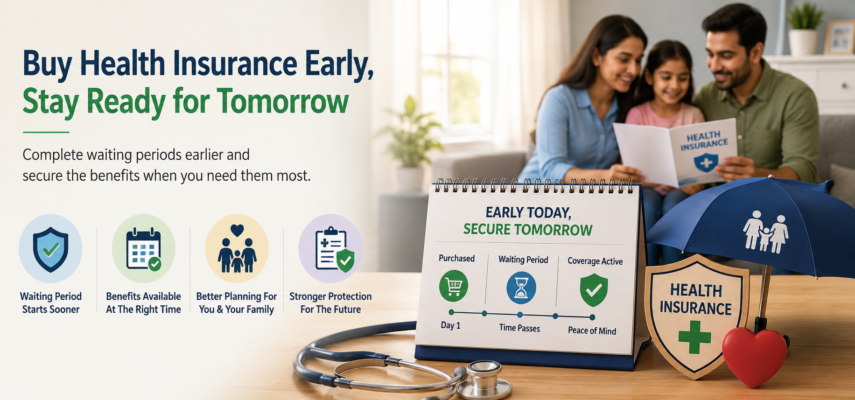

Waiting periods are an important part of health insurance, yet many people understand them only when they need to raise a claim. Buying early gives the policyholder more time to complete these waiting periods while health needs are still manageable.
This can make the policy more useful later, especially when medical expenses become planned, recurring or age-related. Early purchase also helps families choose health insurance plans with more confidence and better long-term clarity.
Waiting Period Starts From The Policy Purchase Date
A waiting period usually begins from the date the policy is purchased, not from the date when a health concern appears. This makes early buying useful because the waiting period starts moving sooner. Waiting too long can delay access to certain benefits when they may be needed.
Keep these points in mind:
- Read the policy wording before buying.
- Check waiting periods for different benefits.
- Keep renewal dates active to avoid gaps.
- Ask questions before finalising the cover.
Pre-Existing Disease Waiting Period Ends Earlier
Health conditions already present before buying the policy may come under a pre-existing disease waiting period. Buying health cover early helps this waiting period begin sooner, which can support smoother claim planning later. This is especially useful for families where members have different medical histories.
Important things to note:
- Declare health details honestly during purchase.
- Understand how the insurer defines pre-existing conditions.
- Keep medical records and prescriptions safely.
- Renewal continuity may help preserve completed waiting period credit.
Specific Illness Waiting Period Gets Completed Sooner
Some illnesses or procedures may have a separate waiting period under the policy. These benefits may not be available immediately after purchase, even when the policy is active. Buying early gives the policyholder time to complete these conditions before such treatments become necessary.
A careful buyer should:
- Check the list of specific illnesses in the policy document.
- Understand when coverage becomes available.
- Avoid assuming all benefits start together.
- Confirm details directly with the insurer when required.
Maternity Benefits Become Available Earlier
Maternity benefits, when offered, generally come with defined waiting period conditions. Buying early can help couples or families plan better because the waiting period may be completed before they need to use the benefit. This makes early planning useful for long-term family decisions.
Before choosing a policy:
- Check whether maternity cover is included.
- Understand the related waiting period.
- Read limits, conditions and claim requirements.
- Plan early instead of buying only when the need is near.
Planned Treatments Can Be Claimed Without Delay
Many treatments are not sudden. Some may be advised after consultations, tests or ongoing medical supervision. When a policy is purchased early and waiting periods are completed, planned treatments may be easier to manage under the policy terms. This can reduce last-minute confusion during hospitalisation.
For better readiness:
- Keep policy documents easily accessible.
- Understand cashless and reimbursement processes.
- Maintain treatment papers and doctor’s advice.
- Check approval requirements before planned admission.
Policy Continuity Helps Retain Waiting Period Credit
Buying early is helpful only when the policy is continued properly. Regular renewal keeps the coverage active and may help retain waiting period credit already earned. A break in policy continuity can create avoidable complications, especially when a claim is needed later.
To maintain continuity:
- Renew the policy before expiry.
- Avoid gaps between policy periods.
- Update personal and health details when required.
- Keep renewal receipts and policy copies safely.
Future Health Issues Are More Likely To Be Covered
Health needs can change with age, lifestyle and family responsibilities. Buying early allows the policy to mature before certain concerns arise. This can be particularly relevant while considering health insurance for senior citizens, where waiting periods and medical history need careful attention.
Early planning may help by:
- Starting coverage before health risks increase.
- Giving families time to understand policy features.
- Supporting better preparation for future medical needs.
- Reducing rushed decisions during stressful situations.
Full Policy Benefits Become Available At An Earlier Stage
A health insurance policy may include several benefits, but not all of them may be available from the first day. Once applicable waiting periods are completed, the policyholder can use eligible benefits with greater clarity, subject to policy terms and claim approval.
This is why early buying matters:
- Benefits may become accessible sooner.
- Claim planning becomes easier.
- Families understand policy usage better.
- Long-term protection feels more organised.
Conclusion
Early buying does not remove waiting periods, but it helps complete them sooner. This can make health insurance more practical when medical needs become serious, planned or age-related. Whether the policy is for an individual, family members or senior parents, starting early gives more time to understand the cover and maintain continuity. The right approach is simple: read the terms carefully, disclose details correctly and keep the policy active through regular renewals.