History of Gap
It began, as so many American retail stories do, with a single problem and a stubborn couple willing to solve it. In 1969 Don and Doris Fisher opened a modest shop at 1950 Ocean Avenue in San Francisco to sell what they could not find: reliable jeans in a comfortable, approachable store.
Within decades the store became a blueprint for mass-market American apparel, spawning new brands, boardroom battles and a very public struggle to stay relevant as fashion and retailing shifted beneath it.
1969–1976: A single store, a simple idea
Don and Doris Fisher opened the first Gap store in 1969. The name—short for “generation gap”—signaled an early instinct to align product and culture: casual clothing for young people who did not want the formalities of traditional department-store shopping.
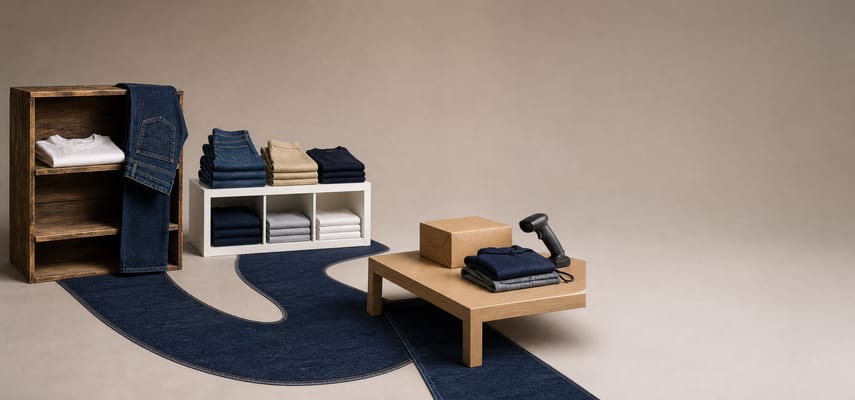
The first Gap store centered on denim, selling men’s Levi’s jeans alongside records and tapes. Gap-label products began appearing in its stores in 1974. By the mid-1970s the chain had expanded beyond San Francisco and prepared to tap public markets to fund further expansion.
1976–1983: Going public and defining the basics
Gap Inc. completed its initial public offering in 1976. Becoming a public company gave Gap capital to open new stores and develop its own merchandise. That period saw a shift from simply retailing other labels toward designing and marketing Gap-branded clothing—plain sweaters, T‑shirts and the kind of everyday clothes the company would come to own in consumers’ minds.
The significance of those years lay in operational discipline: Gap learned to build stores, control inventory and deliver a consistent assortment across a national footprint. Those capabilities would prove critical as the company scaled in the 1980s.
1983–2002: Mickey Drexler, Banana Republic and the era of expansion
Gap hired Mickey Drexler in 1983 as president of the Gap division. He later served as president of Gap Inc. from 1987 to 1995 and as CEO from 1995 until September 2002. Drexler had a reputation for retail instinct honed at other specialty shops; at Gap he transformed a chain that sold basics into a corporation of brands. Under Drexler’s leadership Gap adopted a sharper merchandising rhythm, brought new energy to store design and pursued both organic growth and acquisitions.
Also in 1983 Gap acquired Banana Republic, a travel-themed boutique and catalog business founded in 1978 by Mel and Patricia Ziegler. Banana Republic offered a different product voice—more adventurous, safari-inspired clothing and accessories—and gave Gap a foothold in a higher-priced, aspirational segment. The acquisition signaled a strategic pivot: Gap Inc. would become a multi-brand company rather than a single-label retailer.
Throughout the 1980s and 1990s, Drexler and his team pushed the company into new formats and categories. The corporation opened more specialized stores—children’s lines and store-within-a-store concepts—and accelerated nationwide expansion. The Gap aesthetic—clean, logo-light, grounded in basics—became a recognizable part of American malls and downtowns. During Drexler’s tenure, Gap increasingly relied on merchandise it designed and sold under its own brands rather than third-party labels.
1994: Old Navy launches — a new customer and a new playbook
In 1994 Gap launched Old Navy, a value-oriented chain that intentionally diverged from Gap’s pared-back, middle-market positioning. Old Navy traded on bright price messaging, family-focused assortments and heavy promotions. It was designed to capture a broad, price-sensitive customer who wanted trend-informed basics at lower price points.
The format scaled rapidly, reaching $1 billion in annual sales in 1997, less than four years after its first store opened. Old Navy proved Gap Inc. could operate distinct banners simultaneously, managing divergent merchandising strategies, supply chains and marketing tones.
2002–2007: Post-Drexler adjustments and operational shifts
Mickey Drexler left Gap in September 2002. His departure marked the end of an era. The company that he had expanded into multiple brands entered a phase of introspection and strategic adjustment. Executives who followed tried to translate Drexler’s instinct-driven approach into more systematic processes—centralized merchandising, more sophisticated supply-chain management and an emphasis on international expansion.
That period also brought tougher retail competition. Fast-fashion chains, emerging designers and online players began to erode Gap’s share in key categories. The company responded by opening more varieties of store concepts and experimenting with product segmentation, but momentum proved uneven.
2000s–2010s: Diversification, e-commerce and reputational missteps
The 2000s and 2010s were a period of experiments and mixed returns. Gap expanded into more specialized categories through acquisitions. On September 28, 2008, it acquired women’s sports and active-apparel company Athleta for $148 million. It completed its acquisition of luxury and contemporary retailer Intermix on December 31, 2012, for approximately $130 million, and purchased premium children’s brand Janie and Jack on March 4, 2019, for approximately $35 million plus a separate inventory purchase.
Gap was also an early e-commerce adopter among traditional apparel chains, launching Gap.com in 1996 and adding online sales in 1997 before expanding e-commerce across its other brands.
Yet the same era exposed structural weaknesses. A proliferation of private-label brands under one corporate roof led to blurred merchandise distinctions: what, exactly, differentiated Gap from one of its sister banners? The company also suffered from a shrinking cultural relevance. Where once customers looked to Gap for a clean, modern baseline, fashion-forward younger shoppers increasingly favored brands that aligned with fast fashion cycles or offered distinctive design voices.
Gap’s brand stewardship suffered a particularly visible blow in October 2010, when it attempted an abrupt logo redesign. The new logo—an off-center blue box with a different typeface—was rolled out and then pulled within a matter of days after a disproportionately public backlash. The episode did not change Gap’s product problems, but it crystallized a perception that management was out of touch with the brand’s customers and that aesthetic decisions were being made in boardrooms rather than through sustained engagement with consumers.
Athleta, premium niches and the search for growth (2000s–2010s)
As mass-market apparel grew more crowded, Gap sought growth in more specialized categories. The Athleta, Intermix and Janie and Jack acquisitions expanded its portfolio into women’s activewear, luxury and contemporary fashion, and premium children’s apparel, respectively.
The lesson of these years was clear: scale was no longer enough. Gap needed sharper differentiation and faster reaction times to fashion cycles, or it would continue to lose share to nimbler rivals.
2015–2019: Leadership turnover and strategic inconsistency
The mid-2010s were marked by frequent leadership changes and strategic shifts. Executives came and went as the company searched for a playbook that could restore growth. During this period Gap announced an array of initiatives—brand relaunches, store remodels, expanded online capabilities—but consistency proved elusive. Some initiatives showed promise; others strained margins or failed to connect with shoppers.
Internally, the company grappled with the challenge faced by many legacy retailers: how to reconcile a large, expensive store footprint with growing online demand. That tension produced cycles of store openings and closings that were difficult to manage operationally and damaging to long-term brand clarity.
2020: The COVID-19 shock and acceleration of trends
The COVID-19 pandemic in 2020 forced an abrupt reckoning. Temporary store closures, shifting consumer habits and supply-chain disruptions hit Gap Inc. hard. But the crisis also accelerated trends that had been gathering for years: online shopping surged, athleisure and work-from-home wardrobes gained prominence, and physical stores increasingly functioned as fulfillment centers rather than purely sales outlets.
For Gap, the pandemic laid bare two things. First, the company’s underperforming banners were more vulnerable in a crisis that favored brands with strong digital platforms and clear product identities. Second, investments in omnichannel—buy online, pick up in store, and integrated inventory—were no longer optional. The pandemic accelerated a transformation that management had been discussing for years and forced faster action on store rationalization and digital investment.
2019–2020: The proposed Old Navy separation
In February 2019 Gap Inc.’s board approved a plan to separate the company into two independent publicly traded businesses, with Old Navy becoming a standalone company and the remaining brands operating together.
Gap canceled the plan on January 16, 2020. The company said the cost and complexity of the separation, combined with softer business performance, limited its ability to create appropriate value through the split. The reversal underscored the tensions surrounding capital allocation, investment priorities and the distinct positioning of Gap Inc.’s brands.
Why Gap mattered—and what its struggles reveal
Gap’s story is not simply a tale of retail rise and stumble. It is a window into broader shifts in American consumption, manufacturing and culture over the last half-century. A few themes stand out:
- Operational innovation. Gap expanded through a repeatable specialty-store format and increasingly sold merchandise designed and marketed under its own labels.
- Brand and cultural alignment. At its best, Gap translated subtle cultural cues into ubiquitous product—clean, casual, modern clothing that matched a particular era of American life. When culture moved away from Gap’s aesthetic, the company struggled to adapt without losing the identity that had made it successful.
- Scale as both asset and liability. The company’s size enabled major investments—logistics, marketing and digital—but also made rapid reinvention difficult. Large store fleets and entrenched supply chains slowed adaptation in an era when agility became a competitive advantage.
Lessons from the Gap playbook
Retail executives and students of business have long mined Gap’s history for lessons:
- Consistency at scale matters. Gap’s early emphasis on a consistent product assortment and predictable shopping experience created a powerful, replicable model.
- Culture and taste shift faster than infrastructure. Long-standing operational advantages can be overtaken by changes in consumer taste and retail technology.
- Portfolio diversification demands clear boundaries. Owning multiple brands requires clear differentiation in product, price and voice; without that clarity, brands drift and cannibalize each other.
Timeline of major milestones
- 1969 — First Gap store opens at 1950 Ocean Avenue in San Francisco.
- 1976 — Gap Inc. completes its initial public offering.
- 1983 — Mickey Drexler joins Gap; Gap acquires Banana Republic.
- 1994 — Old Navy launches as a value-oriented chain.
- 2002 — Mickey Drexler departs Gap.
- October 2010 — Gap rolls out and quickly withdraws a redesigned logo after public backlash.
- 2015–2019 — Period marked by leadership turnover and strategic shifts.
- February 2019 — Gap announces a plan to separate Old Navy into an independent public company.
- January 2020 — Gap cancels the planned Old Navy separation.
- 2020 — COVID-19 accelerates digital shopping and omnichannel priorities.
Recent turns and the path ahead
Into the 2020s, Gap’s future hinged on a handful of concrete moves: deciding the structure and stewardship of its brand portfolio, accelerating digital capabilities, and finding a product voice that resonated with newer generations without alienating long-standing customers. The company’s leadership choices and capital allocation decisions in this period would determine whether Gap could remake itself as a modern, multi-speed retailer or continue a slow contraction punctuated by periodic strategic experiments.
Those questions remain consequential because Gap is not only a commercial actor but a cultural one. Its mid-1990s blue logo, its clean window displays and the ubiquity of its basic T‑shirts shaped how Americans dressed across decades. Restoring that kind of influence requires more than clever marketing; it requires synchronized work across design, supply chain, real estate and digital customer experience.
Conclusion
Gap’s arc—from a single San Francisco shop to an international retail company and then to a business wrestling with reinvention—captures the tensions that confront many legacy brands in an era of rapid change. The company’s early mastery of basics and operational scale offers a reminder that retail success often rests on discipline and execution. Yet the later chapters of Gap’s history underline a parallel truth: brands must evolve in voice and product as cultural tastes and distribution channels shift.
Whether Gap will reclaim a clear place in consumers’ wardrobes depends on leadership that can reconcile scale with speed, and heritage with relevance. The past explains how Gap became central to American dress; the next chapter will determine whether it can again be central to how Americans want to dress.