










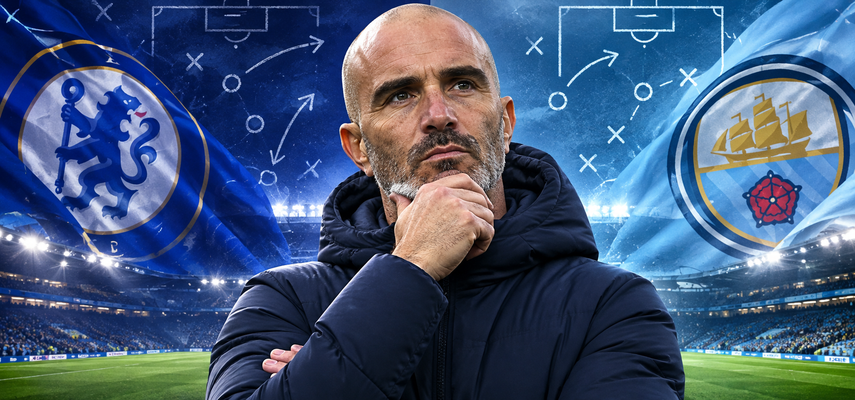

Enzo Maresca returned to Manchester City in June 2026, hoping to build on the success established under Pep Guardiola. His appointment followed a turbulent departure from Chelsea, where impressive trophies failed to prevent a breakdown in relations. Four months later, familiar questions are emerging at the Etihad Stadium. Defensive mistakes, inconsistent performances, and mounting pressure have interrupted City’s promising start. The circumstances differ from Stamford Bridge, but Maresca faces another demanding test of his management and tactical decisions.
Why Maresca Left Chelsea
Maresca’s Chelsea tenure produced significant achievements, including the 2025 UEFA Conference League and FIFA Club World Cup titles. His possession-based approach brought structure to a young squad, and Champions League qualification strengthened his reputation.
Yet results deteriorated during his final weeks. Chelsea won just one of their final seven league matches under his management. The club announced his departure on January 1, 2026, following disagreements and growing uncertainty about his future.
His interest in eventually returning to Manchester City complicated the relationship with Chelsea’s leadership. The separation became a major talking point long after he left Stamford Bridge.
A Familiar Club With Different Expectations
Manchester City appointed Maresca on June 29, 2026, following Guardiola’s departure. The Italian signed a three-year contract, returning to an organization where he previously coached the development squad and assisted Guardiola.
City’s official appointment announcement confirmed his return and highlighted his previous experience within the club. That familiarity offered advantages unavailable during his first months at Chelsea.
Still, replacing Guardiola created enormous expectations. Maresca inherited a club accustomed to competing for major trophies, making prolonged inconsistency difficult to accept.
Defensive Problems Have Returned
City’s recent defensive performances have raised serious questions about their tactical balance. Three consecutive Premier League defeats against Aston Villa, Brighton, and Nottingham Forest interrupted an encouraging opening period.
The 3-1 defeat against Forest exposed problems in defensive transitions and individual decision-making. City’s attacking structure frequently commits players forward, leaving space when opponents recover possession.
Similar concerns appeared during Maresca’s Chelsea tenure. His teams could dominate possession without consistently controlling dangerous counterattacks.
Possession statistics can conceal defensive weaknesses when opponents create opportunities through fewer attacking sequences.
Why High Defensive Lines Carry Risks
Maresca prefers teams that control territory through organized passing and aggressive positioning. His defenders frequently operate high up the pitch, reducing distances between attacking and defensive units.
This structure can help teams recover possession quickly and maintain pressure. It becomes vulnerable when opponents break through the initial press.
Manchester City possess technically accomplished defenders, but individual quality cannot eliminate structural problems. Midfield positioning and defensive recovery runs remain equally important.
Maresca must decide whether maintaining his preferred approach justifies the space opponents increasingly find behind his back line.
Midfield Balance Remains a Major Concern
City’s midfield contains considerable creative talent, including Enzo Fernández and Rayan Cherki. Their attacking contributions can improve passing combinations and opportunities around the penalty area.
Yet creativity requires defensive support. When midfielders advance simultaneously, opponents may find opportunities through central areas.
Rodri’s absence has further complicated City’s defensive organization. Without his positioning and ball-winning ability, the remaining midfielders face greater responsibilities.
Chelsea experienced comparable problems when attacking ambition disrupted the team’s defensive structure. Maresca must find a balance that preserves creativity without exposing his defenders.
Discipline and Squad Management
Discipline became another recurring concern during Maresca’s time at Chelsea. Six Chelsea players received red cards during his final months in charge, creating difficulties in important matches.
The issue resurfaced in discussions surrounding his Manchester City substitutions. Maresca faced questions about replacing booked players and managing disciplinary risks.
His decisions have sometimes attracted criticism, particularly when substitutions appear reactive. Yet protecting players from potential dismissals can represent a reasonable tactical choice.
The larger challenge involves maintaining discipline without reducing the aggression needed for effective pressing.
How Poor Results Change Public Expectations
A successful opening period can create optimism, but consecutive defeats quickly change the conversation surrounding a manager. City began the league campaign with seven victories before suffering three successive losses.
Such reversals attract attention from supporters, journalists, and football betting markets. Commercial coverage can extend from match odds to unrelated gambling promotions, including advertisements at U.S. online casinos, reflecting football’s wider advertising connections.
The sporting questions remain more significant than commercial reactions. City must address defensive weaknesses before their position in the title race deteriorates further.
Can Maresca Avoid Another Breakdown?
The circumstances at Manchester City differ considerably from those surrounding Maresca’s Chelsea departure. He knows City’s internal structure and previously worked closely with Guardiola.
His relationship with the club’s leadership appears stronger, offering an opportunity to concentrate on football decisions. Yet managerial stability still depends heavily on performances.
The Guardian’s November 9 analysis identified defensive vulnerabilities and midfield imbalance as central concerns. Those problems require tactical solutions rather than another change in personnel alone.
Maresca has time to adjust his approach, but upcoming fixtures will test whether those changes produce results.
The Same Problems, a Different Opportunity
Maresca’s experiences at Chelsea and Manchester City share recognizable tactical themes. Possession dominance, defensive transitions, and squad management have created difficulties at both clubs.
The biggest difference concerns his working environment. City offers familiar leadership and players accustomed to demanding tactical systems.
His success will depend on correcting weaknesses without abandoning the principles that brought previous achievements. Another difficult period need not produce the same outcome as Chelsea, but the warning signs deserve attention.












