










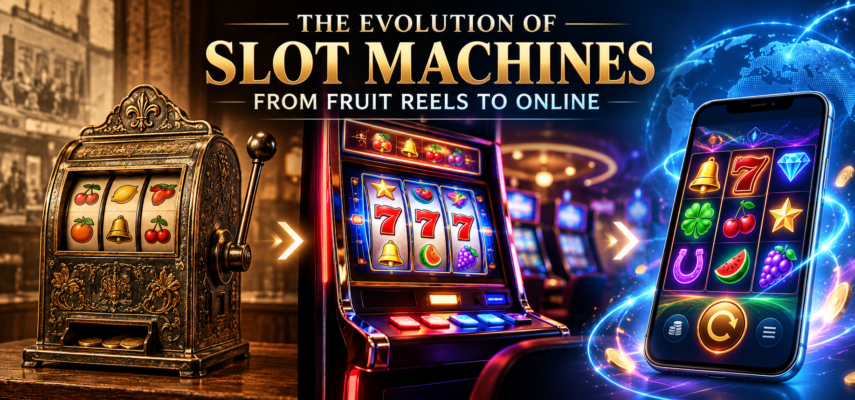
More than any other kind of entertainment, slot machines have evolved during the past century. They transitioned from a lever and three metal reels to electric machines, multimedia games, and smartphone apps, and ave 189 slot sites now just a few clicks away. The entire look was changed.
Four Slot Machine Eras
There have been four major phases in the history of slots. They were mechanical in the late 1800s, with three painted reels and direct coin payments. They were constructed with gears, springs, and a lever. The electric motors in the 1960s allowed for larger payouts, faster play and fewer jams. When computers and displays were available in the latter half of the 20th century, a RNG started selecting each outcome, turning the reels into animation. With richer worlds and shorter sessions, online casinos and cellphones have made it feasible to play from home and eventually from your pocket since the 1990s.
How the Initial Machines Operated
The first slot machines lacked screens, lights, and computers. Behind a tiny glass were three metal reels with graphics painted on them. A player pulled the lever, causing the reels to spin, and a brake stopped them one by one. If the correct photos lined up, coins fell out. The coin was retained by the machine otherwise.
One of the first and most popular devices was invented by a San Francisco inventor in the late 1800s. Bells, horseshoes, and playing card shapes were among its illustrations.
The Origin of the Fruit
After all, traditional slots have cherries, lemons, and plums and most explain it like that. Every fruit had a flavoring, and some places dispensed sweets or chewing gum instead of money. After all the gum was gone, so did the photos.
For this reason, “classic” slots are still profitable today. A cherry symbol is prominently displayed, serving as an homage to the past.
Equipment Plugs in
Electricity began to be used in slot machines in the 1960s. Motors enabled machines to operate more quickly, offer larger prizes, and jam less frequently.
The metal reels were eventually replaced by screens and computers. Every outcome is chosen by a random number generator (RNG) inside. The spinning reels on these more recent devices are merely a showpiece. The animation displays what has already occurred, and the outcome is selected as soon as you hit the button.
After the metal was extracted, the designers were able to add more reels, graphics and winning combinations. For example, it is important to this concept. If each of the three reels has 10 images, then there will be 10 × 10 × 10 = 1,000 possible outcomes. 10 × 10 × 10 × 10 = 100,000 is the result of five reels. Although actual games are different, the general idea is that there are a lot more possible outcomes when there are more reels.
Internet-Based Slots
When the first online casinos debuted in the 1990s, players could spin on a computer at home for the first time. Despite the limited sounds and dull graphics, the idea was embraced.
Games were enhanced as the internet became faster. Bonus rounds were mini-games, studios developed rich worlds of people and stories. Also, numerous websites offered free versions for individuals to try a game without wagering any money.
The Battery Is Recharged
Smartphones have revolutionized things yet again. Spins increased in speed, games were resized for tall screens and touch, and play was shortened to a few minutes, occasionally.
Free spins, symbols that expand to fill the reels, and “tumbling” reels—where winning images vanish and new ones appear—are just a few of the novelties found in today’s slots. Three metal reels and a lever are a long way from modern slot machines.
Game finding developed, too. In just a few seconds, players can find a list of games by searching for a website’s name and the phrase “slot.” A brief glance at the website’s address prior to logging in protects this shortcut.
What Didn’t Change
Despite all the lights and sounds, a few things in that dusty pub remain exactly as they were.
Edge still remains in the home. Slot machines are designed to benefit the online slot casino in the long run.
Luck still has the final say. “Almost” still confuses people; one spin has no bearing on the next. When the big prize is close by it feels close when in reality it’s only slightly beyond the line. It isn’t.
From Just One Payline to Countless Ways to Win
A single line across the center of the reels was where early machines made their payments. Designers added extra paylines when screens took the role of metal, followed by “ways to win” systems where matching symbols on neighboring reels pay regardless of their row. There are hundreds or thousands of ways to play some contemporary games. Better odds do not equate to more opportunities to win. While the RTP still determines the long-term return, it modifies the frequency of modest wins and the overall atmosphere of the game.











