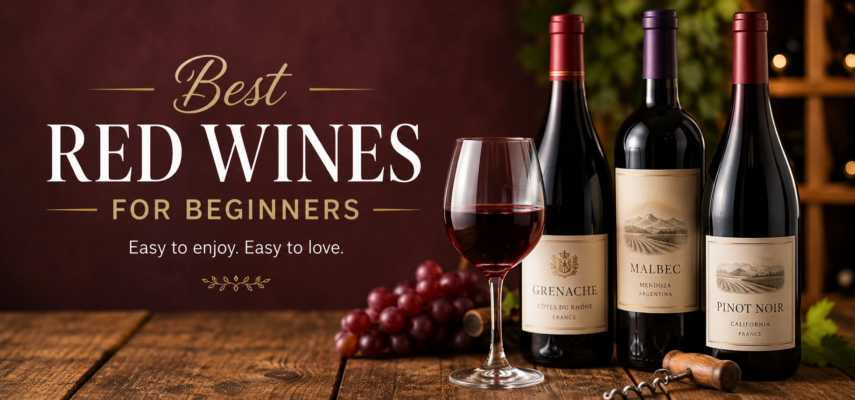
Red wine can feel intimidating at first.
There are hundreds of grape varieties, unfamiliar regions, confusing labels, and plenty of opinions about what “serious” wine drinkers are supposed to like. But learning red wine does not have to start with the boldest, driest, most expensive bottle on the shelf.
For beginners, the best red wines are usually the ones that are smooth, fruit-forward, easy to drink, and not overly bitter or tannic. They help you understand what red wine tastes like without overwhelming your palate.
This guide breaks down the best red wines for beginners, what they taste like, and how to choose a bottle you are likely to enjoy.
What Makes a Red Wine Beginner-Friendly?
A beginner-friendly red wine usually has a few key traits.
It should have noticeable fruit flavors, such as cherry, raspberry, plum, blackberry, or strawberry. These flavors make the wine feel more familiar and approachable.
It should also have moderate tannins. Tannins are the compounds that create a dry, grippy feeling in your mouth, especially on your gums and tongue. Some people love that sensation, but many beginners find highly tannic wines too harsh at first.
A good beginner red should also have balanced acidity and alcohol. Too much acidity can make the wine taste sharp. Too much alcohol can make it feel hot or heavy.
Most importantly, a beginner-friendly red wine should be enjoyable without needing a long explanation.
1. Pinot Noir
Best for: Beginners who want a lighter, smoother red wine
Common flavors: Cherry, raspberry, strawberry, earth, spice
Body: Light to medium
Tannin level: Low to moderate
Pinot Noir is one of the best red wines for beginners because it is usually lighter, softer, and less aggressive than many other reds. It often has bright red fruit flavors, gentle tannins, and a silky texture.
This is a great starting point if you usually drink white wine, rosé, or lighter cocktails and want to ease into red wine without jumping straight into something heavy.
Pinot Noir is also very food-friendly. It pairs well with roasted chicken, salmon, mushrooms, pork, turkey, charcuterie, and lighter pasta dishes.
Good places to look for Pinot Noir include California, Oregon, Burgundy, New Zealand, and Chile. Burgundy can be expensive and more complex, so beginners may want to start with California, Oregon, or New Zealand.
2. Merlot
Best for: Beginners who want something smooth and plush
Common flavors: Plum, black cherry, chocolate, vanilla, herbs
Body: Medium
Tannin level: Moderate
Merlot is one of the most approachable red wines in the world. It tends to be soft, round, and fruit-driven, with flavors of plum, cherry, and sometimes chocolate or baking spice.
If Cabernet Sauvignon feels too dry or intense, Merlot can be a great alternative. It has enough body to feel like a classic red wine, but it is usually smoother and less harsh than bigger, more tannic reds.
Merlot pairs well with burgers, roasted meats, tomato-based pasta, pizza, meatballs, and grilled vegetables.
Look for Merlot from California, Washington State, Chile, or Bordeaux. Bordeaux blends often include Merlot, though they may taste more earthy and structured than New World versions.
3. Grenache
Best for: Beginners who like juicy, fruity reds
Common flavors: Strawberry, raspberry, cherry, spice, herbs
Body: Medium
Tannin level: Low to moderate
Grenache is an excellent beginner red because it is often soft, juicy, and full of ripe red fruit. It can taste warm and generous without being overly bitter.
Grenache is widely grown in Spain and southern France. In Spain, it is often called Garnacha. In France, it is commonly used in Rhône Valley blends, including Côtes du Rhône.
This is a great wine for casual meals. It works well with barbecue chicken, pizza, lamb, burgers, tacos, grilled vegetables, and Mediterranean dishes.
For value, look for Garnacha from Spain or Côtes du Rhône from France. These bottles are often affordable and highly drinkable.
4. Malbec
Best for: Beginners who want a richer red without too much bitterness
Common flavors: Blackberry, plum, black cherry, cocoa, spice
Body: Medium to full
Tannin level: Moderate
Malbec is a great choice for beginners who want a red wine that feels bold but still smooth. It usually has dark fruit flavors, a plush texture, and enough structure to feel substantial without being as intense as some Cabernet Sauvignon.
Argentina is the most famous source of Malbec, especially Mendoza. Many Argentine Malbecs offer excellent value and are easy to find in wine shops, restaurants, and grocery stores.
Malbec is especially good with grilled meats. It pairs well with steak, burgers, barbecue, sausage, roasted vegetables, and hearty pasta dishes.
If you are looking for a red wine for a steak dinner but do not want something too dry or aggressive, Malbec is one of the safest choices.
5. Zinfandel
Best for: Beginners who like bold, jammy fruit flavors
Common flavors: Blackberry, raspberry jam, plum, pepper, vanilla
Body: Medium to full
Tannin level: Moderate
Zinfandel is a flavorful, fruit-forward red wine that many beginners enjoy. It often has ripe berry flavors, soft spice, and a slightly jammy character.
This is not the same as White Zinfandel, which is a sweet pink wine. Red Zinfandel is a true red wine, often fuller-bodied and more intense.
California is the key region for Zinfandel, especially areas like Lodi, Sonoma, and Paso Robles.
Zinfandel pairs especially well with barbecue, ribs, burgers, pizza, chili, pulled pork, and spicy foods. It is a great cookout wine because it can handle smoky, sweet, and savory flavors.
One caution: some Zinfandels can be high in alcohol. Beginners may want to look for bottles around 13.5% to 14.5% alcohol rather than bottles pushing 15% or higher.
6. Beaujolais
Best for: Beginners who want a light, refreshing red
Common flavors: Cherry, cranberry, raspberry, banana, violet
Body: Light
Tannin level: Low
Beaujolais is made from the Gamay grape and is one of the easiest red wines to drink. It is light, fruity, low in tannin, and often very refreshing.
This is a great option for people who think they do not like red wine because it avoids many of the things beginners find difficult: heavy body, high tannin, and intense bitterness.
Beaujolais is also one of the best red wines to serve slightly chilled. Put it in the refrigerator for 20 to 30 minutes before serving, and it becomes even more refreshing.
There are different levels of Beaujolais. Basic Beaujolais and Beaujolais-Villages are usually light and simple. Cru Beaujolais, such as Morgon, Fleurie, or Moulin-à-Vent, can be more complex while still remaining approachable.
Beaujolais pairs well with roast chicken, turkey, ham, cheese, salads, charcuterie, and picnic-style meals.
7. Red Blends
Best for: Beginners who want an easy, crowd-pleasing bottle
Common flavors: Varies, but often cherry, blackberry, plum, vanilla, spice
Body: Medium to full
Tannin level: Usually moderate
Red blends can be very beginner-friendly because winemakers often blend grapes to create a smooth, balanced, easy-drinking style.
Many popular red blends are fruit-forward, soft, and slightly rich. They may include grapes like Merlot, Zinfandel, Syrah, Cabernet Sauvignon, Grenache, or Petite Sirah.
Red blends are a good choice when you want something simple and crowd-pleasing for a party, dinner, or casual night at home. They are not always the best way to learn the differences between individual grape varieties, but they can be very enjoyable.
Look for red blends from California, Washington State, Portugal, Spain, Australia, or southern France.
8. Cabernet Sauvignon
Best for: Beginners ready for a bigger, drier red
Common flavors: Blackcurrant, blackberry, cedar, tobacco, vanilla
Body: Full
Tannin level: Moderate to high
Cabernet Sauvignon is one of the world’s most famous red wines, but it is not always the easiest starting point. It can be full-bodied, dry, tannic, and intense.
That does not mean beginners should avoid it. It just means Cabernet is better for someone who already knows they enjoy bigger, drier flavors.
For a smoother beginner Cabernet, look for bottles from California, Chile, Washington State, or Australia. These often have ripe black fruit flavors and a rounder texture than more austere versions.
Cabernet Sauvignon pairs well with steak, lamb, burgers, short ribs, hard cheeses, and rich mushroom dishes.
If you try Cabernet and find it too dry, do not assume you dislike red wine. You may simply prefer lower-tannin reds like Pinot Noir, Merlot, Grenache, or Beaujolais.
Best Red Wines for Beginners Ranked by Approachability
If you are completely new to red wine, a good order to try them would be:
- Beaujolais
- Pinot Noir
- Grenache / Garnacha
- Merlot
- Malbec
- Red Blend
- Zinfandel
- Cabernet Sauvignon
This is not a ranking from “best” to “worst.” It is a suggested path from lighter and softer wines toward fuller and more structured wines.
Should Beginners Drink Sweet Red Wine?
Some beginners naturally prefer sweeter wines, and that is completely fine. Sweet red wines can be a useful entry point, especially for people who are used to soda, juice, cocktails, or sweet white wines.
Examples include Lambrusco, Brachetto d’Acqui, sweet red blends, and some semi-sweet grocery store reds.
However, if your goal is to learn red wine broadly, it is helpful to gradually move from sweet reds into dry but fruit-forward wines like Beaujolais, Pinot Noir, Grenache, or Merlot. These wines still taste fruity, but they are not necessarily sweet.
A useful distinction: fruity does not always mean sweet. Many dry red wines taste like ripe fruit even though they contain little residual sugar.
How Much Should Beginners Spend?
You do not need to spend a lot of money to find a good beginner red wine.
A strong starting range is usually $12 to $25. Below $10, quality can be inconsistent, though there are still good finds. Above $25, wines may become more complex, structured, or region-specific, which is not always necessary when you are still learning your preferences.
For beginners, it is often better to buy three different $15 bottles than one $45 bottle. Comparing wines side by side teaches you more than chasing a single expensive bottle.
How to Serve Red Wine
Many people serve red wine too warm. Room temperature can be too hot, especially in modern homes.
Most red wines taste better slightly cool, around 55°F to 65°F. Lighter reds like Beaujolais and Pinot Noir can benefit from a brief chill. Fuller reds like Cabernet Sauvignon and Malbec should not be ice cold, but they also should not feel warm or heavy.
A simple rule: put your red wine in the refrigerator for 15 to 25 minutes before drinking. If it tastes muted, let it warm up slightly in the glass.
Best Food Pairings for Beginner Red Wines
Food can make red wine much easier to enjoy. Tannins soften with protein and fat, while fruit flavors can become more expressive alongside savory dishes.
Here are a few easy pairings:
Pinot Noir: roast chicken, salmon, mushrooms, turkey
Merlot: burgers, meatballs, pizza, pasta
Grenache: tacos, grilled chicken, lamb, Mediterranean food
Malbec: steak, barbecue, sausage, roasted vegetables
Zinfandel: ribs, pulled pork, chili, pizza
Beaujolais: charcuterie, ham, chicken, cheese
Cabernet Sauvignon: steak, lamb, short ribs, hard cheese
When in doubt, pair red wine with simple comfort food. Pizza, burgers, roast chicken, and pasta are all excellent places to start.
How to Figure Out What Red Wine You Like
The best way to learn red wine is to pay attention to patterns.
After each bottle, ask yourself:
Did I like the wine?
Was it light, medium, or full-bodied?
Did it taste more like red fruit or dark fruit?
Was it smooth or drying?
Did it taste better with food?
Would I buy it again?
You do not need fancy tasting notes. Even simple reactions help. Over time, you may notice that you prefer lighter reds, smoother reds, jammy reds, earthy reds, or bold dry reds.
That is how wine starts to become less intimidating.
Final Thoughts
The best red wine for beginners is not necessarily the most famous or expensive bottle. It is the one that helps you enjoy the category and understand your own palate.
Start with softer, fruit-forward reds like Pinot Noir, Merlot, Grenache, Beaujolais, or Malbec. Try them with food. Serve them slightly cool. Notice what you like and what you do not.
Red wine is not something you have to master immediately. It is something you learn one bottle at a time.