










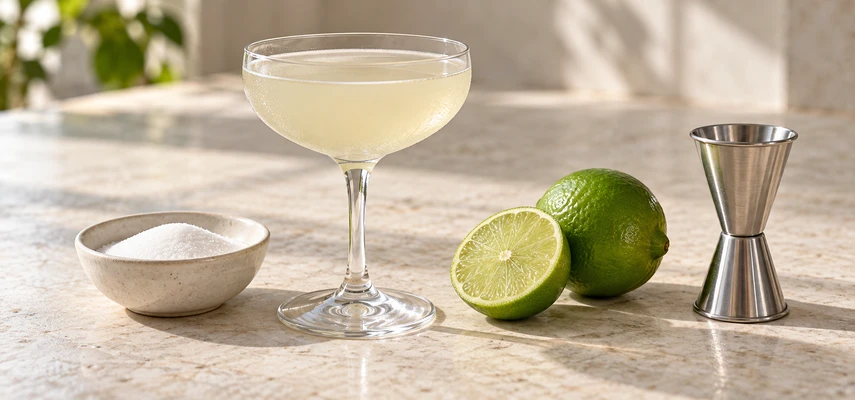

A Daiquiri can contain just rum, lime and sugar. That’s a shopping list short enough to remember without opening your phone. Yet a little extra lime, the wrong amount of water or a change in temperature can make those same ingredients taste strikingly different.
That’s the interesting thing about cocktails: the ingredients don’t tell the whole story. Their proportions, their temperature and the way they’re brought together matter too. A cocktail is a small exercise in composition, with history and hospitality tucked into the glass.
You don’t need a vocabulary full of obscure spirits to understand one. Start with a simpler question: what is each ingredient doing, and how does it change the others?
What makes a drink a cocktail?
In everyday use, a cocktail is a mixed drink, usually alcoholic, made by combining ingredients into a particular preparation. The Oxford Companion to Spirits & Cocktails describes that loose modern usage. It might be as spare as gin and vermouth or as elaborate as a tropical drink with several juices and liqueurs. There isn’t a universally enforced minimum ingredient count or a required kind of glass.
“Mixed drink” is the broader, less fussy expression. Whiskey and soda clearly qualifies; whether someone also calls it a cocktail depends on context. A menu might put highballs, Martinis and alcohol-free creations under one cocktail heading. A historian discussing nineteenth-century drinks may use the word much more narrowly.
The distinction isn’t that a cocktail must be complicated, expensive or shaken by someone wearing an impressive apron. Nor does adding a decorative umbrella confer official membership. What matters in practice is the combination and preparation, although the boundary between cocktail and mixed drink remains pleasantly untidy.
A glass of wine on its own isn’t normally a cocktail. Wine combined with other ingredients can become one. Alcohol-free cocktails, often called mocktails, apply the same attention to flavor and presentation without an alcoholic base. If avoiding alcohol completely matters, check the ingredients: conventional bitters and some products described as non-alcoholic can contain alcohol.
The older definition was much more specific
In 1806, a newspaper in Hudson, New York, answered a reader’s question about the word. The explanation identified a combination of spirits, sugar, water and bitters. The National Park Service recounts that early definition. It documents how the term was understood then; it doesn’t establish that mixed drinks were invented that year.
That four-part structure still looks familiar because it closely resembles an Old Fashioned. The whiskey supplies the base, sugar contributes sweetness, bitters add concentrated seasoning, and water brings dilution. Today’s cocktail category has grown well beyond that particular arrangement.
Nineteenth-century recipe books also distinguished cocktails from other mixed-drink families. Jerry Thomas’s guide first appeared in 1862, gathering cocktails alongside punches, juleps, sours and more. The Library of Congress holds an 1887 edition. Think of “cocktail” expanding from one shelf in the drinks cabinet to a label people use for much of the cabinet.
Recipes could travel through books and through the bartenders who made them. The result is a culture of shared formulas and local variations, rather than a single inventor handing down a finished system. The history contains plenty of disputed origin stories. Fortunately, you can understand what’s in your glass without settling every argument about who first poured it.
Ingredients have jobs, and some work two shifts
A useful way to read a cocktail is by function. The base gives it a center of gravity. Whiskey may bring grain and barrel flavors; gin often contributes juniper and other botanicals; rum can suggest anything from a relatively light profile to richer, more assertive flavors. The particular bottle matters, so these are starting points rather than fixed personalities.
Other ingredients modify that base. Citrus supplies acidity and aroma. Sugar or syrup supplies sweetness. A liqueur contributes its own flavor, usually sweetness and often more alcohol. Vermouth is aromatized, fortified wine, so adding it changes more than the strength of a drink.
Bitters are concentrated flavoring preparations generally used in small amounts. They might bring citrus, spice, herbal flavors or bitterness. Their job resembles seasoning a dish: a small quantity can change how the whole mixture comes across. That doesn’t mean every cocktail needs them.
Garnishes can do work too. A citrus peel releases aromatic oils near your nose as you lift the glass. Mint adds a fresh aroma before the liquid reaches your mouth. Appearance matters, but a garnish doesn’t have to be edible scenery with no connection to the drink.
These roles overlap. Orange liqueur brings sweetness, aroma and alcohol at once. Lime juice brings sourness and a recognizable citrus character. Changing an ingredient therefore isn’t always a one-for-one swap, even when the quantities look identical.
Balance means the parts make sense together
Consider lemonade before considering cocktails. Too little sugar and it may taste aggressively tart. Too much and the lemon loses its liveliness. You haven’t changed what the ingredients are; you’ve changed their relationship.
The same practical idea helps explain a sour cocktail. In the International Bartenders Association’s Daiquiri, white rum, fresh lime juice and sugar form the basic combination. The lime supplies sharpness, sugar moderates that sharp impression, and rum gives the mixture its alcoholic base and character.
Sugar doesn’t chemically erase the acid. Both remain in the glass. What changes is your experience of the mixture. That’s why a drink can be sweet and sour at the same time, rather than landing at some flavorless midpoint.
Bitterness adds another possibility. It can give a sweet drink a firmer edge, but more isn’t automatically better. Alcohol contributes flavor and a warming or burning sensation as well as strength. A successful drink makes these sensations work together for its intended style.
Balance also doesn’t mean every cocktail should taste alike. A dry Martini isn’t an unsuccessful lemonade. Some drinks deliberately emphasize spirit, others citrus, bitterness or bubbles. The question is whether the result feels coherent, rather than whether all the sensations are equally loud.
Water belongs in the recipe, even when it isn’t listed
Ice is an ingredient delivery system as well as a cooling tool. As it melts, it adds water. That lowers the concentration of alcohol, sugar and acid in the mixture and increases its volume. Meanwhile, the drink becomes colder. Dave Arnold’s experiments with cocktail cooling and dilution explore that connection. Both changes influence the result.
This is why tasting a room-temperature mixture before it meets ice can be misleading. You’re tasting an intermediate stage. Judging it then is a little like judging soup before adding the water the recipe calls for.
Too much dilution can make a drink seem thin; too little may leave it harsh or concentrated. The useful amount depends on the recipe and serving method. There’s no single magic percentage for every cocktail.
Temperature changes the experience too. A very cold drink and a warmer version don’t necessarily present their sweetness, aromas and alcoholic sensation in the same way. A cocktail served over ice also keeps changing while you drink it. Preparation aims for a useful starting point, with that continuing change in mind.
Shaken, stirred or built: three ways to get there
Shaking combines ingredients vigorously with ice. It chills and dilutes while also incorporating air, which changes texture. It’s commonly used for drinks containing citrus juice. A shaken Daiquiri has a different character from the same ingredients lazily swirled together in a glass.
Stirring mixes more gently, usually preserving a clear appearance and a relatively smooth texture. It’s a familiar choice for drinks built around spirits and vermouth. The IBA’s dry Martini combines gin and dry vermouth, stirred with ice, then strained into a chilled glass.
Neither method has exclusive ownership of cooling or dilution. As bartender and drinks writer Simon Difford explains, both do those jobs; shaking also changes texture through aeration. The choice is about the intended result, rather than which movement looks more dramatic.
A built drink is assembled in its serving glass. A simple spirit-and-soda highball is an easy example. There’s no separate shaker or mixing glass to strain from. Carbonated ingredients are generally added gently so the bubbles stay in the drink instead of becoming a brief event above the counter.
Three familiar drinks make the idea visible
The Old Fashioned puts the spirit near the front. The IBA version uses bourbon or rye, sugar, bitters and water, prepared with ice. It’s a useful example of how modest additions can reshape a base without hiding it.
The Daiquiri shows a different relationship: rum, citrus and sugar working together. It doesn’t need a blender, bright coloring or a mountain of frozen fruit to qualify. Those are possibilities in the wider world of drinks, rather than requirements of the classic.
The Martini demonstrates how much can happen with very few components. Changing the amount of vermouth changes the drink; changing the gin changes it again. Its apparent simplicity leaves the ingredients unusually exposed. There isn’t much furniture to rearrange, so moving one chair makes a difference.
These are illustrations, not a complete map of cocktail families. For now, notice the different intentions: emphasize a spirit, balance citrus with sweetness, or combine aromatic ingredients with restraint.
A cocktail glass isn’t a measure of alcohol
Sweetness, size and smoothness don’t reliably tell you how much alcohol a drink contains. A small cocktail can contain more alcohol than a much taller drink, depending on the ingredients and quantities.
In the United States, NIAAA defines a standard drink as about 14 grams, or 0.6 fluid ounces, of pure alcohol. That’s approximately the amount in 1.5 fluid ounces of a 40% ABV spirit. A cocktail may contain one standard drink or more.
Adding soda or melted ice lowers the alcohol concentration; it doesn’t remove the alcohol already poured. Dilution and alcohol dose are different things. Flavor is worth understanding, but it isn’t a dependable strength gauge, and an enjoyable preparation doesn’t make alcohol harmless.
Begin with curiosity rather than a memorized menu
A bartender’s work includes interpreting preferences, making consistent drinks and looking after guests. Saying “I like citrus and dislike very sweet drinks” gives a bartender something useful to work with. So does asking for an alcohol-free option or explaining an ingredient allergy.
When a drink arrives, look for its structure. What provides the base? What adds sweetness, tartness, bitterness or aroma? Is it cold and clear, lively and bubbly, or softened by a little air? You don’t have to identify every ingredient to notice what the combination is doing.
That’s a practical beginning to cocktail knowledge: a handful of ingredients, each with a purpose, brought together deliberately. Once you can see those relationships, a menu becomes easier to read—and three ordinary ingredients can become a much more interesting story.









