










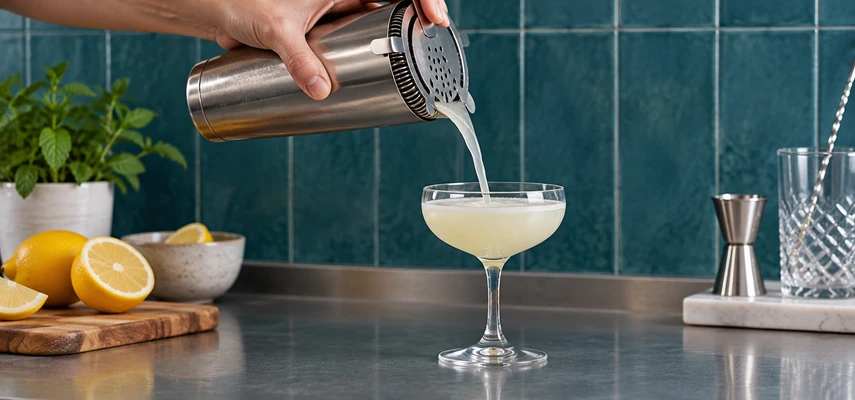

A bartender puts several room-temperature liquids into a metal tin, adds ice, shakes, and pours out something cold, fragrant and faintly cloudy. It’s easy to focus on the shaking. That’s the bit with the sound effects. But the important work started before the tin moved and continues after it stops.
Making a cocktail means controlling several things together: the amounts of the ingredients, how thoroughly they combine, how cold they become, how much water they gain, and what reaches the serving glass. Technique is the way those decisions become a drink.
You don’t need a theatrical flourish to understand the process. Follow one drink from recipe to glass, and the movements begin to look like practical solutions rather than secret handshakes.
A recipe specifies a result, not just a shopping list
Rum, lime and sugar can become a Daiquiri, but simply owning those ingredients doesn’t finish the job. Their proportions matter. So does whether the sugar dissolves, whether the drink meets ice, and whether that ice ends up in the serving glass.
The International Bartenders Association’s Daiquiri method makes that sequence visible: combine the ingredients, dissolve the sugar, add ice, shake and strain. Each instruction solves a different problem. The sugar needs to become part of the liquid rather than remain a gritty deposit at the bottom.
Before making any cocktail, read the entire method once. “Shake and strain” and “build over ice” are different routes. A recipe that finishes with soda also needs different handling from one made entirely of still ingredients.
This first reading is a small investment with an excellent return. Discovering the final instruction while a drink is already warming in your hand is a less convenient form of research.
Set the ingredients up before starting the clock
Preparation usually includes selecting the serving glass, getting the ingredients within reach, preparing any garnish and making sure usable ice is available. The purpose is to avoid leaving a half-made drink waiting while you search for a missing strainer.
Measure the liquids before introducing ice unless the recipe gives a reason to do otherwise. Once ice meets warmer ingredients, cooling and melting begin. Adding ingredients slowly while the first ones sit on ice makes the process harder to reproduce.
There’s no need to turn a kitchen counter into a laboratory. You do need to know which quantity belongs to which bottle. Small containers and a readable recipe often contribute more to a reliable drink than impressive equipment does.
Ingredients should also be fit for the job. Use clean tools, sound fruit and fresh-tasting ice. Keep perishable products under appropriate refrigeration. If a recipe includes an ingredient someone can’t consume, choose a suitable recipe or a verified alternative before you start mixing.
Measurement gives the method something stable to work with
A cocktail recipe is a set of relationships. Increasing the spirit while leaving everything else unchanged produces a different relationship, even if the extra pour seems small. The same is true of syrup, juice or a concentrated flavoring.
Measurement lets you separate a recipe problem from a preparation problem. If you guess the quantities and also change the mixing method, an unsatisfactory result comes with too many possible explanations. Consistent amounts give you a sensible reference point.
The unit itself is less important than using it consistently. Milliliters and fluid ounces both describe volume. A recipe expressed in parts describes proportions that still need to be translated into a serving size. Don’t silently exchange a volume for the same number of grams: different liquids have different densities.
At this stage, think of measuring as setting the coordinates. The technique that follows moves the ingredients toward their intended temperature, dilution and texture. Starting at the wrong coordinates makes that journey less predictable.
Ice changes the drink while it cools it
Ice absorbs energy from the warmer mixture. As some of it melts, water joins the drink. The result is colder and less concentrated than the mixture that entered the shaker or mixing glass.
That’s why water isn’t necessarily evidence of a mistake. Many recipes are designed around the water that arrives during preparation. The drink isn’t complete just because the named liquids have been measured.
In his cocktail-cooling experiments, Dave Arnold examined temperature and dilution together. A practical lesson for beginners is to treat ice contact as part of the recipe rather than a pause between measuring and drinking.
The outcome depends on the ingredients, ice, vessel and technique. There’s no universal amount of water that every cocktail should gain. Nor does melting ice remove alcohol: it increases the drink’s volume and lowers its concentration while leaving the amount of alcohol already poured essentially unchanged.
Shaking mixes vigorously and changes texture
Shaking brings liquid and ice into repeated contact. It combines ingredients, cools the mixture and adds dilution. It also incorporates air, which can make a drink look cloudier and feel different in the mouth.
That texture is one reason shaking is common for citrus drinks. You’re not merely stirring more energetically; you’re asking for a particular combination of mixing and aeration. A sour poured immediately after shaking may have a lively surface that a gently stirred version wouldn’t share.
Use a vessel designed to seal securely, and hold its parts firmly. The goal is controlled agitation, not maximum distance traveled across the room. Follow the recipe’s method and work with a consistent amount of suitable ice rather than trying to judge success by noise alone.
Don’t seal and shake carbonated mixers. Add those gently as directed after the still ingredients have been prepared. Pressurizing a closed shaker is a poor way to preserve bubbles and an unnecessarily exciting way to discover how well its pieces fit.
Stirring gives a different finish
Stirring moves the mixture around the ice more gently. It still mixes, chills and dilutes, but generally introduces much less air than shaking. That makes it useful when a clear appearance and a smooth, relatively unfoamed texture are part of the intended result.
The IBA dry Martini is a straightforward example: gin and dry vermouth are stirred with ice, then strained into a chilled glass. The method supports the character of the ingredients rather than adding an aerated texture.
This isn’t a moral contest between shaking and stirring. Both methods have jobs. As Simon Difford’s comparison explains, the distinction includes texture as well as the way the drink reaches its temperature and dilution.
Stirring also isn’t a guarantee against over-dilution. A mixture can become too watery through either method if the preparation doesn’t suit the recipe. The useful question is whether the finished drink has reached the intended state, rather than whether the movement looked traditional.
Building keeps the work in the serving glass
A built drink is assembled in the glass from which it will be served. There may still be measuring, stirring and careful sequencing, but there’s no separate mixing vessel to empty at the end.
A spirit-and-soda highball illustrates the idea neatly. The serving ice, measured spirit and mixer come together in one place. A gentle mix helps prevent a strong bottom layer and a weak top layer while treating the carbonation with some courtesy.
The IBA John Collins method also builds gin, lemon, syrup and soda in a highball glass with ice. Other recognized preparations handle similar drinks differently. That’s a reminder to follow the specific method in front of you rather than assuming one rule covers every recipe with bubbles.
Building isn’t the absence of technique. It simply combines preparation and presentation in the same vessel. The quantities and order still matter, and the drink will continue changing as its serving ice melts.
Straining decides what stays behind
After shaking or stirring, straining separates the prepared liquid from things that shouldn’t travel into the final glass. Those might include mixing ice, fruit pulp, herb fragments or small ice chips, depending on the recipe.
A shaker strainer holds back the larger material. A second, fine-mesh strainer can catch smaller particles when a cleaner texture is wanted. That extra step is useful for some drinks, but it isn’t an automatic upgrade for all of them. A recipe may deliberately retain texture or ice.
When a drink is served over fresh ice, the mixing ice and serving ice have separate jobs. The first helped prepare it; the second becomes part of its presentation and subsequent evolution. Straining into a glass without ice produces another serving style altogether.
The point is deliberate separation. You’re choosing what the reader—or guest—will encounter in the glass, rather than treating everything in the mixing vessel as entitled to come along.
The last adjustments happen around the liquid
A chilled serving glass helps a cold drink remain cold for longer than a warm glass would. A suitable garnish can add aroma near the nose. A stable, appropriately sized glass also makes the drink easier to handle without immediately warming the bowl.
These choices needn’t be elaborate. A clean citrus twist that suits the recipe can be more useful than an ambitious arrangement that gets in the way. Presentation should make the intended experience easier to enjoy.
If a recipe uses uncooked egg, use appropriate pasteurized ingredients and safe handling; FDA guidance addresses uncooked egg beverages. Alcohol and citrus aren’t substitutes for that precaution. Milk, nuts and other allergens also need explicit ingredient checks.
At the end of the process, you’ve done more than combine liquids. You’ve controlled their amounts, temperature, water content, texture and presentation. Once those jobs are visible, the shaker’s little performance makes sense: it’s one tool in a sequence, rather than the whole act.












