










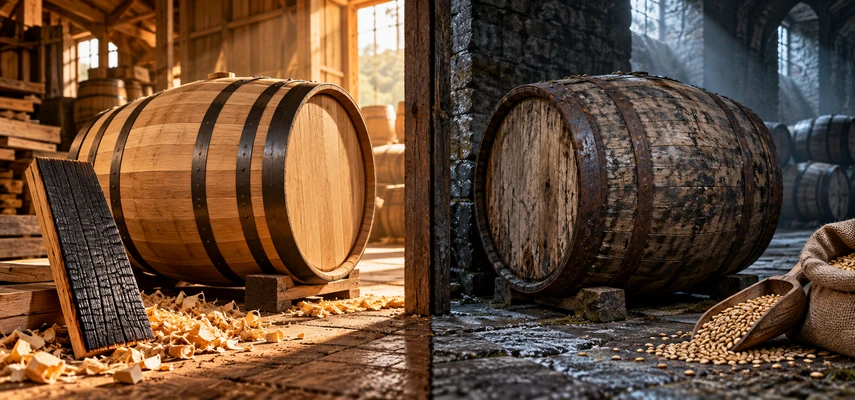

The easiest comparison says bourbon is sweet and Scotch is smoky. It’s memorable, tidy and liable to lead you astray. There are Scotches with no obvious smoke and bourbons whose drying oak would make a poor substitute for dessert.
The more useful comparison starts at the distillery door. Bourbon and Scotch belong to the same grain-spirit family, but their rules create different starting conditions. Grain recipes, barrels and geography make a better foundation than a pair of tasting stereotypes.
Once those differences are clear, familiar flavor patterns become easier to explain. You can also understand why a particular bourbon and a particular Scotch might have more in common than the slogans suggest.
Two names with different kinds of boundaries
Bourbon is a distinctly American whiskey category. It must be produced in the United States and satisfy requirements concerning grain, distillation, barrel entry, maturation vessel and bottling strength. It doesn’t have to come from Kentucky.
Scotch whisky must be produced and matured in Scotland under its own framework. Scotch includes several categories, such as single malt and blended Scotch, rather than one uniform style.
The American standards of identity and the Scotch definition are the relevant starting points. The spellings bourbon whiskey and Scotch whisky reflect common conventions; the extra letter isn’t what creates the production differences.
These are protected descriptions, not merely geographic suggestions on a label. A distillery outside Scotland can make an excellent barley whisky without making Scotch. An American distillery can make many kinds of whiskey without every product qualifying as bourbon.
Grain creates the first fork in the road
Bourbon’s grain mixture must contain at least 51 percent corn. The remaining recipe commonly includes other grains, such as rye, wheat and malted barley. The exact proportions and production choices vary.
Single malt Scotch is made from malted barley at one distillery using the specified pot-still process. Other Scotch categories involve grain whisky and combinations of components. Comparing bourbon only with single malt therefore leaves out a large part of the Scotch family.
The distinction isn’t that bourbon contains grain while Scotch contains malt. Malt is processed grain. Malting encourages controlled germination and then dries the grain, developing tools that help make starch accessible during production.
That agricultural difference contributes to flavor, but it isn’t a one-ingredient explanation. Fermentation produces aroma compounds, distillation selects and concentrates, and the cask changes the result. Reading a grain recipe is useful; expecting it to tell the complete story is asking it to work overtime.
The barrel difference is especially important
Bourbon must enter new charred oak barrels. New means the vessel hasn’t already spent a maturation cycle giving material to another drink. Charring changes the inner surface and the underlying wood available to interact with the spirit.
Scotch must mature in oak casks, but they need not be new. Previously used bourbon barrels and sherry-seasoned casks are familiar parts of Scotch production. New oak can also be used within the rules. “Bourbon uses new, Scotch always uses old” is therefore a convenient pattern with an overconfident ending.
Used wood can contribute differently because earlier fills have already extracted and changed some of its material. A previous occupant or seasoning history may add another influence. Cask size, preparation and fill history all matter.
Annandale’s technical cask discussion explains why wood contribution isn’t a single variable. A reused cask can give a distiller room to preserve spirit character; fresh active wood can make its presence known more quickly. Neither situation is automatically superior.
There is a pleasing connection between the two traditions here: a vessel used for bourbon may later mature Scotch. The categories differ, but their production economies can share the same piece of oak.
Their clocks follow different rules
Scotch must mature in oak in Scotland for at least three years. An age statement reflects the youngest Scotch in the bottle, rather than the average of the components. A 12-year-old blend can contain older whisky without becoming an average-age product.
Bourbon by itself has no fixed minimum maturation period under the federal category definition. Straight bourbon must meet a minimum of two years, and additional American age-label rules apply. The U.S. age-statement provision is useful when interpreting an actual label.
More years don’t automatically mean a better drink. Wood extraction and other changes depend on the cask and environment, so a calendar number isn’t a universal maturity scale. A spirit can become more strongly oaky without becoming more enjoyable.
Nor does time in a sealed bottle add more cask age. A bourbon or Scotch saved for a decade has a longer storage history, not an extra decade in wood. If you want to compare age meaningfully, keep the production context attached to the number.
Why sweetness and smoke aren’t definitions
Vanilla, caramel-like and toasted aromas often appear in bourbon descriptions. Corn-rich recipes and new charred oak help create the conditions behind those associations. But perceived sweetness is a sensory experience, not permission to assume every bourbon contains added sugar.
Scotch can offer fruity, floral, cereal, nutty, coastal or smoky impressions, among many others. Peat smoke used during malt drying can introduce smoky compounds. It isn’t required across Scotch, and not every region or producer follows one single sensory script.
The Scotch Whisky Association’s FAQ explains the connection between peat drying and smoky flavor. That’s a more useful mechanism than treating Scotland itself as a source of smoke.
Two glasses may share vanilla-like or dried-fruit impressions because their flavor development has overlapping features, including oak influence. Similar sensory words don’t make the production standards identical. Conversely, different standards don’t prevent sensory overlap.
A label is a clue, not your palate’s instructions
If an unpeated Scotch reminds you of orchard fruit, you aren’t failing to detect its supposedly compulsory smoke. If a bourbon tastes drying or peppery, it hasn’t failed to be bourbon. Category expectations should help you ask questions, not pressure you into reporting sensations you don’t have.
This matters when discussing whiskey with friends. One person’s “sweet” may refer to vanilla aroma, another’s to actual taste and another’s to the absence of bitterness. Ask what they mean before deciding that the bottles disagree with the laws of nature.
Strength and blending cut across the comparison
Both traditions include different bottling strengths. A higher ABV can change aroma delivery, mouthfeel and alcohol burn. It also means more alcohol in an equal-volume pour. Comparing a high-strength bourbon against a lower-strength Scotch without noticing that difference can muddle the result.
Blending needs the same care. Blended Scotch combines malt and grain Scotch under its category definition. A single malt can still be assembled from many casks of one distillery. A bourbon release may similarly combine qualifying barrels to create a batch.
The Scotch category guide helps separate those uses. “Single” doesn’t always mean one barrel, and “blend” isn’t a universal synonym for inferior. Construction and quality are different questions.
For a sensible comparison, identify the actual expressions, strengths and cask information. Otherwise you may accidentally compare barrel strength with standard strength, a heavily peated style with an unpeated one, or a single cask with a large consistent batch, and attribute every difference to country.
Geography affects conditions, not just names
Scotland’s generally cool maturation conditions differ from those in many American bourbon regions. Temperature and humidity affect how spirit and wood interact and what evaporates. But neither country has one identical warehouse environment. Building design, cask location and local weather complicate any simple national comparison.
That is another reason to avoid converting years into a universal flavor scale. Saying a whiskey “ages faster” can describe a particular change, such as strong wood extraction, without proving that every part of maturation has reached the same state. Different processes don’t necessarily accelerate in lockstep.
For a reader, the practical benefit is modest but useful: keep cask type, strength and place alongside age when comparing bottles. If those conditions differ, an age gap alone can’t explain the sensory gap. You can still notice and enjoy a difference without pretending to have isolated its cause in a controlled experiment.
How to make the comparison useful
Start by deciding what you want to understand. For barrel influence, compare clear information about new and previously used oak. For smoke, choose known peated and unpeated examples rather than assuming the national names settle it. For grain character, look at disclosed ingredients and acknowledge that other production variables remain.
If you choose to taste, small samples, comparable glassware and written notes make the exercise clearer. You don’t need to finish the samples, and you don’t need to turn a comparison into a large flight. Tasting is optional; production information alone can answer many questions.
There isn’t a winner hiding in the category definitions. Bourbon’s corn-rich recipe and new charred oak create one set of possibilities; Scotch’s Scottish production framework and range of categories create another. The interesting question is what each producer does within those possibilities. Once you ask that, sweet versus smoky starts to look like a very small doorway into a much larger room.












