










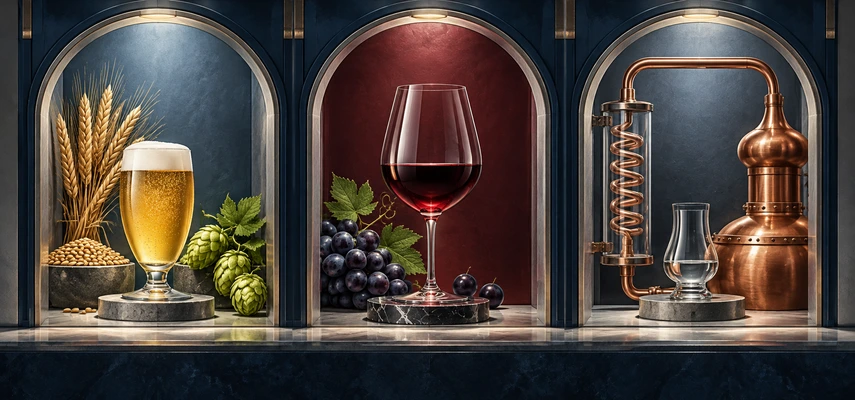

Three people order three drinks: a beer, a glass of wine and a measure of rum. The glasses look different enough to suggest three separate worlds. Yet the alcohol in all of them is the same molecule, ethanol, and each drink owes its existence to fermentation.
The differences lie in the agricultural ingredients, the processing that follows, the strength of the finished drink and the amount served. Those differences matter for flavor and for understanding alcohol exposure. They don’t create three different kinds of intoxicating alcohol with separate rules for the body.
Once you follow the ingredients through production, the comparison becomes clearer. Beer is generally brewed from starch-rich materials, wine is commonly fermented fruit juice, and spirits use distillation in addition to fermentation. Each family is more varied than that first sentence suggests, which is where the interesting details begin.
The shared starting point is fermentation
Yeast converts fermentable sugars into ethanol and carbon dioxide. Winemakers, brewers and distillers all rely on that biological transformation, although they prepare the sugars in different ways and aim for different results.
Grape juice already contains sugars available to yeast. Brewing commonly begins with cereal starch that must be converted into fermentable sugars. A distillery might start with either sort of material, or with sugarcane, agave or another carbohydrate source requiring its own preparation.
The spiritsEUROPE production overview emphasizes that fermentation creates the alcohol before distillation separates and concentrates it. That’s the key relationship. Spirits aren’t an alternative to fermentation; they’re another path after it.
Fermentation also changes aroma. The finished drink therefore owes something to the crop and something to what microorganisms do with it. A fermented beverage isn’t simply its original ingredient with a little ethanol mixed in afterward.
Beer usually begins with cereal starch
Barley is a familiar brewing grain, although wheat, rice, corn and other materials also appear in different traditions. In a typical malt-based process, enzymes break starch into smaller sugars during mashing. Yeast can then ferment suitable sugars in the resulting liquid.
Hops contribute bitterness and aroma in many beers. They’re important to modern beer identity, but they aren’t the source of the alcohol. Separating the roles helps: grain supplies much of the carbohydrate foundation; yeast carries out fermentation; hops contribute a different set of sensory properties.
Carbon dioxide is another part of the experience. Beer commonly arrives carbonated, whether that gas was retained from fermentation or introduced through controlled processing. It changes mouthfeel and how aromas reach the nose. A frothy head is therefore more than a decorative hat, although it still doesn’t tell you the drink’s strength.
Beer is a family, not one strength
A light lager and a strong specialty beer can contain very different alcohol concentrations. Color doesn’t solve the problem: a dark beer isn’t automatically stronger than a pale one. Read the ABV instead of trying to estimate strength from the shade of the liquid.
The same principle applies to serving size. A large can can contain more than one standard drink even if its strength looks ordinary. The container is a package, not a medically defined unit of alcohol.
Wine commonly begins with fruit juice
In ordinary conversation, wine usually means grape wine. Grapes supply water, sugars, acids and compounds that influence aroma, texture and color. Fermentation turns part of that sugar into ethanol while reshaping the liquid’s sensory character.
Winemaking choices then create further differences. Skin contact helps distinguish many red wines from white ones; fermentation and maturation vessels can influence development; some styles retain sugar or bubbles. There are also fruit wines made from ingredients other than grapes.
The TTB’s wine-label information provides a reminder that category, origin and alcohol statements carry specific regulatory meanings. The language on a bottle is doing more than describing how the wine might taste with dinner.
Wine generally doesn’t undergo distillation as part of becoming ordinary table wine. Distill that wine and you move toward a grape spirit such as brandy, subject to the applicable rules. Shared raw material doesn’t make the two products interchangeable.
Sweetness and strength are different questions
Residual sugar can make a wine sweet, but sweetness isn’t a dependable measure of ABV. Fermentation may stop with sugar remaining, or a producer may use other permitted methods to achieve a style. Dryness tells you something about sugar perception; it doesn’t directly state how much ethanol the glass contains.
Fortified wines add another branch to the comparison. They involve an addition of spirit, so they complicate the simple picture of fermented drinks on one side and distilled drinks on the other. Useful introductory categories should leave room for those bridges.
Spirits add a separation stage
A distiller starts with an alcoholic fermented liquid, heats it in suitable equipment and collects condensed vapor. Under the relevant conditions, the vapor can be richer in ethanol than the starting liquid. Condensing it creates a stronger liquid, although water and other volatile substances also travel through.
The WSET explanation of distillation describes that enrichment. The still isn’t merely a large cooking pot that makes water disappear. It’s equipment for changing the proportions of components collected from a mixture.
This permits a distiller to pursue different objectives. A relatively neutral vodka base, an aromatic fruit spirit and a characterful rum don’t require identical separation. What remains in the distillate helps shape the result, alongside later decisions about botanicals, wood, blending and water.
The U.S. spirits standards define families through combinations of ingredients, production and other requirements. Distillation alone doesn’t tell you whether a bottle is gin, rum or brandy.
Why the flavors differ
Imagine three routes from grapes: fermented juice sold as wine, wine distilled into a grape spirit, and that spirit matured in wood. The agricultural beginning is related, but each step changes the available compounds and the way they interact.
Distillation leaves many nonvolatile components behind while carrying selected volatile substances into the collected liquid. Wood can then add compounds and support further chemical changes. A brandy therefore doesn’t need to taste like concentrated table wine, even though wine was part of its production.
Beer offers another contrast. Its cereal and hop character, carbonation and remaining dissolved material create a different sensory structure from a spirit distilled from a grain fermentation. The shared grain origin isn’t a promise of shared flavor.
Serving conditions also contribute. Chilling, carbonation, dilution and glass shape can change perception. Comparing a cold beer with a room-temperature spirit is a comparison of both products and presentation, which is fine as long as you recognize both influences.
ABV is concentration; the pour determines the dose
Alcohol by volume expresses the proportion of ethanol in the finished liquid. A drink at 40% ABV is more concentrated than one at 5% ABV. That doesn’t mean every glass of the first contains eight times the alcohol of every glass of the second. You still need the volumes.
The CDC’s U.S. standard-drink examples make the comparison concrete: 12 U.S. fluid ounces of 5% beer, 5 ounces of 12% wine and 1.5 ounces of 40% spirits each contain about 14 grams of pure alcohol.
Those are reference amounts, not universal serving sizes. A strong beer, generous wine pour or double measure of spirits can contain considerably more. Cocktails can also combine several alcoholic ingredients, making the name of the drink a poor guide to its total ethanol.
Water changes strength without erasing alcohol
Adding water or a nonalcoholic mixer lowers concentration while leaving the amount of ethanol already poured unchanged. The drink becomes larger and weaker by percentage, but the alcohol hasn’t vanished. Ice does the same as it melts, apart from any liquid left unconsumed.
That distinction prevents a common mental shortcut. A long mixed drink may taste gentler than a neat spirit while still containing the same amount of alcohol, or more. Sensory heat and ethanol dose aren’t identical measurements.
No family gets a health exemption
Beer, wine and spirits differ in composition and cultural associations, but ethanol remains ethanol. The World Health Organization identifies alcohol consumption as a cause of disease and injury and describes ethanol as toxic and capable of producing dependence.
Neither an artisanal production story nor a premium price removes those risks. A standard-drink comparison isn’t a recommendation to consume that amount, and a lower-strength product isn’t automatically low in total alcohol if the serving is large.
For practical decisions, inspect both ABV and quantity. Don’t rely on color, sweetness, glass size or the reassuring familiarity of a beverage family. Alcohol can impair judgment and driving ability; choosing not to drink is compatible with learning how all these beverages are made.
A comparison you can actually use
Ask three questions when a bottle or menu seems confusing. What supplied the fermentable carbohydrate? Was the fermented liquid distilled, or was spirit added afterward? What are the finished strength and intended serving volume?
Those questions separate production from presentation. They explain why grape wine and grape brandy can share a beginning, why grain can become beer or a spirit, and why differently sized servings can deliver comparable ethanol amounts.
The glasses on the table may still look like three different worlds. Underneath them is one shared biological process, followed by very different decisions. That’s a more useful distinction than simply calling one drink weak, another refined and a third strong.












