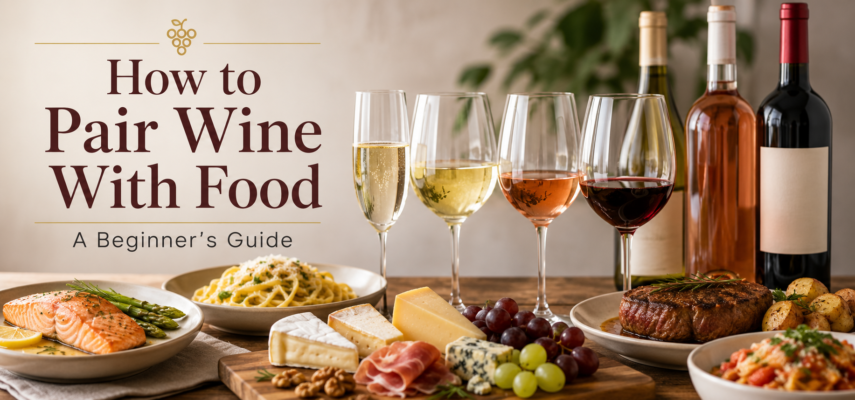
Wine pairing can sound intimidating, as if every bottle needs to be matched with a perfect dish by someone who has memorized every grape, region, and sauce in the world.
In reality, good wine pairing is much simpler.
The goal is not perfection. The goal is balance.
A good wine pairing makes the food taste better, makes the wine taste better, or at the very least keeps one from overpowering the other. Once you understand a few basic rules, you can make confident choices without overthinking every meal.
This guide explains how to pair wine with food in a practical, beginner-friendly way.
The Basic Idea Behind Wine Pairing
Food and wine both have structure.
Food can be rich, salty, spicy, sweet, fatty, acidic, earthy, smoky, or delicate. Wine can be light or full-bodied, dry or sweet, crisp or soft, fruity or earthy, tannic or smooth.
Pairing is about matching those traits so the wine and food feel balanced together.
A heavy steak usually needs a wine with enough body and structure to stand up to it. A delicate piece of fish usually works better with a lighter, brighter wine. Spicy food often pairs well with wines that are slightly sweet or low in alcohol. Creamy dishes often benefit from wines with acidity that cut through richness.
You do not need to know every pairing in advance. You just need to understand the basic logic.
Rule #1: Match the Weight of the Food and Wine
The first rule of wine pairing is to match intensity.
Light foods usually pair best with lighter wines. Rich, heavy foods usually need fuller-bodied wines.
For example, a crisp Pinot Grigio or Sauvignon Blanc works well with seafood, salads, and lighter chicken dishes because those wines are refreshing and not too heavy. A bold Cabernet Sauvignon works better with steak, lamb, burgers, or other rich dishes because it has the body and tannin to handle more intense flavors.
Think of it like volume. A quiet dish does not need a loud wine. A loud dish can overpower a quiet wine.
Light foods pair well with:
- Pinot Grigio
- Sauvignon Blanc
- Albariño
- Dry Riesling
- Unoaked Chardonnay
- Sparkling wine
Richer foods pair well with:
- Cabernet Sauvignon
- Syrah/Shiraz
- Malbec
- Zinfandel
- Merlot
- Oaked Chardonnay
This does not mean you can never break the rules. It simply gives you a reliable starting point.
Rule #2: Acidity Is Your Friend
Acidity is one of the most useful tools in wine pairing.
Wines with higher acidity taste fresh, crisp, and mouthwatering. They can make food feel lighter and more refreshing, especially when the dish is salty, fatty, fried, or creamy.
That is why Champagne works so well with fried foods. It is also why Sauvignon Blanc can pair beautifully with goat cheese, salads, seafood, and citrusy dishes. The acidity in the wine keeps the pairing bright instead of heavy.
Acidic wines are especially useful with:
- Fried chicken
- French fries
- Creamy pasta
- Goat cheese
- Seafood
- Tomato-based dishes
- Salads with vinaigrette
- Rich cheeses
A simple rule: if the food is rich, salty, or oily, a crisp wine can help refresh your palate between bites.
Rule #3: Tannins Love Fat
Tannins are the drying, grippy sensation you feel in your mouth when drinking some red wines. Cabernet Sauvignon, Nebbiolo, Syrah, and many Bordeaux-style blends are known for having noticeable tannins.
Tannins can taste harsh with delicate foods, but they are excellent with fatty proteins.
That is why Cabernet Sauvignon and steak are such a classic match. The fat in the meat softens the tannins, while the tannins help cut through the richness of the steak.
Tannic red wines pair well with:
- Steak
- Lamb
- Short ribs
- Burgers
- Prime rib
- Braised beef
- Hard cheeses
They are usually less successful with very light fish, spicy dishes, or bitter vegetables because the tannins can feel too aggressive.
Rule #4: Sweetness Helps With Spice
Spicy food can be tricky with wine.
High-alcohol wines can make heat feel even hotter. Big tannic red wines can also clash with spicy dishes, creating a bitter or burning sensation.
A better choice is often a wine with a little sweetness, lower alcohol, and bright acidity.
That is why Riesling is one of the best wines for spicy food. Off-dry Riesling, Gewürztraminer, Chenin Blanc, and lightly sweet sparkling wines can calm heat while still refreshing the palate.
Good wines for spicy food include:
- Off-dry Riesling
- Gewürztraminer
- Chenin Blanc
- Moscato
- Sparkling wine
- Light, fruity reds like Beaujolais or Pinot Noir
These wines work especially well with Thai, Indian, Chinese, Mexican, Korean, and spicy barbecue dishes.
Rule #5: Pair Wine With the Sauce, Not Just the Meat
Many beginners try to pair wine only with the main protein: chicken, beef, pork, fish, or vegetables.
That helps, but the sauce often matters more.
Chicken with lemon and herbs is very different from chicken in a creamy mushroom sauce. Pasta with tomato sauce needs a different wine than pasta with Alfredo sauce. Salmon with a spicy glaze is different from salmon with butter and dill.
When choosing wine, ask yourself: what is the strongest flavor on the plate?
If the dish has a tomato sauce, look for a wine with acidity, such as Chianti, Barbera, Sangiovese, or Pinot Noir. If the dish is creamy, choose a wine with enough acidity to cut through the richness, such as Chardonnay, Champagne, or Sauvignon Blanc. If the dish is smoky or grilled, a bolder red like Syrah, Malbec, or Zinfandel may work well.
The sauce often leads the pairing.
Rule #6: Regional Pairings Usually Work
One of the easiest wine pairing shortcuts is this:
Food and wine from the same region often go well together.
Italian red wines work beautifully with Italian food. Spanish wines work well with tapas, grilled meats, and seafood. French wines often match classic French dishes. Greek wines pair naturally with Mediterranean flavors like lemon, herbs, olive oil, seafood, and grilled meats.
This works because food and wine traditions often evolved together.
Examples:
- Chianti with pasta in tomato sauce
- Rioja with lamb or roasted meats
- Sancerre with goat cheese
- Albariño with seafood
- Champagne with oysters or fried foods
- Barolo with rich Italian meat dishes
- Assyrtiko with Greek seafood
- Provence rosé with Mediterranean salads and grilled vegetables
When in doubt, think local.
Easy Wine Pairing Examples
Here are some simple pairings that work well for beginners.
Steak
Best pairings:
- Cabernet Sauvignon
- Malbec
- Syrah
- Bordeaux-style blends
Steak is rich, fatty, and flavorful, so it can handle bold red wines. Cabernet Sauvignon is the classic choice because its tannins work well with the fat in the meat.
Chicken
Best pairings:
- Chardonnay
- Sauvignon Blanc
- Pinot Noir
- Chenin Blanc
Chicken is flexible. A simple roasted chicken works well with Chardonnay or Pinot Noir. Lemon-herb chicken works better with Sauvignon Blanc or dry Riesling. Creamy chicken dishes can handle richer Chardonnay.
Salmon
Best pairings:
- Pinot Noir
- Chardonnay
- Rosé
- Sparkling wine
Salmon is richer than many other fish, so it can pair with both white and light red wines. Pinot Noir is one of the best red wine options for salmon because it has enough flavor without being too heavy.
Seafood
Best pairings:
- Sauvignon Blanc
- Albariño
- Pinot Grigio
- Muscadet
- Champagne
Seafood usually works best with crisp, refreshing white wines. The goal is to keep the pairing light, clean, and bright.
Pasta With Tomato Sauce
Best pairings:
- Chianti
- Sangiovese
- Barbera
- Pinot Noir
Tomato sauce is acidic, so it needs a wine with acidity as well. Low-acid wines can taste flat or awkward next to tomato-based dishes.
Creamy Pasta
Best pairings:
- Chardonnay
- Champagne
- Chenin Blanc
- Pinot Gris
Creamy pasta needs a wine that can either match the richness or cut through it. Chardonnay works well if the dish is buttery, while sparkling wine adds freshness.
Pizza
Best pairings:
- Chianti
- Barbera
- Zinfandel
- Lambrusco
- Pinot Noir
Pizza usually has tomato sauce, cheese, salt, and sometimes fatty toppings. Medium-bodied reds with acidity are usually a safe bet.
Burgers
Best pairings:
- Cabernet Sauvignon
- Merlot
- Zinfandel
- Malbec
Burgers are rich, salty, and fatty, which makes them a good match for bold reds. If the burger has barbecue sauce, Zinfandel or Syrah can be especially good.
Spicy Food
Best pairings:
- Off-dry Riesling
- Gewürztraminer
- Chenin Blanc
- Moscato
- Sparkling wine
Spice needs refreshment, not more heat. Wines with a little sweetness and lower alcohol are often the best choices.
Cheese
Best pairings:
- Goat cheese with Sauvignon Blanc
- Brie with Champagne or Chardonnay
- Cheddar with Cabernet Sauvignon or Merlot
- Blue cheese with Port or Sauternes
- Parmesan with Chianti or Barolo
Cheese pairing depends heavily on the cheese style. Fresh, tangy cheeses need crisp wines. Rich cheeses work well with bubbles or fuller whites. Strong salty cheeses often pair beautifully with sweet wines.
Dessert
Best pairings:
- Port with chocolate
- Sauternes with fruit tarts or blue cheese
- Moscato with light desserts
- Late-harvest Riesling with fruit-based desserts
The key rule with dessert is that the wine should usually be sweeter than the dessert. If the dessert is sweeter than the wine, the wine may taste sour or thin.
Red Wine Pairing Basics
Red wines usually work best with dishes that have more body, fat, protein, or earthy flavors.
Light reds like Pinot Noir, Gamay, and Grenache are good with chicken, salmon, pork, mushrooms, and roasted vegetables. Medium-bodied reds like Merlot, Sangiovese, and Tempranillo work well with pasta, pizza, pork, and roasted meats. Full-bodied reds like Cabernet Sauvignon, Malbec, Syrah, and Zinfandel are best with steak, lamb, burgers, barbecue, and hearty stews.
A useful beginner rule:
The bolder the red wine, the richer the food should be.
White Wine Pairing Basics
White wines usually work best with lighter foods, seafood, chicken, salads, creamy dishes, and foods with citrus or herbs.
Crisp whites like Sauvignon Blanc, Pinot Grigio, Albariño, and dry Riesling pair well with seafood, salads, goat cheese, and lighter dishes. Richer whites like Chardonnay, Viognier, and white Rhône blends work better with roasted chicken, creamy sauces, lobster, and buttery dishes.
A useful beginner rule:
The richer the white wine, the richer the dish it can handle.
Rosé Pairing Basics
Rosé is one of the most flexible food wines.
It has the freshness of white wine with some of the fruit and structure of red wine. That makes it useful with foods that are hard to pair, including grilled chicken, seafood, salads, charcuterie, Mediterranean dishes, and casual outdoor meals.
Dry rosé is especially good with:
- Grilled shrimp
- Chicken skewers
- Summer salads
- Charcuterie
- Salmon
- Tapas
- Mediterranean vegetables
- Light pasta dishes
Rosé is a great choice when the meal includes a little bit of everything.
Sparkling Wine Pairing Basics
Sparkling wine is one of the most underrated food-pairing options.
The bubbles, acidity, and freshness make it extremely versatile. Sparkling wine works with oysters and caviar, but it also works with fried chicken, potato chips, fries, sushi, cheese, and salty snacks.
Good sparkling wine pairings include:
- Champagne with oysters
- Prosecco with light appetizers
- Cava with tapas
- Sparkling rosé with charcuterie
- Crémant with fried foods
- Lambrusco with pizza or cured meats
When you are unsure what to serve, sparkling wine is often one of the safest choices.
Common Wine Pairing Mistakes
The biggest mistake is assuming red wine always goes with meat and white wine always goes with fish. That rule is too simple. Salmon can pair beautifully with Pinot Noir. Pork can work with Riesling. Fried chicken can be excellent with Champagne.
Another mistake is ignoring sweetness. Spicy food often needs a wine with a little sweetness. Dessert needs a wine that is sweeter than the dish.
A third mistake is pairing very tannic red wines with delicate foods. A powerful Cabernet can overwhelm light fish, salads, and subtle vegetable dishes.
Finally, many people overthink pairing. Wine pairing should help the meal, not make dinner stressful.
A Simple Wine Pairing Cheat Sheet
Use this as a quick reference:
- Steak: Cabernet Sauvignon, Malbec, Syrah
- Burgers: Zinfandel, Merlot, Cabernet Sauvignon
- Roast chicken: Chardonnay, Pinot Noir
- Lemon chicken: Sauvignon Blanc, dry Riesling
- Salmon: Pinot Noir, Chardonnay, rosé
- White fish: Albariño, Pinot Grigio, Sauvignon Blanc
- Shellfish: Champagne, Muscadet, Albariño
- Tomato pasta: Chianti, Barbera, Sangiovese
- Creamy pasta: Chardonnay, Champagne, Chenin Blanc
- Pizza: Chianti, Barbera, Lambrusco
- Spicy Thai or Indian food: off-dry Riesling, Gewürztraminer
- Tacos: Sauvignon Blanc, rosé, light reds
- Barbecue: Zinfandel, Syrah, Malbec
- Goat cheese: Sauvignon Blanc
- Brie: Champagne, Chardonnay
- Blue cheese: Port, Sauternes
- Chocolate dessert: Port, Banyuls, late-harvest red wines
The Best Beginner Strategy
If you are new to wine pairing, start with these five principles:
Match light wines with light foods. Match bold wines with bold foods. Use acidity for rich or salty dishes. Use sweetness for spicy dishes. Pair wine with the sauce, not just the protein.
That alone will get you through most meals.
You do not need to memorize hundreds of pairings. You just need to understand why certain combinations work. Once you do, wine pairing becomes much less intimidating and much more enjoyable.
The best wine pairing is not always the most expensive or the most traditional. It is the one that makes the meal better.
And sometimes, that simply means opening a bottle you enjoy and sharing it with good food.