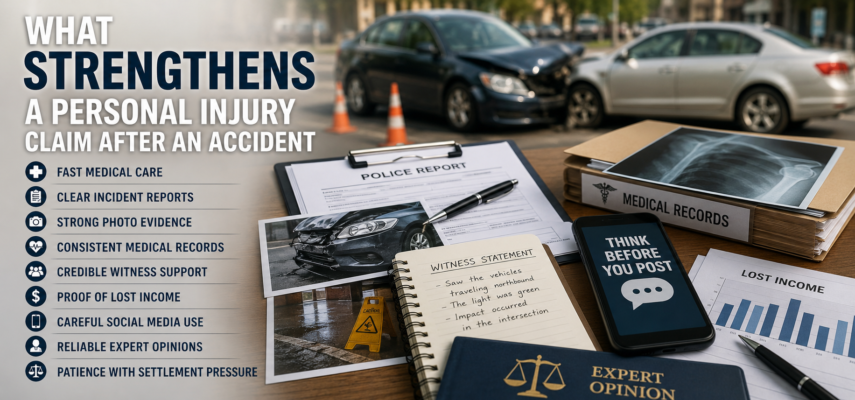
A personal injury claim gains force when each detail is documented early and explained with care. In the Bronx, where traffic collisions, construction accidents, and premises injuries are common, building a strong claim from the start is especially important. Insurers often test chronology, symptom reports, and daily limitations for inconsistency.
Medical charts, photographs, work records, and witness accounts help show how trauma affected the body and routine functioning. Consulting a Bronx personal injury lawyer early in the process can help preserve that proof. Clear evidence matters because pain can be subjective, while treatment notes, imaging, and prompt reporting give reviewers something concrete, dated, and easier to trust after an accident.
Fast Medical Care
Early treatment does more than relieve pain. It creates a medical timeline linking symptoms, physical findings, and clinical judgment to the accident itself. Soon after emergency evaluation, legal guidance can help preserve records, witness names, and insurer communications while physicians continue assessing inflammation, soft tissue damage, nerve irritation, or other trauma-related changes.
Clear Incident Reports
An official report often becomes the first fixed version of events. Police records, workplace forms, and business incident logs can capture weather, floor conditions, traffic control, or visible hazards. That early snapshot helps limit later disputes about location or timing. Errors do occur, yet a written report still provides a useful baseline. Later corrections carry more weight when supported by photos, statements, or objective records.
Strong Photo Evidence
Photographs can show facts that memory may soften over time. Images of vehicle crush zones, pooled liquid, damaged stairs, bruising, swelling, or torn fabric help place the injury in a visible setting. Wide shots explain the scene, while close frames capture texture and severity. Time-stamped pictures taken over several days can also show how discoloration, restricted motion, or surface wounds changed during early recovery.
Consistent Medical Records
Treatment notes should reflect the same pattern of symptoms reported outside the clinic. Gaps in care can raise questions, especially where pain, dizziness, numbness, or reduced grip strength reportedly continued. According to the Centers for Disease Control and Prevention, motor vehicle crashes remain a leading cause of preventable injuries in the United States. Reliable charts describe frequency, severity, sleep disruption, movement limits, and medication response. Precision matters here. A measured description of symptoms usually carries more value than broad language that sounds inflated or unsupported by examination findings.
Credible Witness Support
Neutral witnesses can steady a claim when fault is disputed. A bystander may recall speed, lighting, floor moisture, distracted conduct, or the injured person’s condition immediately afterward. Those observations often carry added value because they come from someone without a personal stake. Early outreach is important. Memory shifts quickly, and short written summaries taken soon after the event tend to preserve better detail.
Proof of Lost Income
Financial loss usually reaches beyond emergency bills. Payroll records, tax filings, attendance sheets, and employer letters can show missed shifts, reduced duties, or a drop in hours. Self-employed workers may need invoices, deposits, appointment calendars, and client cancellations to show interrupted earnings. That paper trail also helps connect physical restrictions, such as lifting limits or prolonged standing intolerance, to measurable changes in earning capacity.
Careful Social Media Use
Online activity can damage an otherwise sound case. A single post showing travel, exercise, or a social outing may be framed as proof that pain complaints were overstated. Context is often stripped away. A smiling photograph does not rule out cervical strain, radicular pain, or post-traumatic headaches. Still, silence on public platforms is usually the safer course while treatment continues and liability remains contested.
Reliable Expert Opinions
Some cases need specialist input to explain what routine records cannot fully show. Treating physicians may address prognosis, future procedures, or permanent restriction. Accident reconstruction experts can assess force, visibility, and movement patterns before impact. Vocational analysts may evaluate work loss after lasting impairment. Strong expert opinions depend on examination findings, imaging, measurements, and accepted clinical or technical methods, rather than dramatic wording.
Patience With Settlement Pressure
Quick settlement pressure can undercut a claim before the medical picture is complete. Adjusters may seek recorded statements or early releases while pain patterns are still emerging. Soft tissue injuries, concussion symptoms, and nerve irritation do not always declare their full course immediately. Waiting allows time for follow-up visits, diagnostic testing, and work assessments. A firm like Frekhtman & Associates can help manage the claim while the recovery path becomes clearer.
Conclusion
A stronger personal injury claim usually rests on timing, consistency, and proof that speaks plainly. Prompt care, accurate reporting, photographs, witness support, income records, and cautious communication each add a different layer of credibility. Expert review can help where future impairment or technical questions remain unsettled. When those parts align, the claim presents a clearer picture of physical harm, functional loss, and the real effect of an accident.