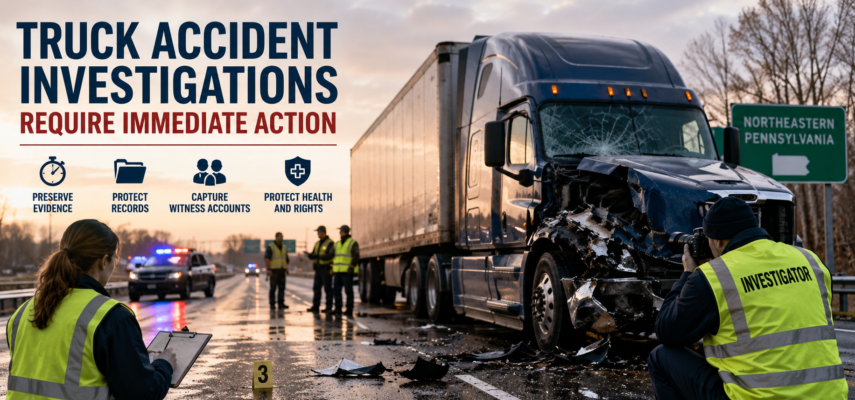
A serious truck crash starts a race against loss. Tire marks fade, damaged parts get moved, and onboard data can disappear through ordinary system use. Witnesses also begin to forget distance, speed, and sequence sooner than most people expect. Trucking companies usually respond right away, with insurers, adjusters, and internal staff. Early investigative work helps preserve facts before time, weather, storage changes, or routine record handling weaken the case.
First Hours
In those opening hours, a Scranton Truck Accident Lawyer often works to preserve proof before routine business activity alters it. That can include notice to keep driver logs, cab footage, dispatch messages, maintenance files, and trailer records. Quick action matters because towing, repairs, yard transfers, and automatic deletion settings can erase details that later explain how the collision happened.
Lost Evidence
Truck claims rely on far more than roadside photographs. Brake service notes, cargo documents, inspection sheets, route records, hiring materials, and phone use can all shape fault analysis. Delay gives key material more chances to be overwritten, misplaced, or discarded. Once those items are gone, rebuilding a reliable timeline takes more effort and often leaves gaps no witness can fill.
Scene Conditions
Roadway proof is fragile from the start. Skid marks shorten, gouges get covered, broken pieces are cleared, and fluid stains dry or spread. Rain can wash away surface clues before sunrise. Heavy traffic also changes sightlines and lane patterns. A prompt site review can document lighting, grade, signage, debris fields, and impact position while those conditions still reflect the actual event.
Driver Records
A driver’s background may reveal facts that matter. Prior collisions, logbook problems, rest violations, licensing issues, training limits, and medical restrictions can show unsafe operation or weak supervision. Those records are easier to track early, while employers still hold current files and contacts remain easy to reach. Waiting can create missing pieces that leave room for dispute where clarity once existed.
Company Response
Many trucking businesses treat a major wreck as a legal emergency. They may send investigators, insurance representatives, or defense counsel to gather photographs, inspect equipment, and speak with drivers quickly. Their effort starts early for a reason; it helps shape the factual record. Injured people need the same urgency so one side does not define the event before independent review begins.
Vehicle Data
Commercial trucks produce valuable digital information during normal operation. Speed, braking force, throttle use, steering input, engine activity, and service alerts may all be stored in separate systems. That data can support, or contradict, spoken accounts. Retention periods are often limited, which makes early preservation requests essential. Without them, a critical electronic record may be gone before formal claims even begin.
Witness Memory
Human memory changes fast after a violent crash. A person may recall the sound of impact yet lose precision about lane position, signal use, following distance, or weather conditions. Later conversations can also influence what someone believes was seen. Early interviews help capture observations while they remain fresh, concrete, and less shaped by outside opinions, media reports, or repeated retelling.
Medical Link
Prompt medical evaluation protects both health and proof. Immediate records connect pain, visible injury, neurological symptoms, and treatment plans to the collision without a long gap. That timing matters when defense teams argue that soreness came from a later strain or an older condition. Early examinations also identify internal bleeding, spinal damage, or head trauma that may worsen before symptoms fully appear.
Wider Liability
Responsibility in a truck case may extend beyond the person behind the wheel. A carrier, maintenance contractor, cargo loader, broker, leasing company, or equipment owner can share blame under the right facts. Early investigation by lawyers at Scartelli Olszewski helps identify each role before contracts are harder to locate and records scatter across different entities in truck accident cases across Northeastern Pennsylvania. A narrow start may miss parties whose decisions helped cause the crash.
Public Records
Official material can strengthen reconstruction when gathered quickly. Police reports, dispatch recordings, inspection histories, roadway camera footage, and prior enforcement findings may all add useful detail. Some sources stay available for only short periods under routine retention practices. Fast follow-up helps secure them before they are purged. Public records can confirm timing, weather, road conditions, and earlier safety concerns.
Conclusion
Immediate action in a truck collision case protects facts before they fade or disappear. Strong investigations depend on quick scene work, rapid record preservation, early witness contact, and prompt medical documentation. Each lost day can weaken the connection between conduct, injury, and responsibility. Acting without delay gives injured people a fair chance to prove what happened, identify every liable party, and seek full financial recovery.