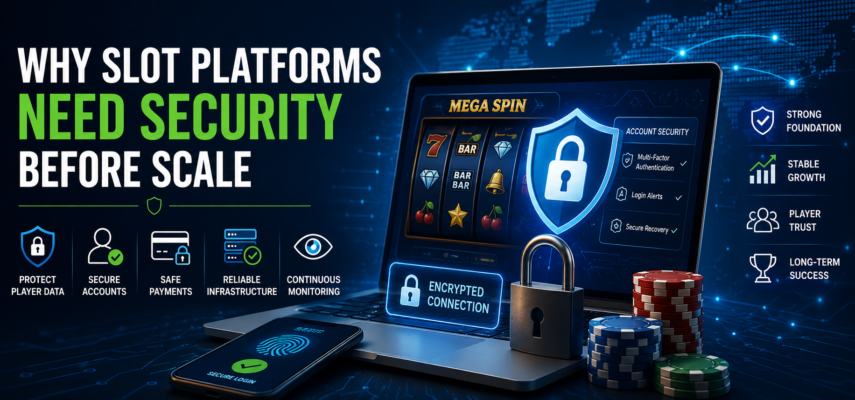

Growth is an exciting goal for any online slot platform. More games, more payment options, and a larger player base can make a platform more competitive. However, rapid expansion also increases the amount of personal data, financial activity, and system traffic that must be protected.
This is why security needs to come before scale. A platform that grows without a strong security foundation may struggle to manage fraud, account misuse, payment risks, and technical disruption. Building protection early allows growth to happen in a more stable and controlled way.
Player Data Must Be Protected From the Beginning
Slot platforms may collect information such as names, contact details, login records, identity documents, and payment data. As the number of registered users increases, the volume of sensitive information also grows.
Platforms should protect this data through encryption, secure storage, controlled employee access, and regular system reviews. Information should only be collected when it serves a clear operational or legal purpose.
Good data management also includes retention rules. Keeping unnecessary information for too long creates additional responsibility. Clear policies help platforms understand what data they hold, where it is stored, and who can access it.
Strong Account Security Reduces Misuse
Player accounts can become targets for credential theft, automated login attempts, and unauthorised access. Basic password protection may not be enough when a platform serves a large audience.
Multi-factor authentication adds another layer of verification by requiring a code, approved device, or biometric check. Systems can also detect unusual login behaviour, such as repeated failed attempts or sudden access from unfamiliar locations.
A platform associated with gaming searches such as vegas338 still needs clear account controls, secure recovery options, and visible login alerts. These features help players respond quickly when something appears unusual.
Account recovery must receive the same attention as account login. Weak recovery procedures can allow someone to bypass otherwise strong protection.
Payment Systems Require Extra Attention
Deposits and withdrawals are central to real-money gaming platforms. Payment security should therefore be treated as a core system rather than a feature added after growth.
Platforms should work with reputable payment processors, separate sensitive payment data from general user records, and monitor transactions for unusual patterns. Withdrawal requests may require additional checks when account details change or activity differs significantly from the user’s normal behaviour.
Clear transaction histories are also valuable. Players should be able to review deposits, withdrawals, and account adjustments without searching through complicated menus.
Security checks must remain efficient. A well-designed process protects funds while explaining verification requirements in simple language.
Scaling Increases Technical Pressure
A growing platform must handle more users, larger databases, and heavier traffic. This can place pressure on servers and expose weaknesses that were less visible at a smaller scale.
Capacity testing helps teams understand how systems behave during busy periods. Load balancing, secure cloud configuration, and protection against distributed denial-of-service attacks can reduce the risk of disruption.
Backups are equally important. Critical data should be copied regularly and stored securely in a separate environment. Recovery procedures should also be tested instead of being left as written plans.
A backup is only useful when the platform can restore it correctly and quickly.
Third-Party Providers Expand the Security Boundary
Slot platforms often depend on game studios, payment services, identity-verification tools, analytics systems, and customer-support software. Every integration creates another connection that must be managed carefully.
Before adding a provider, platforms should review its security practices, access requirements, and incident-response procedures. Third parties should receive only the permissions needed to perform their role.
Connections must also be reviewed over time. A service that was suitable during launch may require new controls as the platform expands into additional markets or processes more transactions.
Monitoring Helps Platforms Respond Early
Security is not a one-time setup. Platforms need continuous monitoring to identify unusual account activity, technical errors, suspicious payments, and unexpected changes in system behaviour.
Automated alerts can help teams notice potential issues quickly. However, alerts need clear response procedures. Staff should know who investigates an incident, how affected systems are isolated, and when players or regulatory authorities must be informed.
Regular testing can also reveal weaknesses before they become serious. Security reviews, controlled penetration testing, software updates, and employee training all contribute to stronger protection.
Secure Growth Creates Long-Term Confidence
Slot platforms need security before scale because every new player, feature, and payment method increases operational responsibility. Protection becomes harder to add once a platform has already grown around weak processes.
A secure foundation supports stable expansion. Strong account controls, protected data, monitored payments, reliable infrastructure, and carefully managed third-party access allow platforms to grow with greater confidence.
Scale can bring opportunity, but security ensures that growth remains dependable, manageable, and worthy of player trust.