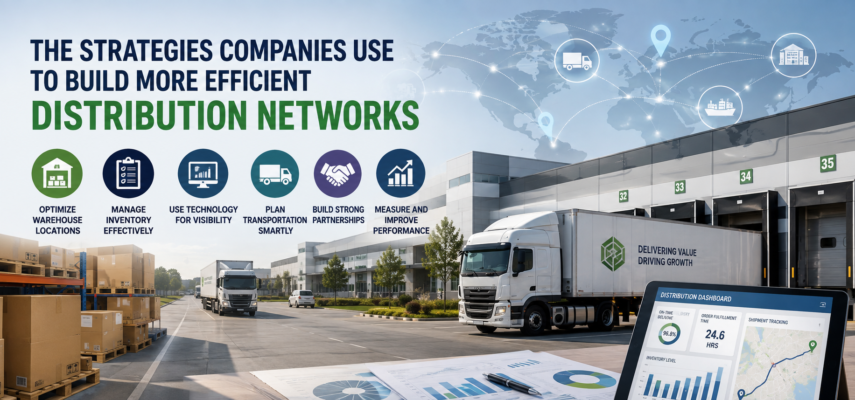
Efficient networks are beneficial because they help organizations transport items at a high speed, manage expenses and satisfy the requirements of customers. Complexity in transportation, inventory and warehouse tasks increases as a business grows. Organizations that prioritize the improvement of distribution methods often experience more consistent operations plus fewer delays.
Careful planning and the use of modern technology are necessary to build a functional network. Businesses examine the structure of their supply chains to find ways to use resources more effectively. They create processes that ensure products move reliably from the original suppliers to the final customers.
Selecting Warehouse Locations
Organizations often choose warehouse sites that increase the speed of delivery and lower the costs of shipping. Managers study where customers live but also analyze buying patterns to decide where to place facilities. A network of warehouses in proximity to the target market is useful because it shortens transport routes.
Regional demand is another factor businesses consider during expansion. Some companies establish multiple distribution points rather than using one central hub to make products easier to access – this method is effective for managing high shipping volumes and responding to orders.
Managing Inventory
Precise inventory records are essential for an efficient network. Organizations use tracking software to observe stock levels, which prevents both shortages and the storage of unneeded items. Maintaining a specific amount of stock allows a business to complete orders without paying for extra warehouse space.
Modern strategies are often based on forecasting as well as automated tools – these systems are helpful because they predict how many products customers will buy in the future. Businesses that collaborate with logistics providers, like those offering 3PL Canada, are able to coordinate inventory through specialized support.
Using Technology for Visibility
Technology is a tool that provides organizations with clear information about their supply chains. Digital platforms are used to track where shipments are located and to study how the operation is performing – this data is helpful for managers who must identify delays and make quick decisions.
Software for transportation or warehouse management is common for coordinating different tasks – these tools are used to organize delivery schedules and lower the number of manual duties. Companies working with a 3PL provider often use these platforms to communicate and understand their logistics activities more clearly.
Planning Transportation
Strong distribution networks are built through detailed transportation planning. Businesses review shipping routes next to the performance of carriers to make their processes more effective. Good planning is useful for lowering fuel costs and ensuring that deliveries arrive when expected.
Shipment consolidation is another method used to fill vehicles to their full capacity. Combining multiple orders into one shipment is a way to lower costs and the number of vehicles on the road. Better planning results in a network that supports fast delivery plus maintains steady operations.
Developing Relationships with Partners
Reliable distribution depends on strong connections with suppliers and logistics partners. Businesses talk to their partners frequently to coordinate work and set expectations for service – these professional relationships are important for creating a supply chain that experiences few interruptions.
External logistics providers are often hired to provide extra expertise. A 3PL partner is capable of managing tasks like warehousing but also order fulfillment – this arrangement is beneficial for businesses that want to improve their capabilities without managing every task themselves.
Measuring Performance
Organizations improve their networks – checking performance data regularly. Metrics like the accuracy of deliveries and the time it takes to process an order provide facts about if the operation is successful. Reviewing this data is how businesses make informed changes to their processes.
Regular evaluation is also necessary to adapt to new market conditions. Customer needs and shipping challenges are subject to change. Businesses that monitor their performance are prepared to keep their distribution operations efficient.
Conclusion
Strategic planning as well as strong management are the foundations of an efficient distribution network. Organizations are more successful when they optimize warehouse locations, track inventory accurately and work with professional partners. A distribution network that is designed well helps a company lower its costs and support its future growth. As supply chains become more complex, the businesses that invest in these improvements are better able to deliver products reliably.