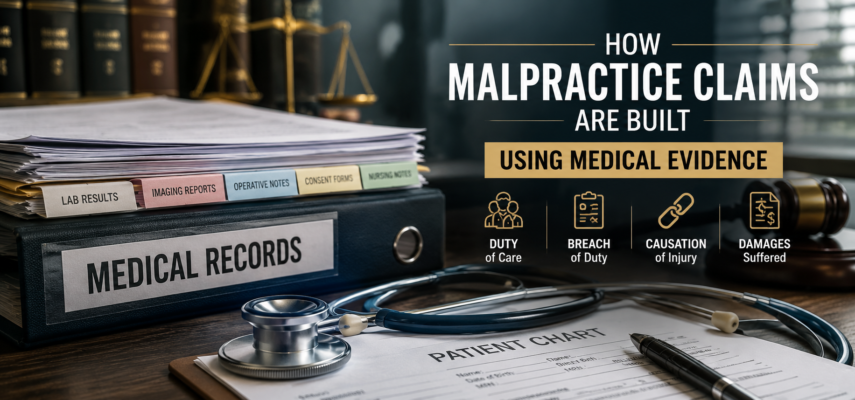
Medical malpractice claims depend on proof that can withstand clinical and legal review. An unexpected death, infection, or disability may raise concern, yet the outcome alone rarely proves fault. Records, test results, and treatment timelines help show whether care fell below accepted practice. That evidence also helps distinguish disease progression from preventable injury, providing families, insurers, judges, and our court system with a sound basis for deciding whether a claim should move forward.
Records First
Most cases begin with the chart because memory shifts while records preserve timing. Before filing, families often ask a medical malpractice lawyer in Indiana to study operative notes, nursing entries, lab values, imaging reports, consent forms, and discharge instructions for signs of delay, omission, or inconsistent care. That early review helps identify whether the file supports breach, causation, and measurable loss.
The Four Legal Points
A viable claim usually turns on four elements. First, a clinician owed a duty of care to the patient. Next, that duty was breached through an act or omission. Causation must then connect the lapse to physical harm. Damages complete the picture, with proof of additional treatment, lost earnings, long-term impairment, or wrongful death.
Standard Of Care
Standard of care refers to what a reasonably careful clinician would have done under similar circumstances. That measure depends on symptoms, available history, test data, and the urgency of the moment. Guideline statements may help, yet they do not decide every dispute. Reviewers usually study chart details closely because context matters more than hindsight after a crisis has already unfolded.
Finding The Breach
A breach may appear as a delayed diagnosis, medication overdose, surgical injury, poor fetal monitoring, or failure to address worsening symptoms. Sometimes the clue is simple, such as an ignored lab result. Other files reveal conflicting times, missing reassessments, or unsigned verbal orders. Those details matter because liability often rests on small clinical choices made in minutes that change a patient’s course.
Proving Causation
Causation is often the hardest issue in any malpractice case. Many patients already face infection, bleeding, heart strain, or advancing cancer before the disputed event occurs. A claimant must show that the error meaningfully changed the medical course. Strong proof may include oxygen decline after an airway mistake, bowel injury after surgery, or stroke following a missed clot warning.
Experts Connect The Dots
Expert witnesses translate technical medicine into plain, credible language for people outside a hospital setting. Their role is to compare actual care with accepted practice and explain how the lapse produced injury. Sound opinions rely on charts, images, pathology, bedside notes, and sworn testimony. Juries usually respond best when an expert teaches clearly, without stretching beyond what the record can support.
Damages Need Proof
Even clear negligence requires proof of actual harm. Damages may include additional hospital bills, rehabilitation, prescription costs, lost pay, future attendant care, pain, or loss of normal function. In severe cases, economists and life care planners may estimate long-term needs. Without solid documentation, a case may show poor treatment yet still recover modest compensation, because loss must be measured, not assumed.
Timing Matters
Medical evidence is strongest when collected early. Delays can result in missing monitor strips, unavailable scans, or incomplete medication logs. Witness memory also fades quickly after an emergency admission or rushed operation. Prompt preservation helps experts reconstruct the sequence with greater confidence. It may also reveal whether electronic entries were added later, which can affect how a jury views the file’s credibility.
Gaps Raise Questions
Missing pages do not automatically prove misconduct, yet they can alter the shape of a claim. An absent nursing note may hide a blood pressure crash, while an incomplete consent form may weaken the defense position. Reviewers often compare records from each facility involved in the episode. That broader look can show whether a problem began in one unit and continued during transfer or follow-up.
Defense Evidence Counts Too
Hospitals and insurers build their own cases with the same medical materials. Defense experts may argue that the provider acted reasonably, that the complication was known, or that the injury would have occurred despite earlier treatment. Alternative causes often receive close attention. For that reason, successful claims rely on organized evidence that addresses competing explanations directly, rather than resting on anger, grief, or suspicion alone.
Conclusion
Medical malpractice claims are built much like careful clinical reviews, step by step, with records, timing, expert judgment, and proof of injury. Strong evidence must show duty, breach, causation, and damages in terms that withstand scrutiny from both medicine and law. When that foundation is clear, families can pursue accountability with firmer footing. When the record is thin, even grave suffering may fall outside the reach of legal remedy.