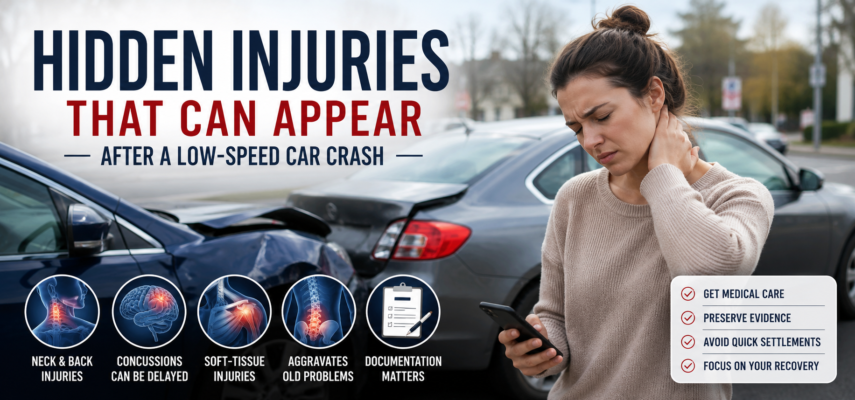
A low-speed crash can look harmless from the outside. The bumper may only have a small dent, the airbags may not deploy, and everyone may walk away from the scene. Because the damage looks minor, injured people often feel pressure to act as if nothing serious happened. That can be a mistake.
The body does not always respond to a crash based on how the vehicle looks. A sudden jolt can strain the neck, back, shoulders, knees, wrists, or head, even when the cars are not moving fast.
Some symptoms appear hours or days later, which can make the injury harder to connect to the collision if you delay medical care. Therefore, before asking, “Can you sue someone for a minor car accident?” it helps to separate vehicle damage from human damage. A case is not based only on whether the crash looked serious; it depends on fault, injury, medical proof, insurance coverage, and how the collision affected your life.
Why Such Crashes Can Still Cause Pain
Low-speed crashes often involve sudden force because your body moves forward, backward, or sideways faster than you can brace. Even if the vehicle takes on some or most of the impact, your muscles, ligaments, nerves, and joints still can bear the brunt.
NHTSA’s crash injury research explains that crash investigations often include vehicle details, crash circumstances, medical records, and injury documentation. That is a good reminder that injury analysis is broader than looking at the bumper alone.
Neck and Back Injuries May Take Time
Whiplash is one of the most common concerns after a rear-end or sudden-impact crash. MedlinePlus explains that whiplash pain may not appear right away and can sometimes take hours to weeks to develop.
Symptoms to Watch Out For
You may notice neck stiffness, headaches, shoulder pain, dizziness, jaw pain, arm pain, back pain, or reduced movement. These symptoms should not be ignored simply because the crash was slow.
Back injuries can also develop gradually. Disc irritation, muscle strain, or nerve pain may become more obvious when you return to work, lift something, drive, or sleep.
Concussion Symptoms Can Be Delayed
A concussion can happen when the head is hit or when the body is shaken hard enough to affect the brain. You do not always need a visible head wound to have symptoms.
MedlinePlus notes that concussion symptoms may not start right away and may appear days or weeks after the injury. Headache, nausea, dizziness, ringing in the ears, confusion, tiredness, light sensitivity, or memory problems should be taken seriously.
Soft-Tissue Injuries Can Be Hard to Prove
Soft-tissue injuries involve muscles, ligaments, and tendons. They may not always show clearly on basic imaging, but they can still cause real pain and limitation.
Insurance companies may question these injuries because they are less visible than broken bones. That makes consistent medical care and clear symptom reporting very important.
Small Crashes Can Aggravate Old Problems
If you already have back pain, neck pain, arthritis, a prior surgery, or an old injury, a low-speed crash may make it worse. The insurance company may argue that your pain was pre-existing.
That does not automatically defeat a claim. The issue is whether the crash worsened your condition or caused new symptoms. Medical records before and after the crash can help answer that question.
Documentation Matters More in Low-Speed Cases
Evidence is the most important thing when you have been in a crash, be it minor or major. Take photos of the vehicles, road, weather, traffic signals, property damage, and any visible injuries. Save the police report, repair estimate, medical records, and names of witnesses.
You should also write down when symptoms started, how they changed, what treatment you received, and how the injury affected work or daily tasks. These notes can help later when details become harder to remember.
Do Not Accept a Quick Settlement Too Early
An insurer may offer a small settlement because the vehicle damage looks minor. That offer may arrive before you know whether you need therapy, imaging, injections, specialist care, or time away from work.
Once you sign a release, the claim is usually over. If symptoms get worse later, you may not be able to ask for more money.
The Legal Question Depends on Proof
A low-speed crash does not automatically mean you have a strong claim. It also does not automatically mean you have no claim. The answer depends on whether another person was at fault, whether you were injured, whether treatment supports the injury, and whether damages can be proven.
If pain appears after a minor crash, do not dismiss it. Get medical care, preserve evidence, avoid quick settlement decisions, and focus on records that show how the crash affected your body and your life.