










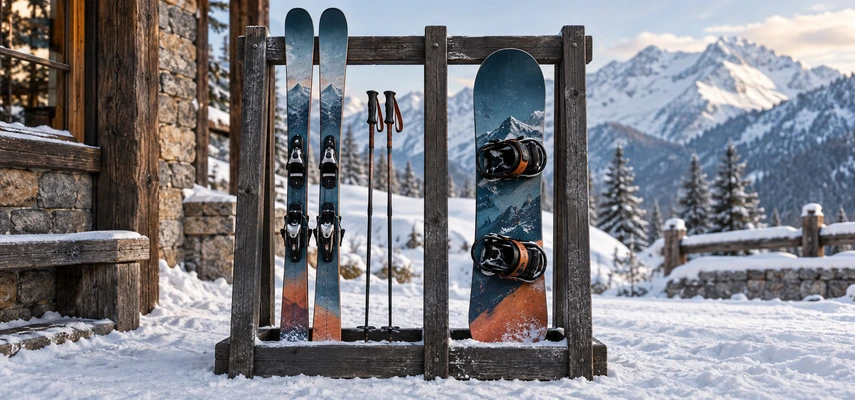

The rental counter presents a surprisingly consequential question: one board or two skis? Both will slide downhill. Both can turn a snowy morning into something worth getting out of bed for. Yet they ask your body to solve the mountain in different ways.
The difference isn’t that skiers are sensible and snowboarders enjoy sitting in the snow. Nor is it a contest between an old sport and a younger, cooler relative. The useful comparison is practical: how your feet move, how you steer, what learning feels like and what happens when the slope inconveniently stops sloping.
If you’re choosing a first lesson, concentrate on the experience you’d like to explore. You aren’t signing a lifelong exclusivity agreement. Plenty of people enjoy both, and neither piece of equipment comes with a personality test.
Two independent platforms or one shared platform
In ordinary downhill skiing, each boot connects to a separate ski. You face generally in the direction of travel, and your legs can move independently. A skier can step, shuffle or widen the skis while learning to balance. That freedom is useful, although coordinating two skis eventually becomes a sophisticated skill of its own.
On a snowboard, both boots attach to the same board, with one foot leading and your body oriented sideways. Movement from either leg affects the shared platform. You can bend and twist the board through coordinated foot and body movements, but you can’t step one attached foot away to catch yourself.
Imagine carrying a tray with two hands. Each hand can apply a different pressure, yet both influence the same tray. That’s closer to the snowboard relationship than treating your legs as passengers. The analogy stops at the snow: a snowboard also flexes and interacts with a surface that yields beneath it.
Regular snowboard stance means left foot forward; goofy means right foot forward. Skiers don’t make that same lead-foot choice for ordinary forward skiing. A snowboarder’s preferred direction becomes part of the setup, while riding the opposite way is called switch. Neither regular nor goofy is a superior option.
Steering feels different, but both sports depend on edges
Skis and snowboards have edges that engage with snow. Tilting the equipment changes how those edges meet the surface. Body position, pressure, equipment shape and snow conditions all influence the resulting turn. Neither sport is steered simply by leaning in the direction you’d like to go and hoping the hardware understands.
Beginning skiers often learn to control speed with a wedge, bringing the ski tips closer than the tails while keeping the skis apart. Developing skiers progress toward other turn shapes and relationships between the skis. REI’s introduction to skiing illustrates a beginner progression rather than treating the wedge as the finished sport.
Snowboarders learn the relationship between the heel-side and toe-side edges, controlled sliding and changes of direction. Because there’s one board, changing edges changes the support beneath both feet together. That transition can feel unfamiliar until the movements become coordinated.
In either sport, turns help manage the path down the hill. A rounded route spends more of its time traveling across the slope than a straight downhill line does. Skidding also dissipates energy as equipment slides sideways through snow. Carving follows a cleaner edge-led track. Both skiers and snowboarders use different blends according to the situation.
This is why watching an expert isn’t a reliable preview of your first lesson. The polished version conceals hundreds of small adjustments. You see an elegant curve; the rider or skier is managing a moving relationship between body, equipment and snow.
Which is easier to learn?
The familiar claim says skiing is easier to start and snowboarding is easier to master. It’s tidy enough for a T-shirt and much too tidy for an individual learner. Starting and mastering aren’t single measurable events, and neither sport has an obvious finishing line.
Some beginners find skiing’s forward-facing position and independent feet reassuring. Some find a snowboard’s shared platform more intuitive, especially if a sideways stance is already familiar. Previous experience can help without transferring perfectly: pavement isn’t snow, and skateboard wheels don’t prepare you for every edge interaction.
Snowboarders may find the first sessions awkward because both feet are constrained while the board slides. Skiers may find that managing two skis introduces its own confusion. Instruction, terrain, weather, equipment fit, confidence and fatigue can matter more than the slogan printed on the learning curve.
The PSIA-AASI learning resources introduce both sports through qualified instruction. A professional can adjust the task when you’re struggling instead of asking you to repeat the same unsuccessful movement with more determination.
Give yourself a useful first-day target: understand the equipment, move on suitable terrain and learn controlled stopping. Reaching the top of a large lift proves only that you got onto a lift. It doesn’t settle which sport suits you, and it doesn’t guarantee that the descent will be appropriate.
The small logistics that shape a day
A snowboard has advantages when carrying equipment: one board is a single substantial object rather than a pair of skis plus poles. But a single object can still knock someone if you swing it carelessly in a queue. Learn the resort’s carrying and storage practices whichever equipment you choose.
Flat ground changes the comparison. Skiers can often shuffle or use poles to help move along. Snowboarders commonly release the rear foot and push with it. REI’s snowboard progression includes one-foot movement because getting around is part of riding, not a minor administrative detail.
Chairlifts introduce another distinction. Skiers usually remain attached to both skis. Snowboarders ordinarily approach and unload with the front foot attached and the back foot free, following instruction and local procedures. Surface lifts, conveyors and accessibility arrangements can differ. Ask staff what the specific lift requires before joining its queue.
Some snowboard binding systems allow riders to secure a boot while standing; others use straps. That doesn’t remove the need to learn safe, effective equipment handling. Binding choice also depends on compatible boots and the particular system. Don’t choose a sport based on a promise that you’ll never have to pause at the top.
Boots feel different too. Typical recreational snowboard boots have a different construction and flex from alpine ski boots, but fit matters more than the generalization that one category is comfortable. Pain, poor heel hold or inadequate support aren’t experiences you’re obliged to tolerate to become authentic.
Terrain isn’t divided into a skiing half and a snowboarding half
Both sports include cruising groomed trails, riding powder, racing and freestyle. Neither owns steep terrain or tricks. The same mountain can offer very different experiences depending on the route and the person’s skills.
Snowboarding’s sideways platform can make a long flat connecting trail especially inconvenient if momentum runs out. Skiers may have more options for stepping along, but they still need enough control for the terrain and traffic. Trail planning is useful to everyone; a shortcut into unsuitable terrain isn’t a sensible cure for a slow traverse.
Powder performance depends on equipment design, speed, snow and technique. A wide snowboard can provide flotation, and appropriately designed skis can too. Claims that snowboarding always wins in powder ignore considerable variety in boards, skis and riders. Deep snow also introduces hazards that a pleasurable sensation of floating doesn’t cancel.
For a first visit, the quality of the learning area matters more than the mountain’s most dramatic terrain. Look for suitable beginner instruction and ask which lifts and runs serve it. A famous summit can be magnificent scenery while having almost nothing to do with the lesson you need.
Safety doesn’t yield a universal winner
Different movement patterns and equipment can produce different injury patterns, but that doesn’t create a simple personal risk ranking. Your experience, behavior, conditions and terrain choices matter. A beginner shouldn’t take a general comparison as permission to disregard preparation in the supposedly safer sport.
Wear a properly fitted snow-sports helmet and suitable clothing, learn how your equipment works and keep your speed manageable. A helmet has protective value without making head injury or concussion impossible. Equipment selection doesn’t substitute for knowing when to stop, ask for help or stay on easier terrain.
The National Ski Areas Association’s Responsibility Code puts both skiers and riders under the same obligations: control your movement, avoid people ahead, obey signs and closures, and understand lift use. A person downhill doesn’t owe you room because your equipment happens to be harder for you to steer.
If you’re concerned about an injury, disability or medical condition, discuss your needs with an appropriate professional and the ski school’s adaptive program where relevant. Personalized advice is more useful than a blanket internet rule about which sport your knees will prefer.
How to make a choice you can actually enjoy
Start with curiosity. If the flowing sideways motion of snowboarding is what brought you here, that’s a good reason to book a snowboard lesson. If skiing’s independent feet and range of movement appeal, explore that. Motivation helps you remain interested through the inevitable stage when equipment seems to have opinions of its own.
Then check the practicalities. Does the venue offer a genuine first-timer lesson in your chosen sport? Are the boots available in a suitable fit? What does the package include? Can your companions accept that you’ll be learning on different terrain instead of following their usual route?
Renting lets you try the experience before making a large equipment commitment. Choose the lesson and the learning environment carefully, then let the instructor help with the details. You can compare notes with friends at lunch without comparing your progress against their tenth season.
The best first choice is the one that makes you want to return while giving you a realistic way to learn. One board or two skis changes the conversation with the mountain. It doesn’t decide who gets to enjoy the view.










