










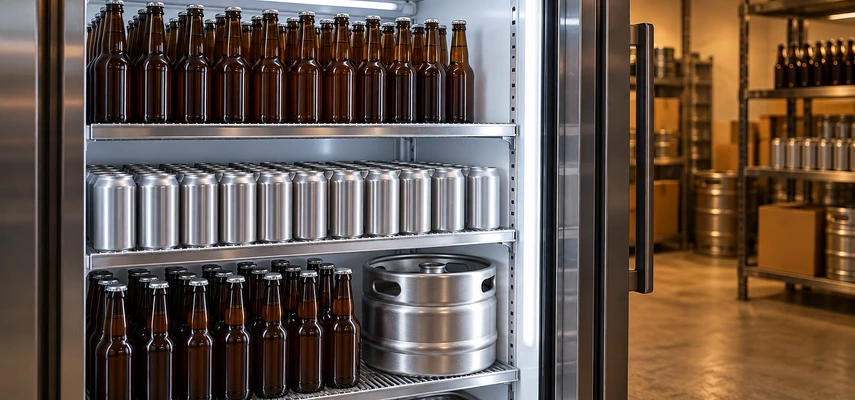

A beer can leave the brewery in excellent condition and arrive in the glass tired. The recipe may be unchanged, but heat, light, oxygen and time have continued working. Beer storage and packaging explain why buying a favorite brand does not always guarantee the same experience.
This lesson covers the storage and packaging requirements in the WSET Level 2 Beer specification. The practical principle is simple: preserve the character the brewer intended. Intentional ageing is a separate choice, useful for selected products rather than a universal upgrade.
Four influences work together
Oxygen can drive reactions that change aroma and flavor after fermentation. Heat accelerates many changes. Light can trigger a distinctive hop-related fault, and elapsed time gives these processes more opportunity. Their effects interact, so the calendar alone cannot fully describe condition.
WSET’s storage guidance emphasizes protecting beer from oxygen, heat and light. Refrigerated, consistent conditions generally help preserve freshness. A package that blocks light can still warm up, and a cold bottle can still receive damaging light exposure.
Therefore, assess the whole chain: brewery packaging, transport, shop display and home or venue storage. A recent packaging date is useful, but it does not erase a period in a hot loading area. The freshest-looking label is only one piece of evidence.
Keep storage distinct from serving
Cold storage slows deterioration, while serving temperature affects the immediate aroma, texture and balance in the glass. These are different decisions. A strong complex beer can be kept cold for preservation and allowed to warm appropriately before service.
The Brewers Association’s temperature guidance supports refrigeration for packaged and kegged beer. Do not interpret a warmer recommended serving temperature as permission to keep stock indefinitely in a warm room.
At the same time, refrigeration does not make beer immortal. Hop aroma can fade and other changes can accumulate slowly. Avoid freezing, which can damage packages and disturb the product. Follow the producer’s guidance, especially where a live product needs a specified conditioning or handling stage.
Oxygen belongs in different places at different times
Oxygen supplied before fermentation can support healthy yeast, but oxygen introduced into finished beer generally threatens freshness. Stage matters: the same word describes useful early process support and unwanted later exposure.
Good filling practices minimize dissolved and headspace oxygen. A sound sealed package preserves that advantage, while poor filling or a leaking closure can lose it. Opening creates a different situation again, with air exposure and carbonation loss changing the remaining beer.
Staling can bring papery or cardboard-like notes, faded fresh aromas and changes in malt expression. The BJCP fault reference connects oxidized character with post-fermentation oxygen. Not every aged beer tastes identical, but a loss of intended freshness is still a handling concern.
Light protection is a packaging property
Opaque cans and kegs block light from the beer inside. Brown glass gives useful protection, while green and clear glass generally offer less protection against the wavelengths relevant to ordinary lightstrike. A closed outer box can add another barrier.
Lightstrike commonly produces a skunky association through reactions involving light-sensitive hop-derived compounds. It is different from oxidation, even though both can result from poor storage. Refrigeration alone does not prevent lightstrike if the package remains exposed.
Likewise, once beer is poured into a clear glass, the package’s former protection is gone. A sunny table can create another exposure. Distinguish the container’s barrier from the beer’s later surroundings; a well-protected can does not make the poured beer lightproof.
Bottles need sound closures and sensible orientation
Glass bottles can hold different products, from filtered beer to live bottle-conditioned beer. The closure and filling process help retain gas and exclude oxygen, but glass color determines much of the light protection. Bottle does not mean one shelf life.
Store ordinary capped bottles upright unless the producer directs otherwise. This supports stable sediment and sensible handling. For corked or unusual live products, specific producer advice is more reliable than applying a wine-storage rule to every beer.
Avoid shaking sediment before a clear pour. Some beers are intended to include yeast in presentation; others are not. Upright storage makes the choice easier at service. An intact bottle and closure are also prerequisites: do not treat a damaged or leaking package as ordinary stock.
Cans block light but still need care
Store cans upright as well as ordinary crown-cap bottles. A can’s opaque wall provides complete light protection for the beer inside, and modern packaging uses an internal lining. Correct filling and sound seams matter for oxygen and gas control. The material alone cannot compensate for a poor process.
Heat and time still affect canned beer. A can sitting warm for months does not retain fresh hop aroma simply because no sunlight reached the liquid. Inspect damaged, leaking or abnormal packages rather than assuming that any metal container is automatically sound.
Compared with a bottle, a can changes some barriers and handling characteristics, but neither format guarantees superior flavor in every case. The strongest comparison includes filling quality, storage history and product age. Package preference is less useful than evidence about actual condition.
Kegs and casks are different systems
A keg is normally a sealed pressure vessel dispensed with an appropriate gas system. Correct refrigeration, pressure and clean equipment help retain intended carbonation and condition. Dispensing with air introduces oxygen and changes the freshness problem.
Cask-conditioned beer contains living yeast and develops its condition through the intended cask process. CAMRA’s cask explanation provides the production context. Settling, venting and service require care; once service introduces air, the usable window is limited compared with an intact sealed package.
Neither container name supplies one universal expiry period. A well-managed keg product, an air-dispensed keg and a cask in active service have different conditions. The venue should follow product guidance, maintain the system and match stock turnover to the beer’s actual service life.
Growlers and crowlers depend heavily on filling
Takeaway containers filled at a venue do not necessarily have the same process controls as a brewery packaging line. Oxygen pickup, seal quality, sanitation and carbonation loss can shorten the intended life even when the container looks familiar.
Cicerone’s home-beer guidance highlights this short-life distinction. Keep takeaway fills refrigerated and use the venue’s current advice rather than assuming a metal crowler equals a factory-filled can’s shelf life.
Once opened, carbonation escapes and air enters. Resealing may slow further loss but does not recreate the original package environment. Buying a size that can be used promptly is more effective than hoping a partly empty container will remain unchanged for weeks.
Read dates as instructions, not magic guarantees
A packaged-on date reports an event; a best-before date expresses a producer’s quality expectation under relevant conditions. Codes differ, and some are not reader-friendly. Ask for clarification where freshness matters rather than inventing a date from an unfamiliar stamp.
Stock rotation helps: use older appropriate stock before newer deliveries, while respecting individual product requirements. A retail shelf is not a cellar just because bottles remain there for a long time. Check handling history alongside the printed information.
Shelf life depends on style, process, package and conditions. Delicate fresh hop aroma can be especially time-sensitive, while some strong or fermentation-led beers are deliberately developed. Avoid a universal rule that every beer lasts a fixed number of months in every format.
Ageing is a selective experiment
Some strong, malt-rich, bottle-conditioned or traditional mixed-fermentation products can develop desirable complexity. That does not mean every example improves, or improves indefinitely. A brewer’s recommendation gives a better starting point than alcohol strength alone.
Fresh fruit and hop aromas can fade. Lindemans’ own FAQ, for example, distinguishes ageable traditional products from its fruit-focused products intended for freshness. Treat that as product-specific evidence rather than a command to age every lambic derivative.
For a controlled learning exercise, compare written producer recommendations and record packaging date, storage temperature and intended character. If legally eligible readers choose to compare samples over time, keep conditions consistent. The useful question is which characteristics changed, not whether older automatically wins.
Receiving stock is part of storage
At a venue, check a delivery before putting it away. Confirm the product, date information, package integrity and any required temperature conditions. Place it where those conditions can continue, with dates accessible for rotation. A well-run cold room cannot reverse damage that occurred before arrival, but receiving checks can identify questions while the supplier can still answer them.
Keep different stock histories traceable. Combining new and old deliveries without records makes it harder to investigate a freshness complaint. Likewise, changing a keg does not clean the lines or restore a poorly maintained dispense system. Storage and service are connected stages, and each needs its own control rather than relying on the previous stage to do all the work.
One-page revision summary
Protect beer from heat, light, oxygen and unnecessary time. Refrigeration slows deterioration; opaque packaging blocks light; good filling and closures limit oxygen. These protections complement one another rather than replacing one another.
Bottles, cans, kegs, casks and takeaway fills need different handling decisions. Store ordinary sealed packages upright, follow producer instructions and rotate stock. Choose ageing only where the product supports it, then judge the result against the character the brewer intended.
Continue your beer studies
Explore the related lessons on milling and mashing alongside pilsner and hopped lagers alongside lambic and geuze to extend the ingredient, process or sensory reasoning in this article.
Knowledge check: 10 original practice questions
Independent TFE questions, not official WSET examination items. Choose one answer per question; explanations follow separately.
1. Which protection does an intact can provide most directly?
- Unlimited shelf life
- A complete light barrier
- Immunity to heat
- Removal of all oxygen already dissolved
2. Why is cold storage useful even for beer served somewhat warmer?
- Storage and service must always be identical
- Cold storage creates alcohol
- Preservation and immediate serving expression are separate aims
- Cold removes all sediment permanently
3. Which handling practice generally suits ordinary capped bottles?
- Upright storage unless the producer directs otherwise
- Direct sun exposure
- Daily shaking
- Removing the closure for ventilation
4. What changes after opening a takeaway container?
- All oxidation stops
- Its original filling conditions are restored
- Carbonation becomes permanently stable
- Gas can escape and air can enter
5. Which is a lightstrike association?
- Skunky aroma
- Only increased sweetness
- Only more alcohol
- Only a fuller body
6. What determines shelf life most accurately?
- Container name alone
- Product, packaging process and storage conditions
- Only label color
- Only whether it is imported
7. Why do growlers often need prompt use?
- Glass always creates acid
- They contain no carbon dioxide
- Venue filling can introduce oxygen and lose carbonation
- Their metal always dissolves
8. Which beer is automatically improved by ageing?
- Every strong beer
- Every bottled beer
- Every sour beer
- No beer solely because of one of those labels
9. Which distinction matters for oxygen?
- Useful before fermentation versus generally unwanted in finished beer
- Oxygen always desirable
- Oxygen always absent from air
- Oxygen identical to light
10. What does a recent packaging date fail to guarantee?
- That packaging occurred
- A continuously well-managed storage history
- That a code exists
- That the beer has a container
Answers and explanations
1. B — A complete light barrier. An opaque can blocks light, but heat, time and filling-related oxygen can still affect the beer. Mapping: LO4 AC1.
2. C — Preservation and immediate serving expression are separate aims. Refrigeration slows deterioration, while the glass can reach an appropriate serving temperature before use. Mapping: LO4 AC1.
3. A — Upright storage unless the producer directs otherwise. Upright sealed storage supports stable sediment and sensible handling; unusual products may have specific instructions. Mapping: LO4 AC1.
4. D — Gas can escape and air can enter. Opening changes the package environment; resealing does not restore the original oxygen and carbonation state. Mapping: LO4 AC1.
5. A — Skunky aroma. Light can react with sensitive hop-derived compounds to create skunky character, independently of ordinary oxidation. Mapping: LO4 AC1.
6. B — Product, packaging process and storage conditions. Different styles, filling methods and histories make a universal expiry period unreliable. Mapping: LO4 AC1.
7. C — Venue filling can introduce oxygen and lose carbonation. Takeaway filling may not match brewery packaging controls, so refrigeration and short product-specific guidance matter. Mapping: LO4 AC1.
8. D — No beer solely because of one of those labels. Ageability is product-specific; intended freshness, process and producer guidance matter beyond a broad category. Mapping: LO4 AC1.
9. A — Useful before fermentation versus generally unwanted in finished beer. Stage changes its role: yeast support before fermentation differs from freshness damage after fermentation. Mapping: LO4 AC1.
10. B — A continuously well-managed storage history. A recent beer can still have suffered heat, light or mishandling; the date is only part of the evidence. Mapping: LO4 AC1.












