










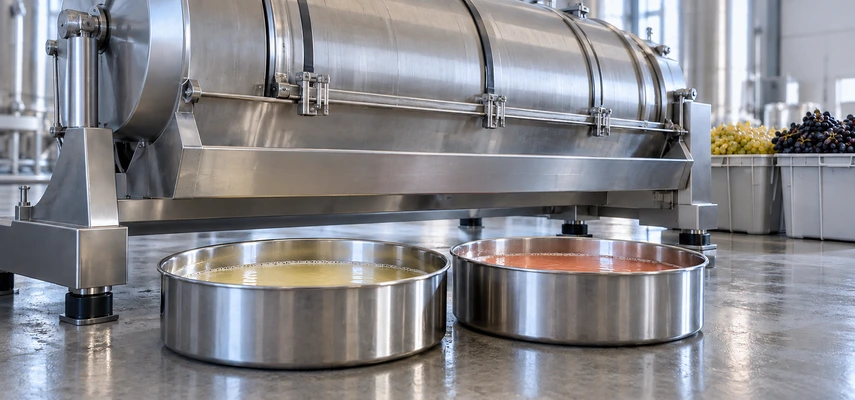

A black grape can yield pale juice, and a very ripe grape can produce dry wine. Those two facts explain why white and rosé winemaking needs more than a colour chart. The winemaker decides what to extract, what to protect and what to let the yeast consume. The choices begin before the press starts turning.
Article #5 · Part I: Wine Science, Viticulture, and Winemaking. This independent lesson follows Unit 1 LO1, criterion 3, in the 2022 Issue 2 WSET Level 3 specification. Explain fruit handling, pressing, clarification, alcoholic fermentation, oxygen management, must adjustments and rosé methods. Original practice questions and indicative marking points are TFE teaching materials, without WSET affiliation or endorsement.
Start with the intended wine
A producer seeking a fresh, aromatic Sauvignon Blanc makes different choices from one seeking a broader Chardonnay with fermentation and maturation complexity. Variety and growing conditions supply potential; harvest date and winery decisions determine what happens next. Good fruit cannot remove the need for careful processing, while expensive equipment cannot guarantee that unsuitable fruit becomes excellent wine.
Sugar supplies potential alcohol, acidity contributes freshness and balance, and grape condition affects microbial and oxidation risks. Harvest timing therefore connects vineyard decisions with winery options. Cooler picking conditions and prompt transport may help preserve fragile fruit and limit unwanted reactions. Damaged, warm grapes waiting in a large load present a different starting problem from healthy, cool fruit processed promptly.
Hand picking can supply intact bunches where the method needs them. Machine picking can bring fruit in quickly and at night where the vineyard allows. Neither label settles quality by itself. The relevant explanation concerns fruit condition, temperature, selection, timing and suitability for the chosen process, followed by their consequences for wine and cost.
Reception, destemming and crushing
At reception, the winery assesses the fruit and can sort out unwanted material or damaged grapes. Sorting costs time and labour or requires machinery, and rejecting fruit reduces usable volume. That may improve the material entering the process, but the benefit depends on what is removed and whether the remaining grapes suit the intended style.
Destemming separates berries from stems. Crushing breaks the berry skins so juice becomes available; it is distinct from pressing, which separates liquid from solids. Some white wines use whole-bunch pressing without prior crushing or destemming. Other lots are crushed and destemmed first. The correct sequence depends on the chosen method, not a universal instruction that every grape must pass every machine.
Brief contact between white-grape skins and juice can extract aroma compounds or precursors, but also phenolics. Cool, controlled conditions can limit unwanted fermentation during this stage. The OIV describes pre-fermentation cold maceration as a way to release skin compounds. Longer or more aggressive extraction is not automatically beneficial for a delicate style.
Pressing controls what joins the juice
For conventional white wine production, pressing generally precedes alcoholic fermentation. In red production, fermentation usually takes place with skins before pressing; that contrast is the useful foundation. Skin-fermented white styles are an important exception, not the normal sequence being taught here. State the intended method when answering an examination question.
Gentle pressing can release juice while limiting excessive extraction from skins, seeds and stems. Later or harder press fractions can differ from the first juice in phenolics and composition. Keeping fractions separate lets the winemaker decide how much to include. Rejecting or diverting some juice may improve a target blend while reducing the volume available at its intended price level.
The Bourgogne white-wine production guide illustrates pressing, settling and fermentation in tanks or barrels. Use the sequence to explain the style: removing skins early limits extraction, while later fermentation and maturation choices still leave room for considerable diversity among white wines.
Clarify the juice before fermentation
Pressed juice contains suspended solids, including particles from grape tissues. Clarification reduces selected solids before fermentation. Settling allows heavier material to fall, after which clear juice can be moved away. Centrifugation, filtration or flotation can achieve separation through other mechanisms. Each method involves equipment, time, energy or handling decisions.
Cold settling helps delay spontaneous fermentation while solids separate. Flotation uses gas bubbles to carry solids upwards so they can be separated. Clarification is not a competition to remove every trace of solid matter: excessive removal can affect nutrients and fermentation performance. The appropriate degree depends on the material and the desired style.
Iowa State’s juice-clarification guide explains the main approaches and their tradeoffs. Distinguish this pre-fermentation operation from racking wine off sediment after fermentation. Both separate liquid from solids, but occur at different points and address different material. Simply writing “clarification” without saying when leaves the mechanism uncertain.
Alcoholic fermentation: sugar becomes alcohol
Yeast converts grape sugars into ethanol and carbon dioxide, releasing heat. A dry wine has little residual fermentable sugar; a fruity aroma does not make it sweet. If the fermentation consumes a higher starting sugar concentration completely, the resulting wine has greater potential alcohol, other things equal. Sweetness instead concerns what sugar remains in the finished wine.
Selected yeast cultures can offer predictable performance and particular aroma outcomes. Fermentation with the fruit’s and winery’s existing microbial populations can produce different results, but requires monitoring and is not inherently better or worse. Yeast need appropriate conditions and nutrients. A sluggish or stuck fermentation is an operational problem, not proof that a wine is artisanal.
Temperature control helps manage fermentation rate, yeast health and aroma development. Relatively cool fermentation is often chosen for fresh, fruity white and rosé styles, while warmer conditions may suit other objectives. Too cold can inhibit yeast; too hot can damage them and alter aroma retention. Cooling equipment and energy add costs, but can protect consistency and the intended character.
Oxygen is a timing question
Many fresh white and rosé styles use protective handling to limit unwanted oxidation of juice and wine. This can include careful transfers, cooling, suitable inert-gas use and appropriate sulfur dioxide management. Oxygen exposure can change colour and aroma; damaged fruit may make the problem harder to control. Avoid presenting protection as one single addition that solves every risk.
Oxygen is not always an enemy. Yeast can benefit from carefully managed oxygen during fermentation, and some production styles deliberately use exposure at chosen stages. AWRI’s aeration research discusses fermentation benefits. The apparent contradiction disappears when the explanation specifies the material, stage, quantity and objective. Protecting finished wine and supporting an active ferment are different tasks.
Must adjustments are targeted interventions
Must enrichment increases fermentable sugar or potential alcoholic strength through an allowed method before or during production. It should not be confused with adding sweetness to a finished wine: sugar added before a complete fermentation can become alcohol. Where a method is permitted depends on the relevant rules, which must be checked for the actual region and vintage.
Acidification increases acidity, while deacidification reduces it through appropriate treatments. A winemaker may seek balance or a suitable chemical environment for stability and microbial management. These are not interchangeable operations, and neither is a shortcut to quality. The starting must, target style and applicable rules determine whether a particular intervention is appropriate.
Do not infer an addition solely from a tasting impression. A fresh wine may have retained natural acidity, received an adjustment or reflect several production decisions. Explanations should separate a possible mechanism from a claim about a specific bottle. Numerical treatment rates and local permissions belong in professional, current production guidance rather than a general study recipe.
Malolactic conversion and the sediment decision
After alcoholic fermentation, the wine may be racked off gross lees, the heavier sediment containing grape debris and other material. This differs from deliberately retaining suitable fine lees for texture or other maturation effects. Leaving every deposit indefinitely is not the same as a considered lees programme. The wine’s condition determines useful options.
Malolactic conversion changes malic acid into lactic acid through bacterial activity, reducing acidity and potentially changing aroma and mouthfeel. A producer may encourage it for a rounder style or prevent it to retain the desired acidity and character. It can occur in tank or barrel and does not require oak. Detailed lees, oak, finishing and closure decisions belong to the maturation lesson.
Three routes to rosé colour
Rosé commonly starts with black grapes whose skins contain colour. Controlling the contact between skins and liquid limits extraction. The colour also depends on variety, maturity, temperature and handling, so neither a universal contact time nor a particular shade guarantees quality. A pale wine is not necessarily more refined, drier or less alcoholic than a deeper one.
| Method | Main sequence | What needs explaining |
|---|---|---|
| Direct pressing | Press black grapes with little prior skin contact; ferment the juice. | Limited extraction often gives a pale style. Pressing conditions remain influential. |
| Short maceration | Crush, allow brief skin contact, then separate juice and ferment. | Longer contact can increase colour and phenolic extraction, depending on conditions. |
| Blending | Combine appropriate white and red components where the method is allowed. | Component proportions influence colour, flavour and structure. Check rules for the actual wine. |
The Provence wine board explains direct pressing and skin maceration. Saignée, or bleeding, removes some juice from a red-wine vat after brief contact; that juice can become rosé while the remaining red must has a changed liquid-to-solids ratio. A dedicated rosé programme need not be a by-product of red production.
Once the desired colour is extracted, much rosé production resembles white winemaking: clarify the juice, ferment under suitable conditions and protect the resulting wine. Some producers choose other fermentation or maturation treatments. A typical fresh, dry Provence example and a broader barrel-influenced rosé illustrate different choices, not a hierarchy determined by how pink they look.
Explain style, quality and price separately
A hypothetical aromatic white might combine cool fruit handling, gentle extraction, clarified juice, controlled fermentation and protection from unwanted oxidation. A broader Chardonnay might use barrel fermentation, malolactic conversion and considered lees contact. Explain the contribution of each decision rather than assuming that one vessel alone accounts for the whole sensory profile.
Selection, cooling, press fractions, vessels, monitoring, labour and storage all influence cost. Their effect on quality depends on execution and suitability for the intended wine. An economical tank-fermented wine can be clean and balanced; an expensive programme can still go wrong. In a written answer, link each decision to a specific style, quality or cost consequence before moving on.
Knowledge check: 10 original practice questions
1. What distinguishes crushing from pressing?
2. In conventional white winemaking, when does pressing generally occur?
3. Why might a winemaker separate press fractions?
4. What is cold settling intended to do?
5. Which statement about oxygen is correct?
6. What can enrichment before complete fermentation increase?
7. What produces colour in a typical direct-pressed rosé?
8. Which statement about rosé shade is defensible?
9. What is malolactic conversion?
10. Why can temperature control add production cost?
Answers and explanations
1. B — Different operations. Breaking berries releases juice; pressing separates liquid from solids. The distinction helps keep the production sequence and extraction explanation clear.
2. C — Juice first. Conventional white production usually separates juice before fermentation. Skin-fermented white wines are a stated exception rather than the sequence assumed here.
3. A — Control over components. Different fractions can contribute different phenolics and composition. Separation creates a selection option, not an automatic quality guarantee.
4. D — Separation before fermentation. Gravity removes heavier particles while cooling discourages an early ferment. This is distinct from moving finished wine away from lees.
5. B — Timing and objective. Limiting unwanted oxidation and supporting a ferment are different tasks. A useful explanation specifies stage, amount and intended result.
6. C — Fermentable potential. Sugar added before fermentation can become alcohol if consumed. That is why enrichment does not necessarily make the finished wine sweeter.
7. A — Skin extraction. Black-grape skins provide colour during contact and pressing. The process does not require food colouring or a coloured vessel.
8. D — Several influences. Variety and processing choices affect shade. Quality, sweetness and alcohol require separate evidence rather than being read straight from the colour.
9. B — Bacterial acid change. Malic-to-lactic conversion reduces acidity and can alter style. It is distinct from alcoholic fermentation and can take place without oak.
10. C — Resources used. Cooling and control need equipment and operation. Those explain costs without proving that every buyer will pay a higher price.
Written exercise 1: make a fresh aromatic white
Question: A producer wants a fresh, aromatic dry white wine from healthy fruit. Explain two choices before alcoholic fermentation that can support that aim, giving a mechanism for each. Suggested marks: 4. Learning outcome: Unit 1 LO1, criterion 3.
Indicative marking points: One point each for selecting cool, prompt fruit handling; explaining reduced unwanted reaction or microbial activity during handling; choosing gentle pressing with limited unwanted extraction; and connecting that selection to avoiding excessive phenolics in a delicate style. Accept other accurately explained pre-fermentation choices, capped at four points.
Model answer: Keeping healthy fruit cool and processing it promptly can slow unwanted reactions and microbial activity before fermentation, helping preserve the intended fresh character. Gentle pressing with limited skin contact can reduce unwanted phenolic extraction, avoiding excessive bitterness or astringency in a delicate white style. The choices must still match the variety and intended wine.
Why it earns credit: Both decisions occur within the requested stage and connect a method with a consequence. Common mistake: describing only later bottle ageing, or claiming that cool handling makes unsuitable fruit excellent automatically.
Written exercise 2: compare rosé methods
Question: Describe direct pressing and short maceration for rosé. Explain why short maceration may produce a deeper colour, and why colour alone cannot establish quality. Suggested marks: 6. Learning outcome: Unit 1 LO1, criterion 3.
Indicative marking points: One point each for direct pressing of black grapes; little prior skin contact in that method; crushed grapes contacting skins during short maceration; separation of juice before its subsequent fermentation; additional contact potentially extracting more skin colour; and quality requiring separate evidence such as balance rather than shade alone.
Model answer: Direct pressing presses black grapes with little prior skin contact. In short maceration, crushed grapes remain with their skins briefly before the liquid is separated and fermented. Additional contact can extract more colour from the skins, though variety and other conditions influence the result. A deeper shade does not establish higher or lower quality: the wine still needs an assessment of characteristics such as balance and flavour persistence.
Why it earns credit: The answer distinguishes both sequences, supplies an extraction mechanism and separates style from quality. Common mistake: claiming all rosé is a white-and-red blend or that a paler wine must be drier.
One-page revision summary
Separate crushing, pressing, clarification and fermentation. For typical white wine, remove skins before fermenting the juice; for rosé, control extraction before that separation. Match temperature, oxygen and yeast management to the intended wine. Enrichment, acidity adjustment and malolactic conversion do different jobs. Explain each choice through its mechanism, then keep style, quality and cost conclusions distinct.












