










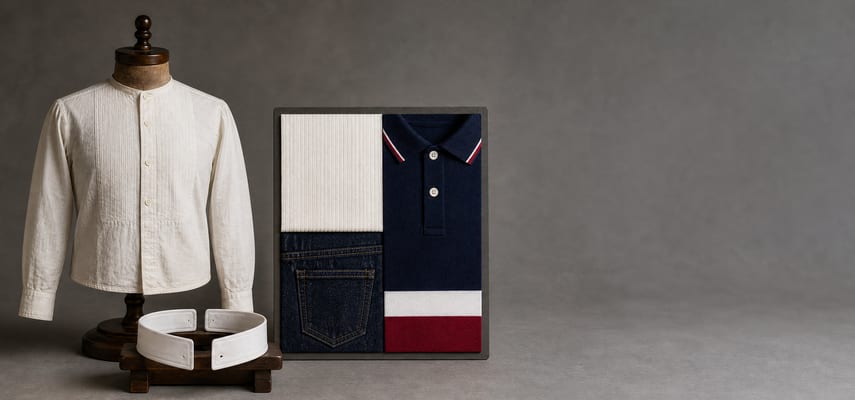
History of PVH
When shoppers think of Calvin Klein underwear or a Tommy Hilfiger polo, they rarely picture the corporate machinery behind the label. Yet the story of PVH—long known inside retail as Phillips‑Van Heusen—reads like a compact history of American apparel: family names and factory floors, licensing deals and label consolidation, global expansion and the digital pivot.
This is the story of how a company built on shirts and collars evolved into the steward of global lifestyle brands and then confronted the turbulent retail landscape of the 21st century.
Key dates
- 2010 — PVH acquired Tommy Hilfiger.
- 2013 — PVH acquired Warnaco, consolidating Calvin Klein licenses and product lines.
- 2015–2019 — E‑commerce growth, department‑store consolidation, and operational change.
- 2020 — COVID‑19 pandemic struck the apparel industry, prompting immediate operational responses.
- 2021 — Leadership change: Stefan Larsson appointed CEO.
- 2021–present — Focus on Calvin Klein and Tommy Hilfiger, sustainability and portfolio discipline.
From shirtmakers to a modern company: roots and early identity
PVH traces its roots to 1881, when Moses and Endel Phillips began mending and selling shirts to coal miners in the Pottsville, Pennsylvania, area. Their family business relocated to New York City in 1890 and merged with shirt and collar maker D. Jones & Son in 1907, taking the name Phillips-Jones Corporation. In 1919, Phillips-Jones began producing John M. Van Heusen’s patented soft-folding collar. Van Heusen was therefore a product and brand relationship rather than a parallel founding business; in 1957, Phillips-Jones changed its name to Phillips-Van Heusen Corporation in honor of its best-selling shirt brand.
The Van Heusen name came to embody the company’s expertise in shirts and collars and anchored its identity for decades. The design, production, sourcing and wholesale capabilities developed around shirts later formed part of the operating base PVH used as it expanded its brand portfolio.
Assembling a brand portfolio: Van Heusen, IZOD and heritage offerings
Through the mid‑ and late 20th century, PVH maintained a steady strategy of building recognizable, portfolio‑level brands. Van Heusen remained core, while IZOD and other labels allowed the company to compete across price points and retail channels.
These brands gave PVH multiple routes to market—department stores, midmarket retailers and specialty channels—and diversified its exposure to changes in consumer taste. That diversification proved consequential when fashion cycles shortened and retail consolidation accelerated. Having several well‑known but distinct labels let PVH negotiate licensing deals and manage risk: if one brand slowed, another could pick up volume. It also prepared PVH to handle brands it would later acquire that required both centralized infrastructure and differentiated marketing.
2010: Transformative acquisition — Tommy Hilfiger and the push for global scale
One of PVH’s biggest strategic moves came on May 6, 2010, when it completed the acquisition of Tommy Hilfiger B.V. and certain affiliated companies from shareholders led by funds affiliated with Apax Partners. The agreed consideration was €2.2 billion—€1.924 billion in cash and €276 million in PVH common stock—plus the assumption of €100 million in liabilities. PVH later reported closing-date consideration of approximately $3.0 billion, consisting of about $2.486 billion in cash and 7.9 million PVH shares valued at $475.6 million.
Tommy Hilfiger brought PVH a higher‑profile lifestyle positioning and global distribution that matched the company’s ambitions to expand beyond North America. The brand’s outlets, license agreements and international retail footprint offered immediate scale in markets where PVH sought to grow. For PVH, the purchase was less about replacing its older shirt business than about extending its reach into aspirational apparel categories—denim, sportswear, and lifestyle accessories—with higher potential margins and a youth‑oriented appeal.
2013: Completing Calvin Klein — the Warnaco acquisition and brand consolidation
PVH’s relationship with Calvin Klein evolved in stages. PVH acquired Calvin Klein, Inc. in 2003, but Warnaco remained Calvin Klein’s largest licensee and operated major portions of its jeanswear and underwear businesses. On February 13, 2013, PVH acquired all of Warnaco’s outstanding equity interests. PVH reported total accounting consideration of approximately $3.137 billion, including about $2.180 billion in cash and 7.7 million PVH shares valued at approximately $926 million, as well as replacement stock awards and the elimination of a pre-existing liability.
The acquisition brought the worldwide Calvin Klein Jeans and Calvin Klein Underwear businesses under PVH’s direct control. Warnaco’s Calvin Klein operations included men’s and women’s jeans and related apparel worldwide, jeans accessories in Europe and Asia, men’s and women’s underwear worldwide, and swimwear in North America and Europe. The transaction also added the Speedo, Warner’s and Olga businesses to PVH, while Ralph Lauren reacquired the Chaps license at the time of the acquisition. Bringing the jeanswear and underwear operations into PVH allowed the company to coordinate brand strategy, product design, merchandising, supply chains, retail distribution and marketing more directly.
Building a two‑pillar strategy: Calvin Klein and Tommy Hilfiger
By the mid‑2010s, PVH had effectively become the custodian of two global nameplates with distinct identities and complementary strengths. Calvin Klein was a high‑visibility, fashion‑forward global brand—particularly powerful in underwear, jeans and fragrance—while Tommy Hilfiger was a lifestyle label with a broad international retail presence.
This two‑pillar approach shaped PVH’s choices in product development, retail investment and licensing. Holding two large brands allowed PVH to allocate investment where each had the most runway: fashion and creative reinvention for Calvin Klein; retail expansion and global merchandising for Tommy Hilfiger. The structure also buffered PVH against single‑brand risk: shifts that hurt one brand—say a downturn in denim—might not affect the other in the same way.
2015–2019: Operational challenges and a changing retail landscape
The middle of the 2010s brought both opportunity and pressure. E‑commerce and direct‑to‑consumer channels were growing, department stores were consolidating, and fast fashion pressures intensified. PVH responded by trying to balance wholesale partnerships with investments in its own retail footprint and digital platforms.
For a company rooted in wholesale relationships, this required both cultural and operational change. Supply chains had to be flexible enough to serve the immediacy of online shoppers while maintaining inventory for brick‑and‑mortar partners. Marketing strategies shifted toward digital storytelling and influencer partnerships.
These were not overnight transitions—the company had to rewire planning cycles, invest in IT and rethink how it measured brand health in an always‑on media environment. Those years also underscored a basic truth: owning the right brands did not inoculate PVH from broader structural shifts in retail. The company’s ability to adapt depended as much on execution—upgrading digital systems, renegotiating retail leases, sharpening product assortments—as on its brand assets.
2020: Shock of the pandemic and the immediate response
The COVID‑19 pandemic struck the apparel industry hard. Lockdowns closed stores, travel slowed (affecting duty‑free and airport retail), and consumer spending patterns shifted abruptly toward essentials. For PVH the crisis tested the resilience of its portfolio and the decisions it had made about channels and supply chains.
Operationally, the immediate effects were visible: lower wholesale demand, temporary store closures and pressure on near‑term revenues. At the same time, the pandemic accelerated trends—digital adoption, a faster cadence of inventory turnover and renewed emphasis on online channels—that had long been reshaping retail. Companies that moved quickly to shift inventory, bolster e‑commerce, and manage costs could mitigate losses and position themselves for the recovery.
PVH’s pandemic experience mattered because it crystallized the need to be nimble. Short‑term decisions (temporarily closing stores, deferring capital expenditures, protecting liquidity) intersected with longer‑term strategy: an accelerated push into digital, a reevaluation of wholesale partnerships, and an intensified focus on consumer data to better predict demand.
2021: Leadership change — Stefan Larsson takes the helm
PVH announced on September 30, 2020, that Stefan Larsson, then the company’s president, would become chief executive officer effective February 1, 2021. He succeeded Emanuel “Manny” Chirico, who had served as CEO since 2006 and remained chairman of PVH’s board. Larsson had joined PVH in June 2019 in the newly created position of president, overseeing the company’s branded businesses and regions as part of a planned succession process.
PVH said Larsson and Chirico had worked together on near‑term actions and long‑term strategies focused on the company’s core strengths, changing consumer behavior, brand relevance, performance and sustainable growth. The transition marked a new phase following the company’s decade of major acquisitions, with greater emphasis on operating and developing its core global brands.
2021–present: Recent years — brand stewardship, sustainability and strategic pruning
Under new leadership PVH has continued to manage two globally scaled brands while adjusting to post‑pandemic consumer behavior. A few themes have dominated the recent era:
- Brand focus and creative reinvention. Both Calvin Klein and Tommy Hilfiger have required refreshed creative direction and product relevance in an era where heritage must coexist with streetwear influences and rapid fashion cycles.
- Direct‑to‑consumer growth. Like peers, PVH has pushed to increase its e‑commerce revenue and to use brand‑owned retail not only for sales but as a marketing and experience channel that drives loyalty and margins.
- Sustainability and supply‑chain scrutiny. Investors, customers and regulators have increased pressure on apparel companies to address environmental and labor impacts. PVH’s choices on materials, emissions, and factory relationships affect brand reputation and regulatory exposure.
- Portfolio discipline. PVH completed the sale of the Van Heusen, IZOD, ARROW and Geoffrey Beene trademarks and related Heritage Brands assets in August 2021, and sold its Warner’s, Olga and True&Co. women’s intimates businesses in November 2023, sharpening its focus on Calvin Klein and Tommy Hilfiger.
These themes have practical consequences. Investing in direct channels changes the company’s margin profile but requires heavy upfront spending on logistics, technology and customer acquisition. Sustainability commitments can open supplier and sourcing challenges but increasingly are nonnegotiable for large retail partners and institutional investors. Portfolio pruning can free up capital, but divestitures must be managed so they do not dilute brand value.
Why PVH’s story matters to retail and corporate strategy
PVH’s history is a case study in balancing two often conflicting demands: the steady cashflow of heritage, mass‑market labels and the growth potential of global lifestyle brands. The company chose to pursue scale—buying Tommy Hilfiger, consolidating Calvin Klein’s product lines—and then to wrestle with the operational and strategic complexities that scale brings.
There are broader lessons in that arc. First, brand ownership is not the same as brand vitality: acquiring a label buys potential but not guaranteed growth. Second, operational dexterity—supply chains, data systems, and retail execution—matters as much as marketing. Third, the cadence of change in retail means that even large firms must continuously reallocate capital between distribution channels, creative investments and sustainability initiatives.
PVH’s brand architecture today
At the core of PVH’s contemporary identity are its two principal global brands, Calvin Klein and Tommy Hilfiger. The company’s stewardship of these names is its primary strategic lever: how it positions them, the channels it chooses, and the markets it prioritizes define PVH’s financial prospects and cultural relevance.
Key elements of the company’s portfolio strategy include:
- Maintaining distinct brand identities—ensuring Calvin Klein’s minimalism and Tommy Hilfiger’s preppy lifestyle remain differentiated in a crowded market.
- Balancing wholesale partnerships with direct retail and e‑commerce investments to capture margin while preserving distribution breadth.
- Leveraging global scale to optimize sourcing and negotiate licensing arrangements that can expand product categories without diluting brand equity.
Challenges ahead: competition, sustainability and cultural relevance
Looking forward, PVH faces an array of industry‑level challenges. Competition is intense at every price point: fast fashion, digitally native brands, and other large conglomerates all vie for the same consumer dollars. Sustainability demands will reshape sourcing and cost structures. Finally, cultural relevance—how brands connect to younger consumers across social media and live experiences—will determine whether legacy names remain aspirational.
For PVH these challenges are not theoretical. They require daily choices about inventory, marketing spend, store networks and partnerships. The company’s success will hinge on turning its scale into an advantage without allowing the inertia of a large enterprise to blunt its capacity for rapid creative change.
Conclusion
PVH’s journey—from a business built on shirts and collars to a global owner of some of fashion’s most recognizable labels—is a story of strategic acquisition, operational adaptation and the constant reinvention demanded by retail. Its acquisitions of Tommy Hilfiger and the assets that consolidated Calvin Klein into a single company reshaped PVH into a two‑brand powerhouse.
The pandemic and the digital revolution tested that model, and recent leadership changes reflect a push to modernize execution and deepen brand relevance. What remains clear is that owning iconic names is only the beginning. The future will reward the companies that can marry heritage with contemporary culture, translate scale into supply‑chain and digital excellence, and meet rising expectations on sustainability. For PVH, the next phase will be measured not only by the size of its brands but by how deftly it runs them in a retail world that keeps changing its rules.











