










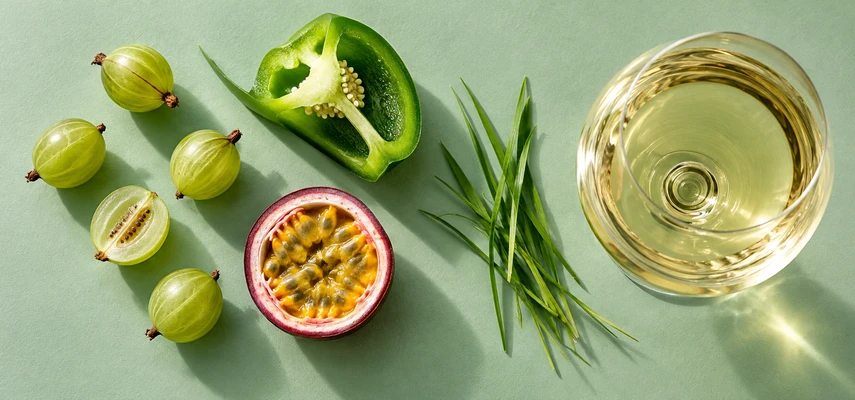

Why can one Sauvignon Blanc suggest cut grass while another smells of passion fruit? Sauvignon Blanc explained through ripeness and climate makes those apparently different personalities fit together. The grape often announces itself clearly, but it doesn’t read from exactly the same script in every vineyard.
This is Article #5 of The TFE Guide to WSET Level 2 Wine, Part II: The Eight Principal Grape Varieties. We’ll compare the Loire, Bordeaux, Marlborough and the other prescribed origins, then separate the influence of fruit ripeness from choices such as oak, lees and blending. The familiar green-versus-tropical contrast is a starting point, not the entire lesson.
What WSET Level 2 expects you to know
The current official specification places Sauvignon Blanc among the eight principal varieties in LO3. You need its typical characteristics, environmental and production influences, specified regional styles and meaningful comparisons. The regional checklist includes both familiar Sauvignon names and places more often remembered for other grapes.
Use three questions to organize the material. How ripe does the fruit seem? How prominent is the acidity? Does the wine emphasize fresh primary character or combine it with texture and secondary character? Answering those separately prevents “herbaceous,” “dry” and “light-bodied” from becoming one vague idea.
The grape’s calling card: aroma and acidity
Sauvignon Blanc is a white variety associated with pronounced aromatic character and high acidity. Common associations include gooseberry, citrus, grass, green bell pepper and, in riper expressions, passion fruit or other tropical fruit. They’re descriptions of resemblance, not a list of ingredients added to the wine.
Typical dry styles can feel light to medium in body, although production choices and ripe fruit can create broader wines. Alcohol varies with grape sugar and fermentation. High tannin isn’t the defining feature of these white wines, so use acidity, body and flavour intensity to build the structural comparison.
The distinction between intensity and body is especially useful here. A wine can smell strikingly vivid yet feel relatively light. It can also be dry despite suggesting a fruit you associate with sweetness. Bring those observations from Article #1 into this grape study rather than starting the tasting language again from zero.
Green versus tropical: follow ripeness, not stereotypes
Growing conditions and harvest decisions influence the balance between greener and riper characters. Cooler conditions can help retain acidity and a more herbaceous expression; greater ripeness can encourage more tropical associations. But Marlborough demonstrates that tropical aromas and refreshing acidity can coexist.
Light exposure, canopy decisions and picking time can all matter. The producer has to balance suitable ripeness with the desired freshness. Picking later isn’t automatically an improvement if it moves the fruit away from the intended style. Nor should you assume a wine smelling green was necessarily made from defective grapes.
Sauvignon Blanc can be vigorous, producing substantial leafy growth. Managing that canopy helps balance fruit exposure, airflow and ripening. This gives vineyard choices a concrete role: the grower isn’t simply waiting for a national climate to deliver a predetermined flavour.
WSET’s Sauvignon Blanc overview describes the range from grassy Loire wines to fuller white Bordeaux. That range makes a useful correction to the idea that one famous aromatic style defines every bottle.
Freshness in the winery: protect the fruit
Many producers use relatively cool fermentation and vessels such as stainless steel to emphasize primary aromas. Avoiding obvious oak can leave citrus, grass or tropical character in the foreground. Such a wine doesn’t need to taste plain: the grape itself can provide plenty of aromatic material.
Malolactic conversion may be prevented when the goal is to preserve acidity and the intended aromatic profile. This differs from some richer Chardonnay production, where softening acidity and adding buttery character may be part of the plan. “Good winemaking” therefore doesn’t mean applying the same treatment to every variety.
Lees contact and other choices can add texture without necessarily turning the wine into an obviously woody style. Where oak is used, ask whether the wine shows fruit alongside secondary aromas rather than assuming Sauvignon Blanc has somehow ceased to be Sauvignon Blanc. The range of valid choices is wider than one stainless-steel recipe.
The Loire: Sancerre, Pouilly-Fumé and Touraine
Sancerre and Pouilly-Fumé are important Loire Valley origins for dry Sauvignon Blanc. Their wines commonly offer refreshing acidity with citrus and greener fruit associations, often in a relatively restrained, unoaked style. Producer and vintage differences remain possible; don’t turn a broad comparison into a compulsory description of every bottle.
Touraine is another prescribed Loire association. It helps you remember that Sauvignon Blanc in the Loire isn’t limited to the two most famous appellations. On a label, regional names can do the job that a grape name does elsewhere, so recognizing them matters even when “Sauvignon Blanc” isn’t prominent.
Pouilly-Fumé is particularly easy to mix up with Pouilly-Fuissé. The first belongs in this Sauvignon Blanc lesson; the second belongs in Chardonnay’s Burgundy list. Don’t infer grape identity from the shared word “Pouilly.” And don’t treat the name Fumé as proof that a wine must have been smoked or matured in a new barrel.
Bordeaux: blending can change the weight
The prescribed Bordeaux origins are Bordeaux, Graves and Pessac-Léognan. Here Sauvignon Blanc can be blended with Sémillon, and some wines use oak fermentation or maturation and lees work. These choices can produce a broader, more complex impression than a straightforward fresh, unoaked example.
Understand what the blend is trying to achieve. Sauvignon Blanc can contribute acidity and aromatic lift, while Sémillon can contribute body and a different texture. The aim is a coordinated wine, not simply a way of stretching the quantity. The exact balance depends on the components and producer.
Don’t classify every white Bordeaux as heavily oaked, and don’t assume a Sauvignon-Sémillon blend must be sweet. Sweet Bordeaux styles involve additional considerations, discussed with Sémillon and sweet-wine production later. Here the essential lesson is that the same variety can play a different role within a blend.
France’s list also includes Pays d’Oc, a broad southern PGI. Learn it as an additional origin rather than quietly assuming every French Sauvignon comes from Sancerre. Broad sourcing and varied production allow different price points and styles; a country name alone doesn’t establish a precise profile.
Marlborough: vivid fruit with a cool-climate backbone
Marlborough is New Zealand’s prescribed Sauvignon Blanc origin. Its wines are often strongly aromatic, combining gooseberry, herbaceous and tropical-fruit associations with high acidity. The national wine body’s description also emphasizes variation within the region and a growing range of winemaking approaches.
This is the place to retire an unreliable shortcut: “tropical fruit means warm climate and low acidity.” Aroma resemblance isn’t a thermometer. Suitable growing conditions can support vivid ripe character while retaining the freshness that makes the wine recognizable.
Many examples are intended for relatively early drinking, when primary fruit is central. Some more ambitious wines use lees, oak or other treatments to build complexity and can develop further. Separate that possibility from the claim that all Sauvignon Blanc needs bottle ageing. Often the point is precisely the fresh character present at release.
The USA, Chile and South Africa
Napa Valley is the prescribed US origin. Its Sauvignon Blanc can show ripe fruit, and producers may choose unoaked or oak-influenced styles. The grape name doesn’t require the familiar Marlborough profile, nor does Napa’s association with Cabernet Sauvignon make its white wines irrelevant to this course.
Chile’s Central Valley and Casablanca Valley provide a broad-origin and cooler coastal comparison. Casablanca’s cooling influences can help support acidity and fresh character. Learn both names, but resist assigning exactly the same wine to every vineyard in the larger Central Valley.
South Africa’s prescribed associations are Elgin and Constantia. These are useful examples of how cooler influences can matter within a country many readers broadly associate with warmth. WSET’s regional comparison beyond Marlborough helps place alternatives in context. The exam task remains comparison of specified styles, rather than a competition to identify one “best” country.
Australia: Adelaide Hills and Margaret River
Adelaide Hills and Margaret River are the Australian names to retain. Adelaide Hills provides a cool-influenced, fresh Sauvignon reference, while Margaret River is also important for Sauvignon Blanc and Sémillon blends. Climate and production explain the different emphases.
In a Margaret River blend, think about how aromatic freshness and body can complement each other. Blending doesn’t make the grape characteristics disappear; it changes the relationship between them. Wine Australia’s account of Western Australia identifies these blends as part of Margaret River’s established range.
Compare this with Chardonnay’s lesson: both varieties can use oak and lees, but their starting aromatic profiles differ. Applying a treatment to a wine with naturally pronounced herbaceous character may give a different result from applying it to a more restrained grape. Winemaking choices interact with material; they don’t act in isolation.
Put the comparisons to work
Imagine a dry, high-acid wine with citrus, grassy notes and restrained texture. Contrast it with a fuller white showing ripe fruit, lees texture and oak influence. The first could illustrate the fresh Sauvignon approach; the second could illustrate a more ambitious blend or oak-treated style. Neither description proves an origin on its own.
For a written study comparison, name the grape, origin, climate influence and relevant production options. Then state the resulting difference in acidity, body or character. This produces an explanation you can defend instead of a collection of national stereotypes.
Common mistakes and exam traps
Sancerre and Pouilly-Fumé belong with Sauvignon Blanc, while Pouilly-Fuissé belongs with Chardonnay. Sauvignon Blanc isn’t always unoaked, Sémillon blending doesn’t automatically mean sweetness, and tropical fruit doesn’t automatically mean low acidity. Finally, a pronounced nose doesn’t prove a full body: keep aromatic volume and palate weight separate.
Related study guides
Knowledge check: 10 original practice questions
Choose one answer each. These independent questions support LO3 and relevant production comparisons.
1. Which structural characteristic is especially associated with Sauvignon Blanc?
- High acidity.
- Mandatory high tannin.
- Guaranteed sweetness.
- Complete absence of aroma.
2. Which set contains the prescribed Loire associations?
- Chablis, Meursault, Mâcon.
- Sancerre, Pouilly-Fumé, Touraine.
- Barolo, Gavi, Soave.
- Mosel, Rheingau, Pfalz.
3. Which grape can accompany Sauvignon Blanc in white Bordeaux blends?
- Nebbiolo.
- Corvina.
- Sémillon.
- Pinotage.
4. Which statement about Marlborough Sauvignon Blanc is sound?
- Tropical aromas prove low acidity.
- It can never use oak.
- It must be sweet.
- Vivid tropical or herbaceous character can coexist with high acidity.
5. Which place belongs with Sauvignon Blanc rather than Chardonnay?
- Pouilly-Fumé.
- Pouilly-Fuissé.
- Chablis.
- Puligny-Montrachet.
6. Which production aim fits many fresh Sauvignon styles?
- Removing every primary aroma.
- Preserving fruit character and acidity.
- Maximizing tannin from stems.
- Requiring full malolactic conversion and strong butter in every wine.
7. Which South African pair is prescribed for Sauvignon Blanc?
- Mendoza and Maipo.
- Barossa and Eden.
- Elgin and Constantia.
- Tokaj and Gavi.
8. Which Australian region is important for Sauvignon Blanc–Sémillon blends?
- Mosel.
- Sancerre.
- Priorat.
- Margaret River.
9. What does a pronounced aroma tell you directly?
- Aromatic intensity, rather than automatic sweetness or body.
- Exact residual sugar.
- Guaranteed full body.
- A compulsory oak treatment.
10. Which Chilean pair belongs in this grape’s revision?
- Western Cape and Walker Bay.
- Central Valley and Casablanca Valley.
- Napa and Sonoma.
- Marlborough and Hawke’s Bay.
Answers and explanations
1. A — Grape structure; LO3. High acidity is an important Sauvignon reference; tannin and sweetness aren’t mandatory defining features.
2. B — Loire geography; LO3. These are the prescribed Loire origins, while the other groups concern different grapes or countries.
3. C — Bordeaux blending; LO3. Sémillon can contribute body and texture alongside Sauvignon’s aromatic freshness.
4. D — Marlborough style; LO3. Ripe-smelling fruit and acidity are distinct dimensions and can occur together.
5. A — Similar names; LO3. Pouilly-Fumé is Sauvignon Blanc; Pouilly-Fuissé is Chardonnay in Burgundy.
6. B — Production; LO3. Cool fermentation and restrained handling can emphasize the grape’s fresh primary character.
7. C — South Africa; LO3. Elgin and Constantia are the assigned Sauvignon Blanc associations.
8. D — Australia; LO3. Margaret River is an important source of these blends, alongside its other wine styles.
9. A — Description; LO3 foundation. Aromatic strength doesn’t directly establish sugar, palate weight or production treatment.
10. B — Chile; LO3. Both appear in the Sauvignon Blanc regional list, with Casablanca offering a cooler coastal reference.
One-page revision summary
| Country | Prescribed origins | Useful association |
|---|---|---|
| France | Pays d’Oc; Sancerre; Pouilly-Fumé; Touraine; Bordeaux; Graves; Pessac-Léognan | Loire freshness; Bordeaux blending and possible oak |
| USA | Napa Valley | Ripe or oak-influenced options alongside fresh styles |
| Chile | Central Valley; Casablanca Valley | Broad origin versus cooler coastal reference |
| South Africa | Elgin; Constantia | Cooler influences support freshness |
| Australia | Adelaide Hills; Margaret River | Fresh expression and important Sémillon blends |
| New Zealand | Marlborough | Pronounced herbaceous/tropical character with acidity |
Remember the grape’s aromatic identity, then ask how ripeness, site and winemaking modify it. A grassy note, a tropical note and a richer texture can all belong in Sauvignon Blanc’s story.











