










A car accident rarely comes with a warning. One moment, a person is heading to work, picking up groceries, or driving through Fayetteville, Arkansas, and the next moment, dealing with damaged vehicles, unexpected injuries, and a hundred questions running through the mind. It is not just an unfortunate possibility, either. According to the Fayetteville Police Department’s 2025 Annual Traffic Report, the city recorded 258 injury-related traffic collisions that year.
Behind every number is someone whose day took an unexpected turn and who may now be dealing with the consequences. In the middle of all that confusion, knowing what to do next can make a real difference. The first decisions made can affect your safety, the evidence available, and any future insurance claim. A Fayetteville car accident attorney can help you understand your legal options and protect your interests as you work toward recovery.
Get Clear of Traffic
When injuries, damage, or disputed fault complicate the aftermath, a car accident attorney can explain how evidence and insurance communications relate to a possible claim. Before any consultation, preserve the crash report number, photographs, witness contact details, and medical records. A prompt written account keeps details clear as memories fade while you recall the sequence.
If a vehicle creates a hazard, move it only when doing so is safe and practical. Turn on hazard lights, and stay out of active lanes. If anyone appears seriously injured, avoid moving that person unless immediate action requires it. Give the dispatcher the location, the number of vehicles involved, and any urgent safety concerns.
Arrange Medical Care Promptly
Call emergency services when someone is hurt, trapped, or in immediate danger. For less obvious injuries, arrange medical care as soon as possible. Pain, dizziness, or confusion can emerge after the initial shock, and a medical assessment records symptoms and treatment.
Describe what happened and report every symptom, even if it seems minor. Follow the clinician’s instructions and keep appointment summaries, test results, prescriptions, and receipts. If symptoms change, contact a medical professional and record when the change began.
Exchange Essential Information
Once the scene is safe, exchange contact and insurance details with the other driver. Note each driver’s name, phone number, license plate number, vehicle make and model, and insurer. Keep the exchange factual and calm.
Ask witnesses for their names and contact information before they leave, if possible. Do not argue about fault or ask anyone to change an account. If a driver refuses to share details or leaves the scene, report that to responding officers and record what you observed.
Photograph the Scene Carefully
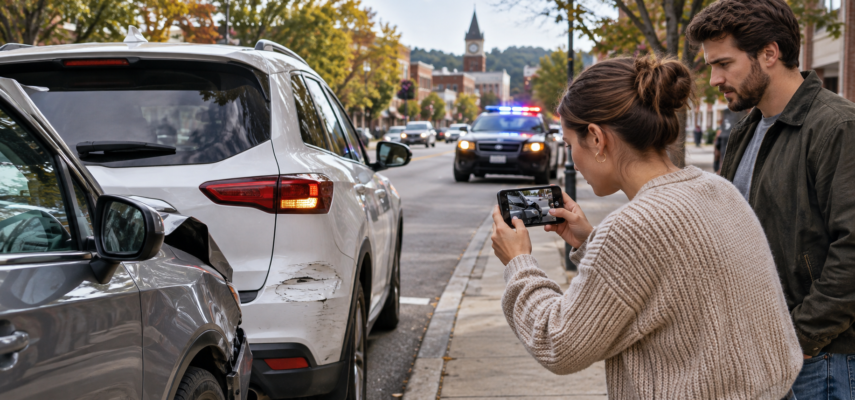
Take photographs only from a safe place. Capture the vehicles, damage, road position, traffic signs, skid marks, and visible hazards. Include wide view angles that show where the vehicles stopped, and then capture closer images of damage. Avoid standing in traffic or delaying medical help to take pictures.
Write down the time, weather, road conditions, direction of travel, and a brief account of events. Save original images and notes in a place you can find later. If a nearby business or home may have recorded the collision, note its location and tell the responding officer.
Keep Roadside Statements Factual
Share basic information with responding officers and answer questions truthfully. Describe what you saw and did, rather than guessing about speed, distance, or another driver’s intentions. If you are unsure, make sure to convey it to the responding officer. Check the report process and ask how to obtain a copy.
Do not apologize, speculate about fault, or agree to a recorded interview before you understand what is being asked. A simple expression of concern is different from accepting responsibility. Keep conversations brief, and avoid posting details or images about the crash on social media.
Notify Your Insurer and Save Records
Contact your insurer promptly and follow the policy’s reporting instructions. Give accurate facts, and keep a copy of what you submit. Ask which forms, photographs, or records the insurer needs, and note the date and name associated with each conversation.
Save repair estimates, towing or storage receipts, medical bills, and missed-work records. Keep emails, letters, and claim numbers together. Do not discard damaged items before documenting them, and avoid signing documents you do not understand. Rules and coverage depend on the policy and circumstances.
Track Recovery and Next Steps
Keep a simple timeline of symptoms, appointments, travel for care, and changes in daily activities. Record missed work and tasks that became difficult. These details can be hard to recall later, especially when treatment continues over time.
Review any paperwork before signing and ask for clarification about unfamiliar terms. If injuries persist, the facts are disputed, or an insurer requests a recorded statement or broad authorization, get advice about your options before responding. Keep copies of every document and note any deadline stated in a letter.
Conclusion
The first hours after a collision are demanding, but a few deliberate actions can preserve facts and support sound decisions later. Put safety and medical care first, then document the scene and keep every related record in one place. Follow the insurer’s reporting process without guessing or signing unclear paperwork. As the situation develops, use your notes to identify unanswered questions and decide whether you need advice about your next step.












