










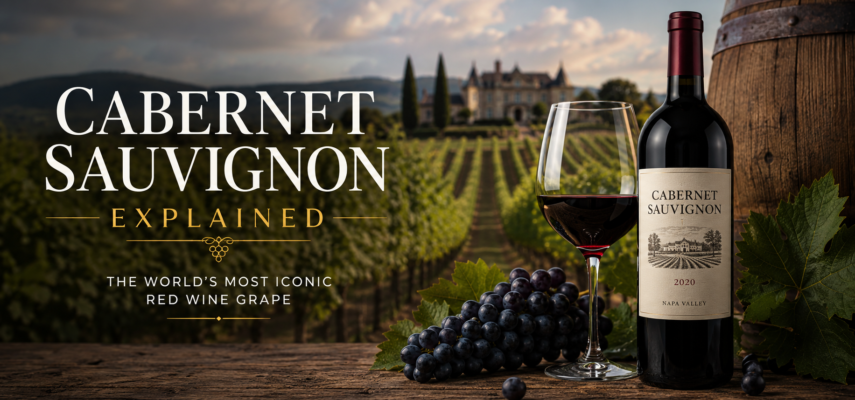
Cabernet Sauvignon is the red wine grape that became a global benchmark.
It is grown almost everywhere wine is made. It appears on steakhouse wine lists, in luxury Bordeaux blends, in cult Napa bottles, and in affordable supermarket wines. For many drinkers, Cabernet Sauvignon is the first “serious” red wine they encounter.
But Cabernet can also be misunderstood. Some bottles are powerful and expensive. Others are lean, earthy, and restrained. Some taste like blackberries and vanilla. Others taste like cedar, graphite, tobacco, herbs, and gravel.
So what exactly is Cabernet Sauvignon? Why is it so famous? And how should a beginner understand it?
At its simplest, Cabernet Sauvignon is a bold red wine grape known for dark fruit, firm tannins, high structure, and long aging potential. It is one of the most important grape varieties in the world because it can produce both reliable everyday wines and some of the most prestigious bottles ever made.
What Is Cabernet Sauvignon?
Cabernet Sauvignon is a red grape variety used to make dry red wine.
It is known for producing wines with:
- Full body
- High tannins
- Dark fruit flavors
- Noticeable acidity
- Deep color
- Strong aging potential
The grape is naturally thick-skinned, which helps explain much of its personality. Thick skins give Cabernet Sauvignon deep color, firm tannins, and concentrated flavor. Those tannins are one reason Cabernet can feel more powerful or drying in the mouth than lighter red wines like Pinot Noir or Gamay.
Cabernet Sauvignon is also famous because it performs well in many different climates. It can produce excellent wine in Bordeaux, Napa Valley, Chile, Australia, South Africa, Italy, Washington State, and many other regions.
It is not always the easiest grape to love immediately, especially for people new to red wine. But once you understand what Cabernet is trying to do, it becomes one of the clearest examples of structure, power, and place in wine.
What Does Cabernet Sauvignon Taste Like?
Cabernet Sauvignon usually tastes like dark fruit, savory herbs, oak spice, and earthy or mineral notes.
Common flavors include:
- Black cherry
- Blackberry
- Blackcurrant
- Plum
- Cedar
- Tobacco
- Graphite
- Leather
- Green bell pepper
- Mint or eucalyptus
- Vanilla
- Cocoa
- Baking spice
The exact flavor depends on where the wine is grown and how it is made.
A warm-climate Cabernet, such as one from Napa Valley, may taste rich, ripe, plush, and fruit-forward. You might notice blackberry jam, cassis, vanilla, chocolate, and sweet oak spice.
A cooler-climate Cabernet, such as one from Bordeaux, may taste more restrained, earthy, and savory. You might notice blackcurrant, cedar, tobacco, graphite, herbs, and a firmer dry finish.
Neither style is automatically better. They simply express different versions of the grape.
Why Cabernet Sauvignon Feels So Bold
Cabernet Sauvignon is considered bold because of its combination of body, tannin, alcohol, and flavor intensity.
Tannin is especially important. Tannins are natural compounds found in grape skins, seeds, stems, and oak barrels. They create a drying, gripping sensation in your mouth, similar to the feeling of strong black tea.
Cabernet Sauvignon usually has high tannins because the grape has thick skins. This gives the wine structure and helps it age, but it can also make young Cabernet feel firm, dry, or intense.
That is why Cabernet is often paired with rich foods. A fatty steak, lamb chop, burger, or braised short rib can soften the perception of tannin and make the wine feel smoother. The wine and food improve each other.
Cabernet Sauvignon and Bordeaux
Cabernet Sauvignon is one of the key grapes of Bordeaux, the famous wine region in southwest France.
In Bordeaux, Cabernet Sauvignon is often blended with other grapes, especially Merlot and Cabernet Franc. The classic Bordeaux blend may also include Petit Verdot, Malbec, and sometimes Carménère, though the first three are the most common.
Cabernet Sauvignon plays a major role in the Left Bank of Bordeaux, especially in areas such as Médoc, Pauillac, Saint-Julien, Saint-Estèphe, and Margaux. These wines are often structured, age-worthy, and complex.
Bordeaux Cabernet is usually less about obvious fruit and more about balance. The wines can show flavors of blackcurrant, cedar, pencil shavings, tobacco, gravel, herbs, and leather.
This is one reason Cabernet Sauvignon became associated with prestige. Some of the most famous and expensive red wines in the world are Cabernet-based Bordeaux blends.
Cabernet Sauvignon and Napa Valley
If Bordeaux represents Cabernet’s old-world identity, Napa Valley represents its modern luxury identity.
Napa Cabernet is often riper, fuller, and more powerful than Bordeaux. The California sunshine allows Cabernet Sauvignon to reach high levels of ripeness, producing wines with dense fruit, generous alcohol, and a plush texture.
Typical Napa Cabernet flavors include blackberry, cassis, black cherry, mocha, vanilla, baking spice, and toasted oak.
Napa Valley helped prove that world-class Cabernet did not have to come from France. Today, Napa Cabernet is one of the most recognizable luxury wine categories in the world.
For many American wine drinkers, “Cabernet” means Napa Cabernet: bold, dark, polished, expensive, and steakhouse-friendly.
Cabernet Sauvignon Around the World
Cabernet Sauvignon is grown across the globe. Its adaptability is one of the reasons it became so dominant.
France
In Bordeaux, Cabernet Sauvignon is usually blended and tends to be structured, savory, and age-worthy.
United States
In Napa Valley, Cabernet is often rich, ripe, full-bodied, and luxurious. Washington State also produces excellent Cabernet with dark fruit, structure, and freshness.
Chile
Chile is one of the best places to find value Cabernet Sauvignon. Chilean Cabernet often combines ripe black fruit with herbal, earthy, and sometimes minty notes.
Australia
Australian Cabernet varies by region. Coonawarra is famous for Cabernet with blackcurrant, mint, and firm structure. Margaret River produces elegant, balanced Cabernet-based wines that can resemble Bordeaux in style.
Italy
In Tuscany, Cabernet Sauvignon is often used in “Super Tuscan” wines. These wines may blend Cabernet with Sangiovese or other international varieties, creating powerful, polished reds.
South Africa
South African Cabernet can show dark fruit, earth, herbs, and firm structure, often sitting somewhere between old-world restraint and new-world ripeness.
Cabernet Sauvignon vs Merlot
Cabernet Sauvignon and Merlot are often compared because they are both important Bordeaux grapes and are frequently blended together.
The basic difference is that Cabernet Sauvignon is usually firmer, more tannic, and more structured, while Merlot is usually softer, rounder, and more approachable.
Cabernet often tastes like blackcurrant, blackberry, cedar, graphite, and herbs. Merlot often tastes like plum, black cherry, chocolate, and soft spice.
A simple way to think about it:
Cabernet Sauvignon has more backbone. Merlot has more softness.
That is why they work so well together. Cabernet brings structure and intensity. Merlot brings roundness and plush fruit.
Cabernet Sauvignon vs Pinot Noir
Cabernet Sauvignon and Pinot Noir are almost opposites in the red wine world.
Cabernet is bold, dark, tannic, and powerful. Pinot Noir is lighter, more delicate, lower in tannin, and often more aromatic.
Cabernet Sauvignon often pairs with steak, lamb, burgers, and hearty dishes. Pinot Noir pairs better with roast chicken, salmon, mushrooms, pork, and lighter foods.
For beginners, this comparison is useful because it shows that red wine is not one category. A glass of Cabernet and a glass of Pinot Noir can feel like completely different beverages.
Why Cabernet Sauvignon Is Often Expensive
Cabernet Sauvignon can be affordable, but the most famous bottles can become extremely expensive.
There are several reasons.
First, Cabernet is tied to some of the world’s most prestigious wine regions, especially Bordeaux and Napa Valley. Land in those regions can be incredibly valuable, and that cost shows up in the bottle.
Second, Cabernet Sauvignon often benefits from aging in oak barrels, which adds cost. High-quality barrels are expensive, and wines that spend many months or years aging require more time, storage, and capital.
Third, Cabernet has a strong luxury identity. Collectors, restaurants, and wealthy buyers compete for top bottles, especially from famous estates and sought-after vintages.
Finally, Cabernet Sauvignon ages well. Wines with aging potential often attract collectors, which can push prices higher.
That said, you do not need to spend hundreds of dollars to enjoy Cabernet. Good Cabernet exists at many price levels, especially from Chile, Washington State, Australia, South Africa, and less famous California regions.
What Foods Pair Best With Cabernet Sauvignon?
Cabernet Sauvignon pairs best with rich, savory foods that can stand up to its tannin and intensity.
Great pairings include:
- Steak
- Lamb
- Burgers
- Short ribs
- Brisket
- Roast beef
- Grilled mushrooms
- Aged cheddar
- Blue cheese
- Meatloaf
- Beef stew
- Pepper-crusted meats
The classic pairing is steak because the fat and protein help soften Cabernet’s tannins. The wine feels smoother, and the food tastes richer.
Cabernet is usually not ideal with delicate seafood, very spicy dishes, light salads, or foods with a lot of sweetness. Those foods can make the wine taste harsh, bitter, or overly alcoholic.
Should Cabernet Sauvignon Be Aged?
Some Cabernet Sauvignon can age beautifully, but not every bottle is meant for long-term cellaring.
High-quality Cabernet from serious producers and strong regions can develop complexity over many years. As it ages, the fruit may become less fresh and more dried or savory. The wine may develop notes of leather, tobacco, cedar, earth, dried herbs, and forest floor.
But many affordable Cabernet bottles are made to be opened young. They are designed for fruit, accessibility, and immediate enjoyment.
A practical beginner rule:
If the bottle cost under $25, it is probably meant to be enjoyed within the next few years. If it is a serious Bordeaux, Napa Cabernet, or high-end bottle from a known producer, it may have aging potential.
When in doubt, ask a wine shop, check the producer’s notes, or buy two bottles: one to drink now and one to revisit later.
How to Serve Cabernet Sauvignon
Cabernet Sauvignon is best served slightly below room temperature.
The ideal serving temperature is usually around 60–65°F. If the wine is too warm, it can taste heavy, alcoholic, and flat. If it is too cold, the tannins can feel sharper and the fruit may seem muted.
A simple method is to put the bottle in the refrigerator for about 20 minutes before serving.
Cabernet can also benefit from air, especially when young. Decanting a young Cabernet for 30 to 60 minutes can help soften the wine and open up its aromas.
You do not need fancy equipment, though. Even pouring a glass and letting it sit for a few minutes can help.
How to Buy Cabernet Sauvignon
When buying Cabernet Sauvignon, pay attention to region, price, and style.
For a bold, rich, fruit-forward style, look for:
- Napa Valley
- Paso Robles
- Sonoma County
- Barossa or Coonawarra
- Warm-climate California Cabernet
For a more structured, savory, classic style, look for:
- Bordeaux Left Bank
- Margaret River
- Chilean Cabernet
- Washington State
- South African Cabernet
For value, consider:
- Chile
- Washington State
- South Africa
- Australia
- California’s Central Coast
- Bordeaux Supérieur
- Côtes de Bordeaux
A good wine shop can be especially helpful with Cabernet because the category is so broad. “Cabernet Sauvignon” alone does not tell you whether the wine will be elegant, earthy, massive, oaky, fruity, or restrained.
Common Beginner Mistakes With Cabernet Sauvignon
One common mistake is assuming all Cabernet is the same. A $15 Chilean Cabernet, a $40 Washington Cabernet, a $90 Napa Cabernet, and a classified-growth Bordeaux can all be made from the same grape but taste very different.
Another mistake is drinking Cabernet too warm. Room temperature in modern homes is often warmer than ideal for red wine.
A third mistake is pairing Cabernet with food that is too light. Cabernet usually wants rich, savory food. It can overpower delicate dishes.
Finally, beginners sometimes judge Cabernet too quickly. Young Cabernet can feel tight, dry, or closed at first. Giving it air and pairing it with the right food can completely change the experience.
Why Cabernet Sauvignon Matters
Cabernet Sauvignon matters because it became one of the world’s great wine languages.
It can express luxury, power, age, terroir, craftsmanship, and global ambition. It helped define Bordeaux. It made Napa Valley famous. It gave collectors a red wine built for cellars, steakhouses, and status.
But Cabernet is not important only because it can be expensive. It is important because it teaches some of wine’s core ideas: tannin, structure, blending, aging, climate, oak, and food pairing.
If Chardonnay is one of the world’s great white wine canvases, Cabernet Sauvignon is one of the world’s great red wine frameworks.
It is not always subtle. It is not always cheap. It is not always easy. But when Cabernet Sauvignon is good, it delivers something few wines can match: depth, power, structure, and a sense that the wine was built to last.
The Bottom Line
Cabernet Sauvignon is a full-bodied red wine known for dark fruit, firm tannins, structure, and aging potential.
It can taste rich and polished, like many Napa Valley examples, or restrained and savory, like many Bordeaux wines. It pairs best with hearty foods, especially steak and lamb. It can be affordable, but its greatest examples are among the most prestigious wines in the world.
For beginners, Cabernet Sauvignon is worth understanding because it explains so much about red wine. Once you understand Cabernet, you understand why tannin matters, why food pairing matters, why region matters, and why some wines become global icons.
Cabernet Sauvignon is not just another red wine.
It is the red wine that taught the world what power in a glass could taste like.












