










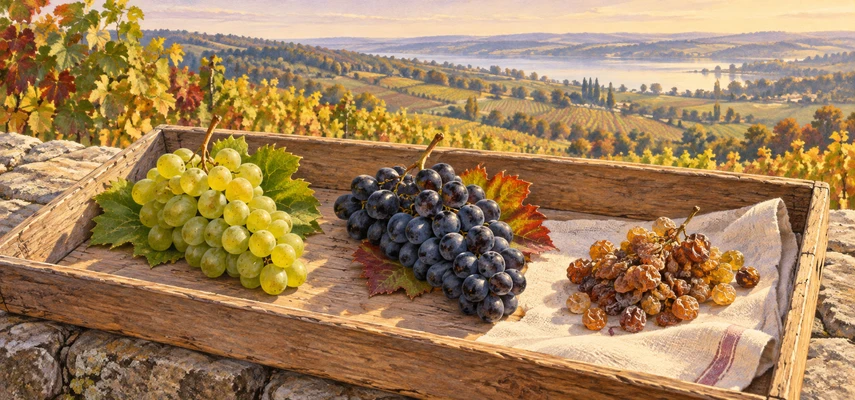

Grüner Veltliner is an excellent way into Austrian wine. It’s a less useful way to explain everything Austria produces. A concentrated Blaufränkisch, an aromatic Styrian Sauvignon Blanc and a botrytised sweet wine from Rust ask different questions of the vineyard, the cellar and the drinker.
For Diploma study, begin with three major regional settings: Niederösterreich, Burgenland and Steiermark. Then separate broad origin, specific DAC identity, vineyard claims and harvest categories. Austria shares some German-language terminology with Germany, but translating an entire classification system across the border is a reliable way to make a confident mistake.
Niederösterreich: follow the Danube, then look beyond it
Niederösterreich, or Lower Austria, includes eight specific wine-growing areas: Wachau, Kremstal, Kamptal, Traisental, Wagram, Weinviertel, Carnuntum and Thermenregion. The regional wine organisation’s overview is a useful starting map. They don’t all have the same grapes, terrain or permitted DAC styles.
Grüner Veltliner and Riesling provide important white-wine comparisons, particularly in the Danube-related regions. In Wachau, terraces, crystalline rocks, loess deposits and contrasting air movements help create varied sites. Riesling on a rocky terrace and Grüner on a deeper loess-influenced parcel offer a starting hypothesis, not an exclusive planting law or guaranteed flavour.
Weinviertel adds a large, varied northern setting whose DAC identity centres on Grüner Veltliner. Carnuntum contributes important reds; Thermenregion brings distinctive whites including Zierfandler and Rotgipfler as well as reds. The broader Niederösterreich designation allows wines outside a narrower DAC’s particular requirements when they qualify for that broader origin. Broader doesn’t mean inherently inferior.
Burgenland: distinguish red ripening from sweet-wine concentration
Burgenland lies farther east, strongly influenced by the Pannonian setting. Blaufränkisch and Zweigelt are important red varieties, while white and sweet wines also matter. The provincial government’s DAC overview distinguishes Neusiedlersee, Leithaberg, Rosalia, Mittelburgenland, Eisenberg and Ruster Ausbruch identities. Treat them as different propositions rather than six interchangeable red-wine names.
Mittelburgenland and Eisenberg are useful starting points for Blaufränkisch; Neusiedlersee is strongly associated with Zweigelt. Leithaberg includes white as well as red wines, and Rosalia adds another red and rosé context. Check the particular wine and current specification before making an exhaustive variety or style claim. Warmth can help maturity without guaranteeing balanced alcohol or ripe tannin in every parcel and season.
Around the Neusiedler See, suitable humidity and subsequent drying conditions can support noble rot. The ministry’s account of Ruster Ausbruch establishes its sweet-wine identity and careful fruit selection. For the protected wine’s production definition, the EU single document specifies white quality-wine varieties. Don’t infer that any shrivelled grape, or every sweet Burgenland wine, qualifies as Ruster Ausbruch.
Steiermark: aromatic whites and a distinctive rosé
Steiermark, or Styria, is Austria’s southeastern wine setting. The regional organisation distinguishes Südsteiermark, Vulkanland Steiermark and Weststeiermark. Hills, exposure, altitude and rainfall make site and fruit-health decisions particularly important. This isn’t simply a southern extension of Burgenland’s red-wine programme.
Sauvignon Blanc is an important reference, alongside Welschriesling, Gelber Muskateller, white Pinot varieties and Morillon, the local name for Chardonnay. Weststeiermark’s Schilcher is associated with Blauer Wildbacher and a distinctive rosé tradition. The regional DAC explanation distinguishes regional, village and vineyard levels and requires hand harvesting for its DAC wines. A lower-priced wine still has to account for that production requirement.
An aromatic young white and an ambitious vineyard wine may differ in selection, texture and maturation. Stronger aroma alone doesn’t prove greater complexity. For Schilcher, brisk acidity can be a deliberate stylistic feature, but deliberate acidity still needs to work with fruit and the rest of the palate. Regional identity explains the ambition; tasting evaluates the result.
Connect environment with the intended grapes
Temperature affects growth, ripening and acid retention. Sunlight supports photosynthesis and modifies bunch conditions. Water availability depends on rainfall, rooting, soil depth and drainage; nutrient availability affects vigour and crop balance. Apply these mechanisms separately to Niederösterreich’s varied Danube and inland settings, Burgenland’s eastern vineyards and Steiermark’s hill sites.
Weather creates frost, hail, heat, drought and harvest-rain risks. Downy and powdery mildew and bunch rot require monitoring. A relatively dry Burgenland site may suffer water stress, while a damp Styrian parcel may need particular attention to canopy airflow and fruit health. A warm season in Niederösterreich can advance maturity without eliminating frost damage suffered earlier in the year.
Noble rot needs suitable fruit and conditions, not permanent dampness. Destructive rot can reduce usable yield instead of producing valuable sweet-wine material. The opportunity to concentrate sugar comes with selection costs, uncertain volumes and fermentation challenges. That is a stronger explanation of price than the claim that sweetness is expensive because it tastes rich.
Adapt vineyard work to the place
Vineyard establishment considers access, slope stability, row arrangement, training and permitted production. Planting materials should match variety, soil, vigour and water conditions. A Wachau terrace, a Burgenland parcel intended for concentrated sweet wine and a steep Styrian white-wine site can demand different practical plans even when each needs healthy, balanced vines.
Nutrient and water management follows observation, analysis and applicable rules. Canopy management balances productive leaf area, airflow and bunch protection. Excessive exposure may damage fruit during heat; excessive shade can delay ripening and retain moisture. Neither completely stripping leaves nor leaving every shoot untouched is a universal Austrian quality measure.
Harvest timing balances flavour, sugar, acidity, health and intended style. Hazard management includes erosion control, maintaining terraces and access, and suitable frost precautions. Pest and disease management combines monitoring, canopy decisions and justified interventions. Hand picking can facilitate selection, but it doesn’t automatically make an unsuitable harvest date sensible.
Make white, red and sweet wines through different decisions
Winemaking approaches include fresh dry whites, more textured whites, fruit-led or structured reds and concentrated sweet wines. Careful grape transportation limits crushing, heating and oxidation. Reception should separate origin, variety, maturity and health. Processing and pressing determine yield, phenolics and usable fractions; handling highly concentrated selected fruit poses different challenges from pressing healthy grapes for an early-drinking white.
Pre-fermentation clarification adjusts solids for the intended white fermentation. Must adjustments require analysis and legal permission. Alcoholic fermentation choices include yeast, nutrition, temperature and vessel. A concentrated sweet must can challenge yeast through high sugar and increasing alcohol, so retaining sweetness isn’t simply neglecting to finish the job. Technical control remains essential.
Malolactic conversion can alter acidity and character and isn’t desirable for every fresh white. Extraction and pressing for reds should suit skin and seed maturity, fruit concentration and the intended drinking window. A youthful Zweigelt and an ambitious Blaufränkisch may need different tannin management. More extraction can create hardness without useful complexity.
Lees maturation can build white-wine texture; wood influences oxygen exposure and, where new, potentially flavour. Blending eligible lots can improve balance or consistency while respecting the claim on the label. Grüner Veltliner doesn’t have to taste obviously oaky to possess substance. Conversely, an appropriately integrated wood component shouldn’t be rejected merely because a wine is Austrian.
Post-fermentation clarification removes unwanted material. Stabilisation considers protein, tartrate and microbial risks as appropriate. Finishing adjustments, sulfur dioxide and filtration should fit analysis and intended distribution. Retained-sugar wines need sound protection against refermentation. Packaging and closures protect the chosen freshness or development plan, while wine transportation requires suitable temperature and handling.
Read legal quality and origin as different information
International and EU protection frameworks, national Austrian law and local DAC specifications interact. A geographical indication defines a regulated origin claim. The ministry’s wine-law explanation distinguishes Qualitätswein within PDO protection, Landwein within PGI and wine without GI. DAC belongs to the protected quality-wine framework rather than serving as a universal sensory score above all other Austrian wine.
The state quality-approval explanation describes analytical and sensory assessment for the official approval number. Passing that process isn’t identical to achieving an outstanding Diploma tasting conclusion. Legal eligibility, typicity and the quality of the particular glass remain related but distinct questions.
Kabinett and Prädikat terms have Austrian conditions; don’t import German assumptions wholesale. Prädikatswein cannot be enriched or receive sweet reserve, and Kabinett also has restrictions including no enrichment. A harvest category doesn’t by itself settle balance or ageing suitability. Eiswein concentration from frozen grapes and Strohwein or Schilfwein concentration through drying are different production routes from noble rot.
Industry associations such as Austrian Wine and regional organisations provide information and promotion, while Vinea Wachau, ÖTW and other producer groups have their own roles. Vinea’s Steinfeder, Federspiel and Smaragd styles are member trademarks, distinct from Wachau DAC. They describe lighter to more powerful dry styles under the association’s conditions. They aren’t three national appellations or proof that the strongest wine is best.
Current rules need checking rather than memorising an old chart. The consolidated Kamptal DAC regulation includes Chardonnay, Weissburgunder and Grauburgunder alongside Grüner Veltliner and Riesling, and sets certification provisions from the 2025 harvest with specified small-producer exceptions. An older summary limiting all Kamptal DAC to two varieties is incomplete.
Austria also has a national legal framework for Erste Lage and Große Lage. Its conditions and formal designation process must be distinguished from existing producer-association classifications. Don’t claim every association-classified site has automatically become a nationally designated cru, or that vineyard classification has no legal basis at all.
Connect styles with customers and cost
Supply depends on harvest, usable fruit, selection and allocation between products. Demand differs between recognisable Grüner Veltliner, specialist Austrian reds, aromatic Styrian whites and concentrated sweet wines. Costs include vineyard labour, selection, cellar work, maturation and inventory. Low juice recovery in a botrytised selection and terrace maintenance in Wachau create different cost pressures.
Legislation affects production, origin claims and destination compliance. Currency exchange changes an importer’s landed cost without altering wine quality. Importing adds freight and intermediary costs. Retail needs understandable variety, origin and sweetness information; HoReCa buyers require staff education and a useful food context. Direct-to-consumer sales can retain revenue but require hospitality and fulfilment. Mature and emerging markets include diverse customers rather than one national preference.
A grower may supply grapes, an estate can coordinate vineyard and cellar, and a winery supplies production capacity. A merchant sources wine or fruit; a broker connects parties without necessarily owning stock. A virtual winery contracts production under its brand, while a custom crush facility provides agreed services. These models clarify responsibility; they aren’t claims that every model is equally common in all three regions.
A cooperative can share equipment and market access. A conglomerate may coordinate several businesses and channels. Examine selection standards and inventory risk rather than assuming ownership determines flavour. Wine brands may lead with variety, place, producer or style, and each choice needs a credible promise.
Marketing concepts start with a target customer and useful information. Marketing options include comparative tastings, estate visits, restaurant education and clear digital explanation. The five Ps connect product, price, place, people and promotion. Explaining a dry Grüner alongside a sweet Burgenland wine can reveal Austrian diversity; calling both simply premium doesn’t help a buyer choose.
Compare the evidence here with Tokaj as a regional case, then apply the regional comparison framework to the comparison. Compare growing conditions, production decisions, style, quality and the commercial reasons for price. Establish the differences rather than assuming that one familiar name must be better.
Original Diploma practice
These original questions and indicative points are teaching material, not official WSET questions or marking allocations.
Question 1: compare two concentration strategies
Compare a fictional Wachau dry white made from ripe healthy grapes with a Burgenland sweet wine made from selected botrytised fruit.
Indicative points: site, harvest, selection, juice recovery, fermentation, balance and cost.
Outline answer: Ripe healthy fruit may support concentration without retained sweetness. Botrytised selection adds dependence on suitable conditions, selection costs and potentially low recovery. High sugar complicates fermentation, and the final sweet wine needs integrated acidity and fruit. Neither greater alcohol nor greater sugar automatically establishes higher quality.
Question 2: evaluate an old classification chart
A buyer’s chart says Kamptal DAC permits only two grapes and every Austrian Erste Lage is solely a private association term. Assess the chart.
Indicative points: current regulation, vintage, varieties, certification, national framework and designation.
Outline answer: Consult current consolidated rules rather than assuming an older chart remains complete. Kamptal’s current variety list is broader, and its certification provisions include exceptions. Austria has a legal vineyard-classification framework, but the existence of that framework doesn’t automatically convert every association classification into a statutory designation. Verify the particular claim.
Question 3: assess a Styrian cellar proposal
A fictional producer proposes full malolactic conversion and substantial new oak for every aromatic white. Evaluate the plan.
Indicative points: grape, acidity, fruit, target style, trials, integration and market.
Outline answer: Consider each lot’s acidity, concentration and intended character. Conversion can alter freshness and aroma; oak can support or obscure fruit. Compare trials and assess balance before assigning a common recipe. Regional prestige and expensive vessels don’t remove the need to evaluate the wine.
Analytical tasting preparation: compare Grüner on its own terms
The official Diploma specification, PDF page 26, makes two Grüner Veltliners essential: one good, and one very good or outstanding. Its optional samples include good or very good Zweigelt, Blaufränkisch or St Laurent, and good or very good Welschriesling or Riesling. These are national study selections rather than a compulsory sample from every Austrian DAC.
Propose two suitable Grüners with contrasting concentration and production ambitions, then add an available red or white optional comparison. These are proposed selections, not actual tastings, automatic grades or examination predictions. Record producer, vintage, origin and technical information after the blind assessment rather than using price to write the conclusion first.
Write full systematic descriptions, including sweetness, acidity, alcohol, body, tannin where relevant, aroma, development and finish. Justify quality through balance, concentration, complexity and desirable persistence. Assess bottle-ageing suitability separately through retained fruit, structure and development. A lighter Grüner can succeed on its own terms; the richer bottle still needs to earn its quality conclusion.












