










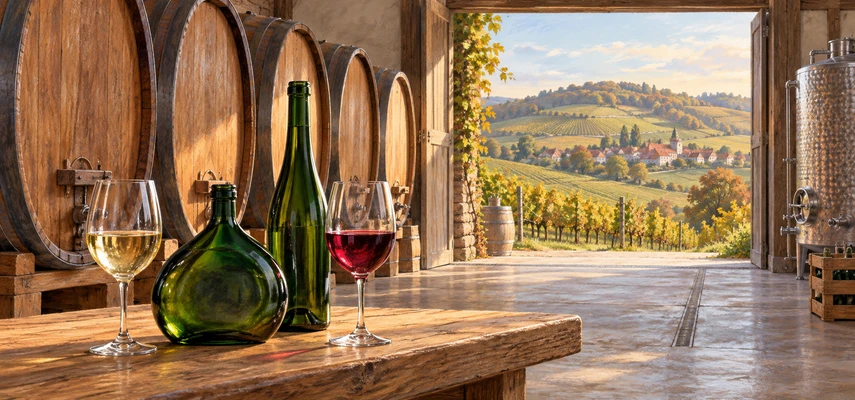

A German wine list can move from Riesling to Silvaner, Pinot Noir, Trollinger and Pinot Gris without leaving the country. That diversity isn’t a collection of exceptions to a Riesling rule. It’s central to understanding German wine, especially when comparing regions whose vineyards, businesses and local customers differ considerably.
Rheinhessen, Pfalz, Baden, Franken, and Württemberg make a useful Diploma comparison because they resist one tidy formula. Learn each region’s location and important varieties, then explain how conditions and production decisions lead to a particular wine. A sunny location isn’t a quality grade, a cooperative isn’t a flavour, and an unusual bottle shape doesn’t tell you how long its contents will improve.
Rheinhessen: a broad regional name with room for ambition
Rheinhessen lies within the broad Rhine bend between the Mainz, Bingen and Worms area, extending inland towards Alzey. The German Wine Institute’s profile describes relatively dry conditions, warm summers, shelter from western uplands and extensive rolling vineyard country. Riesling, Silvaner, Müller-Thurgau and white Pinot varieties belong in the picture, alongside red grapes including Dornfelder and Spätburgunder.
That breadth matters commercially and sensorially. An accessible varietal wine and an ambitious site-specific Riesling can share regional origin while differing in crop, selection, cellar work and price. Don’t make the region’s scale an argument against quality, or its celebrated producers an argument that every bottle must be exceptional.
For an accessible Rheinhessen white, consistent healthy fruit and efficient production may support freshness at a competitive price. For a more concentrated parcel wine, selective harvesting and separate maturation can increase cost and distinctiveness. Neither approach excuses imbalance. The intended market helps explain the production plan; it doesn’t decide the tasting result in advance.
Pfalz: shelter supports a varied wine programme
Pfalz runs along the eastern side of the Pfälzerwald towards the Alsace border. The official regional account identifies Mittelhaardt-Deutsche Weinstraße and Südliche Weinstraße and explains the forest’s sheltering influence. Riesling is important, but Weissburgunder, Grauburgunder, other white varieties and a substantial red-wine programme prevent an exclusively Riesling interpretation.
A favourable warm site can support flavour and phenolic maturity. It can also become challenging in a hot, dry season when water supply and acid balance need attention. A broader dry Riesling is plausible here, but its final weight still depends on site, crop, harvest timing and fermentation. Regional warmth doesn’t compel every Pfalz wine to be high in alcohol.
Compare a fresh Pinot Blanc with a more structured Pinot Noir from the region. The white programme may emphasise controlled pressing and aroma protection; the red requires decisions about skin extraction and tannin. Growing both successfully involves more than choosing a warm district and buying different barrels.
Baden: a long region rather than one warm hillside
Baden stretches from northern districts towards Lake Constance, with considerable geographical diversity. The German Wine Institute distinguishes nine Bereiche and highlights the importance of red and white Pinot varieties. Kaiserstuhl, Ortenau, Markgräflerland and the Bodensee area shouldn’t be treated as interchangeable growing environments.
Spätburgunder, Weissburgunder and Grauburgunder make useful comparisons, while Gutedel is particularly associated with Markgräflerland. Riesling remains relevant, notably in Ortenau. Baden’s association with warmth explains possibilities; elevation, exposure and local conditions still influence the actual season. Don’t infer the same harvest date or acid profile across its length.
An ambitious Baden Pinot Noir can justify careful selection, measured extraction and maturation suited to its concentration. A fresh Gutedel may instead prioritise delicacy and an earlier release. Applying the Pinot’s oak programme to the white simply because both come from Baden would confuse regional identity with winemaking purpose.
Franken: understand Silvaner before judging its perfume
Franken’s vineyards are strongly associated with the Main and the Würzburg area. The regional profile highlights Silvaner, Müller-Thurgau and Bacchus, as well as the recognisable Bocksbeutel bottle. Red wines also occur. Silvaner is a regional calling card, not its only permitted grape.
The VDP’s regional account describes continental influences and differences between sandstone, Muschelkalk and Keuper landscapes. That gives a basis for investigating exposure, water and ripening conditions. It doesn’t turn rock names into compulsory flavours. A restrained aroma can accompany considerable texture and persistence, so don’t judge Silvaner by whether it competes with Riesling for floral intensity.
Dry Silvaner can provide a useful contrasting white-wine study. Crop, maturity, pressing and lees decisions influence its substance and balance. The Bocksbeutel reinforces regional recognition, but it isn’t a sensory grade or a universal identification test. A bottle’s silhouette is considerably easier to assess than its quality; the two tasks shouldn’t be confused.
Württemberg: give the red varieties their identities
Württemberg follows the Neckar and several tributary valleys, with important steep vineyards and a strong cooperative tradition. The German Wine Institute’s regional account highlights Trollinger, Lemberger, Schwarzriesling and Spätburgunder, alongside Riesling as an important white variety. Small parcels and difficult slopes help explain why shared production and marketing resources matter.
Schwarzriesling is Pinot Meunier, as the official grape profile explains; it isn’t a dark-skinned version of Riesling. Regional names and synonyms deserve careful attention before sensory comparisons begin. A light red and a structured red may both be deliberate styles rather than different degrees of success at making the same wine.
A fresh Trollinger programme can emphasise fruit, moderate extraction and relatively prompt release. A more structured Lemberger or Pinot Noir may support a different extraction and maturation plan when the material warrants it. The region’s local following offers a route to market, but a buyer elsewhere may need more explanation of variety and style.
Apply climate and soil knowledge to all five regions
Temperature affects growth, ripening and acid retention; sunlight supports photosynthesis and modifies bunch conditions. Water availability depends on rainfall, rooting, soil reserves and drainage. Nutrient availability affects vigour and crop balance. Apply those mechanisms to the sheltered Rheinhessen and Pfalz settings, Baden’s varied districts, Franken’s continental influences and Württemberg’s valley sites rather than assuming one German climate.
Weather creates frost, hail, harvest rain, heat and drought risks. Downy and powdery mildew and bunch rot still require attention. A comparatively dry Rheinhessen vineyard isn’t disease-free; a warm Baden parcel isn’t immune to poor ripening in an unfavourable season. Frost exposure in a Franken hollow can differ from a nearby slope, while intense rain on a Württemberg terrace creates different practical problems from the same rain on accessible Pfalz ground.
Vineyard establishment considers slope stability, access, drainage, training and intended production. Planting materials should suit variety, soil, vigour and water conditions. Nutrient and water management follows vine status and permitted practice. Canopy management balances effective leaf area, airflow and bunch protection: exposure that helps fruit dry can become excessive during a heatwave.
Harvest timing balances flavour, sugar, acidity, fruit health and intended style. Hazard management includes erosion control, maintaining access and appropriate frost precautions. Pest and disease management combines observation, canopy work and justified intervention. Compare maintaining Württemberg terraces with operating on an accessible Rheinhessen parcel: labour costs can differ before either grape reaches the cellar.
Compare cellar choices through the intended wine
Winemaking approaches range from fresh whites and light reds to structured, concentrated wines. Careful grape transportation limits crushing, heating and oxidation. Reception should separate variety, origin, maturity and health. Processing and pressing affect yield, phenolics and usable fractions. Pre-fermentation clarification adjusts solids for the desired fermentation, without assuming maximum clarification means maximum quality.
Must adjustments require analysis and legal permission. Alcoholic fermentation choices include yeast, temperature, vessel and nutrient management. A Pfalz dry Riesling, Franken Silvaner and Baden Pinot Gris can all involve different balances of alcohol, acidity and texture without one universal regional recipe. Retained sugar changes palate balance and stability requirements; it doesn’t automatically indicate inferior wine.
Malolactic conversion can soften acidity and alter character, so its suitability depends on the wine. Extraction and pressing for reds should follow skin and seed maturity, concentration and target style. Intensive extraction may overwhelm a light Württemberg red while still failing to improve a poorly balanced Baden Pinot. More colour isn’t a reliable substitute for better tannin.
Lees maturation can add texture to whites; wood choices influence oxygen exposure and potentially flavour. Blending eligible lots can improve balance or consistency while respecting origin claims. For a Rheinhessen commercial blend, reliable style may be central; for a Franken parcel wine, maintaining identity may matter more. These aims can both be legitimate, provided the result is sound and honestly labelled.
Post-fermentation clarification removes unwanted material. Stabilisation considers protein, tartrate and microbial risks where relevant. Finishing adjustments, sulfur dioxide and filtration should suit analysis and the intended distribution. Packaging and closures protect freshness or planned development. Wine transportation needs appropriate temperature and handling; neither a prestigious Pfalz name nor a heavy Baden bottle prevents heat damage.
Read German labels with the current framework
International and EU protection frameworks, national German law and local protected-origin specifications interact. A geographical indication defines a regulated origin claim. Qualitätswein and Prädikatswein sit within the PDO framework; Landwein illustrates PGI, while Deutscher Wein without GI makes another category of claim. A broad category doesn’t authorise otherwise ineligible wine to use one of these five protected regional identities.
The current DWI legal guidance explains the origin reforms mandatory from the 2026 vintage, with transitional treatment for earlier vintages. The origin hierarchy distinguishes broader, village and individual-site claims under their conditions. Check the operative category and vintage rather than applying one historical summary to every bottle.
Industry associations such as DWI inform and promote; they don’t replace regulatory authorities. The VDP classification has its own association requirements and shouldn’t be mistaken for the entire national system. A narrower origin, membership or prestigious dry-wine designation cannot establish outstanding sensory quality by itself.
The Prädikat framework addresses grape ripeness at harvest, not universal finished-sugar bands. The sweetness guide addresses another question; feinherb has no fixed legal sweetness definition. Prädikatswein cannot be enriched. Keep permitted enrichment of other categories separate from finished sweetness and from the question of whether a wine tastes balanced.
Explain price through the business as well as the vineyard
Supply depends on usable harvest and allocation between products. Demand differs between regional favourites, familiar international varieties and specialist site wines. Costs include vineyard work, selection, cellar resources, maturation and inventory. A steep Württemberg parcel may carry high labour cost, while a widely distributed Rheinhessen brand may require substantial logistics and promotion. Neither cost pattern proves superior quality.
Legislation affects production, claims and destination compliance. Currency exchange changes an importer’s landed cost without altering the wine. Importing adds freight and intermediary costs. Retail needs understandable origin and sweetness information; HoReCa buyers require staff education and a useful food context. Direct-to-consumer sales can improve revenue per bottle but require service and fulfilment. Mature and emerging markets contain varied customers, not one universal appetite for German sweetness.
A grower may supply grapes, an estate can coordinate vineyard and cellar, and a winery provides production capacity. A merchant sources wine or fruit; a broker connects parties without necessarily owning stock. A virtual winery contracts production under its brand, while a custom crush facility supplies agreed production services. These are comparisons of responsibility, not claims that every model is equally common in all five regions.
A cooperative shares resources and market access, particularly relevant to Württemberg’s small-parcel context and also present elsewhere. A conglomerate may coordinate multiple businesses and channels. Assess fruit standards, incentives, selection and inventory risk rather than treating scale as a tasting note. Wine brands can lead with place, variety, producer or style.
Marketing concepts begin with a defined customer and credible promise. Marketing options include local hospitality, restaurant training, comparative tastings and clear digital explanation. The five Ps connect product, price, place, people and promotion. A Franken Silvaner may benefit from explaining texture and food context; a Württemberg red may need its grape identity clarified. Neither needs an invented claim that all regional wines taste alike.
Compare the evidence here with Austria as a regional case, then apply the regional comparison framework to the comparison. Compare growing conditions, production decisions, style, quality and the commercial reasons for price. Establish the differences rather than assuming that one familiar name must be better.
Original Diploma practice
These original questions and indicative points are teaching material, not official WSET questions or marking allocations.
Question 1: evaluate a regional climate shortcut
A fictional buyer expects every Baden wine to have more alcohol and less acidity than every Franken wine. Evaluate the comparison.
Indicative points: regional context, district, site, season, variety, harvest and fermentation.
Outline answer: Regional conditions provide context, but Baden’s extent and both regions’ site diversity prevent a universal ranking. Variety, crop, season and harvest timing affect grape composition; fermentation affects alcohol and retained sugar. Compare the actual wines and relevant technical information. Warmth creates possibilities rather than one compulsory style.
Question 2: compare two production plans
A fictional business proposes the same intensive extraction and new-oak regime for fresh Württemberg Trollinger and concentrated Baden Pinot Noir. Assess the proposal.
Indicative points: material, style, tannin, vessel, integration, time and price.
Outline answer: A fresh wine may lose its intended balance under excessive tannin and oak. The Pinot’s concentration still needs testing before an ambitious programme is justified. Trial extraction and maturation separately, then consider likely selling price and inventory cost. Expenditure isn’t evidence that the result is better.
Question 3: assess a cooperative’s premium wine
A retailer rejects a fictional cooperative’s selected Pfalz Riesling because cooperative production supposedly prevents high quality. Evaluate the argument.
Indicative points: fruit standards, incentives, selection, resources, cellar decisions and tasting.
Outline answer: Examine how members are rewarded for suitable fruit and whether selected lots remain separate. Shared resources may support technical control and market access. Scale can create coordination challenges, but it doesn’t establish the wine’s balance or complexity. Judge the bottle and its production evidence rather than its ownership model alone.
Analytical tasting preparation: complete the German contrasts
The official specification, PDF page 26, sets a national German programme. To extend its essential dry-white comparison, propose very good or outstanding Franken Silvaner against the very good or outstanding dry Riesling selected earlier. A contrasting region or different white variety meets that contrast’s intent; a new compulsory flight for each region isn’t required.
Group 1 also includes an acceptable or good branded wine and very good Spätburgunder. A suitable Rheinhessen branded wine and Baden Pinot Noir could contribute, with availability and actual quality checked. Group 2 compares the same region, producer and variety across Kabinett or Spätlese, Auslese, and Beerenauslese or Trockenbeerenauslese; don’t invent separate quality requirements for those rows. Good Dornfelder and very good or outstanding Eiswein are optional. These are proposed study selections, not actual tastings, official grades or exam predictions.
Write full systematic descriptions before revealing identity. Evaluate sweetness, acidity, alcohol, body, tannin where relevant, aroma, development and finish. Justify quality through balance, concentration, complexity and desirable persistence. Assess bottle-ageing suitability separately through retained fruit, structure and development. Restrained Silvaner needn’t imitate aromatic Riesling, and an enjoyable early-drinking red needn’t promise decades of improvement.











