History of Public Service Enterprise Group
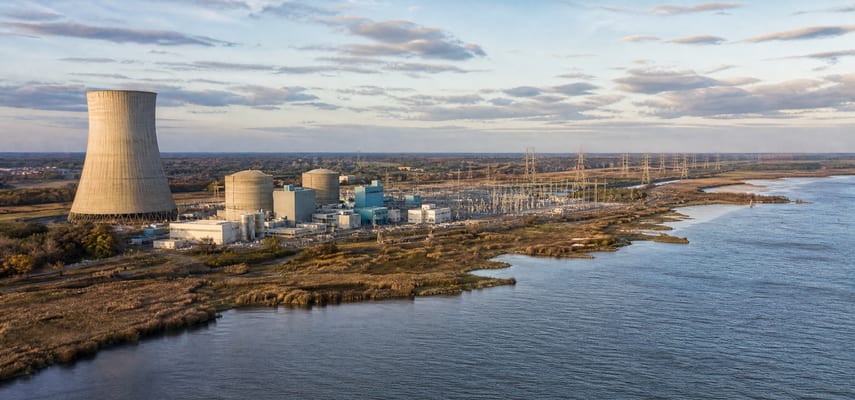
When you look at New Jersey’s power infrastructure—its transmission lines, neighborhood substations and the squat concrete domes of Salem and Hope Creek—you are tracing the work of a single corporate lineage that has shaped how the state gets light, heat and industrial power. Public Service Enterprise Group, known to most residents simply by its utility arm PSE&G, did not arrive fully formed. Its history is a century-long sequence of consolidations, engineering bets, regulatory battles and strategic pivots that reflect the larger shifts in American energy: from local gasworks and streetcars to nuclear reactors, wholesale competition and the modern push for resilience and decarbonization.
Roots in early 20th-century consolidation
PSEG’s ancestry lies in the patchwork of small gas, electric and transit companies that served New Jersey towns at the turn of the 20th century. Utilities in that era were local and fragmented: gas works provided town lighting, separate electric companies experimented with incandescent lighting, and numerous independent trolley and streetcar lines provided transit. Over the first decades of the 1900s, founders and financiers pursued consolidation as a model for delivering consistent service and spreading the heavy capital costs of wires, mains and generating plants across larger customer bases.
Out of that consolidation emerged Public Service Electric and Gas Company—usually referred to as PSE&G—the regulated utility that would become the state’s dominant provider of both electricity and natural gas. By bringing together previously separate gas and electric operations, PSE&G could plan system expansion, centralize metering and billing, and make large infrastructure investments. Those choices mattered: centralized utilities created the engineering scale needed to wire suburbs, support wartime manufacturing and extend dependable service to millions of customers.
Public Service Corporation was formed in 1903 from more than 400 New Jersey gas, electric and transportation companies, and its first president was Thomas McCarter. In the company’s early years it began centralizing generation and distribution—opening the Marion steam generating station in 1906—and PSE&G was later incorporated in 1924 through a merger that included Public Service Gas Company and Public Service Electric Company, formalizing the unified utility.
Mid-century growth: suburban expansion and the regulated model
Through the mid-20th century, PSE&G mirrored the broader American utility growth story. Postwar housing and industry pushed demand upward, and regulated rate-of-return regulation encouraged steady investment in power plants, distribution lines and gas mains. The company’s engineers layered the grid outward from urban cores into new suburbs; at the same time, utilities like PSE&G became fixtures of local civic life, visible in sponsorships, employment and municipal relationships.
That regulated environment shaped corporate incentives. Utilities were rewarded for capital investment but constrained on how much profit they could earn. The tradeoff made sense in an era when centralized generation—powered by coal and later by oil and gas—delivered cheap, reliable energy at scale. Yet it also locked utilities into large, long-lived infrastructure whose economics would prove vulnerable to later market and policy shocks.
Nuclear power and the era of large plants
Beginning in the 1960s and accelerating into the 1970s, utilities across the United States made a second capital bet: nuclear power. For PSE&G, that meant investing in sizeable nuclear plants on the Delaware River in Salem County. The Hope Creek and Salem nuclear generating stations came to represent a strategic shift. Nuclear promised large amounts of carbon-free baseload power and, for utilities, an opportunity to anchor long-term supply with assets that could run almost continuously.
Building and operating nuclear units demanded a new institutional skill set—rigorous regulatory compliance, complex engineering and emergency planning—and it exposed utilities to new kinds of risk: construction delays, cost overruns and, after the Three Mile Island accident in 1979 and later in the decade, intense public scrutiny. For PSE&G, nuclear ownership made the company a major player in the regional wholesale markets, even as it remained the principal regulated distributor of electricity and gas to New Jersey customers.
Creating a holding company and moving into competition (late 20th century)
By the late 20th century, the U.S. utility industry was under pressure from changing policy, technological innovation and the rise of wholesale electricity markets. In response, many integrated utilities reorganized to separate regulated functions from competitive businesses. Public Service Enterprise Group as a corporate identity emerged from that moment.
Public Service Enterprise Group was incorporated in New Jersey on July 25, 1985; the holding-company reorganization placing PSE&G beneath the new parent took effect in 1986. PSEG Power was later formed in 1999 amid New Jersey’s electric-industry restructuring. A holding-company structure allowed PSEG to keep the regulated utility under one legal roof while pursuing merchant generation, energy services and other competitive activities elsewhere. That separation was more than corporate housekeeping: it reflected a strategic judgment that some parts of the business—delivery of safe, regulated service—would remain stable and price-regulated, while other parts—power generation in a changing market—required greater flexibility and different commercial approaches.
PSEG Power, merchant markets and the volatility of de-regulation
As wholesale electricity markets opened and natural gas markets evolved, PSEG followed the industry trend of expanding its merchant generation presence. PSEG Power acquired and developed fossil-fueled plants and marketed electricity into regional power markets. Those merchant activities gave the company exposure to market upside but also made it sensitive to commodity cycles: when natural gas prices sagged and renewables penetrated the market, merchant fleets faced margin pressure.
For customers and regulators, the rise of merchant generation raised questions about the appropriate scope of a utility’s activities. The contrast between the steady, regulated returns of PSE&G and the swinging fortunes of merchant generators became a recurring theme in PSEG’s corporate story. The company had to balance the capital needs of distribution—poles, wires, meters—with the unpredictable economics of wholesale generation.
Leadership under Ralph Izzo and a strategic reorientation (2007–2022)
Ralph Izzo became PSEG’s chairman, president and chief executive officer effective April 1, 2007, after serving as president and chief operating officer from October 2006. He remained CEO through August 31, 2022; Ralph LaRossa succeeded him on September 1, 2022. Izzo, an engineer by training, presided over a period in which the company sharpened its emphasis on grid investments, system reliability and the long-term economics of nuclear generation. Under his leadership, PSEG retained its regulated utility core while also managing its merchant-generation portfolio and operating its nuclear stations through the unit known as PSEG Nuclear.
Izzo’s tenure coincided with two defining pressures: the financial crisis of 2008 and a long-term policy shift toward decarbonization. Those forces pushed utilities to think differently about risk, capital allocation and the mix of generation serving customers. For PSEG, the result was a blend of continued investment in transmission and distribution and an intensified focus on making nuclear assets competitive in a low-carbon future.
Superstorm Sandy and the test of resilience (October 2012)
Few events in recent memory tested New Jersey’s energy systems like Superstorm Sandy in October 2012. The storm’s storm surge and high winds damaged transmission and distribution infrastructure across the state, causing about 2.8 million customers statewide to lose power; full restoration took about two weeks. For PSE&G, the emergency was both operational and reputational: crews worked around the clock to clear fallen lines, repair flooded substations and restore service, while customers and regulators demanded faster, more resilient responses.
The consequences were concrete. In the storm’s aftermath, PSE&G and other utilities accelerated programs to harden critical parts of the grid: elevating equipment, strengthening substations, replacing vulnerable overhead lines and improving mutual-aid protocols. Regulatory filings and subsequent storm-recovery investments reflected a judgment that climate-driven extremes would increase the need for capital spent on resilience rather than on incremental service expansion alone.
Grid modernization, smart meters and the digital utility
Throughout the 2010s and into the 2020s, PSEG pushed a modernization agenda that mirrored national trends: the smartening of the grid. Investments in advanced metering infrastructure, distribution automation, and improved outage management systems changed how the company detects problems and communicates with customers. Smart meters enabled more granular data on usage patterns and made certain customer-facing programs—time-of-use rates, demand response—technically feasible.
Why this mattered: the old one-way grid—central plants sending electrons to customers—was giving way to a two-way system with distributed resources. Utilities that could not integrate distributed generation, electric vehicles and behind-the-meter storage risked operational stress and missed efficiency opportunities. PSEG framed grid modernization as necessary both to deliver better service and to enable the state’s evolving energy policy goals.
Regulatory environment and New Jersey’s clean-energy ambitions
State policy played a decisive role in shaping PSEG’s strategy. New Jersey’s Board of Public Utilities and successive governors influenced the pace and character of decarbonization: mandates for renewable portfolio standards, incentives for energy efficiency, and later, more aggressive targets for offshore wind and greenhouse gas reductions. The state’s 2019 Energy Master Plan set explicit goals for emissions reductions and renewable deployment; utilities like PSE&G were compelled to adjust investment plans and customer programs in response.
PSEG’s decisions—how much to invest in batteries, whether to bid into offshore wind projects, and how to adapt rates to support electric vehicle charging—were therefore not made in a vacuum. They reflected an interplay of corporate judgment, regulatory incentives and public policy priorities. For customers, the result was a mix of new programs, higher capital spending, and debates about cost allocation and fairness.
Nuclear operations and the low-carbon balancing act
PSEG Nuclear remained a strategic asset. The Salem and Hope Creek plants continued to deliver large amounts of low-carbon baseload power, a valuable attribute as states moved to reduce emissions. At the same time, nuclear economics became increasingly complex: aging reactors require substantial capital for maintenance and upgrades, wholesale prices can undercut operating margins, and public acceptance of nuclear safety remains a political variable.
For PSEG, operating nuclear plants meant committing to high standards of safety and long-term investment, even as the market rewarded flexible and low-cost gas-fired plants and growing quantities of intermittent renewables. The company’s stewardship of these plants shaped its role in regional transmission planning and in discussions about how to preserve carbon-free generation in markets that did not directly price carbon.
Divestments, portfolio reshaping and the 2010s trading environment
Across the industry, many utilities scaled back merchant-generation exposure and refocused on regulated infrastructure. PSEG was no exception: through a series of portfolio decisions the company adjusted the size and character of its non-utility generation holdings, shifting capital toward distribution modernization and away from assets that delivered volatile merchant returns.
This reshaping mattered because it redefined risk. A utility that leans into regulated distribution enjoys steadier returns and a clearer regulatory pathway for cost recovery; a merchant generator benefits from upside in power prices but must weather cycles. PSEG’s choices illustrated the larger industry trend of privileging the regulated franchise as the anchor of long-term corporate value.
Customer-facing changes: efficiency programs, electrification and resiliency investments
In the 2010s and into the 2020s, PSE&G expanded programs aimed at customers: energy-efficiency rebates, demand-management programs, and pilot deployments for electric vehicle infrastructure. Those initiatives had practical goals—reducing peak load, deferring expensive upgrades, and lowering bills for participating customers—and strategic ones: shaping future demand and positioning the utility as an active manager of a decarbonizing grid.
At the same time, investments in storm-hardening, tree-trimming protocols and more robust distribution designs reflected an acceptance that climate change would increase the frequency of severe weather events. These investments demanded public buy-in and regulatory approval, and they reshaped how utilities defined prudent capital spending.
Corporate footprint and the modern public company
Public Service Enterprise Group today wears multiple hats: it remains the parent of a regulated utility, a nuclear operator and a corporation that manages corporate finance, investor relations and strategic planning. The company’s headquarters in Newark—at an office address long associated with PSE&G—serves as the operational center from which executives coordinate investments and regulatory strategies across New Jersey and the regional grid.
PSEG is publicly traded and accountable to shareholders, which means balancing short-term financial performance against the long-lived nature of utility investments. That tension—between quarterly expectations and the decades-long life of power lines and reactors—runs through much of the company’s decision-making.
Recent years and the path ahead (late 2010s–2020s)
In the most recent years, the company’s actions have reflected a blend of continuity and change. Continuity in the sense that PSE&G still delivers electricity and gas to New Jersey residents and maintains large generating assets; change in the sense that the utility is actively adapting to a policy-driven push for lower emissions, more distributed resources and a more resilient grid.
Key themes dominate PSEG’s near-term horizon. One is decarbonization: preserving low- or zero-carbon resources such as nuclear while integrating renewables and storage. A second is resilience: hardening infrastructure and improving response capabilities after high-impact storms. And a third is customer transition: facilitating electrification of heating and transportation while managing the cost and fairness implications of those transitions for ratepayers.
How PSEG balances those priorities will matter not just for its shareholders but for millions of New Jersey residents and businesses that depend on reliable, affordable energy. Utilities operate within a tight web of technical constraints, regulatory oversight and public expectations. The company’s future choices—what to build, what to retire, and how to allocate costs—will determine how the state navigates its energy transition.
What the history shows
PSEG’s history is a mirror of American utility evolution. It shows how local gasworks and trolley lines were consolidated into large regulated systems, why utilities built nuclear plants and how they later adapted to wholesale market competition and climate-driven policy shifts. The company’s arc—from early consolidation to mid-century regulated utility to late-20th-century diversification and 21st-century grid modernization—illustrates the recurring theme of tradeoffs: centralized reliability versus competitive risk, long-term infrastructure versus short-term market flexibility, and the technical challenges of integrating new energy resources into legacy systems.
Above all, the company’s story underlines an essential fact about modern energy: supply networks are societal infrastructure. Decisions made by utilities, regulators and elected leaders about capital investments, environmental goals and customer protections ripple across communities for decades. Public Service Enterprise Group’s century-long presence in New Jersey makes it a central actor in those decisions—and a useful case study in how a legacy utility adapts to the demands of a low-carbon, climate-constrained future.
Conclusion
Public Service Enterprise Group is not a single, unchanging entity; it is the product of successive strategic choices in response to engineering challenges, regulatory pressures and shifting politics. From the early consolidation of gas and electric firms to the construction and operation of nuclear stations, from the era of merchant generation to the modern emphasis on resilience and decarbonization, PSEG’s history is a series of responses to changing circumstances. The next chapters will be written in the wires and substations of New Jersey neighborhoods, in boardrooms weighing investments in storage and offshore renewables, and in public forums debating how to balance cost, reliability and climate goals. Those choices will determine whether the company’s legacy is one of steady stewardship or of missed opportunity as the state moves toward a very different energy system.