Hiring the wrong attorney for a DUI case in Idaho isn’t just a financial mistake. It’s a strategic one that shows up in the outcome.
Canyon County courts move on a specific timeline. Idaho’s DUI statutes carry consequences that reach well beyond the courtroom, and the difference between adequate representation and genuinely experienced representation is measurable in what actually happens to your case. Before you commit to anyone, there are questions worth asking directly. A Nampa DUI attorney who knows these courts, understands Idaho’s implied consent laws, and has handled cases like yours in this specific jurisdiction will answer them without hesitation. One who hasn’t will tell you quickly.
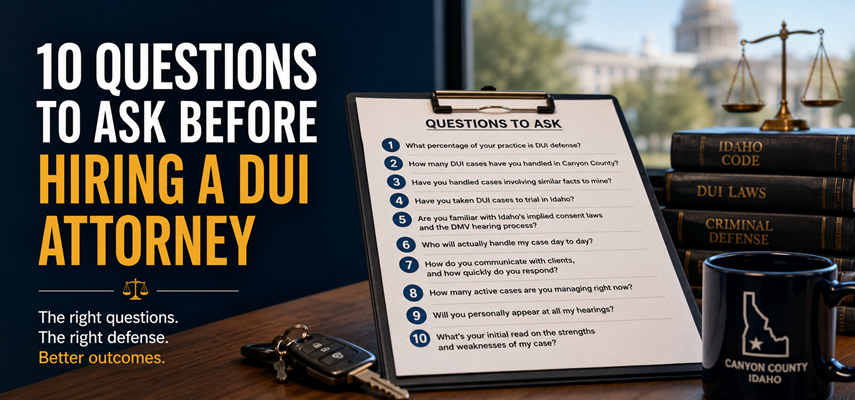
Here are 10 of them.
1. What percentage of your practice is DUI defense specifically?
General criminal defense experience and DUI-specific experience aren’t the same thing.
- Idaho’s DUI statutes, implied consent laws, and administrative hearing processes are specific and technical.
- An attorney who handles DUI cases regularly knows the procedural landscape in ways a generalist doesn’t.
- Ask directly what portion of their active caseload involves DUI matters.
2. How many DUI cases have you handled in Canyon County?
Local familiarity matters in ways that are hard to overstate.
- Judges in Nampa’s courts have tendencies. Prosecutors in Canyon County operate with specific patterns.
- An attorney who appears here regularly knows what arguments land and what realistic outcomes look like.
- Someone without that local experience is working with less information at every stage.
3. Have you handled cases involving similar facts to mine?
A standard DUI and a case involving a high BAC, a minor in the vehicle, or an accident are different matters entirely.
- Idaho’s enhanced penalties for aggravated DUI carry significantly different exposure.
- Prior DUI history changes the classification and the consequences dramatically.
- Knowing whether your attorney has previously handled a case with your specific fact pattern is important.
4. Have you taken DUI cases to trial in Idaho?
Most cases settle. But knowing your attorney is genuinely prepared to litigate changes the dynamic in negotiations.
- Prosecutors approach plea negotiations differently when they know the defense will go to trial if necessary.
- An attorney who builds their entire practice on quick settlements may not serve you well if a trial becomes the right call.
- Ask how many DUI trials they’ve handled and in which courts.
5. Are you familiar with Idaho’s implied consent laws and the DMV hearing process?
The administrative license suspension process operates on a tight deadline and is separate from the criminal case.
- Missing the DMV hearing request window results in automatic suspension with no recourse.
- Handling both the criminal case and the administrative hearing requires specific knowledge of how each process works.
- This question tells you quickly whether the attorney understands the full scope of a DUI case in Idaho.
6. Who will actually handle my case day to day?
In larger firms, the attorney you meet in consultation isn’t always the one managing your file.
- Find out whether you’ll be working directly with them or primarily with a paralegal or associate.
- Understand who will appear at hearings on your behalf.
- Knowing this upfront prevents surprises at critical moments in the case.
7. How do you communicate with clients, and how quickly do you respond?
Responsiveness matters in a DUI case where deadlines are tight, and decisions move fast.
- Ask whether communication runs through email, phone, or a case management portal.
- Understand the expected response time for routine questions and urgent matters.
- An attorney who can’t give you a clear answer here is telling you something.
8. How many active cases are you managing right now?
Caseload affects attention. It’s a fair and direct question.
- An attorney managing an unmanageable volume has less bandwidth for the details that change outcomes.
- There’s no perfect number, but a confident, organized attorney won’t be bothered by the question.
- What you’re assessing is whether your case will get the focus it actually requires.
9. Will you personally appear at all my hearings?
Not all firms operate this way, and the difference matters.
- Substituting an associate at a hearing without notice is more common than clients expect.
- Continuity of representation affects how well your case gets argued at each stage.
- Get clarity on this before signing anything.
10. What’s your initial read on the strengths and weaknesses of my case?
A good attorney gives you an honest assessment in the first consultation.
- Vague reassurances without specific analysis are a warning sign.
- You want someone who asks detailed questions and then gives you a realistic picture.
- If everything sounds fine without any caveats, that’s worth being skeptical about.
One Last Thing
The consultation itself is part of the evaluation.
How an attorney listens, how specifically they engage with your facts, and whether they treat your situation as genuinely important are all signals worth reading carefully. A DUI charge in Nampa carries real consequences, and you deserve representation that takes both the case and the client seriously.
The questions above tell you a lot. How the answers get delivered tells you even more.