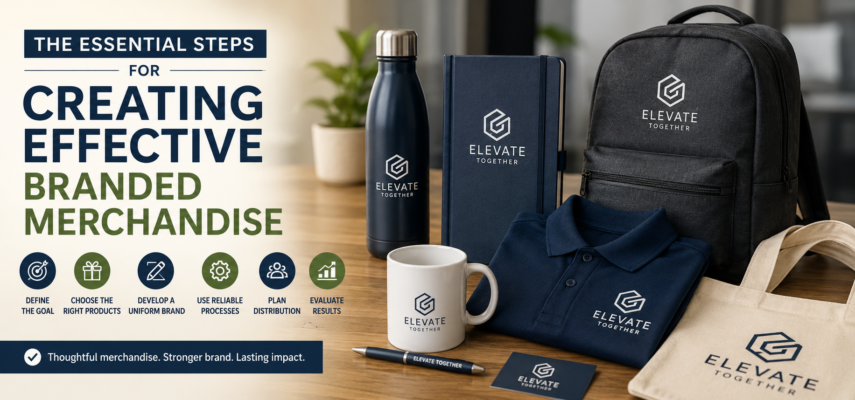
Branded merchandise is a tool that allows companies to be seen by more people, develop connections with clients and maintain a uniform image. Organizations frequently distribute promotional items to share their principles and remain present in the minds of consumers, staff plus partners. Creating successful merchandise involves more than applying a logo to an object. A deliberate strategy ensures that every product contributes to marketing objectives and represents the organization accurately.
The initial phase in this process is to define the goal of the project. A company is responsible for deciding if the intent is to raise public awareness, assist at a function, provide gifts to clients or increase staff involvement. Clear goals assist in making choices about which items to buy, how they look and how people receive them – this focus ensures that products are useful rather than becoming items that individuals discard.
Selecting Products That Align With the Organization
Choosing appropriate objects is necessary to ensure that recipients find them helpful but also use them often. Managers are encouraged to think about the people they are reaching, the specific field of business and the characteristics of the company when they pick items. Products that serve a purpose in daily life are visible for longer periods because people are likely to retain them.
Durability is a significant factor during the development of these goods. Items that break easily or look cheap can harm the reputation of a business, whereas sturdy products can build a sense of reliability. Products like corporate clothing, bags, containers for liquids and electronic tools are expected to meet the standards that a company wants to project.
Developing a Uniform Visual Strategy
A coherent visual plan ensures that merchandise matches the overall identity of the company. Symbols, text styles as well as written messages are most effective when they stay the same across all materials – this uniformity makes it simple for a person to link a promotional item to the specific business.
Designers are more successful when they keep graphics simple and easy to understand. Visuals that contain too many elements can look untidy and are less effective. If a company uses t shirt printing for a project, the artwork is best when it is legible or stays attractive while showing the message of the brand clearly.
Choosing Dependable Manufacturing Processes
The way a product is made changes how it looks and how well it functions. It is helpful for businesses to cooperate with suppliers who have experience with different materials and printing techniques. Picking the correct method ensures that logos stay accurate next to look professional on various surfaces.
Managers are advised to check physical samples before they buy large quantities. Testing a product allows a business to find problems with color, size or material before the items reach the public – this stage prevents errors and helps maintain an even image throughout the project.
Organizing Distribution Methods
Functional merchandise requires a plan for how the products will reach the audience. Companies are responsible for deciding the location and time of distribution to achieve the best results. Professional gatherings, staff programs plus client gift initiatives are common times to give away these items.
Presentation affects how a person feels about the organization. Using specific packaging or adding a written note can make an item feel more significant. An organized plan for giving out items ensures that the merchandise builds a relationship instead of being distributed without a reason.
Evaluating the Results of the Project
Monitoring the outcome of a merchandise project helps a company learn what is successful. Staff can look at comments from clients, the reactions of employees and how often the brand is mentioned to judge the work – these details allow future projects to be more precise.
Long-term benefits are also an important consideration – Items that individuals continue to use after a specific event provide continuous visibility. Checking the results regularly allows a company to make better choices about future designs and strategies.
Building A Long Term Merchandise Strategy
Developing effective branded items is a continuous task that requires organization but also focus. Businesses that treat these products as a core part of their identity can build better relationships with people and improve how often they are recognized. A successful plan combines careful product choice, uniform visuals, reliable manufacturing and organized distribution. By following these stages, companies can make items that show who they are, help the recipient as well as meet marketing goals over time.