The Easiest White Wines to Try When You’re Just Getting Into Wine
White wine is often the easiest place for beginners to start.
It is usually served chilled, it tends to feel lighter than red wine, and many popular white wines are crisp, fruity, refreshing, and easy to understand. You do not need to know much about tannins, aging, oak barrels, or wine regions to enjoy a good glass of white wine.
But white wine can also be confusing at first. Some bottles are bone dry. Some are sweet. Some taste like green apple and lemon. Others taste like peach, pineapple, butter, honey, flowers, or minerals. Two bottles can both say “white wine” and taste completely different.
That is what makes white wine so useful for beginners. It gives you a wide range of styles without requiring you to jump into the heavier, more intense world of red wine right away.
The key is knowing which white wines are most approachable.
What Makes a White Wine Beginner-Friendly?
A good beginner white wine usually has three qualities.
First, it should be easy to drink. That means it should not feel too sharp, too bitter, too alcoholic, or too strange on the first sip.
Second, it should have recognizable flavors. Beginner-friendly white wines often taste like citrus, apple, pear, peach, melon, tropical fruit, flowers, or light honey. These are flavors most people can identify without needing formal wine training.
Third, it should be affordable and widely available. There is no reason to spend $60 on your first serious bottle of white wine. Many excellent beginner bottles can be found between $10 and $25.
White wine also teaches one of the most important lessons in wine: acidity. Acidity is the fresh, mouthwatering quality that makes wine feel crisp and lively. It is the reason a glass of Sauvignon Blanc can taste refreshing with seafood, or why Riesling can feel bright even when it has a little sweetness.
Once you understand acidity, white wine starts to make a lot more sense.
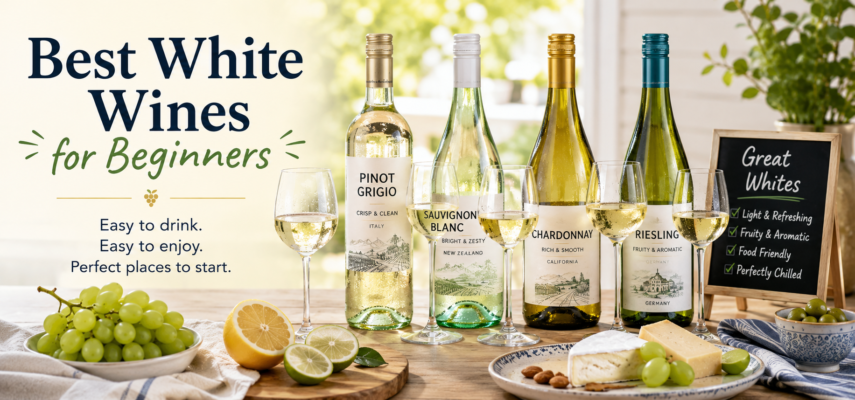
1. Pinot Grigio
Pinot Grigio is one of the safest white wines for beginners.
It is usually light, crisp, dry, and refreshing. The flavors are often simple and clean: lemon, lime, green apple, pear, and sometimes a slight mineral note. It rarely feels heavy or complicated, which is exactly why so many people enjoy it.
Pinot Grigio is a great choice if you want a white wine that is easy to sip without thinking too much about it. It works well before dinner, with salads, seafood, grilled chicken, light pasta, and simple appetizers.
The most common beginner mistake is expecting Pinot Grigio to be dramatic. It usually is not. Its strength is that it is clean, reliable, and refreshing.
Best for: people who want something crisp, dry, and easy.
Beginner flavor profile: lemon, green apple, pear, light citrus.
Good food pairings: shrimp, chicken, salads, white fish, light pasta.
2. Sauvignon Blanc
Sauvignon Blanc is one of the best white wines for beginners who like bright, zesty flavors.
Compared with Pinot Grigio, Sauvignon Blanc usually has more personality. It can taste like grapefruit, lime, green apple, passion fruit, fresh herbs, or even cut grass. Some bottles are extremely crisp and citrusy, while others are more tropical and fruity.
New Zealand Sauvignon Blanc is especially popular because it is bold, aromatic, and easy to recognize. French Sauvignon Blanc, especially from areas like Sancerre or the Loire Valley, tends to be more restrained, mineral, and elegant.
For beginners, Sauvignon Blanc is useful because it shows how refreshing white wine can be. It is one of the best wines to drink cold on a warm day.
Best for: people who like citrus, freshness, and sharp, clean flavors.
Beginner flavor profile: grapefruit, lime, green apple, herbs, passion fruit.
Good food pairings: goat cheese, seafood, sushi, salads, asparagus, grilled vegetables.
3. Chardonnay
Chardonnay is the most famous white wine grape in the world, but it can be tricky for beginners because it comes in very different styles.
Some Chardonnay is rich, buttery, creamy, and full-bodied. This style often has flavors of vanilla, toast, baked apple, butter, and tropical fruit. Many California Chardonnays are made in this fuller style.
Other Chardonnay is lean, crisp, and mineral-driven, with flavors of lemon, green apple, chalk, and pear. Chablis, a white wine from Burgundy in France, is one of the classic examples of this lighter, more precise style.
For beginners, Chardonnay is worth trying because it helps you understand the role of oak. White wines aged in oak barrels often taste rounder, creamier, and more vanilla-like. Unoaked white wines usually taste fresher, sharper, and more fruit-driven.
If you try one Chardonnay and dislike it, do not write off the grape. You may simply prefer a different style.
Best for: people who want a richer white wine or want to understand oak.
Beginner flavor profile: apple, pear, butter, vanilla, toast, lemon, tropical fruit.
Good food pairings: roast chicken, creamy pasta, lobster, salmon, pork, butter-based sauces.
4. Riesling
Riesling may be the most misunderstood beginner white wine.
Many people assume Riesling is always sweet. It can be sweet, but it can also be dry, off-dry, sparkling, delicate, or intensely complex. What makes Riesling special is not just sweetness. It is balance.
A good Riesling has bright acidity, which keeps the wine from feeling heavy. Even when Riesling has some sweetness, it can still taste fresh and clean. Common flavors include green apple, peach, apricot, lime, honey, flowers, and sometimes a distinctive mineral quality.
Riesling is one of the best wines for beginners who think they do not like dry wine yet. A slightly off-dry Riesling can be a perfect bridge because it has a little sweetness but still feels refreshing.
It is also one of the best food wines in the world, especially with spicy dishes.
Best for: people who want something fruity, aromatic, and possibly slightly sweet.
Beginner flavor profile: peach, apricot, lime, apple, honey, flowers.
Good food pairings: Thai food, Indian food, Chinese food, spicy chicken, pork, sushi.
5. Moscato
Moscato is one of the most approachable white wines for people who are brand new to wine.
It is typically sweet, low in alcohol, lightly fizzy, and very fruity. It often tastes like peach, orange blossom, grape, apricot, and honey. Because it is gentle and easy to drink, it can be a comfortable starting point for someone who finds dry wine too sour or bitter.
Moscato is not the wine to choose if you want something serious, dry, or structured. But that does not make it bad. It serves a different purpose. It is fun, casual, fragrant, and easy.
For many people, Moscato is the first wine that makes wine feel accessible.
Best for: people who want a sweet, fruity, low-alcohol white wine.
Beginner flavor profile: peach, orange blossom, honey, apricot, grape.
Good food pairings: fruit desserts, brunch, spicy food, light cakes, soft cheeses.
6. Chenin Blanc
Chenin Blanc is a great beginner white wine because it can offer a lot of flavor without being difficult.
It can be dry, off-dry, sparkling, or sweet, depending on where it is made. Dry Chenin Blanc often tastes like apple, pear, lemon, quince, honey, and sometimes a waxy or mineral note. It usually has strong acidity, which makes it refreshing and food-friendly.
South African Chenin Blanc is often a smart choice for beginners because it can be affordable, fruity, and balanced. French Chenin Blanc from the Loire Valley can be more complex and structured, especially from regions like Vouvray or Savennières.
For beginners who like Pinot Grigio but want something with a little more depth, Chenin Blanc is a strong next step.
Best for: people who want a crisp but slightly richer white wine.
Beginner flavor profile: apple, pear, lemon, honey, quince.
Good food pairings: roast chicken, pork, seafood, soft cheese, vegetable dishes.
7. Albariño
Albariño is one of the best beginner white wines for people who like crisp, coastal, refreshing wines.
Originally associated with northwest Spain and Portugal, Albariño is usually bright, citrusy, and aromatic. It often tastes like lemon, lime, peach, apricot, melon, and sea spray. It has enough acidity to feel lively but enough fruit to feel friendly.
Albariño is especially good with seafood. If you like shrimp, oysters, scallops, grilled fish, or fresh summer dishes, this is one of the best white wines to know.
It is also a useful alternative if you like Sauvignon Blanc but want something slightly softer and less aggressively grassy.
Best for: people who want a crisp, seafood-friendly white wine.
Beginner flavor profile: lemon, lime, peach, melon, sea salt.
Good food pairings: shrimp, oysters, scallops, grilled fish, ceviche, seafood pasta.
8. Grüner Veltliner
Grüner Veltliner is a white wine from Austria that beginners should know because it is crisp, flexible, and excellent with food.
It usually tastes like lemon, lime, green apple, white pepper, herbs, and sometimes a slight mineral note. It is dry and refreshing, but it often has more texture than Pinot Grigio.
One reason Grüner Veltliner is so useful is that it pairs well with foods that can be difficult for wine, including vegetables, salads, asparagus, and lightly spicy dishes. It is also usually affordable compared with many famous white wines.
For beginners who want to move beyond the obvious choices, Grüner Veltliner is a smart bottle to try.
Best for: people who like crisp wines but want something more interesting.
Beginner flavor profile: lemon, lime, green apple, herbs, white pepper.
Good food pairings: salads, asparagus, chicken, vegetables, schnitzel, seafood.
9. Viognier
Viognier is a good beginner white wine for people who want something aromatic, soft, and fuller-bodied.
Unlike Sauvignon Blanc or Pinot Grigio, Viognier is not usually sharp or extremely crisp. It tends to be rounder and more fragrant, with flavors of peach, apricot, orange blossom, honeysuckle, and tropical fruit. Some bottles can feel rich and silky.
Viognier is a good choice for people who find very acidic white wines too tart. It offers a more floral and plush style of white wine.
The downside is that Viognier can sometimes feel heavy if it is too high in alcohol or too ripe. Beginners should look for balanced bottles rather than the biggest, richest version available.
Best for: people who want a soft, floral, fruit-forward white wine.
Beginner flavor profile: peach, apricot, flowers, honeysuckle, tropical fruit.
Good food pairings: roast chicken, pork, spicy dishes, creamy sauces, soft cheeses.
10. Gewürztraminer
Gewürztraminer is not the most neutral white wine, but it can be very appealing for beginners who like bold aromas.
It is intensely fragrant, often smelling and tasting like lychee, rose petals, peach, ginger, spice, and tropical fruit. It can be dry, off-dry, or sweet, but even dry versions often feel rich and perfumed.
Gewürztraminer is a great example of how wine can be aromatic rather than simply fruity. It is also excellent with spicy and flavorful foods, especially dishes with ginger, curry, or aromatic spices.
This is not the best choice for someone who wants a crisp, simple white wine. But for beginners who like big flavors and floral aromas, Gewürztraminer can be memorable.
Best for: people who like floral, spicy, aromatic wines.
Beginner flavor profile: lychee, rose, peach, ginger, spice.
Good food pairings: Thai food, Indian food, Moroccan food, spicy pork, aromatic dishes.
The Best White Wine for a True Beginner
If you are completely new to white wine, start with these three:
Pinot Grigio if you want something light, crisp, dry, and simple.
Sauvignon Blanc if you want something bright, citrusy, and refreshing.
Riesling if you want something fruity, aromatic, and possibly slightly sweet.
Those three wines give you a useful foundation. Pinot Grigio shows the clean and simple side of white wine. Sauvignon Blanc shows the crisp and zesty side. Riesling shows how fruit, acidity, and sweetness can work together.
After that, try Chardonnay to understand richer white wines, Albariño for seafood-friendly freshness, and Chenin Blanc for a more flexible, food-friendly style.
Dry vs. Sweet White Wine
One of the biggest beginner questions is whether white wine is dry or sweet.
Dry means the wine does not have noticeable sugar. Pinot Grigio, Sauvignon Blanc, most Chardonnay, Albariño, and Grüner Veltliner are usually dry.
Sweet means the wine has noticeable sugar. Moscato is usually sweet. Riesling and Gewürztraminer can range from dry to sweet depending on the bottle.
The tricky part is that fruity does not always mean sweet. A wine can taste like peach, apple, or pineapple and still be dry. Fruit flavor comes from the grape and fermentation. Sweetness comes from residual sugar left in the wine.
This is one of the most important beginner lessons in white wine.
A dry Sauvignon Blanc may smell like tropical fruit but still taste crisp and unsweetened. A Riesling may have some sugar but still feel balanced because of its acidity. A Moscato may be clearly sweet and gentle.
Learning the difference between fruitiness and sweetness will make you much more confident when choosing wine.
Oaked vs. Unoaked White Wine
Another important beginner distinction is oaked versus unoaked white wine.
Oaked white wines are aged or fermented in oak barrels. They can taste creamy, buttery, toasted, smoky, nutty, or vanilla-like. Chardonnay is the most common white wine where oak becomes a major factor.
Unoaked white wines are usually fresher and more fruit-driven. They often taste cleaner, lighter, and more acidic. Pinot Grigio, Sauvignon Blanc, Albariño, Riesling, and Grüner Veltliner are usually made in fresher styles, though winemaking can vary.
If you like buttery, creamy flavors, try an oaked Chardonnay.
If you prefer crisp, clean, refreshing wines, look for unoaked Chardonnay or choose grapes like Sauvignon Blanc, Pinot Grigio, or Albariño.
How Much Should Beginners Spend on White Wine?
Beginners do not need to spend a lot on white wine.
A good starting range is $12 to $25. In that range, you can find solid examples of Pinot Grigio, Sauvignon Blanc, Riesling, Chenin Blanc, Albariño, Grüner Veltliner, and Chardonnay.
Spending more can sometimes get you more complexity, better texture, or a more famous region. But it does not automatically mean you will enjoy the wine more.
In fact, beginners may enjoy a fresh, affordable $16 Sauvignon Blanc more than a complicated $60 white Burgundy. Expensive wine often requires context. Beginner wine should build confidence first.
Simple White Wine Buying Tips
When buying white wine, start by deciding what style you want.
For crisp and dry, choose Pinot Grigio, Sauvignon Blanc, Albariño, or Grüner Veltliner.
For rich and creamy, choose Chardonnay.
For fruity and slightly sweet, choose Riesling.
For sweet and easy, choose Moscato.
For floral and aromatic, choose Viognier or Gewürztraminer.
Also pay attention to alcohol level. Lower-alcohol white wines often feel lighter and easier. Higher-alcohol whites can feel richer, heavier, and warmer.
When in doubt, ask for a wine that is “crisp, refreshing, and beginner-friendly.” That phrase alone can help a wine shop point you in the right direction.
White Wines Beginners May Want to Avoid at First
Some white wines are excellent but not ideal as a first bottle.
Very expensive white Burgundy can be confusing if you do not already understand Chardonnay. Oxidative white wines can taste nutty or unusual. Very natural or skin-contact white wines can have textures and flavors that surprise beginners. Extremely sweet dessert wines are delicious in the right setting but not always useful as everyday white wines.
This does not mean those wines are bad. It simply means they are better explored after you understand the basics.
Beginners should start with clarity before complexity.
Final Pour
The best white wines for beginners are the ones that make wine feel enjoyable rather than intimidating.
Pinot Grigio is light and easy. Sauvignon Blanc is crisp and energetic. Chardonnay can be rich or lean. Riesling is fruity, balanced, and often misunderstood. Moscato is sweet, gentle, and accessible. Chenin Blanc, Albariño, Grüner Veltliner, Viognier, and Gewürztraminer each offer a different path into the wider world of white wine.
The goal is not to find the “best” white wine in the world. The goal is to find the best white wine for your taste.
Start with a few bottles. Chill them properly. Taste them slowly. Notice whether you prefer crisp or rich, dry or sweet, simple or aromatic.
That is how beginners become confident wine drinkers: one glass at a time.