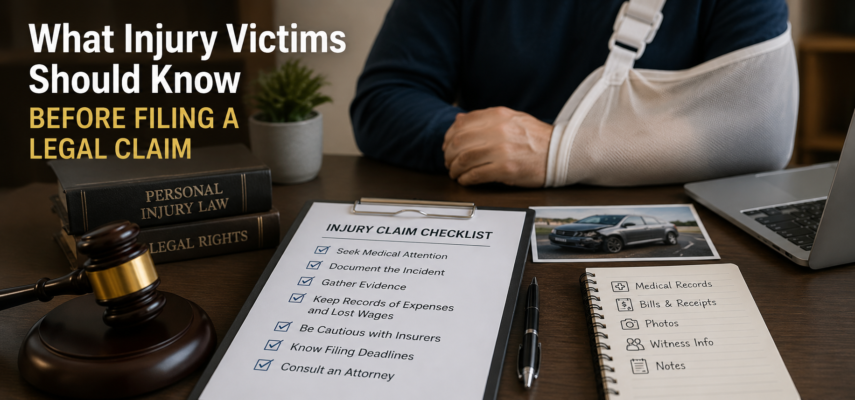
An injury claim involves a lot more than just forms and deadlines. It can shape treatment choices, job stability, family routines, and emotional recovery for months after the incident. Many people naturally focus on dealing with the injuries and pain first, but they also have to deal with insurance calls, record requests, and questions about fault during this time. Thorough documentation, prompt medical attention, measured communication, and legal guidance can help victims strengthen their case.
First Steps After Harm
After an incident, obtaining clear documentation matters as much as seeking medical care. Photos, witness names, scene details, and discharge paperwork can help preserve facts. A personal injury attorney in New York can explain local filing rules, counter insurer tactics, and deal with comparative fault issues, as these factors can have a significant impact on a claim.
Filing Deadlines Matter
Every case operates under a legal timeline. Deadlines can vary based on the defendants involved, the type of incident, and jurisdiction. Claims involving a local government agency may require early notice within a short window. Waiting for full recovery can create risks. It takes time to collect records, and witnesses may be difficult to find later. Additionally, missing deadlines can block recovery entirely.
Evidence Should Be Obtained Quickly
Evidence can be difficult to access after a collision, fall, or unsafe property event. Video footage may be overwritten, surfaces are repaired, and witnesses’ memories fade. Strong claims usually show a direct connection between the event, the injury, and the resulting physical, financial, and emotional harm. That requires organized records from the outset. Photographs, invoices, medication lists, work notes, and repair estimates can all be used to create a coherent narrative later.
Medical Records Shape Value
Treatment records do more than just confirm injuries and pain levels. They build a clinical timeline linking the symptoms, examination findings, and functional losses to the incident. Gaps in care can invite arguments that stiffness, numbness, or reduced range of motion were unrelated to the event in question. Patients should report symptoms accurately, attend follow-up appointments, and retain copies of imaging reports, therapy plans, and billing statements. Consistent records strengthen both the credibility of the case and its valuation.
Fault Can Reduce Recovery
Shared fault rules can reduce compensation if the injured person bears part of the blame. If victims make casual comments during stressful calls or conversations at the scene, they can cause problems later. While offering an apology may be the polite thing to do, insurers can frame it as an admission of responsibility. Claimants can protect themselves by sticking to the facts, avoiding guesswork, and checking incident reports for errors. Using precise language is essential for preserving the record while investigators review conduct, conditions, and timing.
Damages Extend Beyond Bills
Damages can cover emergency charges, follow-up appointments, lost wages, reduced earning capacity, rehabilitation costs, transportation expenses, and household help. Pain may also disrupt sleep, concentration, mobility, and ordinary routines at home. All these losses must be documented in detail, and pay records, mileage logs, calendars, and short daily notes can be used to substantiate them.
Insurance Contact Needs Caution
Insurance representatives often ask for recorded statements soon after an event. Those conversations may seem routine, but the language you use can narrow down your options later. Estimates about recovery time, prior symptoms, or work limits provided during these discussions can become outdated after the medical assessment is complete. Attorneys at Stanley Law can help injured individuals review the facts and advise them on handling communications with insurers.
Settlement Timing Affects Outcomes
Early settlement offers can seem tempting when victims are dealing with missed work, debt, and uncertain treatment outcomes. Still, these offers are often presented before physicians know whether surgery, injections, or extended therapy will be needed. Accepting too soon can close the claim for good. A fair review should consider current losses, future care, long-term restrictions, and expected recovery time. Patience can protect the value of the claim while the medical situation becomes clearer.
Conclusion
Filing a legal claim requires consistent recordkeeping, timely care, and careful communication from the outset. People who preserve evidence early are often in a stronger position during negotiations. Clear records, accurate expense tracking, and measured responses to insurers can shape the outcome, so it’s important to seek legal guidance early.