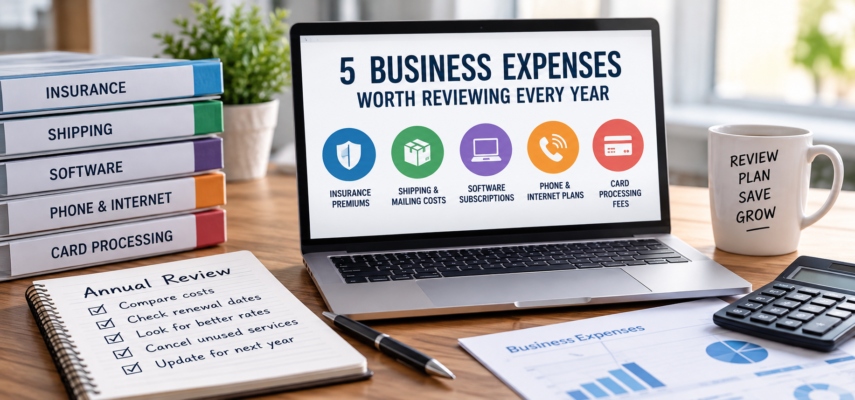
Reviewing business expenses once a year helps a company keep its spending in line with how it actually operates. Contracts renew automatically, vendors adjust their prices, and the tools a team relied on two years ago may no longer be in use. Five everyday costs are worth a look each year, and none of them takes longer than an afternoon to check against current needs.
1. Insurance Premiums
Pull every policy the business carries, including general liability, property, vehicle and workers’ compensation, and compare the coverage limits with what the company owns and does today. Insurance premiums tend to climb each year, while coverage written at the startup stage can fall out of step with new equipment, staff or locations. Ask your agent for a renewal comparison and collect at least one competing quote before you sign. A higher deductible can lower the premium if the business could cover it comfortably.
2. Shipping and Mailing Costs
Postage and delivery prices change several times a year, so the budget is best built on current per-package and per-letter costs. Compare a few recent invoices against current Certified Mail Labels rates to see what delivery confirmation and return receipts add to each piece. Then check whether a different service level would trim the monthly total without changing how quickly customers receive their items. Note the per-piece price for each service so changes are easy to spot next year.
3. Software Subscriptions
Annual renewals, extra seats and overlapping tools are the usual finds once every recurring software charge is listed next to the person who uses it. Gather the last three months of card and bank statements to build that list, then cancel anything that has gone unused for 60 days. Moving the remaining tools under one billing contact keeps renewals from slipping past unnoticed. Calendar reminders for renewals help.
4. Phone and Internet Plans
Promotional rates on business phone and internet plans often expire after the first contract term, so the amount on the current bill may no longer match the original quote. Call the provider with a competing offer in hand and ask for today’s price on the same speed or line count. A shorter commitment can be worth a slightly higher rate when staffing or office space is likely to change. Bundling both services with one provider sometimes lowers the total, so ask for a combined quote.
5. Card Processing Fees
The effective rate on a merchant statement, which is total fees divided by total card sales, is the first number to find. Swipe fees average 2.1 percent nationally, so a rate well above that is worth a call to your processor. Look for monthly minimums, statement fees and compliance charges added after signup, and ask which ones can be waived. A processor unwilling to adjust anything is a reason to request quotes from two others.
Putting all five checks in the same month each year turns them into a routine instead of a project. A sheet listing each expense, its renewal date and what you decided lets next year’s review start from notes rather than a blank page, which means decisions get made before a contract renews on its own, not after.