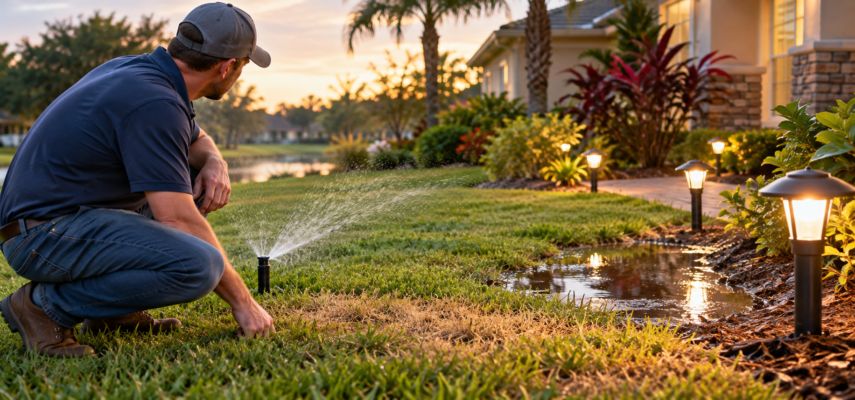

A healthy yard rarely fails all at once. Most outdoor problems begin as small changes that are easy to miss, such as a faded patch of grass, a puddle that lingers a day too long, or a light along the walkway that no longer comes on.
Homeowners in Winter Garden spend a lot of time outdoors, which makes the yard one of the most used parts of the home. The trouble is that early warning signs tend to blend into the background of daily life. By the time they become obvious, the damage has often spread to the soil, the plants, and sometimes the house itself. Learning to spot these signs early can save a great deal of time, money, and effort.
Small Watering Problems That Grow Over Time
Most outdoor trouble starts in places a homeowner rarely stops to check. A sprinkler head that tilts, clogs, or stops rising out of the ground can leave one part of the lawn dry while another part receives far more water than it needs.
Getting the watering system checked and fixed by trained technicians is the simplest way to bring that balance back before the grass starts to suffer. If your lawn is showing these patterns, it makes sense to schedule professional sprinkler repair in Winter Garden before the drier weeks of the year arrive. Catching the issue at this stage protects the grass, the soil beneath it, and every plant that depends on steady moisture.
Patchy Grass and Uneven Color Across the Lawn
Grass is one of the clearest signals of what is happening underground. When one section turns pale or brown while the rest stays green, the lawn is telling you that something has changed. Sometimes the cause is too little water, and sometimes it is too much, since roots that sit in wet soil for long periods can weaken and rot.
Walk the lawn slowly and compare different areas side by side. Look for thin spots, yellowing edges, and areas where weeds are taking over, because weeds often move into places where grass is already struggling. Pay attention to the strips near driveways, walkways, and fences, as these spots tend to dry out faster than the open middle of the yard. A pattern that keeps returning to the same place is rarely a coincidence and usually points to a problem worth addressing.
Standing Water and Soggy Ground After Rain
Heavy rain is part of life in this part of the country, and a well-built yard should be able to handle it. If water still sits in low spots a day or two after a storm, the ground is not moving it away as it should. This can drown grass roots, wash away mulch, and leave bare mud that is hard to bring back.
Standing water near the house deserves special attention. When rainwater collects against the foundation, it can find its way into cracks and cause problems that are far more costly than a soggy lawn. Watch where water flows during a storm, and note where it pools afterward. Soft ground that squishes underfoot, moss growing in sunny areas, and a musty smell near the edges of the home are all signs that excess water is staying where it should not.
Dim or Flickering Outdoor Lights After Dark
Outdoor lighting does more than make a home look inviting at night. It helps people see steps, edges, and uneven ground, and it makes the property less appealing to anyone looking for an easy target. When lights begin to flicker, dim, or go out in sections, the cause is often loose wiring, worn connections, or moisture that has crept into a fixture.
These issues tend to get worse with time. A single dark fixture can turn into an entire row that stops working, especially after storms or long periods of damp weather. Take a short walk around the property after sunset every few weeks. Check that paths are clearly visible, that fixtures are pointed where they should be, and that no light is shining at an odd angle because it has been knocked loose by a mower or a passing pet.
Weak Water Pressure From the Well
Homes that rely on a private well depend on the pump working smoothly every day. Signs that something is wrong often appear gradually. Water may come out with less force than before, the pump may run longer than usual, or you might hear clicking and humming sounds that were not there in the past.
Cloudy water, sputtering faucets, and sudden jumps in the power bill can also point to a pump that is struggling. Ignoring these changes can leave a household without water at the worst possible moment. Keeping a simple record of what you notice, such as when pressure drops and how long the pump runs, makes it easier for a technician to find the cause quickly.
Why a Change of Season Is the Right Moment for a Walkthrough
The shift from one season to the next is a natural time to take a careful look around the property. Weather patterns change, plants grow at a different pace, and problems that stayed hidden during busy months often become easier to see. A short walkthrough every few months helps you catch trouble before it spreads.
Start at the front of the house and work your way around in a loop. Check the lawn for color changes, the low spots for lingering water, the lights for any dark sections, and the shaded areas for insect activity. Listen to the well pump if you have one, and note anything that sounds or looks different from the last time you checked. Writing these observations down creates a simple history of the yard, which makes it far easier to notice when something starts to slip.
Small habits like these keep a home’s outdoor space healthy, safe, and enjoyable for years. A few minutes of attention each season can prevent the kind of damage that takes months to undo.