










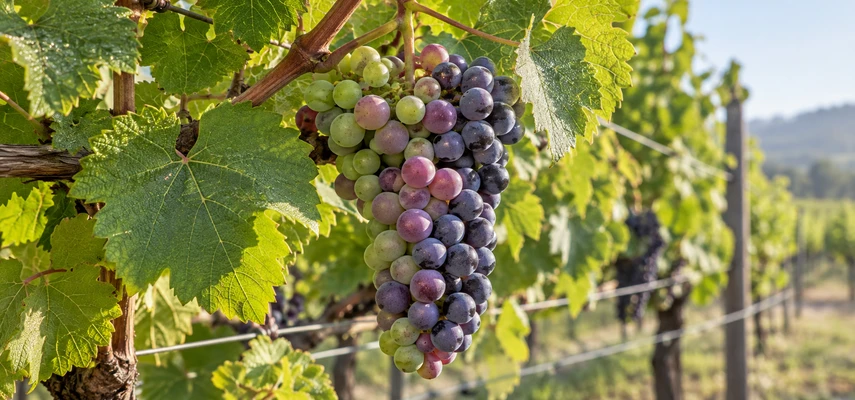

Why can two vineyards growing the same grape produce wines that feel as different as lemon juice and ripe peach? Understanding how grapes grow starts before a winemaker touches a tank. A grape is a changing package of water, sugar, acids, colour, flavour and tannin. Its surroundings influence how that package develops, while the grower decides how to help it along and when to pick it.
This is Article #2 of The TFE Guide to WSET Level 2 Wine, Part I: Wine Fundamentals. Your task is to connect a vineyard condition to a change in grapes, then connect that change to wine style. That chain of reasoning makes the regional comparisons later in the series much easier to remember.
What WSET Level 2 expects you to know
Learning Outcome 1 covers grape components, vine requirements, grape development, environmental influences and vineyard choices. It also includes labelling language, which receives cumulative treatment in Article #25. This article explains the growing processes; it isn’t a complete viticulture manual. The official specification defines the examinable scope.
The useful question is usually “What changes, and what follows?” More sugar can mean more potential alcohol, but it doesn’t guarantee a sweeter finished wine. More heat may help ripening until heat and water stress become excessive. Lower yields aren’t an automatic quality certificate. Keep these qualifications attached to the facts.
Inside a grape: a small package with several jobs
The pulp supplies water, sugar, acids and flavour. During fermentation, yeast can turn sugar into alcohol. Acid helps explain the freshness of the resulting wine. The skin supplies colour, tannin and flavour; seeds and stems also contain tannins. This distribution matters because winemaking determines which parts remain in contact with juice.
Think of a grape as ingredients packed into separate compartments. Pressing and skin contact change which compartments contribute to the wine. Black grapes can therefore supply juice for a pale wine if the producer avoids extracting their skin colour. We’ll follow those decisions in Article #3 rather than pretending the vineyard alone dictates the finished glass.
The vine itself has roots for water and nutrient uptake, a permanent woody framework, and seasonal shoots bearing leaves and fruit. Leaves use sunlight to support photosynthesis, making sugars from water and carbon dioxide. Roots don’t suck ready-made wine flavours out of rocks.
What a vine needs, and why balance matters
A productive vine needs warmth, sunlight, water, nutrients and carbon dioxide. These aren’t interchangeable. Sunshine doesn’t compensate for a root zone without usable water, and generous fertiliser doesn’t replace an adequate growing season. A site must supply the right combination.
Water supports growth and helps the plant function, but excessive supply can encourage too much vegetative growth. Severe shortage can restrict photosynthesis and fruit development. The objective is neither a permanently thirsty vine nor a vine growing leaves as though it has forgotten about grapes.
After harvest, healthy leaves may continue replenishing reserves used in the next season. That helps explain why vineyard care doesn’t end when the picking crew leaves. Wine Australia’s post-harvest guidance connects water, nutrients and carbohydrate reserves.
From flowers to ripening grapes
In a temperate vineyard, winter dormancy is followed by spring growth. Budburst produces shoots and leaves. Flowering comes later, and successful fruit set turns fertilised flowers into small berries. Not every flower becomes a grape, so difficult conditions around flowering can affect the eventual crop.
Véraison marks the onset of ripening. Black varieties begin changing colour; berries soften, sugars accumulate and acid composition changes. A bunch doesn’t change in perfect unison. Seeing green and purple berries together can be entirely normal at this stage.
During ripening, sugar generally rises and acidity generally falls. Tannins and aroma compounds also develop. White-grape flavour associations may move from greener and citrus-like toward riper stone or tropical fruit; black-grape associations may move from fresher red fruit toward riper black or cooked fruit, depending on the variety and conditions. These are broad tendencies, not a colour-coded calendar every grape follows.
Crucially, sugar ripeness and flavour or tannin development don’t always arrive together. A grower may have enough sugar for substantial alcohol while still wanting more flavour development. Texas A&M’s ripening guidance explains why harvest assessment considers several changing components.
Climate is the background; weather is the particular day
Climate describes a location’s longer-term pattern. Weather is what happens during a particular season or day. A generally cool region can have an unusually hot vintage; a warm region can suffer a rainy harvest. Vintage variation is the difference those seasonal conditions make to the crop and wine.
Cool, moderate and warm climates give a first clue to how readily grapes ripen. Cooler conditions generally favour higher retained acidity and less sugar accumulation, all else equal. Warmth can support riper flavours and higher potential alcohol. Excessive heat or severe drought can instead disrupt development.
The WSET explanation of acidity describes the connection between temperature, ripening and acid retention. Use it as a mechanism, not a rule that every warm-climate wine must taste soft or every cool-climate wine must taste thin.
Why a hillside can change the story
Latitude influences the sunlight and warmth available, while altitude generally brings cooler conditions. A warm country can consequently contain cool vineyard sites. Mountains may shelter vineyards from rain-bearing winds or channel air; their effects depend on location rather than the word “mountain” alone.
Slope and aspect matter together. Aspect means the direction a slope faces. A slope receiving more useful sunlight can help grapes ripen in a marginal site. Sloping ground can also encourage cold air to drain away, although an individual site’s frost risk needs local assessment.
Seas and other substantial bodies of water can moderate temperatures. Sea breezes and moving air can cool vineyards; fog and cloud reduce incoming sunlight. Rivers may influence nearby conditions, but a small stream doesn’t automatically create the effect of an ocean. Mist can increase moisture around fruit, which matters for disease pressure as well as particular sweet-wine styles.
Soils affect drainage, water availability, nutrients and heat behaviour. Two nearby plots can therefore give vines different growing conditions. Soil isn’t a literal seasoning packet. Explaining drainage or water supply is more useful than claiming a wine tastes of the vineyard’s stones.
Weather hazards: timing changes the damage
Frost can injure vulnerable spring growth. Hail can physically damage shoots and fruit. Drought can deprive the vine of water, while excessive rain may increase fungal-disease pressure or interfere with flowering and harvest. Sunlight and temperature matter throughout, but the same event can have different consequences at different stages.
For example, rain is valuable when it replenishes a dry soil. Rain near harvest may create a difficult choice between picking before fruit reaches the desired condition and waiting while disease risk increases. “Rain is bad” throws away the important part of the explanation: when, how much and under what conditions?
Growers therefore manage risks rather than eliminating weather. The crop that reaches the winery reflects both the season and the decisions made in response to it.
Training, pruning and crop size
Training establishes the vine’s shape and how its growth is supported. Pruning removes selected growth and controls the buds retained for the next crop. Canopy management positions or removes seasonal growth to influence light exposure, airflow and the fruit environment. These choices affect ripening and disease risk as well as practical access.
Yield is the quantity of grapes produced from a given area or vine. If the crop is too large for the site’s resources, ripening may be difficult. Reducing an excessive crop can help, but reducing an already balanced crop doesn’t guarantee better wine. Variety, vine capacity, weather and the intended style all matter.
Irrigation supplies water where natural rainfall and stored soil moisture are insufficient, subject to local rules. Weed management can reduce competition for water and nutrients. Pest and disease management protects leaves and fruit. Organic production follows defined restrictions on inputs and practices; it doesn’t mean no sprays, no pests or automatically higher quality.
The RHS grape-growing guide provides accessible background on training, pruning, watering and common problems. Commercial wine vineyards adapt these principles to their scale, climate and regulations.
Harvest is a style decision, not a finishing bell
Earlier picking can preserve acidity and limit sugar, while later picking can bring greater ripeness. The right moment depends on the intended wine. Grapes for a fresh style and fruit intended for a concentrated sweet wine needn’t share the same target.
Extra-ripe or raisined grapes lose water, concentrating what remains. Noble rot can also help concentrate suitable grapes under the right conditions, although destructive rot is a serious problem. Freezing grapes and pressing them while frozen separates some water as ice, concentrating the juice. These methods help explain sweet-wine ingredients; the winemaker still determines how much sugar remains after fermentation.
Late Harvest or Vendanges tardives, Botrytis or Noble Rot, and Icewine or Eiswein describe important growing or production associations. Vintage identifies the harvest year; Old Vine or Vieilles vignes concerns vine age, without one universal international age threshold. Don’t confuse these with a guarantee of sweetness or quality. Article #25 will compare the label systems in detail.
Common mistakes and exam traps
Remember three separate clocks: the season, sugar accumulation and flavour development. They influence one another without being identical. A hot year doesn’t automatically produce the finest wine, and a cool vineyard isn’t necessarily incapable of ripening its chosen variety.
Also separate climate from weather, training from pruning, and grape sugar from finished-wine sweetness. If a question changes the harvest date, explain the likely effect on the grapes before jumping to the wine. That extra step often exposes an answer that sounds plausible but skips the mechanism.
Knowledge check: 10 original practice questions
Choose one answer per question. All questions support LO1; these are independent practice questions, not official examination items.
1. Which grape part is an important source of colour in red wine?
- Skin.
- Water in the pulp alone.
- The vine root.
- Carbon dioxide.
2. Which combination describes basic vine requirements?
- Alcohol, oak and yeast.
- Warmth, sunlight, water, nutrients and carbon dioxide.
- Frost, shade and salt.
- Bottles, corks and sugar syrup.
3. What does véraison mark?
- Winter pruning.
- Bottling.
- The onset of grape ripening.
- The end of fermentation.
4. During normal ripening, which broad change is expected?
- Sugar disappears and acid always rises.
- All berries change at exactly the same moment.
- Tannin development becomes irrelevant.
- Sugar generally rises while acidity generally falls.
5. Which statement distinguishes climate from weather?
- Climate is the longer-term pattern; weather concerns particular conditions.
- Climate means only rainfall.
- Weather is identical every vintage.
- Climate changes whenever one storm arrives.
6. What does aspect describe?
- The sweetness of juice.
- The direction a slope faces.
- The age of a barrel.
- The number of seeds in a berry.
7. Why might excessive yield be a problem?
- Every high-yield vineyard produces faulty wine.
- Crop size cannot affect ripening.
- The crop may exceed the vine’s available resources for suitable ripening.
- Lowering yield always doubles quality.
8. Which statement about organic growing is sound?
- It guarantees no disease.
- It requires no vineyard decisions.
- It always produces sweeter wine.
- It follows restrictions on practices and inputs, without guaranteeing quality.
9. What can concentrating grapes by water loss do?
- Increase the concentration of sugar in the remaining material.
- Prove the finished wine will be dry.
- Remove every acid.
- Eliminate the need for fermentation decisions.
10. Why can rain near harvest create a difficult decision?
- Rain always makes grapes instantly ripe.
- Waiting for ripeness may increase exposure to disease or fruit damage.
- Rain prevents all fungal growth.
- Weather stops mattering after véraison.
Answers and explanations
1. A — Grape components; LO1. Skins provide colour as well as tannins and flavour; the pulp principally supplies juice components.
2. B — Vine requirements; LO1. These resources support growth and photosynthesis; winemaking materials aren’t vine needs.
3. C — Development; LO1. Véraison starts the ripening phase, including softening and colour changes in black varieties.
4. D — Ripening; LO1. This is the general direction of change, although the components don’t develop at identical rates.
5. A — Climate and weather; LO1. A single season’s events can differ from the longer-term climatic pattern.
6. B — Site influences; LO1. Slope direction affects exposure to sunlight and can influence the warmth available to grapes.
7. C — Yield; LO1. Excessive crop demand can hinder ripening; there is no universal inverse equation between yield and quality.
8. D — Growing choices; LO1. Organic rules concern permitted practices and inputs, rather than a promise about wine quality.
9. A — Concentration; LO1. Removing water can concentrate sugar, but fermentation still affects finished sweetness.
10. B — Harvest decisions; LO1. The grower balances desired development against weather and disease risks rather than following a fixed date.
One-page revision summary
| Topic | Remember | Avoid assuming |
|---|---|---|
| Grape parts | Skin: colour/tannin/flavour; pulp: water/sugar/acid/flavour | Every component is in the same place |
| Vine needs | Warmth, sunlight, water, nutrients, carbon dioxide | More of everything is always better |
| Development | Flowering, fruit set, véraison, ripening | Sugar and flavour ripen identically |
| Ripeness | Sugar generally rises; acidity generally falls | Ripe grapes guarantee sweet wine |
| Site | Latitude, altitude, slope/aspect, water, air and soil modify conditions | A country’s climate describes every vineyard |
| Management | Training, pruning, yield, water and protection affect grapes | Low yield or organic means automatic quality |
| Harvest | Match grape condition and weather risk to intended style | One perfect picking date suits every wine |
Follow the chain from environment to grape condition to wine style. That’s the vineyard knowledge you’ll use when Chablis, Napa, the Mosel and other regions enter the story.












