










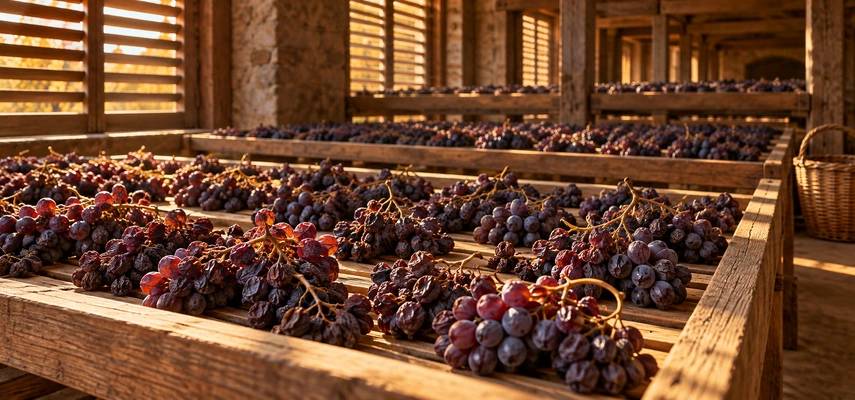

A sweet wine can begin with a shrivelled berry, a frozen bunch or perfectly ordinary grape juice. The crucial question is what happens to the sugar. Concentrating grapes provides more sugar relative to water, but a sweet finished wine still needs some sugar to remain after production. Separating those two ideas makes sweet winemaking much easier to explain.
Article #7 · Part I: Wine Science, Viticulture, and Winemaking. This independent lesson covers sugar concentration and sweet-wine production in Unit 1 LO1, criteria 2–3, of the 2022 Issue 2 WSET Level 3 specification. Compare late harvest, noble rot, drying, freezing, interrupted fermentation and sweetening through style, quality and cost. Original TFE exercises are not official WSET material, and no affiliation or endorsement is implied.
Concentration and residual sugar do different jobs
Residual sugar is sugar left in the wine after fermentation or other production steps. Concentration means increasing the amount of a substance relative to the volume or mass containing it. Losing grape water can raise sugar concentration without the vine adding the same amount of new sugar. Freezing can concentrate juice by keeping some water behind as ice during pressing.
Yeast converts fermentable sugar into alcohol and carbon dioxide. If it consumes the available sugar completely, even very ripe grapes can produce a dry wine with substantial alcohol. Alternatively, fermentation may stop while sugar remains, or an appropriate sweetening component may be added later. The explanation must therefore connect both the raw material and the eventual fermentation outcome.
High sugar concentrations can make fermentation difficult through osmotic stress, and accumulating alcohol can inhibit yeast. That helps explain why some highly concentrated musts ferment slowly and retain sugar. It is not a reason to assume every sugary must stops at the desired point unaided. Producers monitor fermentation and plan stability as part of the intended method.
Late harvest is a choice with several possible results
Leaving suitable grapes on the vine longer can allow further ripening and, in some circumstances, dehydration. Flavours may develop and sugar concentrations rise, while acidity changes. Yet extended hanging also exposes the crop to rain, birds, disease and loss. The same decision can improve desired characteristics in one season and destroy usable fruit in another.
Late picking does not by itself guarantee sweetness. A producer may ferment the fruit to dryness, and some labels describing harvest maturity do not prescribe one finished sugar level. For German Riesling, distinguish the ripeness or concentration of harvested grapes from the actual sweetness of the wine. Detailed classification belongs to the German regional lesson.
The BC fruit-maturity guide explains why flavour, acidity, fruit health and sampling matter alongside sugar. The mechanism for sweet-wine reasoning is not merely “pick late.” Specify whether sugar concentration rises through continued development, water loss or both, and how the producer then retains the intended sweetness.
Noble rot needs the right sequence of conditions
Botrytis cinerea is the fungus associated with both destructive rot and, under suitable conditions, noble rot. On appropriately ripe fruit, beneficial infection can make skins more permeable so water is lost, concentrating the berry’s contents and changing its chemistry. Humid conditions help infection develop; subsequent drier conditions support dehydration rather than relentless deterioration.
This is a precarious balance. Constantly wet conditions can favour damaging rot, while insufficient humidity may prevent the desired development. Infection is uneven, so the producer may need repeated selective picking, known as successive passes or tries. Hand selection adds labour, and losing water or rejecting berries reduces juice yield. Uncertain weather can make a successful crop costly to obtain.
The classified-growth council’s Sauternes and Barsac explanation describes the interaction between local conditions and noble rot. The lesson is an example of a natural factor creating a human decision: wait and select for the desired material, or harvest differently if the risk becomes unacceptable. Noble rot cannot be ordered for a convenient date.
Noble rot changes character as well as concentration
Botrytised wines can show characteristic honeyed, dried-fruit, marmalade or spice-like notes alongside varietal and production influences. The fungus changes grape chemistry; simply reducing water is not the entire story. Those descriptors are tendencies rather than compulsory ingredients in every tasting note. A ripe fruit aroma alone does not establish a botrytis diagnosis.
Sauternes often uses Sémillon alongside other permitted Bordeaux white varieties, while Riesling provides important German examples. Tokaj supplies another distinctive application. In Aszú production, concentrated selected berries can be macerated in must, fermenting must or wine to extract their contents before further processing. The Tokaj regional production explanation shows why it is not simply an interchangeable Sauternes recipe.
Do not assume that every sweet Tokaj or German wine must show the same degree of botrytis character. Region, category, fruit selection and method matter. Here, the goal is to connect a concentration technique with its production challenges; the later regional lessons address the individual wines, grapes and current classification details.
Drying grapes on the vine or after harvest
Some grapes dehydrate while still on the vine, depending on variety, weather and intended handling. Water loss increases concentration, but exposure to rain and pests continues. A producer needs healthy, suitable fruit and enough opportunity for drying. Once berries shrivel, concentration readings require care: higher sugar per volume may partly reflect less water rather than continuing sugar import.
Off-vine drying moves selected fruit to a suitable drying environment after picking. Grapes may be laid on racks or mats, or hung, depending on the method. Ventilation and control of conditions help manage water loss while limiting unwanted decay. The fruit occupies space and ties up resources before pressing, while selection, monitoring and handling add labour.
Italian appassimento provides an important context. Recioto della Valpolicella uses dried grapes and retains sweetness, whereas drying grapes does not mean all wines made by that method are sweet. A Recioto production example from Cantine Campagnola connects drying with fermentation management to retain sugar. Concentrated raw material still leaves the question of how much sugar is fermented; one producer’s exact timings are not a universal recipe.
Drying can shift fruit expression towards dried-fruit characters, while the variety, health of the grapes and conditions affect the result. Over-drying or poor ventilation can reduce usable volume or spoil fruit. Calling a wine “made from dried grapes” identifies a technique; assessing quality requires evidence of the wine’s balance, flavour intensity, persistence and condition.
Frozen grapes: separate ice from concentrated juice
For naturally frozen-grape wines such as German Eiswein, grapes remain on the vine until suitable freezing conditions arrive and are pressed while still frozen. Some water stays in the press as ice, while a small amount of concentrated juice is collected. The process is physical separation, not sugar being created by cold or finished wine being frozen after fermentation.
The German Wine Institute explains the need for frozen berries at harvest and pressing. Waiting risks rot, animal losses and a winter that does not provide a usable opportunity. Picking and pressing require coordination, and the juice yield is small. Those factors help explain potential cost without promising that every winter delivers a crop.
Botrytis is not the defining mechanism of Eiswein: freezing and pressing provide the concentration. The wine can combine intense sweetness with marked acidity and concentrated fruit. Legal requirements for natural freezing and designations are specific to the relevant place, so do not treat artificial freezing and naturally frozen-on-vine production as interchangeable label claims.
Retain sugar by interrupting fermentation
Cooling can slow yeast activity, while effective yeast removal through appropriate filtration can help stop further sugar conversion. The producer then needs hygiene and a suitable stability programme to prevent renewed fermentation. Cooling alone is not necessarily permanent: surviving yeast may become active again when conditions change. A sweet wine can therefore require more monitoring than its easy-drinking impression suggests.
Adding sufficient grape spirit can interrupt fermentation in fortified sweet production by raising alcohol to a level that inhibits yeast. Port is a familiar context, but fortified methods have their own grapes, timing and maturation decisions. They are taught in later lessons; do not confuse all sweet wine with fortified wine or assume that sweetness always implies high alcohol.
Which route suits the wine depends on intended style, starting material and permitted practices. Fermentation interruption can preserve sugar in relatively fresh fruit-led wines, while concentrated material can combine its own character with a separate stopping decision. A complete answer explains both where the sugar came from and why it remains in the final wine.
Sweetening is different from pre-fermentation enrichment
Where allowed, a producer can add a suitable grape-derived sweetening component, such as grape must or concentrated grape must, to wine. This adjusts final sugar rather than relying only on unfermented sugar from the original batch. The component affects composition and volume, so blending trials and stability management are relevant decisions, not just a sweetness calculation.
The OIV sweetening entry describes the practice; actual local permissions must still be verified. Sweetening is not the same as enrichment intended to increase potential alcohol before complete fermentation. One concerns retained sweetness, the other a fermentable resource that may become alcohol.
Compare the mechanism, risk and result
| Route | What changes? | Main challenge or tradeoff |
|---|---|---|
| Late harvest | Further ripening and sometimes dehydration. | Weather, fruit condition and acid balance may change while waiting. |
| Noble rot | Fungal effects and water loss concentrate and alter fruit. | Suitable weather and repeated selection are uncertain and expensive. |
| Dried grapes | Water evaporates on or off the vine. | Lower juice volume, space, labour and rot management matter. |
| Frozen grapes | Pressing separates concentrated juice from frozen water. | A usable freeze, crop survival and coordinated processing are needed. |
| Interrupted fermentation | Some sugar avoids conversion into alcohol. | Yeast must be controlled and later refermentation prevented. |
| Sweetening | A suitable sugar-containing component is incorporated. | Balance, permissions and microbiological stability need attention. |
Sweetness works with acidity, alcohol, flavour concentration and texture. A very sweet wine may remain lively when enough acidity supports it; merely adding acid does not guarantee balance. In a written answer, trace the route through grape or must changes to the finished style, then explain why yield, selection, time and risk can affect cost. Never use sweetness itself as proof of quality.
Knowledge check: 10 original practice questions
1. What is the essential difference between concentration and residual sugar?
2. Which sequence most favours noble-rot concentration rather than relentless damaging rot?
3. Why can successive selective picking increase cost?
4. How does pressing frozen grapes concentrate the juice?
5. Why can drying grapes still produce a dry wine?
6. What is a limitation of cooling alone to stop fermentation?
7. What distinguishes sweetening from enrichment before complete fermentation?
8. Which statement about Eiswein is most accurate?
9. What needs assessing alongside sweetness when judging balance?
10. Which statement correctly describes Aszú production in Tokaj?
Answers and explanations
1. C — Different questions. Concentration describes the relationship between components and water. The finished wine’s sweetness also depends on fermentation and subsequent production decisions.
2. A — Infection and drying. Both development of beneficial infection and subsequent water loss matter. Persistently wet conditions can lead to destructive deterioration instead.
3. D — Selection costs. Repeated passes take time and labour, and concentrated or rejected fruit reduces usable juice. That explains costs without guaranteeing a selling price.
4. B — Physical separation. Ice retains some grape water in the press. The liquid collected is more concentrated; no new sugar is manufactured by the cold.
5. A — Fermentation outcome. Drying increases concentration but need not preserve final sweetness. What happens to the sugar during production determines whether the wine remains sweet.
6. D — Activity can resume. Cooling can inhibit yeast without permanently removing it. Producers must consider yeast removal and later stability rather than relying on one temperature change.
7. C — Different aims. A sweetening component affects sugar in the finished wine. Enrichment before fermentation can raise potential alcohol if that sugar is consumed.
8. B — Frozen fruit pressing. The natural-freeze route retains frozen water during pressing. Botrytis is not the defining step, and a usable freeze is not guaranteed every year.
9. D — Relationships matter. Sweetness is evaluated alongside acidity, texture, alcohol and flavour. Neither price nor label appearance establishes that balance.
10. A — Selected berries extracted. Macerating Aszú berries extracts their concentrated contents. This is a distinct regional application of concentrated fruit, not a freezing method.
Written exercise 1: explain noble-rot cost
Question: Explain how noble rot can increase sugar concentration and identify two reasons why the resulting wine can be expensive to produce. Suggested marks: 5. Learning outcome: Unit 1 LO1, criteria 2–3.
Indicative marking points: One point each for fungal effects on skin permeability; water loss; concentration of remaining contents; repeated selective picking adding labour; and reduced usable juice or rejected fruit spreading costs over a small volume. Accept an accurately explained weather-risk cost in place of the final volume point, without exceeding five.
Model answer: Beneficial Botrytis infection changes the berry skin so water can be lost, concentrating sugar and other remaining contents. Infection and dehydration are uneven, so growers may make repeated selective passes, adding labour. Shrivelling and rejected fruit also reduce the usable juice volume, leaving fewer litres over which production costs can be spread. Suitable weather remains uncertain.
Why it earns credit: A biological change is connected to concentration, and two distinct cost mechanisms follow. Common mistake: saying the fungus simply adds sugar or that a costly harvest guarantees higher sensory quality.
Written exercise 2: frozen fruit and stability
Question: Explain how pressing frozen grapes produces concentrated juice. Then explain why a producer retaining sugar through cooling and yeast removal must consider later stability. Suggested marks: 6. Learning outcome: Unit 1 LO1, criteria 2–3.
Indicative marking points: One point each for water frozen in the berries; pressing while frozen; ice retained while concentrated juice separates; cooling inhibiting yeast activity; effective removal reducing yeast capable of fermenting sugar; and surviving or reintroduced yeast potentially causing renewed fermentation if conditions allow it.
Model answer: Some water in the grapes is frozen. Pressing them while frozen leaves ice behind and separates a smaller amount of concentrated juice. To retain sugar, cooling can inhibit yeast activity and effective filtration can remove yeast. Later stability still matters because surviving or reintroduced yeast may ferment the remaining sugar when conditions become favourable, so hygienic handling and appropriate controls are needed.
Why it earns credit: Physical concentration is separated from biological sugar retention and subsequent risk. Common mistake: claiming that a cold press alone permanently prevents fermentation, or that freezing manufactures sugar.
One-page revision summary
First ask how the fruit or juice is concentrated; then ask why sugar remains. Late harvest, noble rot, drying and freezing create different materials and risks. Interruption and sweetening concern the eventual sugar outcome. Connect acidity with sweetness when assessing balance, and selection, low juice yield, time and uncertainty when explaining cost. A sweet-wine method is a mechanism to understand, not a shortcut to a quality verdict.












