











Sherry explained as “sweet fortified wine” is a particularly efficient way to miss most of its interesting styles. Fino and Manzanilla are dry and pale. Oloroso can be dark, rich and completely dry. Pedro Ximénez is very sweet, while Cream gets its sweetness through blending. The difference isn’t merely how brown the wine looks; it is what happened to its sugar, yeast and contact with oxygen.
For WSET Level 3, follow those production routes before memorising the names. This guide covers the grapes, methods and styles assigned in the official specification, including the classic fortified pathways around 15% and 17% alcohol. Start with the vineyard, then trace the wine through fermentation, classification and ageing.
South-western Spain, sunshine and Atlantic air
Sherry comes from the Marco de Jerez in Andalucía, south-western Spain. The historic triangle of Jerez de la Frontera, El Puerto de Santa María and Sanlúcar de Barrameda remains a useful geographical anchor. However, the wider authorised production and ageing zone extends beyond those three towns. The regulatory council’s regional account explains why the triangle shouldn’t be taught as today’s exclusive boundary.
The climate is warm, with hot, dry summers and rainfall concentrated outside the main growing season. Atlantic proximity moderates coastal locations. The moist, cooling Poniente and hot, dry Levante winds create different conditions for vines and bodegas. Inland and coastal settings therefore shouldn’t share one uniform temperature-and-humidity explanation.
Much of the vineyard landscape consists of low rolling hills. Altitude and aspect influence exposure, drainage and local ripening; this isn’t primarily a high-mountain wine region. Chalk-rich albariza soil can store winter moisture and supply water during dry weather. The Palomino regional account connects this environment with the principal dry-wine grape. Explain the soil’s effect through vine water supply, rather than claiming it puts a ready-made chalk flavour into the wine.
Three grapes with different jobs
Palomino supplies the principal base for the familiar dry styles. Its relatively restrained fruit character allows biological and oxidative ageing to shape the finished wine strongly. Appropriate crop levels and healthy ripeness still matter: neutral fruit doesn’t mean the quality of the grapes is irrelevant. The regional viticulture guide provides the grape-growing context.
Pedro Ximénez, usually shortened to PX, supplies intensely sweet wine from concentrated, commonly sun-dried grapes. Muscat, locally Moscatel, supplies aromatic sweet styles with floral and citrus characters; Moscatel de Alejandría is the local reference. They aren’t synonyms for Palomino, and neither sweet style requires the dry-wine fermentation route to be repeated unchanged.
The current product specification distinguishes dry vinification, naturally sweet wines and blended styles. It also shows why old website tables shouldn’t be treated as a substitute for current rules. Here the aim is to understand the production mechanisms, rather than make one sugar figure stand in for every type and exception.
Dry fermentation comes before the classic fortification choice
For the dry pathway, grapes are pressed and the juice clarified, then alcoholic fermentation proceeds to dryness. Fortification after this complete fermentation doesn’t preserve a large quantity of grape sugar: most has already become alcohol. This is a crucial contrast with stopping a sweet-wine fermentation early.
Producers assess and classify the base wines for their intended development. Finer, lighter wines can be selected for biological ageing; wines with a more robust structure may be selected for oxidative ageing. Classification is an ongoing cellar judgement, not simply a permanent decision based on the vineyard’s name.
In the classic fortified route, bringing the wine to approximately 15% abv allows flor to develop and remain active. Bringing it to approximately 17% abv prevents sustained flor growth and directs the wine toward oxidative development. The council’s fortification explanation connects the strength with the intended ageing route. These are production reference points, not claims that every finished bottle has exactly that alcohol level.
Flor is a living influence, not just a lid
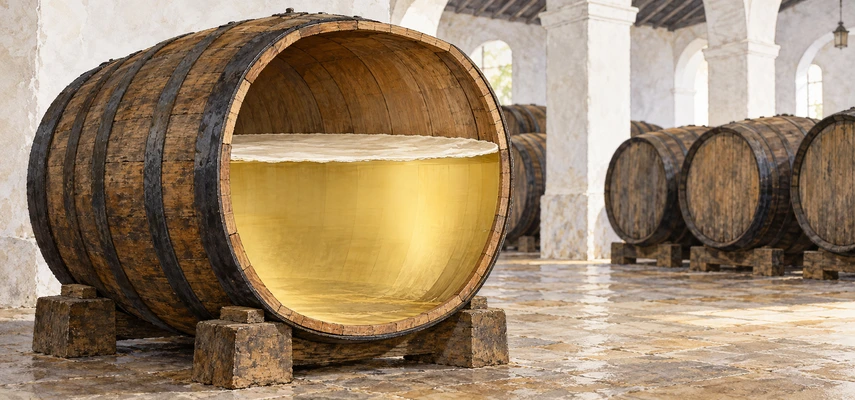
Flor is a film of yeast on the surface of the wine. During biological ageing, it limits direct oxidation and actively changes the wine’s composition. It consumes components including alcohol and glycerol and produces compounds such as acetaldehyde, associated with a distinctive pungent character. The resulting wines can feel lean, dry and sharply defined rather than richly rounded.
Flor needs suitable conditions, including oxygen, temperature and humidity. Casks aren’t filled completely: space above the wine provides a surface on which the film can grow. At the same time, the bodega environment must support the yeast. “Protected from oxidation” doesn’t mean hermetically sealed with no oxygen available. The vinification account explains this living relationship.
Fino is a pale, dry biological style, often with almond-like, fresh-dough and pungent notes. Manzanilla is also dry and biologically aged, but its protected identity requires ageing in Sanlúcar de Barrameda. The town’s humid maritime setting supports its particular cellar environment. The Manzanilla specification makes that location essential. Manzanilla isn’t simply any unusually light Fino produced anywhere.
Oxidation explains Oloroso and the second stage of Amontillado
Without sustained flor protection, oxidative ageing allows gradual contact with oxygen. Colour deepens and nutty, dried-fruit, spice or seasoned-wood characters can develop. Evaporation reduces volume and concentrates components, creating both stylistic changes and commercial losses. Old, well-seasoned casks provide the environment; obvious new-oak vanilla isn’t the required goal.
Oloroso is directed toward oxidative ageing from the outset of its maturation route, classically after fortification to around 17% abv without flor continuing over it. It can be full-bodied, walnut-like and deeply coloured while remaining dry. Brown colour, a rounded palate or a raisin-like aroma alone doesn’t prove sweetness.
Amontillado follows two meaningful stages: first biological ageing under flor, then oxidative ageing after that protection ends. In the classic pathway, refortification to 17%+ abv ends flor activity before further oxidative development. The result can combine a leaner, pungent foundation with hazelnut-like and developed complexity. The current Oloroso–Amontillado comparison makes the order central: biological first, oxidative later.
Palo Cortado is a dry style associated with fine aromatic character and the broader body of oxidative development. A classic route selects suitable fine base wines, then redirects them toward oxidative ageing through further fortification. The Palo Cortado account explains cellar selection. Don’t reduce it to a fixed-duration recipe identical to Amontillado, or claim it is made by blending finished Amontillado and Oloroso simply because its description compares them.
Solera: fractional blending, not an ancient vintage in every glass
The criaderas and solera system blends wines across stages of maturity. A proportion is withdrawn from the oldest stage for bottling. That stage is replenished from the next-younger criadera, which is replenished in turn, with younger wine ultimately entering the system. The casks aren’t emptied completely at every movement.
As a result, the system can support continuity of style and balance younger wine with older material. For biological styles, refreshing the wine also helps sustain suitable conditions for flor. The ageing explanation describes the process. A founding date on a solera isn’t the harvest date of all the wine in today’s bottle.
The physical casks needn’t all be piled in one convenient staircase: the important arrangement is the age sequence and controlled movement. Nor is a solera necessarily three stages. Cellar management must maintain sufficient mature stock, monitor losses and preserve the intended character. Complexity takes time and inventory; fractional blending doesn’t make old wine materialise for free.
PX and Moscatel: preserve concentrated grape sugar
For PX, grapes are dried in the sun, losing water and concentrating their contents. Pressing these sweet grapes produces a thick, sugar-rich must with relatively low juice yield. Sweet fermentation is limited, and fortification to stop fermentation preserves a large amount of grape sugar. Later oxidative ageing can add complexity to the intense raisin, fig and syrup-like fruit. The PX production guide sets out the process.
This differs from fortifying a fully dry Palomino base: timing changes what remains in the wine. Very sweet PX still needs balance, concentration and appropriate freshness; syrupy weight alone isn’t proof of quality. Drying, careful handling and low usable juice yield can increase grape and production costs.
Moscatel can also use very ripe or sun-dried grapes, with Muscat’s floral and citrus aromas providing another clear reference. Sun-drying is relevant, but not a requirement to impose on every permitted Moscatel expression. The harvest account describes the traditional drying practice. Protecting fruit condition during that process matters: concentration shouldn’t become an excuse for undesirable rot.
Pale Cream, Medium and Cream: sweetness through blending
Another route is blending dry wine with sweet wine, or with appropriate grape-based sweeteners. This is different from stopping the dry base’s fermentation before it finishes. The final balance depends on the character of the base and the quantity and nature of the sweet component.
Pale Cream uses a biologically aged foundation and is sweetened, often with rectified concentrated grape must that preserves a pale appearance. The Pale Cream guide explains the colour advantage. It doesn’t contain dairy cream, and adding spirit alone wouldn’t create its sweetness.
Medium covers a range of sweetened blends, often using a base with both biological and oxidative influence, including Amontillado-like character. It isn’t one fixed blend proportion or a synonym for dry Amontillado. The Medium production account identifies the blending principle; consult the current specification when precise sugar boundaries matter.
Cream commonly combines an oxidative, often Oloroso-based foundation with sweet wine such as PX or an eligible grape-based sweetener. The result is dark and sweet, with nutty and dried-fruit characters. The Cream guide connects the base with the finished style. Oloroso itself remains a dry style; Cream’s sweetness doesn’t come from oxidation magically manufacturing sugar.
Explain quality and price through the actual work
Good examples balance alcohol, sweetness where present, flavour intensity, length and complexity. Biological pungency and deliberate oxidative development belong to these styles; the same character might mean something different in a fresh fruit-led white. Assess the wine against its intended style rather than one universal expectation of fruity youthfulness.
Long ageing occupies casks and cellar space, ties up capital and loses volume through evaporation. Concentrated sweet grapes yield less juice, and careful selection adds labour. Market demand, limited mature stocks and reputation affect selling price separately. Therefore, “Sherry is old” isn’t enough: explain which cost or demand mechanism applies.
Revisit sweet-wine fermentation in #7 and maturation in #8. Article #42 compares Port’s fortification timing, #43 covers other fortified Muscats, and #49 compares label systems.
Knowledge check: Sherry
1. What is flor?
2. Why does fortifying a fully dry Palomino base not create a very sweet wine by itself?
3. Which sequence defines Amontillado’s main ageing pathway?
4. Which statement about Oloroso is correct?
5. Which location is essential to Manzanilla’s protected identity?
6. What is the purpose of fractional solera movements?
7. Which production choice preserves large amounts of grape sugar in the PX route discussed here?
8. How is Pale Cream commonly sweetened while retaining its pale appearance?
9. What is the best interpretation of Palo Cortado’s comparison with Amontillado and Oloroso?
10. Why can long oxidative ageing increase production costs?
Answers and explanations
1. C — A living yeast layer. Flor interacts with the wine and limits direct oxidation during biological ageing. Its development depends on suitable cellar and wine conditions.
2. B — Timing controls remaining sugar. A dry fermentation has already consumed most sugar. Adding spirit raises alcohol but doesn’t automatically sweeten the wine.
3. D — Two stages in order. Amontillado begins with biological development, then continues oxidatively after flor protection ends. That distinguishes it from an Oloroso maturation route.
4. A — Colour and richness differ from sweetness. Oxidative development can deepen colour and build complex nutty character in a dry wine. Sweet Cream is a different blended style.
5. C — The origin is part of the definition. Manzanilla must undergo its defining biological ageing in Sanlúcar. A similar-looking biological wine elsewhere doesn’t gain that name automatically.
6. B — Controlled fractional blending. Only a proportion is withdrawn and replenished through younger stages. The system isn’t completely emptied at each movement.
7. D — Preserve concentrated sugar. Sun-dried fruit gives concentrated must, and limited fermentation followed by fortification retains much of its sweetness.
8. A — A grape-derived sweetening route. Rectified concentrated must can sweeten a pale biological foundation without the dark colour a sweet PX component might introduce.
9. C — A style description, not a blend formula. Selection and oxidative development shape Palo Cortado. Comparing its character with two other styles doesn’t define a compulsory mixture.
10. B — Time and losses have costs. Casks, storage, delayed income and evaporation all affect the economics of long ageing, independently of market demand.
Written exercise 1: Compare Fino with Oloroso (5 marks)
Explain five production or ageing differences that help account for a pale, lean Fino and a darker, fuller Oloroso.
Model answer: Both start from a dry base wine, so their contrast isn’t explained by preserving lots of unfermented sugar. The classic Fino route uses around 15% alcohol to support flor, while around 17% directs Oloroso away from sustained flor ageing. Flor limits direct oxidation, helping Fino retain a paler appearance. Flor consumes glycerol and produces distinctive pungent compounds, helping explain Fino’s leaner character. Oloroso’s oxidative ageing deepens colour and develops nutty complexity and concentration without necessarily adding sweetness.
Why it earns credit: Award one mark each for (1) the shared dry foundation and its implication, (2) alcohol levels linked to flor, (3) oxidation protection and colour, (4) flor metabolism linked to character, and (5) oxidative development linked to Oloroso’s style. Calling Oloroso “sweet because brown” contradicts the required explanation.
Written exercise 2: Explain three sweetening routes (5 marks)
Explain how PX, Pale Cream and Cream obtain their sweetness, giving two linked points for PX, two for Pale Cream and one for Cream.
Model answer: PX grapes are sun-dried so water loss concentrates their sugar. Limited fermentation and fortification then preserve much of that sugar in the wine. Pale Cream starts with a biologically aged wine rather than a naturally sweet ferment. Rectified concentrated grape must can sweeten that base while preserving a pale colour. Cream commonly sweetens an oxidative, often Oloroso-based wine with naturally sweet wine such as PX or an appropriate grape-based sweetener.
Why it earns credit: Award one mark each for (1) PX drying/concentration, (2) limited fermentation and fortification, (3) Pale Cream’s biological base, (4) explained pale sweetening component and (5) Cream’s oxidative-base sweetening. Spirit addition by itself isn’t the sweetening explanation for Pale Cream or Cream.
One-page revision summary
| Style or idea | Production anchor | Explain the result |
|---|---|---|
| Marco de Jerez | South-western Spain, Atlantic influence | Historic triangle remains useful; authorised zone is broader |
| Albariza / winds | Water storage / moist Poniente and dry Levante | Vine and cellar conditions, not direct soil flavour transfer |
| Palomino | Principal dry-base grape | Ageing has a strong role in final character |
| Classic 15% / 17% pathways | Suitable for flor / prevents sustained flor | Production targets differ from a fixed final bottle strength |
| Fino | Dry, biological ageing | Pale, pungent, almond/dough-like, relatively lean |
| Manzanilla | Biological ageing in Sanlúcar | Protected origin and maritime cellar context |
| Amontillado | Biological then oxidative | Pungent foundation with developed nutty complexity |
| Oloroso | Oxidative maturation route | Darker, fuller and nutty, yet dry |
| Palo Cortado | Fine selected wines redirected to oxidative development | Aromatic finesse with broader body; not a compulsory blend |
| Criaderas / solera | Fractional withdrawals and replenishment | Continuity across maturity stages, not one ancient vintage |
| PX | Sun-dried grapes, limited fermentation, fortification | Very sweet, concentrated dried-fruit character |
| Muscat / Moscatel | Aromatic ripe or dried fruit, sweet production | Floral/citrus reference; not every example must be sun-dried |
| Pale Cream | Sweetened biological base, often rectified concentrated must | Pale appearance plus sweetness |
| Medium | Sweetened blend, often mixed-ageing influence | Range of sweetness and developed character |
| Cream | Sweetened oxidative foundation, often Oloroso plus PX | Dark, nutty and sweet; no dairy required |
| Quality / price | Balance and complexity / time, losses, labour and demand | Colour and alcohol alone don’t establish sweetness or value |
Trace one dry and one sweet Sherry from grape to glass. Identify when sugar is consumed or preserved, when flor acts, and when oxygen shapes the wine. Those three questions organise most of the chapter.












