










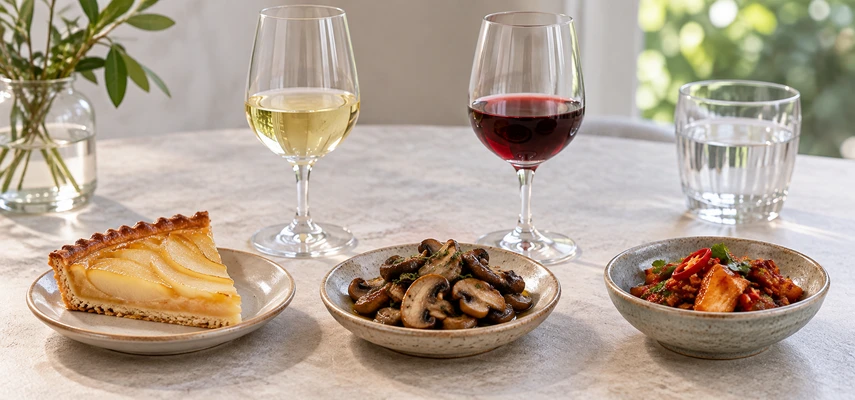

Wine faults, food pairing and responsible advice meet at the same table. First check whether the wine is sound. Then consider how the dish changes its expression and whether the recommendation suits the person. Finding an attractive match doesn’t excuse ignoring a damaged bottle or pressuring a guest who doesn’t want alcohol.
For WSET Level 3, the assigned specification connects fault recognition, food interactions and social and health issues with sound customer advice. This guide explains the mechanisms and practical decisions. Use the service procedures in #47 and the analytical method in #44 to keep observations separate from assumptions.
Check the wine before blaming the pairing
Taste and smell a small sample in a clean glass before deciding that a dish caused the problem. Compare with another clean glass if glass odour is plausible. Record the actual symptom and consider the wine’s intended style. A nutty oxidative fortified wine and a damaged young, fruit-led white can share a descriptor without sharing the same condition.
The AWRI sensory-evaluation guidance notes differences between tasters’ sensitivities. If a colleague cannot detect what you notice, that isn’t proof you imagined it. Seek an appropriate second assessment and follow the establishment’s replacement procedure. A polite, specific description helps more than an argument over who possesses the superior nose.
Cork taint and oxidation are different problems
Cork taint, commonly associated with TCA, can produce musty, damp-cardboard impressions and suppress fruit. It doesn’t mean pieces of cork floating in the glass. Oxidation can dull fresh expression, deepen colour and introduce unwanted bruised-apple or stale notes. The AWRI faults reference describes both mechanisms and their sensory effects.
However, context matters for oxidation. Deliberate oxidative maturation is central to some styles covered in #41–43; damaged freshness is undesirable in others. Brownish colour alone doesn’t establish the diagnosis. Combine appearance, aroma, palate, intended style and handling history. Don’t assume a screwcap excludes every possible musty contamination or guarantees perfect bottle condition.
Reduction isn’t the same as high sulfur dioxide
Reduction is a broad tasting shorthand for certain unwanted volatile sulfur characters, such as rotten egg, cabbage or onion. Hydrogen sulfide is one important example. The AWRI explanation of volatile sulfur compounds distinguishes these compounds and shows why their management isn’t a single simple operation.
High sulfur dioxide, by contrast, can create a pungent, irritating impression. Sulfur dioxide has useful preservative roles, but excess sensory impact can mask the wine. The AWRI off-flavour training reference separates this from other sulfur-related problems. “Contains sulphites” on a label doesn’t prove that a wine has a sensory fault.
Some sulfur impressions may change after air exposure, while others persist. Don’t promise that every problem disappears in a decanter, or attempt improvised chemical treatment at the table. A service decision is about presenting sound wine and obtaining appropriate assistance, not experimenting on a guest’s bottle. Decanting doesn’t repair every production or storage fault.
Volatile acidity and Brettanomyces need specific descriptions
Volatile acidity is associated mainly with acetic acid; conspicuous vinegar character can be problematic. Related solvent-like nail-polish-remover impressions can involve ethyl acetate. It isn’t the same as a sound wine’s refreshing acidity. The AWRI technical discussion of volatile acidity provides the chemical distinction. Avoid presenting a sniff as a precise laboratory measurement or legal-compliance test.
Brettanomyces is a yeast that can produce volatile phenols associated with medicinal, sticking-plaster, animal or barnyard notes and diminished fruit. The AWRI Brettanomyces guidance also warns about misdiagnosis. Not every savoury mature red is affected, and individual thresholds vary. Describe what overwhelms or obscures the wine rather than using “Brett” as a synonym for any unfamiliar earthy aroma.
Out of condition is broader than one named fault
A wine out of condition may have lost freshness through poor storage, excessive time after opening or decline beyond its useful drinking stage. Heat damage can produce cooked impressions and loss of definition. A sample might be tired without giving you enough evidence to identify one exact chemical cause. Report that limitation rather than inventing certainty.
Before replacing a bottle, check the correct product and intended style, assess it under suitable conditions and follow the venue’s process. Preserve relevant information about the bottle and storage problem for investigation. Don’t insist that a guest must enjoy it because the producer’s reputation is impressive. Condition belongs to the actual wine served today.
Food changes perception of the same wine
The wine needn’t chemically change in the glass for it to seem different after a mouthful of food. Sweetness, acidity, umami, salt, bitterness, chilli heat, fat and flavour intensity in the dish can alter the experience. WSET’s pairing principles emphasise those interactions and the drinker’s preferences. Start with the whole dish, including sauce and seasoning, rather than the protein’s name alone.
For example, poached fish with lemon and herbs creates a different brief from the same fish with a sweet, hot glaze. A mushroom dish may combine umami, salt, fat and acidity. Naming only “fish” or “vegetarian” misses the factors that may dominate the pairing. Identify the strongest influences before reaching for a familiar regional match.
During a small practice comparison, taste the wine alone first, then revisit it after one food component. Record the difference before adding another component. This sequence helps distinguish a change caused by sweetness from the combined effect of a fully seasoned dish.
Sweetness, umami and bitterness can challenge a wine
Sweetness in food can make a wine seem less sweet and fruity and more acidic or bitter. A wine with sufficient sweetness is often a useful starting point for dessert. Umami can increase perceived bitterness and reduce fruitiness, particularly challenging some tannic wines. The WSET takeaway-pairing guide explains why savoury dishes need attention to the wine’s fruit and structure.
Bitterness in food can reinforce bitterness in wine. Consider tannins including oak, not merely whether the label is red or white. A heavily oaked white may bring a different bitter edge from an unoaked alternative. For a guest sensitive to bitterness, a fruit-led, lower-tannin choice may be more comfortable than a powerful extracted red, even if someone else enjoys the contrast.
Acidity, salt and fat offer different routes to balance
Acidity in food can soften the wine’s perceived acidity and make it seem fruitier; a low-acid wine may seem flat beside a sharply acidic dish. Salt can reduce perceived bitterness and soften hard edges, making fruit more apparent. These tendencies explain why a lemony, seasoned dish may make a structured wine seem friendlier than it did alone.
Fat creates richness that can be balanced by a refreshing, acidic wine. This is a sensory relationship, not a claim that wine dissolves all fat or makes the meal healthier. WSET’s seasonal pairing discussion connects these components. Meanwhile, a dish can contain several influences at once, so test the actual combination rather than applying one isolated rule mechanically.
Chilli heat and flavour intensity complete the picture
Chilli heat can emphasise alcoholic warmth and make bitterness feel more prominent. Consider a lower alcohol level, modest tannin and sufficient fruitiness; some sweetness may help, if the guest likes that style. WSET’s spice-pairing explanation distinguishes the sensation of heat from the aromas of spices. Fragrant cinnamon and fiery chilli don’t automatically demand identical drinks.
Match flavour intensity so that neither side disappears. A delicate wine’s complexity may be difficult to appreciate beside a forceful sauce; a strongly flavoured wine can overwhelm subtle food. Complexity doesn’t require an elaborate dish, and a rare bottle isn’t compulsory. Explain a recommendation through wine sweetness, acidity, tannin, fruit and alcohol alongside the dish’s dominant features.
Responsible advice includes quantity and context
Alcohol consumption carries risks; heavy episodic or sustained heavy consumption increases many harms. The World Health Organization alcohol fact sheet identifies liver disease, several cancers, dependence and injury risks, as well as harms to other people. Social consequences can include family conflict, financial problems, impaired work and road crashes. Wine’s cultural appeal doesn’t remove ethanol’s effects.
Avoid claiming that red wine is a health treatment or that an expensive wine is safer. Respect abstention, offer appealing alcohol-free choices and never present food or water as making impaired driving safe. In service, follow applicable age and intoxication rules and seek trained assistance when needed. Where health conditions, pregnancy or medicines affect the decision, direct the person to appropriate professional guidance rather than improvising personal medical advice.
Quantity depends on both volume and abv, not the phrase “one glass.” The NIAAA standard-drink explanation defines a US standard drink as 14 grams of pure alcohol, approximately 5 US fluid ounces of wine at 12% abv. A larger or stronger pour contains more; other countries use different units. This is a measurement reference, not a universally safe allowance.
Finally, practising wine education doesn’t require swallowing every sample. Use small pours, spit and plan sessions sensibly. At the table, explain the options without pressure and check that the recommendation meets the person’s stated needs. Sound advice combines a sound bottle, a thoughtful pairing and respect for the person choosing whether to drink it.
Knowledge check: Faults, food and responsibility
1. Which observation most strongly suggests cork taint?
2. How should deliberate oxidative style be distinguished from damage?
3. What does the term reduction commonly refer to in fault recognition?
4. Which distinction is correct?
5. What can sweetness in food do to a wine?
6. Why can umami challenge a tannic wine?
7. Which is a useful starting point with pronounced chilli heat?
8. What should a server do when a guest declines alcohol?
9. What determines the amount of alcohol in a pour?
10. What is the US standard-drink figure used here?
Answers and explanations
1. C — A sensory taint, not fragments. Musty character and muted fruit can indicate TCA-related taint. Pieces of cork alone don’t establish that diagnosis.
2. B — Interpret the evidence in context. Some wines deliberately develop oxidative character. The same descriptor can mean damage in a style intended to remain fresh.
3. D — Sulfur-related sensory characters. Rotten egg or onion impressions can involve unwanted volatile sulfur compounds. They aren’t simply the same thing as high sulfur dioxide.
4. A — Different chemical and sensory ideas. Vinegar-like volatile acidity differs from refreshing structural acidity. A sharp, mouthwatering wine isn’t therefore spoiled.
5. C — Food changes perception. Sweet food can expose a wine’s bitterness or acidity while reducing perceived fruit. Sufficient wine sweetness can help in dessert pairings.
6. B — Consider fruit and grip. Umami may make bitterness more prominent and fruit less apparent. Salt, fat and the rest of the dish can modify the overall result.
7. D — Avoid amplifying the heat unnecessarily. Lower alcohol and gentler tannin can be useful, while fruit and optional sweetness support the combination. Preferences still matter.
8. A — The person leads the recommendation. A pairing isn’t a reason to pressure someone to drink. An appropriate alcohol-free option can meet the occasion.
9. C — Size and strength both count. A larger or stronger pour contains more alcohol. The everyday word glass doesn’t define one fixed quantity.
10. B — A measurement convention. NIAAA uses fourteen grams of pure alcohol for a US standard drink. This isn’t a universal serving size or safety guarantee.
Written exercise 1: Investigate a suspected fault (5 marks)
A fresh white smells musty and its fruit seems muted. The guest also notices the problem, while one colleague does not. Give five reasoned steps or observations for handling the situation.
Model answer: Check the wine in a clean glass so glass contamination isn’t mistaken for a bottle problem. Describe the musty character and suppressed fruit, which support suspicion of cork-type taint rather than merely visible cork fragments. Consider the intended fresh style and assess the actual sample. Seek an appropriate second assessment because sensitivity to taint varies. Follow the venue’s replacement and recording procedure without insisting the guest must accept the wine because a colleague cannot detect the issue.
Why it earns credit: Award one mark each for (1) clean-glass check, (2) specific symptom and plausible distinction, (3) intended-style context, (4) sensitivity and second assessment, and (5) practical respectful response. The scenario supports a suspicion, not a laboratory-confirmed chemical analysis.
Written exercise 2: Explain a pairing recommendation (5 marks)
A guest wants wine with a strongly flavoured, chilli-hot, umami-rich dish and dislikes pronounced bitterness. Give five linked considerations supporting a recommendation without naming a compulsory grape.
Model answer: Lower alcohol can avoid unnecessarily amplifying chilli warmth. Modest tannin is useful because the guest dislikes bitterness and umami can make it more apparent. Sufficient fruitiness helps the wine retain expression beside umami. Enough flavour intensity prevents it being overwhelmed by the powerful dish. Some sweetness may help if the guest enjoys that style, but confirm the preference and offer an alcohol-free alternative if wanted.
Why it earns credit: Award one mark each for (1) alcohol and heat, (2) tannin and bitterness, (3) fruit and umami, (4) matched intensity and (5) sweetness qualified by preference. Naming a fashionable region without explaining these relationships doesn’t answer the task.
One-page revision summary
| Issue | Evidence or interaction | Practical implication |
|---|---|---|
| Cork taint | Musty impression and muted fruit | Different from floating cork fragments |
| Oxidation | Unwanted loss of freshness or developed stale character | Interpret against intended style, not colour alone |
| Reduction | Unwanted volatile sulfur characters | Not identical to excess SO₂; don’t promise universal decanting cure |
| High sulfur dioxide | Pungent, irritating sensory impact | Useful preservative can still have excessive sensory effect |
| Volatile acidity | Vinegar; related solvent character may involve ethyl acetate | Different from normal refreshing acidity |
| Brettanomyces | Volatile-phenol medicinal/animal notes, possible fruit suppression | Not every savoury aroma is Brett |
| Out of condition | Tired, damaged or poorly preserved expression | Report evidence without inventing an exact cause |
| Sweetness / umami / bitterness in food | Can reduce fruit or accentuate hard edges | Consider sweetness, fruit and tannin of the wine |
| Acidity / salt / fat | Can soften or balance structural impressions | Assess the whole seasoned dish |
| Chilli | Can amplify warmth and bitterness | Consider lower alcohol, gentle tannin and guest preference |
| Intensity / complexity | Strong food can obscure delicate wine detail | Match sensory strength without requiring an expensive bottle |
| Responsibility | Quantity, context, health and social effects matter | Respect abstention; don’t make health-treatment claims |
| Measuring alcohol | Volume and strength; US standard drink 14 g pure alcohol | One glass isn’t automatically one standard drink |
For your next practice recommendation, explain three things separately: why the wine seems sound, which food components influenced the choice, and how the advice respects the guest’s preferences and decision about alcohol.












