










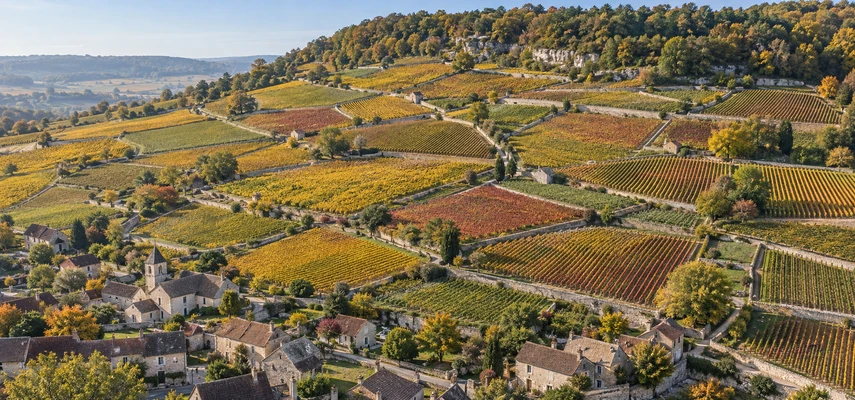

In the Côte d’Or, crossing a narrow path can change the vineyard name on the bottle. It doesn’t magically replace one grape variety with another or guarantee a better wine. It changes the defined origin, its history, its production framework and the expectations buyers bring to it. The grower still has a season and a cellar full of decisions to manage.
Burgundy’s Côte d’Or is a powerful place to study how small differences in slope, exposure, soil and human choices can matter. Pinot Noir and Chardonnay provide familiar reference points, but a shared variety makes the variation more visible rather than making every wine predictable.
For Diploma study, connect site and production with style, quality and price. The WSET specification asks for those relationships and their evaluation. Memorising famous Grands Crus is useful only when you also understand what the names establish, what they don’t, and why different producers can make different wines from the same recognised site.
Locate the two Côtes and their main grapes
The Côte de Nuits lies north of the Côte de Beaune along the vineyard escarpment south of Dijon. Pinot Noir dominates the Côte de Nuits’s reputation for reds; the Côte de Beaune produces important reds and exceptionally famous Chardonnay whites. Neither description excludes every other colour or style.
The BIVB’s Côte de Nuits overview places its village and Grand Cru origins within a varied vineyard. Learn the northern sequence through Marsannay, Fixin, Gevrey-Chambertin, Morey-Saint-Denis, Chambolle-Musigny, Vougeot, Vosne-Romanée and Nuits-Saint-Georges. This is a geographical route, not an ascending quality ladder.
In the Côte de Beaune, orient yourself around Corton, Beaune, Pommard, Volnay, Meursault, Puligny-Montrachet and Chassagne-Montrachet, then include neighbouring origins such as Saint-Aubin, Santenay and Maranges. The better-known villages don’t exhaust the useful study comparisons or guarantee the best value.
Climats identify places, not weather forecasts
A climat is a recognised named vineyard place, shaped by natural conditions and a history of cultivation. It isn’t the French word for an individual vintage’s weather in this context. A lieu-dit is a named location; the boundaries and usage can overlap with climats without being identical in every case.
The BIVB’s explanation distinguishes those terms. A clos traditionally indicates an enclosed vineyard, while monopole concerns a holding under one owner. Neither word is a separate quality rank, and a named site on a label isn’t automatically Premier Cru.
Ownership can be fragmented. Several growers may hold parts of a famous vineyard, each applying different cultivation, selection and cellar choices. UNESCO’s account of the climats emphasises the interaction of parcels, cultivation and the wider production landscape. Recognition of that landscape isn’t a sensory grade awarded to every bottle bearing one of its names.
Slopes help explain ripening and water
Continental influences bring seasonal contrast, with temperature, sunshine and rainfall varying between years. Eastward and southeastward exposure can help ripening, while slope, altitude, wind and local topography create differences over short distances. A regional average doesn’t capture every parcel’s growing season.
Limestone, marl, clay and slope deposits vary in depth and composition. Their influence includes drainage, accessible water and root development rather than literal mineral flavours transferred into wine. A well-drained site may work well in a wet season while needing sufficient reserves in a dry one.
Nutrient availability interacts with water and vine vigour. A dense canopy can alter fruit exposure and airflow; weak growth can limit the vine’s ability to ripen its crop. Evaluate soil, rooting, vine status and management together rather than equating shallow or poor soil with automatic excellence.
Mid-slope positions often combine useful drainage and exposure, but “all the best wine comes from exactly the middle” is too crude. Differences in aspect, soil, weather and decisions matter, and some important sites don’t fit a simple diagram. The BIVB climate overview supplies regional context; the actual parcel still needs analysis.
Manage weather and delicate fruit
Spring frost can damage exposed growth, hail can reduce or injure a crop, and heat or drought can complicate ripening and balance. Wet conditions may increase disease pressure or disrupt harvest. A warmer season isn’t automatically better if acid, fruit condition or water status becomes limiting.
Vineyard establishment involves the permitted varieties, appropriate clones or other selection material, rootstocks, density and training suited to the site and rules. Pinot Noir’s fruit condition and crop balance need attention; Chardonnay also responds to site and harvest decisions rather than acting as a neutral blank sheet.
Canopy management balances light, airflow and protection. Nutrient and water management should reflect measured needs and permitted practices. Frost precautions or hail protection have costs and limits; no system insures every parcel against every event. Site choice and a response to an immediate threat are different decisions.
Downy and powdery mildew, bunch rot and relevant vineyard pests require monitoring and integrated management. Hygiene, canopy work and suitable permitted protection help preserve the crop. Certification labels describe defined practices, not immunity from disease or a guarantee of a better tasting result.
Harvest timing balances flavour and structure with weather and fruit health. Prompt grape transport, careful reception and sorting preserve options in the cellar. Hand selection and small batches can support detailed work, but also add labour, handling and cost. Low output may reflect adversity rather than a deliberate quality strategy.
Pinot Noir makes extraction choices conspicuous
Red production can use destemmed fruit, whole berries or some whole bunches, according to the fruit and intention. Stems can alter fermentation conditions, aroma and tannin, with effects depending on their state and the overall process. “Whole bunch” isn’t a universal synonym for elegance or a guarantee against harshness.
Alcoholic fermentation with skins develops colour and tannin; temperature, cap work and maceration time influence extraction. Pre-fermentation maceration is another possible choice, not a mandatory Côte d’Or recipe. The aim is a coherent wine rather than the deepest possible colour from a variety often associated with relatively pale reds.
Pressing and assessing fractions allow choices about structure and balance. Malolactic conversion is important in the red sequence, while subsequent maturation can use vessels of different sizes and ages. New oak proportion and time should fit the fruit; a delicate wine can be overwhelmed by a programme chosen mainly for prestige.
Blending doesn’t necessarily mean mixing grape varieties. A producer may combine barrels or eligible parcels within the origin claimed, while a named-site wine must respect its permitted sourcing. Separate lots, tasting and selection create decisions even in a wine sold primarily as one grape from one climat.
Chardonnay shows production as well as place
Côte de Beaune Chardonnay can combine fruit, acidity, texture and production-derived character. Pressing, fermentation vessel, lees management, malolactic conversion where chosen and maturation affect the result. Detailed white finishing is treated in the companion Burgundy lesson; don’t infer an exact technique from one buttery or toasty descriptor.
The Puligny-Montrachet profile identifies predominantly Chardonnay whites alongside a small red production. Meursault and Chassagne-Montrachet also demand more nuance than a shorthand that makes every village identical. Compare concentration, freshness, texture and integration through actual wines.
Montrachet and Corton-Charlemagne are key Grand Cru white references. Corton also includes important reds, while Pommard and Volnay are important red-wine comparisons. Differences between a producer’s choices, a climat and a vintage can be as significant as a memorised village stereotype.
Read the hierarchy as protected origin
The familiar study hierarchy runs from regional origins through village wines and village Premier Cru to Grand Cru. The BIVB’s AOC explanation also explains why an additional geographical denomination isn’t automatically a separate appellation. The European protected-designation-of-origin framework, French national recognition and each appellation’s detailed specification underpin the label.
Bourgogne Côte d’Or is a geographical denomination within the Bourgogne appellation framework, not another name for every wine grown anywhere in the administrative department. The regional body’s own profile distinguishes that restricted claim from the broader label.
A village Premier Cru identifies an eligible classified site within its appellation framework, with label wording depending on the claim and any permitted blending. Grand Cru names generally identify separate protected origins. The hierarchy attaches to defined vineyard origin rather than promoting an entire producer through an estate ranking like 1855 Bordeaux.
Meursault’s famous Les Perrières, Les Genevrières and Les Charmes illustrate Premier Cru recognition, not an automatic Grand Cru designation for a celebrated name. The BIVB’s Meursault sheet helps keep the site and wording straight. A high price or strong reputation doesn’t rewrite the category.
Build useful northern and southern comparisons
Gevrey-Chambertin, Vosne-Romanée and Nuits-Saint-Georges offer important Pinot Noir study references, but contain different sites and wines. The Gevrey profile is a better starting point than treating every bottle as maximally powerful. Chambolle, Morey and neighbouring origins add further variation without requiring an infallible perfume for each village.
For Côte de Beaune reds, Pommard can provide a useful fuller-structure comparison, while Volnay is often approached through finesse. Evaluate the actual producer, site, year and development before relying on that contrast. A forceful Pommard and a delicate Volnay are teaching tendencies, not mandatory outcomes that override the glass.
For whites, compare Meursault, Puligny and Chassagne through concentration, acid balance, texture, oak and development. Avoid defining Meursault simply as buttery or Puligny as necessarily austere. Those impressions can reflect production and maturity as well as site, and each appellation contains substantial variation.
Small parcels meet a large international market
Estates can manage their own holdings, while merchants may buy grapes, must or wine and sometimes own vineyards too. Brokers can facilitate transactions without being identical to the buyer. The distinction matters where fragmented ownership and tiny lots make supply coordination and reliable relationships valuable.
A winery handling many small cuvées faces separate vessels, cleaning, sampling and records. Vineyard labour, land access, crop loss, selection, barrels and stock finance affect costs. Scarce supply and strong demand for particular names can raise price further, but expense and classification don’t establish quality for every bottle.
International demand introduces currency and destination-market exposure. An unchanged euro quote can cost a foreign buyer more after conversion; importing, tax, transport and channel service add further layers. Price comparisons need the same vintage, producer, format, condition and transaction stage.
Specialist retail and restaurants may help explain detailed origins, while wider distribution or direct sales can suit other products and volumes. Destination rules, including monopoly or three-tier arrangements, affect the available route. Direct customer contact can be valuable without being legally unrestricted or operationally free.
The producer’s name functions alongside appellation, climat and vintage as a brand. The BIVB and appellation organisations have promotional or representative roles distinct from regulatory approval. Packaging, closure and post-cellar transport still have to protect the wine; origin precision doesn’t make a bottle immune to oxidation, poor storage or damaged provenance.
Compare the evidence here with Chablis and southern Burgundy as a regional case, then apply the regional comparison framework to the comparison. Compare growing conditions, production decisions, style, quality and the commercial reasons for price. Establish the differences rather than assuming that one familiar name must be better.
Original Diploma practice
These are original teaching exercises, not official WSET questions or marking keys. No actual tasting, producer visit or firsthand vineyard survey is claimed.
Question 1: evaluate a slope advantage
Compare a well-exposed, free-draining parcel with a deeper-soil parcel holding more accessible water. Explain how their relative advantages might change between wet and dry seasons.
Indicative answer points: exposure; temperature; water reserves; vigour; hazards; management; conditional quality.
Outline answer: Exposure and drainage can support ripening and avoid excessive wetness, but adequate water access becomes important during drought. Deeper soil can support growth or create excessive vigour depending on conditions. Consider roots, season, crop and management before predicting the result. Neither surface position nor soil depth guarantees superior wine every year.
Question 2: distinguish site and producer
Two producers sell wine from the same Grand Cru. A buyer expects identical style and quality because the origin is identical. Evaluate the expectation.
Indicative answer points: shared origin; parcel variation; cultivation; harvest; selection; extraction; maturation; bottle evidence.
Outline answer: The protected origin establishes an important common framework, not identical management or wine. Holdings may differ within the site, and producers can make different vineyard, harvest, extraction and maturation decisions. Vintage and bottle condition also matter. Compare the actual wines and explain quality from evidence rather than treating the vineyard name as a complete production instruction.
Question 3: assess a scarce-wine price
A merchant argues that a very high price proves a Côte d’Or wine is outstanding and suitable for long ageing. Evaluate both conclusions.
Indicative answer points: supply; demand; brand; costs; quality evidence; structure and concentration; development; condition.
Outline answer: Scarcity, producer reputation, classification, market demand and costs can affect price without establishing a calibrated sensory grade. Assess concentration, balance, complexity and finish in the wine. Ageing needs a separate argument based on remaining fruit, structure, development and likely improvement. A high transaction price proves neither conclusion and may also depend on format, provenance and market stage.
Analytical tasting preparation: compare origin and maturity
For reds, build the specification’s essential Burgundy comparison: an acceptable-quality Bourgogne Rouge; a very good Marsannay or similarly lighter-style Pinot Noir; a very good Pommard or similarly fuller-style Pinot Noir; and a very good or outstanding Premier or Grand Cru with clear tertiary development. Add a very good or outstanding Côte de Beaune Premier or Grand Cru white as the relevant white comparison. Chablis and southern Burgundy supply the other essential white categories in the companion lesson.
A good-quality Hautes-Côtes red or a good-quality Côte de Beaune/Côte de Nuits Pinot Noir can provide optional additional comparisons. These are recommended study categories, not a prediction of exam wines, a completed tasting report or an automatic grade for a bottle selected by its label.
Write full systematic notes blind, then compare fruit and condition, acid, tannin amount and nature, alcohol, body, intensity, development and finish. Indicative review: explain quality through concentration, integration, complexity and desirable persistence. Justify ageing separately; tertiary interest can coexist with limited remaining improvement. Do not infer Grand Cru solely from power or turn an origin guess into permission to change an observed structure.











