










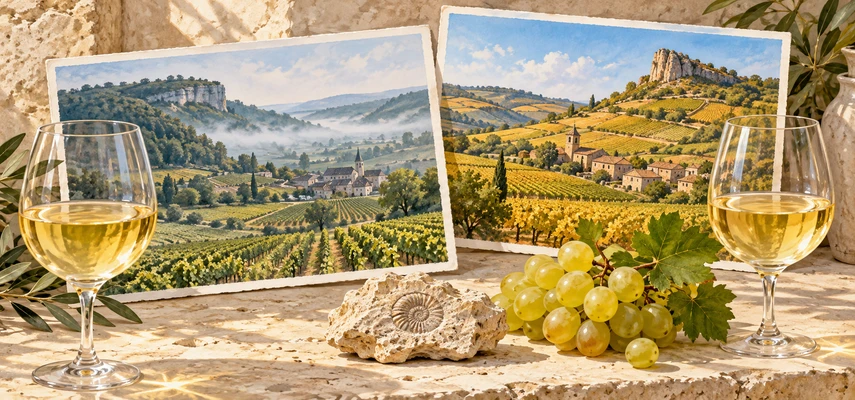

Chardonnay can make a taut Chablis, an approachable Mâcon-Villages or a concentrated Pouilly-Fuissé. That range isn’t a puzzle to solve by assigning one taste to the grape. It’s an invitation to follow site, season, harvest and cellar decisions through to the wine.
Chablis and southern Burgundy also challenge a familiar shortcut: the prestigious middle of the region isn’t the whole story. Northern limestone valleys and the varied vineyards south of the Côte d’Or offer important wines, distinct risks and different commercial structures. Their labels have rules worth understanding, including recent changes that older revision notes can miss.
The WSET Diploma specification asks for regional relationships between environment, production, law, business, style, quality and price. Use those questions to compare these areas, then test the resulting expectations through tasting. A less expensive origin isn’t automatically simpler, and an expensive barrel programme doesn’t turn every white into a better wine.
Keep the three areas separate
Chablis lies in northern Bourgogne, apart from the Côte d’Or, around the Serein valley. Its four familiar study levels are Petit Chablis, Chablis, Chablis Premier Cru and Chablis Grand Cru. Chardonnay is the central grape behind these dry white origins; “Chablis” isn’t a generic French name for every unoaked Chardonnay.
The Côte Chalonnaise lies south of the Côte de Beaune and includes varied hills and vineyard settings rather than one continuous identical slope. Bouzeron, Rully, Mercurey, Givry and Montagny are key names. Bouzeron is associated with Aligoté; Rully, Mercurey and Givry produce whites and reds in differing proportions, while Montagny is a Chardonnay-white origin.
The BIVB’s Côte Chalonnaise overview sets those wines within a broader range. Crémant de Bourgogne is also important here, but its sparkling production belongs to the separate sparkling-wine unit rather than being treated as still-white fermentation with a few bubbles added.
Farther south, the Mâconnais is especially important for Chardonnay, alongside red and rosé production in relevant categories. Learn Mâcon, Mâcon-Villages and Mâcon with an authorised village denomination, then distinguish Pouilly-Fuissé, Pouilly-Loché, Pouilly-Vinzelles, Saint-Véran and Viré-Clessé. Pouilly-Fuissé isn’t the Sauvignon Blanc wine Pouilly-Fumé from the Loire.
Compare exposure, temperature and water
Chablis’s semi-continental conditions create substantial seasonal contrast, with spring frost a serious hazard after vulnerable growth begins. Temperature and sunshine during ripening influence maturity and acid balance, while rain can affect disease, fruit condition and harvest decisions. The regional climate account provides context; no vintage is simply an average year repeated.
The Mâconnais generally has warmer southern influences, but altitude, exposure and soil create meaningful variation. A cooler or differently exposed parcel can behave differently from the shorthand “warm south”. Côte Chalonnaise sites also need their own assessment rather than being placed halfway along a simple temperature ruler.
Water availability depends on roots, drainage and accessible reserves. Limestone and clay-containing profiles can influence the balance, while nutrient availability affects vigour and canopy density. Neither the presence of limestone nor a southern location establishes a fixed quality level or makes drought impossible.
The useful comparison follows the vine: sufficient light and warmth for the intended harvest, enough water to maintain function, and a canopy that supports ripening while managing risk. Then account for the season and producer’s decisions before predicting the wine’s alcohol, body or flavour.
Chablis geology is a starting point, not a flavour recipe
The Chablis wine body’s geology explanation associates much of Chablis, Premier Cru and Grand Cru with Kimmeridgian limestone and marl, while Petit Chablis is mainly associated with younger Portlandian/Tithonian formations. The word “mainly” matters: appellation boundaries and geological descriptions aren’t interchangeable universal formulas.
Fossil-bearing material helps describe the area’s geological history. It doesn’t prove that an oyster-shell aroma is a mineral transported intact into the wine or that a taster can diagnose a precise formation blind. Soil affects vine conditions; the sensory interpretation needs another chain of evidence.
Petit Chablis can offer a fresh accessible style, while selected Chablis and cru examples may show greater concentration, texture or development potential. Producer, season, site and winemaking influence the range. Neither colour depth nor a stony descriptor establishes the appellation level on its own.
Protect a crop without promising perfect security
Vineyard establishment involves matching permitted varieties and suitable planting material with slope, soil, rooting conditions and applicable rules. Clones, rootstocks, training and crop balance create decisions within the regional framework. An ambitious origin doesn’t remove the practical need for healthy vines and workable access.
Canopy management balances exposure, airflow and protection from excessive heat. Nutrient and water management should follow vine status and permitted practice. A technique suitable for vigorous growth on one parcel may be poorly matched to a weaker or drier site.
Frost protection, where appropriate, needs resources and suitable conditions. Sprinkling depends on adequate water and correct sustained operation; other measures also have limits. Hail, heat, drought and rain require different responses, and no investment guarantees a full undamaged crop.
Downy and powdery mildew, bunch rot and relevant pests require monitoring and integrated management. Harvest timing then balances flavour, sugar and freshness against weather and fruit health. Appropriate picking, prompt grape transportation and careful reception help preserve the desired white-fruit condition rather than relying on the cellar to repair everything later.
Press, settle and ferment with an intended style
Processing for these dry whites commonly centres on pressing to separate juice before alcoholic fermentation, with skin contact or other choices depending on the wine. Press fractions can differ, so using every recovered litre indiscriminately may change balance. Selection and recovery affect both style and cost.
Pre-fermentation clarification adjusts the solids carried into fermentation. Settling or another suitable method can remove unwanted material while retaining what the yeast and intended style need. The aim isn’t the clearest imaginable juice at any cost, especially if that creates a different fermentation problem.
Must adjustments require analysis and the applicable rules. An annual permission or an operation allowed in one appellation isn’t unrestricted approval throughout Burgundy. Distinguish a permitted tool, a producer’s actual use and the effect being sought.
Alcoholic fermentation can take place in tank, barrel or another appropriate vessel. Temperature, yeast management and nutrition influence the process. A fruit-led tank approach and a barrel-fermented programme can both make suitable wine; compare actual concentration, freshness and integration rather than awarding quality from the equipment list.
Oak, malolactic conversion and lees aren’t the same thing
Malolactic conversion changes the acid profile and may influence texture or character. Lees contact and stirring can also alter the wine, while oak adds another set of possibilities depending on vessel and age. A creamy impression doesn’t identify all three processes with certainty.
Chablis isn’t required to be completely unoaked. Producer and cuvée choices vary, including among cru wines. Equally, southern Chardonnay needn’t taste strongly of new wood. A regional stereotype can obscure both the site and the producer’s actual programme.
Maturation may develop integration and texture while using space, labour and capital. Blending eligible lots or barrels can help achieve balance within the origin claim; mixing different origins indiscriminately cannot preserve every more precise label. Selection needs both a sensory purpose and traceability.
Post-fermentation clarification can involve settling, fining or filtration as appropriate. Protein and tartrate stability need assessment, with suitable microbial controls and permitted finishing adjustments. Packaging and storage then need to protect the result. Minimal processing is a choice to evaluate, not automatic evidence that a wine is stable or superior.
Read northern and southern cru claims accurately
Chablis Grand Cru is one appellation with seven named climats: Blanchot, Bougros, Les Clos, Grenouilles, Preuses, Valmur and Vaudésir. The official regional profile distinguishes that structure from seven separate Grand Cru appellations. Premier Cru origins extend across different sites and exposures; one example isn’t a complete representation of them all.
In the Mâconnais, Pouilly-Fuissé gained Premier Cru recognition for selected climats from the 2020 vintage. The appellation body’s account describes the four-village origin and its Chardonnay focus. It is wrong to promote every Pouilly-Fuissé to Premier Cru simply because the category now exists.
The hierarchy changed further: the joint appellation body’s 2024 announcement confirms Premier Crus from the 2024 vintage for Pouilly-Loché’s Les Mûres and Pouilly-Vinzelles’s Les Longeays, Les Pétaux and Les Quarts. Older notes stating that neither appellation has Premier Crus are obsolete. Read the precise site, vintage and approved wording.
National and local appellation requirements still apply alongside those distinctions. Regional Mâcon categories and separately named village appellations aren’t interchangeable labels for the same sourcing. Don’t assume that every occurrence of a village name on a bottle creates a separate village-level AOC.
Compare wines beyond the shorthand
Côte Chalonnaise reds such as suitable Mercurey or Givry examples provide useful Pinot Noir comparisons beyond the Côte d’Or. Rully or Montagny can extend Chardonnay study, while Bouzeron gives Aligoté its own meaningful context. Judge the wines’ actual structure and persistence rather than beginning with a lower-price expectation and writing the note to match.
Mâcon-Villages can offer clear fruit and an accessible style; more site-specific or ambitious southern whites can have substantial concentration and capacity for development. Freshness, fruit ripeness, texture and oak need assessing together. Warmth doesn’t require a heavy wine, and high acidity doesn’t guarantee quality.
Quality evaluation needs evidence of balance, concentration, complexity and desirable flavour persistence. Ageing suitability needs another explanation through remaining fruit, structure, current development and likely beneficial change. A youthful fresh wine can be very well made without needing years in bottle, while a famous cru isn’t immune to poor condition.
Production models help explain the range
A grower may supply grapes, an estate may coordinate vineyard and winery, and a cooperative can share facilities, expertise and marketing. Cave de Lugny’s own account provides a real Mâconnais collective-production example. Collective ownership doesn’t require an anonymous style or establish a lower sensory quality than private ownership.
A virtual winery coordinates a wine or brand using contracted resources, while custom crush services provide agreed production work. A larger group or conglomerate may combine holdings and capabilities. These are models for evaluating actual arrangements, not claims that every named southern producer uses them or can disregard origin and estate-bottling conditions.
Shared resources can improve utilisation while creating coordination and incentive questions. Independent production offers control with capital, staffing and sales obligations. Compare the real service, fruit and decisions rather than treating the ownership category as the tasting note.
Connect legal claims with a commercial proposition
The wider regional industry also includes alternative categories such as IGP Saône-et-Loire, identified in INAO’s geographical-indication mapping, and wines sold without a protected regional indication. They have their own conditions and permitted claims; they aren’t extra rungs between Chablis’s cru categories. Vin de France doesn’t mean unregulated wine or permission to keep every reserved origin term.
Supply varies with harvest and permitted production, while small lots, selective work, vessels and inventory affect cost. Demand and reputation can support different price positions, but high production cost doesn’t compel buyers to pay. Compare actual producer, vintage, origin, format and transaction stage before concluding that one region is always cheaper.
Marketing concepts start with the intended customer, benefit, position and objective. A crisp accessible Chardonnay and a collectible cru need different propositions and resources. The five Ps link product, price, place, people and promotion; tasting events, staff explanation or digital communication should fit actual availability and customer behaviour. A new Premier Cru label is an opportunity to explain a place, not proof that a campaign or a price rise will succeed.
Compare the evidence here with Beaujolais as a regional case, then apply the regional comparison framework to the comparison. Compare growing conditions, production decisions, style, quality and the commercial reasons for price. Establish the differences rather than assuming that one familiar name must be better.
Original Diploma practice
These are original teaching exercises, not official WSET questions or marking keys. No personal tasting or producer interview is claimed.
Question 1: evaluate a geological inference
A taster claims an oyster-shell descriptor proves a wine came from Kimmeridgian soil and must be Chablis Premier Cru. Evaluate the reasoning.
Indicative answer points: observation versus cause; geological scope; producer and style; alternative origins; legal level; complete evidence.
Outline answer: The descriptor records a sensory impression, not a geological assay. The formation occurs across more than one Chablis level and doesn’t itself establish every production decision or origin. Assess the full note and plausible alternatives before inferring identity, and don’t turn one descriptor into a legal classification. Quality and ageing need separate evidence.
Question 2: compare two production models
A southern Burgundy grower compares cooperative membership with building a private winery. Evaluate the resources and decisions that matter more than assuming one model makes better wine.
Indicative answer points: facilities; expertise; control; incentives; capital; inventory; market and quality evidence.
Outline answer: Compare the cooperative’s actual technical resources, member obligations, fruit incentives and selling arrangements with the full private investment and operating plan. Independent control also brings staffing, funding and customer obligations. Evaluate the resulting wine and realistic net return, rather than ranking quality solely through ownership form.
Question 3: correct an outdated hierarchy
A revision sheet says Chablis has seven separate Grand Cru appellations and no Mâconnais appellation other than Pouilly-Fuissé can have Premier Crus. Explain the corrections and verification method.
Indicative answer points: one AOC; seven climats;2020 Fuissé;2024 Loché/Vinzelles; precise names; current approval.
Outline answer: Chablis Grand Cru is one appellation with seven named climats. Pouilly-Fuissé’s selected Premier Crus apply from 2020, while selected Pouilly-Loché and Pouilly-Vinzelles sites gained the category from 2024. Check current official specifications and appellation-body announcements, including site and vintage, instead of relying on an undated generalisation. Recognition doesn’t promote every wine from those appellations automatically.
Analytical tasting preparation: complete the Burgundy white range
Select a good-quality Chablis or Petit Chablis; a very good or outstanding Chablis Premier or Grand Cru; a good Mâcon-Villages; and a very good or outstanding Saint-Véran or Pouilly-Fuissé. These are the remaining essential Burgundy white categories alongside the Côte de Beaune cru white in the previous lesson. A Bourgogne Blanc of acceptable or good quality, a Côte Chalonnaise village or Premier Cru of good or very good quality, and a Bourgogne Aligoté of acceptable or good quality are optional additions.
This is a proposed study programme, not an actual tasting report or an examination prediction. Write full systematic notes blind before revealing origins. Compare sweetness, acidity, alcohol, body, intensity, flavour, production and development character, texture and finish; don’t award quality from a label or assume that every northern wine must be the most acidic.
Indicative review: justify quality through the actual concentration, integration, complexity and desirable persistence. Explain ageing independently, considering remaining fruit and likely positive development rather than acid, oak or rank alone. The exercise supplies no fabricated bottle notes or exact official grades. Ask a tutor or informed group to help select and calibrate the intended sample comparisons.












