










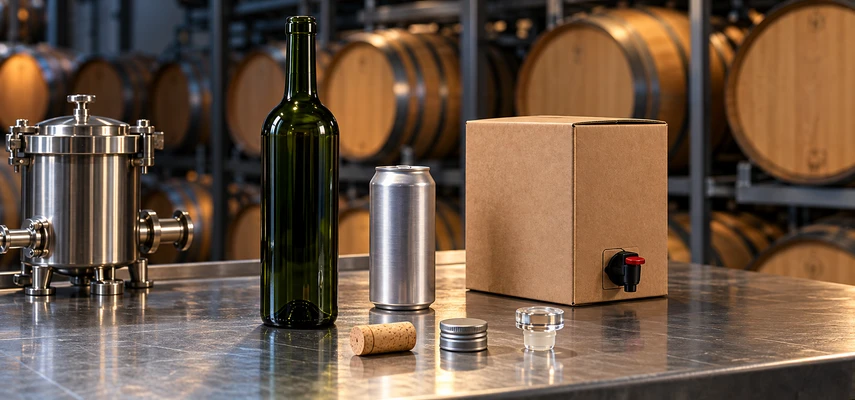

A wine can leave fermentation in excellent condition and still disappoint when its bottle is opened. Time in a vessel, a final blend, a filtration step, the closure and a hot journey can each change the result. Wine maturation, stabilisation, faults and packaging belong in one argument because the consumer receives the outcome of the whole chain.
The task is to develop the wine where development helps, remove or control what threatens its intended performance, and deliver it in a suitable package. Those aims can conflict. An operation that improves stability may remove useful material; a prestigious package may add cost without improving the wine’s condition.
The official D1 specification covers these finishing decisions alongside quality assurance. The strongest explanation connects each intervention to a diagnosed need, a sensory or technical objective and the cost of achieving it. A long list of treatments is less useful than knowing which wine needs which operation.
Wine maturation changes the product through time
Maturation is more than keeping wine somewhere until a release date. Chemical and physical changes can alter aroma, texture and appearance. Whether those changes are desirable depends on the starting wine and intended style. A fresh early-drinking white and a structured red intended for development do not need identical storage regimes.
Oak vessels can add wood-derived compounds while providing a particular storage environment. Species, origin, seasoning, cooperage and toast influence the material available. Barrel size affects the relationship between wine volume and wood surface; age and previous use affect what remains extractable. New small barrels and old large casks are therefore different choices.
Barrel maturation also involves topping, sampling, cleaning and maintaining many separate units. Evaporation and oxygen exposure interact with the wine’s development. AWRI’s research on barrel alternatives separates wood extraction, concentration and oxygen-related processes. Buying oak flavour is not the same operation as reproducing the entire barrel environment.
Neutral vessels, such as suitable stainless tanks, can preserve the wine without a strong contribution of wood flavour. Their shape, construction, temperature control and fill condition still matter. Neutral describes the intended flavour contribution, not a vessel in which nothing happens. Concrete or lined containers likewise require assessment of their actual construction and handling.
Lees management can contribute texture and other changes where the settled material is suitable. It requires monitoring and a decision about contact, stirring and separation. AWRI’s lees-contact resource describes benefits alongside unwanted sulfur or oxidative characters. Retaining sediment for longer is not automatically more complex or better.
Oak alternatives, including chips and staves, can provide wood-derived contributions in a different vessel. They offer different control, handling and cost possibilities, but do not inherently reproduce every barrel effect. Trial wood type, contact and the resulting sensory balance. Permission and any product-description implications must be checked for the wine concerned.
Micro-oxygenation introduces small, controlled quantities of oxygen for a defined production purpose, often involving red-wine phenolic development. It is distinct from an unfilled tank or an uncontrolled transfer. The OIV oxygenation framework connects its use with wine conditions and monitoring. More oxygen is not necessarily more maturation benefit.
Post-bottling maturation continues under the packaged conditions. Aroma and texture can evolve without the wine remaining in a barrel or taking in a large oxygen supply. The starting wine, closure, package oxygen, temperature and time influence the trajectory. Bottle age can develop a suitable wine or simply carry another beyond its useful freshness.
Blending should solve a defined problem
Blending for balance may combine components with complementary acidity, alcohol, tannin or flavour. Blending for consistency helps maintain a recognisable product across lots or seasons. Blending for style assembles the producer’s intended profile, rather than merely averaging whatever happens to be available.
Blending for quality can bring complementary strengths together, while blending for price involves producing an appropriate wine within a viable cost structure. Those aims can coexist. A technically impressive component may not belong in a particular product if it disrupts the profile or makes the required price impossible.
Use trials and calculations together, then reassess the actual final blend. Components that were stable separately may behave differently when combined. A sweetening component, where permitted, also changes fermentable sugar and the microbial-control plan. The finished blend is the product requiring approval, not an assumption based on its ingredients’ earlier test results.
Clarification and stabilisation answer different questions
Sedimentation lets suspended particles settle so that clearer wine can be separated. It can be relatively simple but takes time and tank capacity, with wine retained in the sediment. Racking and subsequent transfers also need appropriate protection. Waiting is a process choice with costs and risks, not a completely passive alternative to equipment.
Fining uses a suitable agent to interact with selected constituents so that unwanted material can be removed. The aim might involve protein stability, colour or astringency. AWRI’s fining guide emphasises trials because response depends on the wine. Excess treatment can remove desirable material; insufficient treatment may fail to solve the original problem.
Different agents serve different purposes. Bentonite can remove haze-forming proteins, while other permitted agents may target particular phenolic effects. Choice also involves process compatibility, certification and applicable labelling requirements. The fact that an agent works in one trial does not establish that it is permitted or appropriate for every market.
Filtration separates material through a medium. Coarser clarification and validated microbial removal are different tasks. Depth, surface and cross-flow systems offer different operating characteristics; nominal ratings should not be confused with absolute retention performance. AWRI’s filtration resource explains why the filter and its integrity matter.
Centrifugation uses rapid rotation to separate suspended material and can support efficient processing. It requires equipment, energy, cleaning and an appropriate feed. Compare throughput, recovered wine and the target condition rather than assuming every clarity problem needs the same machine.
Clarification concerns the material currently visible or suspended. Stability concerns the likelihood of unwanted change later. A brilliantly clear wine may still contain dissolved haze precursors or microorganisms capable of growing. Assess the relevant instability rather than using appearance as a substitute for testing.
Tartrate, protein and microbial stability differ
Tartrate stability concerns the risk of crystal formation, commonly potassium bitartrate. Cold treatment can encourage precipitation before packaging, while other permitted approaches can alter ion balance or inhibit crystal growth. AWRI’s cold-stability guidance also distinguishes calcium tartrate behaviour. A treatment aimed at one salt does not automatically resolve every crystalline deposit.
Tartrates are not glass fragments, although consumers may find them alarming. Investigate an unfamiliar deposit rather than identify it by appearance alone. The relevant specification depends on the wine and expected distribution conditions. A test predicts behaviour under defined circumstances, not immunity from every future change.
Protein stability concerns material that can form haze, particularly in white and rosé wines. Heat testing and fining trials can help choose an appropriate treatment. AWRI’s protein-stability fact sheet explains why reproducible test conditions matter. Removing all visible particles does not necessarily remove dissolved haze-forming proteins.
Microbiological stability concerns the risk of unwanted yeast or bacterial activity. Residual sugar, malic acid, pH, ethanol, protection and viable populations influence the problem. Appropriate filtration or other permitted controls must be matched to the product, followed by hygienic packaging. A microbial treatment can be undermined by contamination afterwards.
Stabilisation has a sequence. Blend changes, fining and additions can alter subsequent behaviour, so check the final formulation at the appropriate point. AWRI’s pre-bottling specification guide follows that movement from final blend to packaged checks. Testing the wrong version of the wine can provide a reassuring but irrelevant result.
Diagnose faults before choosing remedies
Cloudiness and hazes have several possible causes, including proteins, colloids and microorganisms. Identify the material and assess its significance. A style deliberately sold with sediment differs from a wine developing an unexpected haze, but the producer still needs to understand what is present and whether the product remains suitable.
Bottle refermentation can occur when viable yeast encounters fermentable sugar under suitable conditions. Unexpected gas, pressure, sediment and flavour changes may follow. Preventing it involves the final composition and microbial controls through packaging, rather than relying on a wine having appeared quiet before filling.
Cork taint commonly refers to musty effects associated with compounds such as TCA, sometimes with suppressed fruit expression. AWRI’s faults and taints guide notes that taint can occur without contact with a cork. An alternative closure does not make contaminated equipment or materials irrelevant.
Oxidation can involve loss of freshness and undesirable aroma or colour changes when exposure exceeds what the intended wine can usefully accommodate. Distinguish faulty oxidation from deliberately oxidative production. The same descriptor can have a different significance in different styles, but intention alone does not make every damaged wine balanced.
Volatile acidity involves volatile acids, principally acetic acid, while ethyl acetate can add a solvent-like impression. Some acetic acid is produced during normal fermentation. The sensory and legal significance depends on concentration, wine and applicable requirements; it should not be diagnosed from one isolated aroma word without supporting assessment.
Reduction is often used loosely for unwanted sulfur-related aromas, including those associated with hydrogen sulfide and other volatile sulfur compounds. These have different origins and responses. AWRI’s volatile-sulfur research shows why oxygen history, precursors and metals matter. Simply exposing every suspect wine to air is not a universal cure.
Brettanomyces can produce volatile phenols associated with medicinal, barnyard or related characters and can obscure the intended fruit profile. AWRI’s Brettanomyces guidance connects control with hygiene, wine conditions and microbial management. Detecting or removing viable cells is different from removing compounds already formed.
Control gases and protection through packaging
Sulfur dioxide has antioxidant and antimicrobial functions, with pH, binding and the wine’s condition affecting its usefulness. Measure the relevant forms and follow the appropriate requirements. One nominal addition does not provide identical or permanent protection in every wine.
Carbon dioxide affects perceived freshness, texture and the degree of spritz. The desired concentration differs among still and sparkling styles. Gas adjustment can also change dissolved oxygen, so the procedure should fit the intended sensory and packaging specification rather than simply remove every detectable gas.
Oxygen at packaging includes dissolved oxygen and headspace oxygen. Further exposure can come from the closure or package over time. AWRI’s total-package-oxygen explanation makes that distinction explicit. A low dissolved-oxygen result alone does not describe everything trapped in the package.
Fill conditions, suitable inert gas use, line operation and closure application influence performance. Verify the packaged result, including after a line adjustment. A carefully protected tank can still pick up oxygen during filling, and a well-chosen closure cannot erase a poor starting condition.
Compare packaging with the intended life of the wine
A glass bottle offers a strong barrier through its body, established consumer acceptance and options for long storage with suitable closures. It also adds weight and breakage considerations. Bottle weight is not a measure of wine quality, and a heavier design needs a logistical or commercial justification.
A plastic bottle, commonly made from suitable PET, reduces weight but has different barrier and compatibility characteristics. Bag-in-box combines a flexible inner pack and dispensing system with an outer box; collapse during use can help limit the air drawn into the remaining wine. Its barrier, tap and intended life still require validation.
Bricks, meaning carton-style packs, use composite construction to combine protection and convenient transport. Pouches offer another lightweight flexible format, while cans provide portable single-serving or other formats with an internal lining. Each needs a suitable filling and product-compatibility plan rather than a blanket promise of equivalent shelf life.
AWRI’s packaging-options overview illustrates the range. Assess barrier performance, light exposure, seals, liners and distribution alongside material use, recycling context and customer expectations. A lightweight format may reduce transport burden while creating a different recovery or shelf-life problem in a particular market.
Cans in particular need attention to interactions between wine and lining, as well as oxygen and storage conditions. AWRI’s can-packaging guidance treats the container and wine together. Suitability for one formulation does not establish suitability for another wine with different chemistry.
Closure performance is a technical choice
Natural cork provides a familiar seal and opening experience, with performance depending on product and quality control. Technical cork uses manufactured cork-based structures that differ from a single natural piece. Synthetic closures provide another construction, with oxygen transfer and flavour interactions varying among products.
Screwcap performance depends partly on its liner and correct application to a compatible bottle. Glass stoppers use a different sealing arrangement, including the contact interface. AWRI’s oxygen-transmission fact sheet shows why closure categories are not single uniform barriers.
Compare consistency, taint risk, oxygen transfer, mechanical performance, cost and the intended development period. Very low oxygen transfer may preserve freshness but can interact with a wine prone to unwanted sulfur characters. A closure cannot be ranked independently of the wine and packaging conditions, and screwcap does not prevent all maturation.
Transport belongs in the production specification
Bulk transport moves wine in suitable tanks or flexitanks for packaging later, potentially avoiding shipment of retail packaging over the whole route. It adds filling, unloading and destination-packaging interfaces that require control. Packaged transport moves the finished retail units but also carries their weight and the consequences of their barrier and closure choices.
AWRI’s transport and storage account considers both routes and the effects of conditions. Neither is automatically a quality downgrade or guarantee. Product suitability, temperature, light, contamination risk, time and handling determine the result.
Holdback samples stored under known conditions can support investigation if a consignment differs on arrival. Track lot identity through movements and keep relevant observations. A tasting complaint without a comparator can be harder to interpret than a documented difference between matched samples with known histories.
Hygiene and assurance make controls dependable
Winery hygiene prevents unwanted residues, organisms or taints from being carried between operations. Cleaning removes soil and residues; suitable sanitation addresses microbial contamination on appropriately prepared surfaces. A visually tidy room is not proof that pumps, hoses, barrels and filler components perform as required.
HACCP uses hazard analysis to identify significant food-safety hazards and suitable controls, with monitoring, corrective action, verification and records. FAO’s HACCP introduction places it on a foundation of good hygiene practices. A quality fault is not automatically a safety hazard or a critical control point; the analysis must establish the relevant risk.
ISO is an organisation publishing many standards, not one generic winery certificate. ISO 22000 addresses food-safety management systems, while ISO 9001 concerns quality management. ISO’s public explanation distinguishes those scopes. Following or certifying a management system does not award an outstanding sensory grade to each wine, and ISO itself does not perform certification.
Traceability connects grapes, suppliers, additions, vessel movements, blends and packaging runs with the final lot. It helps investigate a problem and identify affected stock rather than treating every bottle as an isolated event. Accurate records also make successful production repeatable. The useful system records what actually happened and supports action when a result falls outside the plan.
Connect this explanation with alcohol adjustment and production tradeoffs and winemaking economics as linked parts of the same explanation. Trace the relevant growing or cellar decision through to its consequences, and identify the condition that could change the result rather than treating the relationship as automatic.
Original Diploma practice
These original exercises are not official WSET questions and have no official mark allocations.
Question 1: compare barrel and alternative maturation
A producer wants oak character at lower cost and proposes replacing small barrels with staves in tank and controlled oxygen. Evaluate the comparison.
Indicative answer points: separate wood extraction and vessel environment; trials; oxygen control; evaporation and handling; style; capital and labour; permission.
Outline answer: The alternative can provide wood-derived compounds and a separately managed oxygen regime, but it does not automatically reproduce all barrel effects. Compare the starting wine, contact conditions and final sensory balance, including freshness and tannin. Account for equipment, monitoring, cleaning, recovery and time as well as barrel purchases. A successful trial may justify the route for this product without proving universal sensory equivalence or superiority.
Question 2: assess a clear but unstable blend
Two clear wines pass individual tests, then are blended and sweetened before packaging. Evaluate the claim that filtration is unnecessary because both components were clear.
Indicative answer points: clarity versus stability; final composition; protein/tartrate interactions; fermentable sugar; viable organisms; appropriate trials and controls; packaged verification.
Outline answer: Clarity does not establish freedom from dissolved instability precursors or viable microorganisms. Blending and sweetening change the product, including the substrate available for later activity. Assess relevant stability on the final formulation and select controls for the intended life and market. Filtration is one possible tool whose required performance must be defined and verified. Individual pre-blend results cannot be treated as approval of the altered packaged product.
Question 3: choose a package and closure
Compare a lightweight alternative pack for early consumption with glass and a suitable closure for a wine intended to develop over several years.
Indicative answer points: barrier and seals; oxygen at filling and later; product compatibility; light and temperature; intended life; transport weight; market and cost.
Outline answer: The early-release product can justify a different barrier-life balance if trials demonstrate that it remains suitable through distribution and use. The ageing product needs a compatible wine, package and closure with dependable longer-term performance. Neither material name establishes the result. Compare filling conditions, actual oxygen transfer, closure variability and storage evidence alongside logistics and consumer needs. A lighter or more traditional package is useful only when it fits the product’s intended performance.
Question 4: investigate an arrival complaint
A shipment shows dull fruit and bottle-to-bottle variation. Explain an investigation using retained samples, packaging evidence and traceability without assuming cork taint is the cause.
Indicative answer points: compare controls; sensory and analytical diagnosis; oxygen and closure variation; transport conditions; taint and microbial alternatives; lot records; corrective action.
Outline answer: Compare affected stock with holdback samples from the same lot stored under known conditions. Examine sensory differences and relevant chemical or microbial evidence before naming a fault. Review filling, total package oxygen, closure application and transport history, then trace whether the pattern follows a packaging run or consignment. Mustiness, oxidation and other causes need different evidence and responses. Use the findings to identify affected stock and correct the underlying process, rather than selecting a remedy from the first aroma description.












