










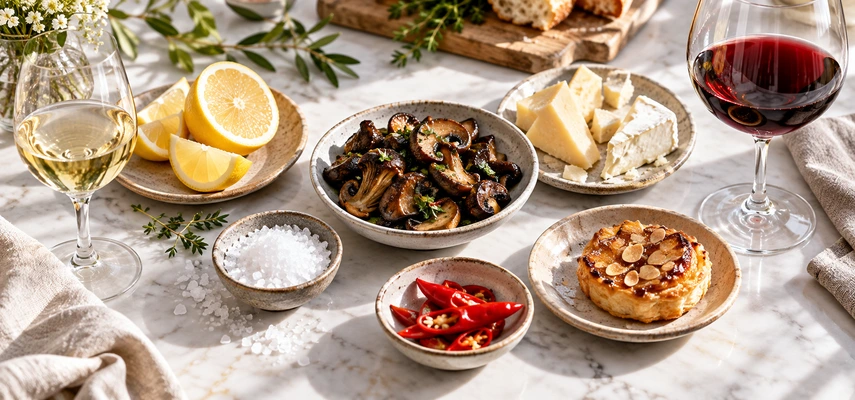

The wine hasn’t changed, but after a bite of sweet dessert it suddenly tastes sharper and less fruity. The bottle is innocent. The food has changed the reference point against which the next sip is judged.
Food and wine pairing explained through perception is more useful than memorizing “red with meat, white with fish.” A sauce can matter more than the protein underneath it, and the same dish can combine several influences. The aim is to predict a direction, then leave room for preference.
What WSET Level 1 expects you to know
The official Issue 1.2 specification, Learning Outcome 3, criterion 4, prescribes seven food components: sweetness, umami, salt, acidity, flavour intensity, fat and chilli heat. It also identifies five wine characteristics affected: sweetness, acidity, bitterness including tannin/oak, fruitiness and alcohol.
Know the typical interactions, not a universal list of perfect matches. This independent TFE guide isn’t WSET-affiliated, and the questions are original. Individual sensitivities and combinations of ingredients can change the result.
Perception changes before the chemistry does
Food can alter how a wine’s existing components feel. The same wine may seem more acidic, sweeter or less bitter after a bite, without anyone removing acid or adding sugar to the glass.
WSET’s food-pairing introduction frames pairing around these changes and personal preference. A good explanation therefore says “can make the wine seem” rather than claiming the food chemically erases a wine characteristic.
Think of looking at a grey square against different backgrounds: its surroundings affect the impression. The comparison explains context, not the physiology of taste. With wine, the immediate context includes what was just eaten.
Sweetness in food can make wine seem harder
Sweet food tends to make a wine seem less sweet and less fruity, while acidity, bitterness and alcoholic warmth may seem more prominent. A dry white beside a very sweet pastry can therefore taste more severe than it did on its own.
One practical response is to choose a wine with enough sweetness for the dessert. Sweet Sauternes or a suitably sweet Riesling may be a more comfortable direction than a very dry, delicate white, depending on the actual dish and preference.
Don’t confuse sweet food with fruity food. An unsweetened berry component and a heavily sugared berry sauce can behave differently. The amount of sugar matters alongside the flavour name printed on the menu.
Umami: savoury depth can expose bitterness
Umami is a savoury taste associated with foods such as mushrooms, aged ingredients and some rich stocks. It is distinct from salt, even though many umami-rich foods also contain salt. Separating the two helps explain apparently inconsistent pairing results.
Umami-rich food can make wine seem more bitter, more acidic and more alcoholic, with less sweetness and fruitiness. A young, highly tannic red may therefore feel more drying beside an unsalted mushroom dish than expected.
Adding salt to the dish can change the balance, because salt often has a softening effect on the wine’s perceived bitterness. The lesson isn’t “mushrooms never work with red wine.” It is that the complete preparation matters, not just the ingredient name.
Salt often softens the impression of wine
Salt in food can reduce the impression of bitterness and acidity and enhance perceived fruitiness, sweetness or fullness. This is why a wine that feels rather austere alone may become more comfortable with a suitably salted dish.
The effect doesn’t mean the food removes tannin from the bottle. Nor is it advice to keep adding salt until a wine tastes pleasant. It is a sensory relationship to recognize within the dish being eaten.
Consider an aged cheese with both umami and salt. The two influences can pull perception in different directions. A pairing rule based only on the cheese being savoury would miss half the explanation.
Acidity in food can make wine feel softer
Acidic food can reduce the impression of acidity in wine while making sweetness and fruit seem more apparent. A lemon dressing may therefore alter the next sip even though the wine’s actual acid content remains unchanged.
Choosing a wine with enough acidity can help it remain fresh alongside a tart dish. A low-acid wine may seem flat by comparison. This is a tendency to test, not a guarantee that every acidic wine works with every sour preparation.
The direction can feel counterintuitive: acidic food doesn’t automatically make wine taste more acidic. Remember the changed reference point. After a tart bite, the wine may seem less tart in comparison.
Flavour intensity: avoid accidental domination
A strongly flavoured dish can overwhelm a delicate wine, while a powerful wine can dominate subtle food. Matching intensity is therefore a useful starting point. It concerns how assertive the flavours are, not simply whether the wine is red or white.
A richly sauced chicken dish can be more intense than a plainly cooked piece of beef. Similarly, a fuller, oaked white can be more substantial than a light red. The colour rule fails because it ignores what is actually on the plate and in the glass.
Intensity also isn’t identical to alcohol or tannin. A fragrant, light-bodied wine can have pronounced aromas, while a fuller wine can be comparatively restrained. Describe the particular feature rather than treating every kind of strength as interchangeable.
Fat and acidity: a refreshing contrast
Fat can create a rich, coating sensation in food. A wine with refreshing acidity can provide a useful contrast, making another mouthful feel appealing. Fatty foods can also soften the impression of tannin and bitterness in some combinations.
Saying acidity cuts through fat is a familiar shorthand for that sensory contrast. It doesn’t mean the wine literally dissolves the fat or cancels its nutritional properties. Keep the explanation about taste and texture rather than turning it into a health claim.
WSET’s winter pairing discussion provides examples involving richness, sweetness and salt. A creamy sauce, salty cheese and rich unsalted food aren’t the same pairing problem simply because each contains fat.
Chilli heat and alcohol can amplify each other
Chilli heat is a warming or burning sensation rather than the same thing as aromatic spice. Alcohol can make that heat feel stronger, and chilli can make a wine’s alcohol, bitterness or acidity more noticeable while fruit and sweetness seem diminished.
A lower-alcohol wine with some sweetness can be a gentler starting point for a hot dish than a high-alcohol, tannic dry red. That is a conditional suggestion, not a commandment for everyone who enjoys chilli.
WSET’s spice-pairing guide emphasizes the interaction and the importance of personal heat tolerance. Someone who enjoys a more intense sensation may make a different choice without being wrong about their own preference.
Keep the five affected wine characteristics visible
| Food component | Typical direction in perceived wine |
|---|---|
| Sweetness | Less sweet/fruity; more acidic, bitter or warming |
| Umami | Less sweet/fruity; more bitter, acidic or alcoholic |
| Salt | Often softer bitterness/acidity; more fruit/sweetness/fullness |
| Acidity | Less acidic; more fruity/sweet |
| Flavour intensity | Can overwhelm or be overwhelmed |
| Fat | Can soften grip; acidity supplies refreshing contrast |
| Chilli heat | Often more burning/alcohol prominence; reduced fruit impression |
These tendencies aren’t a demand to force a single answer from every complex meal. They are tools for explaining why something changed. Sweetness, acidity, bitterness, fruitiness and alcohol remain the wine dimensions to track.
Work through a complete dish
Imagine a mushroom dish with a creamy sauce, generous salt and a squeeze of lemon. Umami can make a tannic wine seem harder; salt may soften bitterness; fat changes texture; lemon changes the acid reference point. Calling it simply mushrooms with red wine would hide most of the useful information.
Next imagine the same main ingredient with a sweet chilli glaze. Sweetness and heat add different pressures, so the previous pairing needn’t behave identically. The protein didn’t change, but the eating experience did.
If experimenting, compare a small taste of the wine before and after the food and change one component at a time. There is no need to drink large amounts to understand the contrast. People choosing not to taste can still learn the cause-and-effect framework from the examples.
Common misconceptions and exam traps
Sweet food doesn’t usually make wine seem sweeter. Acidic food doesn’t necessarily make it seem more acidic. Umami isn’t salt, and aromatic spice isn’t automatically chilli heat. Acidity doesn’t literally remove dietary fat.
Avoid “always” and “perfect” unless the question concerns a precise definition. Learn the typical direction first, then acknowledge ingredients and preferences. A pairing explanation should make a result understandable rather than scold someone for enjoying a combination.
Predict, observe, then revise the explanation
A pairing prediction is most useful when it names the expected change. “The dessert may make this dry wine seem less fruity” can be checked. “They go together because both are expensive” supplies no sensory mechanism to investigate.
If the result differs, consider the complete dish and the drinker’s sensitivity. Salt may soften a bitterness that umami exposed; sweetness may interact with chilli; a strongly flavoured sauce may dominate otherwise delicate ingredients. Revising the explanation is part of understanding perception rather than a failure to obey a rigid matching law.
Knowledge check: 10 original questions
1. After very sweet food, a dry wine may seem what?
- Less fruity and more acidic or bitter
- Automatically sweeter
- Chemically free of acid
- Fortified
2. What does umami refer to here?
- A grape colour
- A savoury taste distinct from salt
- The same thing as chilli heat
- Only sugar
3. Which food component often softens perceived bitterness?
- Unsalted umami by itself
- Chilli heat
- Salt
- Sweetness in a dessert
4. Acidic food often makes a wine seem what?
- Always more acidic
- Chemically acid-free
- More fortified
- Less acidic and more fruity
5. What does matching flavour intensity help avoid?
- One side overwhelming the other
- All alcohol disappearing
- Wine changing grape variety
- Food gaining tannin chemically
6. Why can acidity work with rich fatty food?
- It makes all wines sweet
- It offers a refreshing sensory contrast
- It removes dietary fat chemically
- It eliminates calories
7. How can high alcohol interact with chilli heat?
- It removes all bitterness
- It creates sugar in the food
- It can intensify the burning impression
- It always removes heat
8. Which starting direction may be gentler with hot chilli food?
- Maximum alcohol and tannin in every case
- Only a dry fortified wine
- Any wine served very hot
- Lower alcohol and some sweetness
9. Which list contains affected wine characteristics?
- Sweetness, acidity, bitterness, fruitiness and alcohol
- Only colour and bottle size
- Only vintage and cork length
- Only grape country
10. Why can two mushroom dishes pair differently?
- Umami always overrides everything
- Salt, sauces, fat and other components differ
- All mushrooms change grape identity
- The wine must be faulty
Answers and explanations
1. A — Less fruity and more acidic or bitter. Food sweetness often makes a less-sweet wine seem harder and less fruity.
2. B — A savoury taste distinct from salt. Umami is savoury; many foods also contain salt, but the two influences differ.
3. C — Salt. Salt can reduce perceived bitterness and make fruit or sweetness seem more evident.
4. D — Less acidic and more fruity. Food acidity changes the reference point and can soften perceived wine acidity.
5. A — One side overwhelming the other. Intensity balance concerns how assertive the food and wine seem together.
6. B — It offers a refreshing sensory contrast. The familiar cutting-through-fat expression describes perception, not nutrition or fat removal.
7. C — It can intensify the burning impression. Alcohol and chilli can amplify warming/burning sensations.
8. D — Lower alcohol and some sweetness. The combination can reduce the severity of alcohol/heat interactions, subject to preference.
9. A — Sweetness, acidity, bitterness, fruitiness and alcohol. These five dimensions are specified as influenced by food.
10. B — Salt, sauces, fat and other components differ. The complete dish combines influences, so a single ingredient name is insufficient.
One-page revision summary
Learn seven food components and five affected wine characteristics. Sweetness and umami often make wine seem harder; salt and food acidity often make it seem softer or fruitier. Match intensity, use acidity as a refreshing contrast to richness, and remember that chilli and alcohol can intensify heat. Apply the ideas to the whole dish, then respect the drinker’s preference.












