










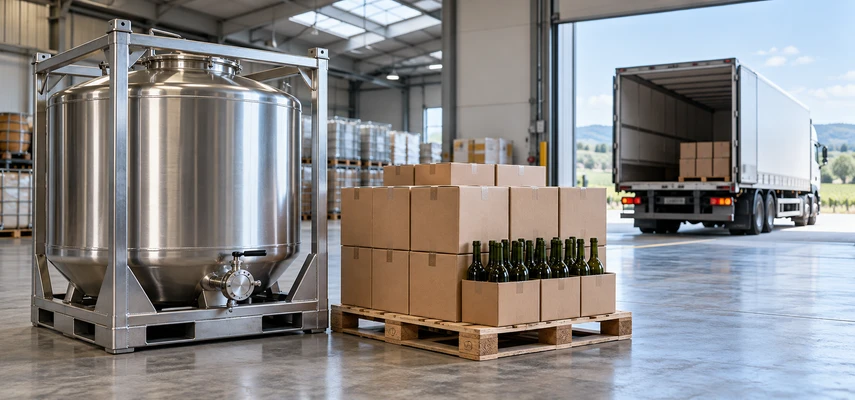

A container arriving on time is a logistical success. It isn’t necessarily a commercial one. If the wine sits in a warehouse without reaching buyers, transport has completed its task while the route to market has stalled.
Wine transportation and distribution belong in the same explanation because the physical journey must support the selling strategy. A restaurant supplier making frequent small deliveries needs a different system from a retailer receiving consolidated pallets. The relevant question is how to get the right wine to the right customer, in suitable condition, at a cost the transaction can support.
The WSET Diploma specification includes transport types, bulk transport and insurance, alongside routes to market and different market systems. Don’t confuse the vehicle with the commercial relationship. A ship moves wine; an importer or distributor performs defined business functions, and a broker may help arrange a sale without owning the stock.
Choose transport for the whole journey
Transportation types include road, rail, sea and air, often combined within one shipment. Road provides flexible collection and delivery. Rail can suit suitable corridors and consolidated movements. Sea transport can handle substantial international volumes, while air may be considered when urgency or the value of a small shipment justifies its cost.
Compare the complete movement rather than one attractive freight rate. Collection, consolidation, terminal handling, customs procedures, storage, final delivery and delays can change the result. A cheap port-to-port quote may exclude precisely the local work that makes a small shipment expensive.
Time has a cost too. Longer transit can increase the amount of wine committed before payment and require more safety stock at destination. Faster shipment may reduce that interval while raising freight expense. The best choice depends on order size, service commitments, funding and the consequences of running out.
Wine also needs suitable handling. The AWRI’s transport and storage guidance identifies temperature and other storage conditions among the considerations. Assess exposure throughout the route, including terminals and the final delivery. Protecting the ocean leg alone doesn’t guarantee a well-handled bottle at the customer’s door.
Bulk transport changes where packaging happens
Bulk transport moves wine before final consumer packaging, using suitable tanks or other approved systems. Packaging at destination avoids carrying the same load of glass and outer packaging over the long-distance wine journey. It can also allow a receiving operation to prepare market-specific packs closer to demand.
Those possibilities require enough appropriate volume, receiving capacity and a qualified packaging partner. A business still pays for bottles, closures, labels and filling somewhere. Compare their destination cost, handling, testing, losses, scheduling and contracts with the alternative of packaging at origin.
The OIV’s bulk-transport guide emphasises oxidation, contamination, cleanliness and authenticity. Transfers create control points: suitable equipment, inspection, sampling and clear responsibility matter. Its guidance is advisory and works alongside applicable rules; it isn’t a universal permission to ship any wine in any system.
Bulk isn’t a quality category. Good procedures can preserve appropriate wine, while poor handling can damage it. Nor is it automatically the cheapest solution for a small fragmented order. Evaluate scale, receiving arrangements, style requirements and any rules or commercial commitments governing where the wine must be bottled.
Compare landed saleable cost, not freight alone
Use a consistent denominator and scope. In an original hypothetical comparison, origin-packaged transport and handling cost 2 per bottle delivered. A bulk option appears to cost only 0.80 per bottle-equivalent for transport, but destination packaging and additional handling cost 1.40. Its combined stated cost is 2.20 before any other differences.
The illustration doesn’t establish that bulk is generally dearer. It shows why a partial quote cannot establish a saving. Actual volume, material prices, recovery, service and capacity could reverse the result. Include only comparable costs and identify the ones still excluded.
Saleable output matters. Breakage, leakage or rejected product changes the cost carried by bottles that can actually sell. A small unit saving is less attractive if the chosen arrangement increases loss or prevents delivery during a promised selling window. Evaluate expected cost and service together.
Insurance and contracts allocate different responsibilities
Insurance can transfer specified financial consequences of covered loss under its terms. It doesn’t prevent damage or guarantee every claim. Check the insured interest, covered journey, exclusions, excess, documentation and claim procedure rather than assuming “insured shipment” means every delay or quality problem is recoverable.
Carrier liability and cargo insurance are different arrangements. A freight forwarder coordinating a route isn’t automatically providing comprehensive cover for the cargo’s full commercial consequences. Clarify what has actually been arranged and by whom before dispatch.
The US International Trade Administration’s Incoterms explanation distinguishes delivery responsibilities and risk allocation from matters such as payment terms. A named rule and location can clarify parts of the transaction, but the sales contract still needs the other commercial terms. Cost responsibility, physical possession, risk and ownership shouldn’t be assumed to change together at one convenient moment.
For an applied case, map who books each leg, performs formalities and bears relevant risk at each point. Then match insurance to that exposure. Agreeing who pays the freight is useful; it isn’t the same as checking who suffers if the wine is damaged halfway through the journey.
Importers and distributors perform commercial work
An importer brings wine into the destination market under the relevant requirements. A distributor supplies customers within its agreed role and territory, often buying and holding stock. One company may perform both functions, but an import licence alone doesn’t establish a national sales network.
Distribution can provide local knowledge, relationships, storage, credit management, selling and delivery. Its margin pays for resources and risk as well as any eventual profit. The producer exchanges part of its potential selling return for those services and access.
The relationship needs active evaluation. Does the portfolio suit the wine? Will the team have a reason to prioritise it? Agree expectations for territory, channels, pricing approach, reporting and support. Exclusivity without suitable performance provisions can leave a producer dependent on a partner that achieves little.
Wine Australia’s routes-to-market guidance distinguishes getting wine into a market from generating subsequent customer purchases. An initial distributor order is encouraging, but repeat movement through the channel is better evidence that the route is functioning. Stock transferred to another warehouse hasn’t necessarily found its drinker.
Brokers arrange connections rather than replacing every function
A broker typically helps bring buyers and sellers together, earning an agreed fee or commission. Its precise mandate needs confirmation. Introducing an account, negotiating a transaction and managing an ongoing sales relationship can require different work.
Don’t assume the broker buys the wine, holds inventory, imports it or extends credit. Those tasks still need someone responsible. A producer using a broker network may retain more operational and financial work than it would under a stock-buying distributor arrangement.
Compare the fee with the complete service and realistic sales. A lower commission doesn’t automatically mean a lower total route cost if the producer must separately fund storage, deliveries and administration. Likewise, access to valuable accounts can justify a service that initially looks expensive. Evaluate the net result and accountability.
Joint ventures share an undertaking and its risks
A joint venture brings parties together in an agreed business undertaking. A producer and a market partner may combine wine supply, capital, local expertise and distribution relationships. Sharing commitments can create stronger alignment than a simple sale, but it also increases the need for clear governance.
Specify decision rights, contributions, return sharing and what happens if performance disappoints. Partners may disagree over price, investment or which brands deserve attention. A familiar market partner doesn’t remove the need to agree how the venture can change or end.
Evaluate whether the expected scale justifies the commitment. A joint venture may support a long-term strategy while being excessive for a tentative small shipment. The useful comparison is with alternative ways to obtain the same capabilities, not with an imaginary route that provides every service for free.
Direct to seller moves work back towards the producer
Direct to seller means supplying a retailer or hospitality business without a separate conventional distributor performing the full intervening role, where permitted. It differs from direct to consumer: the shop or restaurant still sells onward to the final customer.
A producer can gain closer contact with the account and potentially retain more of the transaction value. In return, it may need to organise orders, import arrangements, compliance, storage, credit, delivery and sales support. The exact division depends on the agreement and market.
Order concentration matters. Supplying one large retailer with consolidated volumes is a different task from servicing many restaurants with small, urgent orders. Removing an intermediary removes neither the tasks nor their cost. Compare the producer’s additional resources and risks with the margin it hopes to retain.
Market systems constrain the available route
A free market in this D2 context allows competing private businesses to operate within the applicable legal framework rather than reserving the relevant trade to a monopoly. It doesn’t mean alcohol is unregulated. Licensing, age restrictions, taxation and trading rules can still determine what a producer may do.
A monopoly reserves specified selling functions to a designated organisation. Scope varies: don’t assume a retail monopoly also monopolises production, importing and hospitality. Systembolaget’s own supplier guidance describes its Swedish retail role and its purchasing through qualifying Swedish suppliers. Foreign producers therefore need an appropriate route into that system rather than treating it like an unrestricted collection of independent shops.
A three-tier system separates supplier, wholesaler and retailer roles under the relevant rules. The US is the usual teaching example, but state variation and exceptions matter. The Texas Alcoholic Beverage Commission’s 2024 winery study illustrates that winery privileges can depart from a simple three-box diagram. Don’t turn that historical state example into current permission for every wine shipment nationwide.
Market structure therefore comes before channel preference. Establish the legally available route, then compare cost, control, service and customer access. A producer might sensibly choose different arrangements in different territories because the tasks and constraints differ.
Turn logistics into an evaluated D2 answer
Start with the wine, volume, destination and target buyer. Compare suitable transport and packaging locations, then assign the commercial roles. Identify the costs and risks retained by the producer and the ones transferred under actual terms.
Conclude with the conditions that make the proposed route workable: sufficient volume, appropriate facilities, reliable partners, legal access, adequate funding and customer demand. That connects physical delivery with commercial success. A route is effective when the wine arrives fit for sale and the selling system gives it a credible path beyond the warehouse.
Use wine retail and wine supply and demand as tests of the business reasoning here: identify who bears a cost or risk, explain how the route to market changes it and distinguish revenue from the return retained by the producer.
Original Diploma practice
These original exercises are not official WSET questions and have no official mark allocations.
Question 1: evaluate a bulk-shipping quote
A producer compares origin-packaged transport at 2 per delivered bottle with bulk freight at 0.80 per bottle-equivalent. Destination packaging and additional handling would cost 1.40. Evaluate the proposed saving.
Indicative answer points: consistent boundary; combined cost; other differences; saleable recovery; receiving capacity; conditional conclusion.
Outline answer: The stated bulk combination costs 2.20, compared with 2 for the stated packaged option. The freight-only comparison is incomplete. Check equivalent included services, losses, packaging specifications, destination capacity, timing and any restrictions. Actual quotations could differ, but the supplied numbers don’t establish a saving from bulk transport.
Question 2: compare broker and distributor
A small exporter proposes replacing a stock-buying distributor with a broker because the commission is lower than the distributor’s margin. Evaluate the reasoning.
Indicative answer points: ownership; service scope; inventory; credit; import and delivery; customer access; total cost.
Outline answer: A broker may arrange sales without buying stock or providing the distributor’s operational services. The exporter must identify who now imports, stores, delivers and finances the wine and handles customer credit. Compare complete cost and net return, not percentages for different functions. Relevant account access and clear performance responsibility matter alongside the fee.
Question 3: assess a universal export strategy
A winery plans to sell directly to every foreign retailer using one contract and assumes that paying freight also resolves transit risk. Evaluate both assumptions.
Indicative answer points: market systems; legal route; local services; shipment terms; insurance; payment; tailored agreements.
Outline answer: Markets differ in licensing and permitted routes, including monopoly and three-tier arrangements. Direct supply may be unavailable or require additional local functions. Paying freight doesn’t by itself establish risk transfer, insurance, ownership or payment terms. Map each transaction and agree responsibilities, suitable cover and service arrangements rather than using one unexamined template everywhere.












