










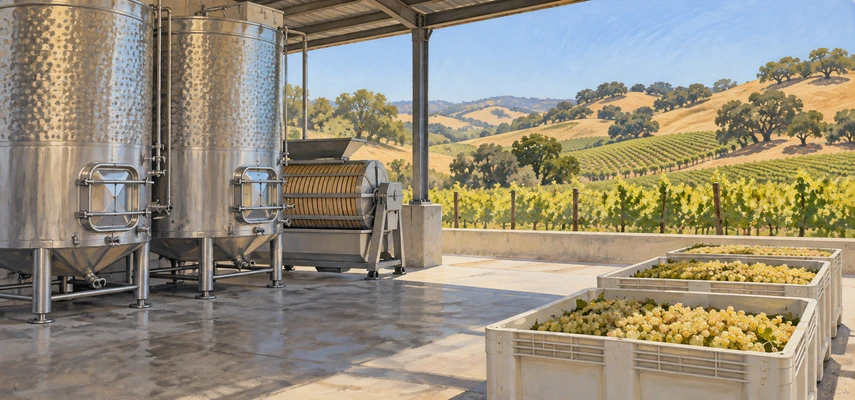

California’s central and southern wine regions demonstrate why moving south on a map doesn’t always mean moving towards warmer vineyards. Pacific air can travel inland through gaps and east–west valleys, while shelter, elevation and exposure change conditions over short distances. Monterey Pinot Noir and an inland Cabernet can therefore need quite different explanations.
For Diploma study, compare sites, grapes and production aims before generalising about California style. This chapter also completes the wider state picture with Santa Cruz Mountains, Lodi, the Sierra Foothills, inland high-volume production and southern vineyards. A modestly priced commercial wine and a selected-parcel bottling face different targets, rather than a choice between caring and not caring.
Monterey: follow marine influence through the valleys
Monterey lies on the Central Coast, with vineyards influenced by Monterey Bay and the Salinas Valley corridor. Northern and exposed settings can receive substantial cooling, while more sheltered or southern locations experience different ripening conditions. A large county and a large AVA shouldn’t be treated as a single thermometer reading.
The Monterey growers’ AVA account distinguishes Santa Lucia Highlands, Arroyo Seco, Chalone, Carmel Valley and other origins. Chardonnay and Pinot Noir provide important cooler-site references; Cabernet Sauvignon, Merlot and other material belong in suitable warmer settings. Wind can moderate temperature while increasing water loss and affecting canopy management.
Santa Lucia Highlands offers a useful slope-and-exposure comparison above the valley. Chalone’s elevated setting and different soils introduce another route to white and red production, while Carmel Valley has its own shelter and relief. Geology helps explain drainage and rooting; claims that limestone and granite exist nowhere else aren’t useful evidence. Nor does elevation alone establish the wine’s final acidity or quality.
Paso Robles: distinguish regional diversity from one powerful red
Paso Robles lies inland from the Santa Lucia coastal mountains in northern San Luis Obispo County. The regional alliance’s geographical account identifies the Salinas River, hills and Templeton Gap as important references. Marine access, elevation, rainfall and soil can differ between sites, complicating a simple east-versus-west division.
Cabernet Sauvignon, Merlot, Zinfandel, Syrah and other grapes support a broad range. The alliance’s variety account makes room for Grenache, Mourvèdre and white varieties too. Rhône-associated blends are useful comparisons, but the region isn’t restricted to one blend or uniformly high alcohol. Warm days can support ripening; retained acidity, fruit health and tannin integration still need deliberate decisions.
Calcareous-influenced soils are important in parts of the area, alongside other materials. A freely draining slope can help after rain and become demanding in drought. Eleven nested districts communicate regional differences under their own geographical boundaries. They aren’t eleven official blind-tasting grades, and a more precise address doesn’t mean the producer must use more new oak.
Santa Barbara: explain the east–west openings
Santa Barbara County lies further south along the coast, but its transverse valleys allow cool Pacific influence inland. The vintners’ regional account distinguishes Santa Maria Valley, Santa Ynez Valley, Sta. Rita Hills and other origins. Greater southern latitude doesn’t cancel an open route for marine air.
The Sta. Rita Hills alliance describes its location within the western Santa Ynez setting and the local hills framing that maritime corridor. Pinot Noir and Chardonnay provide central references. Moving towards more sheltered inland parts of the wider county creates opportunities for other material, including Syrah and Bordeaux-associated varieties in suitable sites.
Santa Maria Valley and Sta. Rita Hills shouldn’t be confused with every Santa Barbara wine. Ballard Canyon supplies a useful Syrah reference, while Happy Canyon of Santa Barbara brings warmer inland conditions and Cabernet-related possibilities into the comparison. Evaluate the actual site and variety rather than assigning the whole county one style of pale, high-acid red.
Add the wider California comparisons
Santa Cruz Mountains, south of San Francisco, combines elevation, varied aspect and marine proximity. Pinot Noir, Chardonnay and Cabernet Sauvignon can each find suitable settings. Ridge’s Monte Bello account gives a concrete elevated Cabernet example. Its production decisions illustrate one site and producer, rather than a universal mountain recipe.
Lodi lies inland near the Sacramento–San Joaquin Delta, with warm conditions and cooling air movement. The Lodi commission’s regional account places old Zinfandel vineyards within a broader range of varieties and businesses. Old parcels, head training and sandy soils can matter without making all Lodi vines ungrafted or all wines identical. Vine age needs to be connected with crop health, balance and practical cultivation.
The Sierra Foothills add elevation, inland exposure and varied soils, with Amador and other settings supplying Zinfandel and additional red and white material. The Amador regional association provides a local starting point. Old-vine history isn’t evidence that phylloxera cannot occur or that dry farming itself supplies immunity.
California’s inland valleys also support high-volume production. Suitable terrain and training can allow mechanisation, while larger processing facilities and broader sourcing can help manage cost and consistency. The official grape-crush report distinguishes reporting districts and varieties. Those statistics don’t turn every inland wine into one sensory category or establish every producer’s price and margin.
Temecula and other southern vineyards complete the state picture. The Temecula growers’ climate account connects inland warmth with marine air entering through gaps. Water, site suitability and fruit health still matter. Hospitality can be commercially important without making every vineyard or bottle a tourism product of identical quality.
Connect vineyard decisions across these settings
Temperature affects growth, ripening and acid retention. Sunlight supports photosynthesis, with exposure also changing bunch heat and sunburn risk. Water availability depends on rainfall, soil depth, rooting, drainage and permitted irrigation. Nutrient availability influences vigour and crop balance. A windy coastal-influenced Pinot parcel and a warm inland Chardonnay source may need different water and canopy plans even in the same season.
Weather creates frost, hail, heat, drought and harvest-rain risks. Downy and powdery mildew and bunch rot remain possible where conditions allow. Vineyard establishment considers exposure, drainage, access, slope and training. Planting materials should match variety, clone, rootstock, soil and water conditions. Warm-site Merlot, maritime Pinot and a vigorous commercial white programme need distinct suitability arguments.
Nutrient and water management follows observation and analysis within applicable rules. Canopy management balances productive leaf area, airflow and fruit protection. Harvest timing balances flavour, sugar, acidity, phenolic maturity and health. Hazard management includes erosion control, appropriate frost precautions and access planning. Pest and disease management combines monitoring, canopy work and proportionate intervention. Mechanisation can lower labour needs where practical; it doesn’t eliminate the need to judge crop and fruit condition.
Separate high-volume white, rosé and red programmes
Winemaking approaches begin with the target style. Careful grape transportation limits crushing, oxidation and unwanted fermentation. Reception should separate origins, varieties, health and ripeness. Processing and pressing affect yield and phenolic pickup. A high-volume fresh Chardonnay needs dependable material and fast, controlled handling; a selected cool-site white may justify more costly parcel separation or maturation.
Pre-fermentation clarification adjusts white-juice solids for the intended fermentation. Must adjustments require analysis and legal permission. Alcoholic fermentation decisions include yeast, temperature, vessel and nutrient management. Chardonnay can follow fresh stainless-steel, barrel-and-lees or other suitable routes. Lees maturation can build texture, with oxygen and microbiological condition monitored. Strong oak flavour and buttery character aren’t compulsory evidence of seriousness.
White Zinfandel is a pale rosé style made from dark-skinned Zinfandel, rather than a separate white grape. Sutter Home’s actual product account provides a commercial reference. Limited skin extraction, fermentation choices, sweetness and stability shape the style. Compare the actual wine with dry red Zinfandel instead of using the shared grape name to infer the same colour, structure or market.
For reds, extraction and pressing should suit skin and seed maturity. Merlot, Cabernet, Syrah, Pinot and Zinfandel don’t need identical cap management or maturation. Malolactic conversion and subsequent maturation should fit acidity, texture and microbial stability. Zinfandel’s uneven ripening can complicate harvest and sorting; a few raisined berries and high alcohol don’t automatically establish complexity.
Blending eligible lots can improve balance while preserving origin and category entitlement. Finishing adjustments, sulfur dioxide and filtration depend on analysis and stability needs. Post-fermentation clarification removes unwanted material; stabilisation considers protein and tartrate risks. Microbiological safeguards should fit analysis, retained sugar and distribution. Packaging and closures should protect the intended drinking period. Wine transportation requires suitable temperature management, especially when fresh white or rosé stock travels through warm distribution channels.
Relate origin labels to production and business
An American Viticultural Area identifies a defined grape-growing origin, rather than a compulsory recipe or official quality grade. The TTB’s appellation guidance explains the 85% minimum AVA-origin requirement alongside other conditions. A broad California label, county name and nested AVA don’t all make the same claim. The winery’s location isn’t proof of the entire fruit source.
International recognition and trade rules, national US law, California requirements and local controls interact. Industry associations and regional grower bodies promote and represent producers, while authorised agencies establish legal entitlement. A geographical indication communicates origin under conditions; PDO and PGI are EU frameworks rather than classifications automatically assigned to California AVAs. Wines without a specific GI claim still face applicable production and labelling rules. Varietal, vintage, Reserve and estate-related wording need their actual conditions.
Supply depends on suitable fruit, weather losses, contracts and stocks. Demand differs between high-volume fresh wines, regional blends and selected-site bottlings. Costs include vineyard labour, machinery, sorting, temperature control, vessels, storage and finance. Legislation affects sourcing, claims and distribution; currency exchange changes export returns. A higher yield or larger tank can reduce unit cost without guaranteeing that the intended margin survives packaging, freight and selling costs.
A grower may supply fruit, while an estate can coordinate vineyard and cellar decisions. A broker connects parties; a merchant sources wine or grapes; a winery provides production capacity. A virtual winery contracts production, and a custom crush facility supplies agreed services. A cooperative can share equipment and market access; a conglomerate may coordinate businesses. These are possible functions, not equal-prevalence claims across the state. Contracts need to connect quality, traceability, delivery and payment responsibility.
Importing into another market adds freight, compliance and currency exposure. Retail needs clear origin, style and price information; HoReCa buyers require service training. Direct-to-consumer sales can retain revenue but add hospitality, customer acquisition and fulfilment costs. Mature and emerging markets contain varied customers. An accessible sweet rosé and a selected coastal Pinot need different occasions and explanations, not a predetermined moral ranking of their customers.
Wine brands can lead with producer, grape, site or appellation. Marketing concepts begin with a target customer; marketing options include comparative flights, technical notes and vineyard visits. The five Ps connect product, price, people, place and promotion. Consistency and value can be meaningful aims, while an expensive local identity still needs sound wine and workable distribution behind it.
Compare the evidence here with Oregon as a regional case, then apply the regional comparison framework to the comparison. Compare growing conditions, production decisions, style, quality and the commercial reasons for price. Establish the differences rather than assuming that one familiar name must be better.
Original Diploma practice
These original exercises practise explanation and evaluation. They aren’t official examination questions, marking schemes or accounts of actual bottles tasted.
Question 1: compare three Central Coast settings
Compare vineyard and cellar decisions for Monterey Chardonnay, a Paso Robles red blend and Sta. Rita Hills Pinot Noir.
Reasoned outline: Establish actual marine influence, exposure, water, crop and fruit health. Connect harvest and handling with pressing or extraction, fermentation and maturation. Compare costs and customers without assigning all southern sites more heat or all ambitious wines more oak. Latitude needs the local air movement, relief and grape before it explains the wine.
Question 2: compare two Zinfandel destinations
Compare decisions for a dry red Zinfandel and a pale, sweeter White Zinfandel style, including stability and market implications.
Reasoned outline: Identify shared dark-skinned grape material, then compare fruit selection, colour extraction, fermentation, retained sugar, maturation and finishing. Discuss microbial stability, packaging, price and drinking occasion. A shared variety doesn’t require a shared colour, structure or production programme.
Question 3: evaluate a high-volume quality claim
A buyer assumes every high-volume California wine must be faulty and every small AVA bottling outstanding. Evaluate the proposal.
Reasoned outline: Distinguish production scale, legal origin and actual sensory quality. Compare fruit health, process control, intended style, condition, balance and customer value. Discuss mechanisation, sourcing, cellar capacity, stock and costs. Scale changes decisions and economics without predetermining the tasting conclusion.
Analytical tasting preparation: complete the California range
Use the official recommended-sample programme, printed page 23, to assemble the wider California comparisons. Its essentials include high-volume Chardonnay at acceptable or good quality, plus Chardonnay and Sauvignon Blanc from any AVA at very good or outstanding quality. The rosé selection is White Zinfandel or White Grenache at acceptable or good quality. Red Group 1 includes high-volume red at acceptable or good quality, then Pinot Noir and Zinfandel from any AVA at very good or outstanding quality, plus Merlot from any AVA at good or very good quality. Group 2 asks for two Cabernet Sauvignons contrasting in quality or region.
The optional choices broaden the exercise with an aromatic white, white Rhône material, dry rosé, red Rhône material and red Italian-variety wines, each with its specified quality range. They don’t replace the essential rows or make every alternative compulsory. Chapters 70–72 provide possible regional contexts; actual bottles and condition still need checking. No single AVA is mandatory for an “any AVA” row.
Write full systematic descriptions blind. Justify quality through balance, length, intensity and complexity using actual fruit, structure and development evidence. Assess bottle-ageing suitability separately, considering retained fruit and integration rather than alcohol, oak, sweetness, scale or price alone. These are proposed selections and methods, not actual tasting results or predetermined official bottle grades.












