










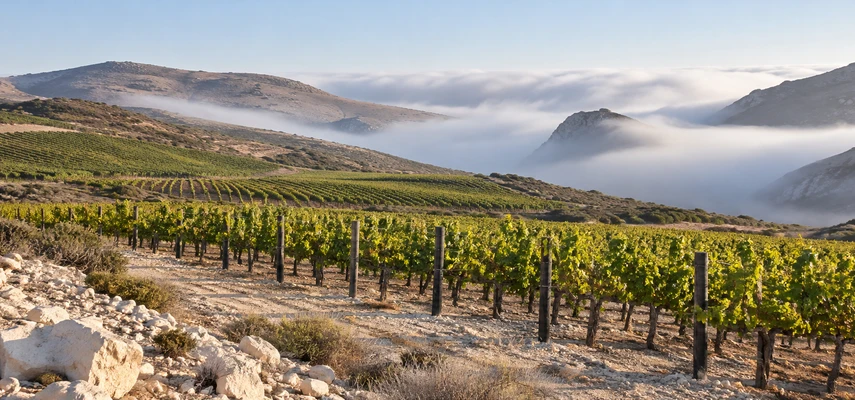

Northern and coastal Chile can make a tidy latitude rule look rather untidy. An arid northern valley may contain a cool coastal Chardonnay site, while an inland parcel farther south can ripen substantial Cabernet. The useful explanation follows the Pacific air, elevation, water and vineyard exposure before deciding what north or south means for the wine.
For Diploma study, keep two official regional inventories in view: Coquimbo and Aconcagua. The latter is both a broad wine-region name and part of the narrower Aconcagua Valley name. Casablanca and San Antonio belong within that wider regional discussion; they aren’t simply alternative spellings for the inland valley.
Locate Coquimbo’s three valleys
Coquimbo contains Elqui, Limarí and Choapa. The current SAG zoning text establishes those relationships and their defined areas. Northern Chile also includes Atacama references, so Coquimbo shouldn’t be described as the complete northern vineyard map.
Elqui offers an arid setting with large differences between inland, higher-elevation and more maritime-influenced locations. Syrah and Sauvignon Blanc provide useful wine references alongside the area’s wider grape-growing history. Pisco is a distilled product; acreage associated with its grapes doesn’t automatically describe the production of still wine for this unit.
Viñedos de Alcohuaz supplies a concrete high-elevation Elqui example, with mountain plantings and red varieties including Syrah. The example demonstrates why elevation matters within a northern location. It doesn’t establish that all Elqui wine comes from the same height, or that altitude itself awards a quality grade.
Explain Limarí and Choapa without one soil story
Limarí’s coastal influence and some calcareous vineyard settings are important references for Chardonnay, alongside Sauvignon Blanc, Pinot Noir and Syrah. Tabalí’s vineyard-linked ranges include coastal Talinay and its morning fog. That gives a specific example to investigate rather than a rule that the entire valley has identical limestone, exposure and style.
Morning maritime fog can reduce early solar heating, while wind and distance from the ocean alter its effects. Inland or higher parcels need their own explanation. Soil depth, texture, drainage and water storage influence vine performance; calcium carbonate doesn’t become a literal chalk or salty flavour in the finished wine.
Choapa forms a separate valley reference, with its own defined areas and arid growing context. Syrah and Cabernet Sauvignon are useful varieties to investigate in suitable sites. Its smaller profile shouldn’t be inflated into an assertion that every parcel is mountainous, uniformly high quality or identical to coastal Limarí. When evidence is limited, a precise site-based explanation is more useful than a confident regional slogan.
Distinguish Aconcagua Valley from the wider region
The broader Aconcagua wine region includes Aconcagua Valley, Casablanca and San Antonio, with further defined areas. Within Aconcagua Valley itself, inland red-wine sites contrast with maritime-influenced coastal plantings. Don’t infer one uniformly hot climate from the name or assume every producer’s vineyards sit directly below the same mountain.
Errázuriz’s terroir account separates inland vineyards from Aconcagua Costa. Cabernet Sauvignon, Merlot, Carmenère and Syrah occur in its inland discussion, while coastal material includes Sauvignon Blanc, Chardonnay and Pinot Noir as well as red varieties. This is a producer’s practical sourcing example, not a compulsory regional planting list.
Alluvial, colluvial and other soils can differ between those locations. Exposure, local air movement and water arrangements help determine suitable grape choices. A broad regional blend can combine eligible complementary lots deliberately; a smaller origin doesn’t mean blending or cellar judgement has disappeared.
Compare Casablanca with San Antonio and Leyda
Casablanca is an important maritime-influenced reference for Sauvignon Blanc, Chardonnay and Pinot Noir. Fog and cool air can slow warming and extend ripening, but frost risk and local exposure still matter. A higher or more sheltered parcel may behave differently from a low pocket. The Wines of Chile map provides regional orientation, while its promotional flavour and frost-free generalisations need qualifying at vineyard level.
San Antonio includes Leyda and areas such as Lo Abarca. Cool Pacific influence and varied slopes support whites and Pinot Noir, with Syrah also offering useful comparisons in suitable sites. Casa Marín’s Lo Abarca account illustrates a coastal producer working with differently oriented parcels. Its small-lot decisions shouldn’t be mistaken for a universal recipe or a legal monopoly on an entire place-name.
Sauvignon Blanc’s freshness, Chardonnay’s possible texture and Pinot’s extraction choices need separate analysis. A coastal wine isn’t automatically light, unoaked or low alcohol. Actual ripeness and production decisions can produce different results even when the same breeze appears in the vineyard description.
Connect the Pacific and mountains with vineyard work
Temperature affects growth, ripening and acid retention. Sunlight supports photosynthesis, while aspect and exposure change bunch temperature. Water availability depends on supply, soil storage, rooting and irrigation decisions. Nutrient availability influences vigour and crop balance. The cold Pacific and maritime air can moderate nearby sites, while elevation and local relief create further contrasts inland.
Weather creates frost, hail, heat, drought and harvest-rain risks. Downy and powdery mildew and bunch rot remain possible where conditions allow. Vineyard establishment considers exposure, drainage, access, slope and training. Planting materials should match variety, clone, rootstock, soil and water conditions. Aridity doesn’t mean a site can support commercial crops without a reliable water plan.
Nutrient and water management follows observation and analysis within applicable rules. Canopy management balances productive leaf area, airflow and fruit protection. Harvest timing balances flavour, sugar, acidity, phenolic maturity and health. Hazard management includes erosion control, appropriate frost precautions and access planning. Pest and disease management combines monitoring, canopy work and proportionate intervention.
Water security needs more than a reference to mountain snow. The University of Chile-linked CR2 water-security assessment considers availability and changing pressures across the country. A producer must understand actual supply, entitlement, storage and delivery. Drip irrigation can improve application control without creating water that isn’t available.
Explain white and red production through their objectives
Winemaking approaches begin with the target style. Careful grape transportation limits crushing, oxidation and unwanted fermentation. Reception should separate origins, varieties, health and ripeness. Processing and pressing affect yield and phenolic pickup. Aromatic Sauvignon Blanc needs a different handling objective from a Cabernet lot intended for substantial maturation.
Pre-fermentation clarification adjusts white-juice solids for the intended fermentation. Must adjustments require analysis and legal permission. Alcoholic fermentation decisions include yeast, temperature, vessel and nutrient management. A fresh Sauvignon programme may prioritise aromatic preservation, while Chardonnay can follow a fresh-vessel or barrel-and-lees route. Neither maritime origin nor calcareous soil makes those choices automatically.
Extraction and pressing should suit skin and seed maturity. Pinot Noir, Syrah and Cabernet Sauvignon don’t need identical cap management. Malolactic conversion and subsequent maturation should fit acidity, texture and microbial stability. Wood maturation involves vessel age, size, toast and time. Lees maturation can build texture, with oxygen and microbiological condition monitored. Blending eligible lots can improve balance while preserving origin and category entitlement.
Finishing adjustments, sulfur dioxide and filtration depend on analysis and stability needs. Post-fermentation clarification removes unwanted material; stabilisation considers protein and tartrate risks. Microbiological safeguards should fit analysis, retained sugar and distribution. Packaging and closures should protect the intended drinking period. Wine transportation requires suitable temperature management, including warehouses and final delivery. A long export journey makes protecting freshness a practical production issue rather than a tasting-note decoration.
Read Chile’s origin and geographical complements carefully
Chile’s D.O. system distinguishes regions, subregions, zones and areas. The current zoning decree also regulates the supplementary terms Costa, Entre Cordilleras and Andes, which add geographical context under defined sourcing conditions. They don’t simply rename every valley or grade its quality. Exact entitlement depends on the applicable declared areas and the full rules.
Origin, variety and vintage are separate claims. Chile’s domestic conditions and an export destination’s requirements also need distinguishing before applying an exact percentage to a label. Reserva and related expressions have local conditions; they aren’t a promise that the wine followed Rioja’s maturation timetable. More elaborate terminology still needs an actual sensory quality assessment.
International recognition and trade rules, national Chilean law, regional requirements and local controls interact. Industry associations and regional bodies promote and represent producers, while authorised agencies establish legal entitlement. A geographical indication communicates origin under conditions; PDO and PGI are EU frameworks rather than classifications automatically assigned to Chilean D.O.s. Wines without a specific GI claim still face applicable production and labelling rules. Reserve, estate-related wording and sustainability expressions need their actual conditions rather than an automatic tasting grade.
Evaluate water, production scale and markets together
Supply depends on healthy fruit, weather losses, contracts and stocks held for maturation. Demand differs between accessible regional wines, fresh coastal whites and selected-site reds. Costs include vineyard labour, water delivery, sorting, temperature control, vessels, storage, insurance and finance. Legislation affects sourcing, claims and distribution; currency exchange changes export returns. A new cool-site planting can carry infrastructure and frost-management costs before it generates a saleable crop.
A grower may supply fruit, while an estate can coordinate vineyard and cellar decisions. A broker connects parties; a merchant sources wine or grapes; a winery provides production capacity. A virtual winery contracts production, and a custom crush facility supplies agreed services. A cooperative can share equipment and market access; a conglomerate may coordinate businesses. These are possible functions, not equal-prevalence claims. Fruit contracts should specify origin, variety, condition, maturity, delivery and payment.
Importing into another market adds freight, compliance and currency exposure. Retail needs clear origin, style and price information; HoReCa buyers require service training. Direct-to-consumer sales can retain revenue but add hospitality, customer acquisition and fulfilment costs. Mature and emerging markets contain varied customers. Scale can help deliver an accessible consistent wine, while a selected-site release needs sufficient customers for its extra cost and explanation.
Wine brands can lead with producer, grape, vineyard or D.O. Marketing concepts begin with a target customer; marketing options include comparative flights, technical notes and vineyard visits. The five Ps connect product, price, people, place and promotion. A marine-influenced Chardonnay needs to offer a clear reason to buy the actual bottle, rather than merely borrowing an attractive coastal story.
Compare the evidence here with Chile’s Central Valley and south as a regional case, then apply the regional comparison framework to the comparison. Compare growing conditions, production decisions, style, quality and the commercial reasons for price. Establish the differences rather than assuming that one familiar name must be better.
Original Diploma practice
These original exercises practise explanation and evaluation. They aren’t official examination questions, marking schemes or accounts of actual bottles tasted.
Question 1: compare two northern Chile sites
Compare a coastal Limarí Chardonnay site with a higher inland Elqui red-wine site, explaining why northern latitude is insufficient to predict either wine.
Reasoned outline: Establish ocean exposure, altitude, aspect, soil depth and water. Connect canopy, frost or heat risk, crop, harvest and handling with intended style. Compare cellar choices and costs. Latitude needs the local air movement, elevation and grape before it explains the result.
Question 2: assess an Aconcagua shorthand
A buyer describes every Aconcagua-labelled wine as a warm inland Cabernet. Evaluate the claim and propose a better regional comparison.
Reasoned outline: Distinguish the broader region from Aconcagua Valley and its inland/coastal variation. Include Casablanca and San Antonio in the wider picture, then check actual source and grape. Compare white and red production choices with real tasting evidence. A shared regional word doesn’t establish one climate, variety or wine style.
Question 3: evaluate a coastal planting proposal
A producer assumes maritime cooling and drip irrigation guarantee a profitable Chardonnay vineyard. Evaluate the plan.
Reasoned outline: Assess site, water availability and rights, frost, soil, material, disease and intended yield. Include capital, labour, harvest logistics, cellar investment, distribution and demand. Better irrigation control doesn’t replace a secure supply or a viable sales plan.
Analytical tasting preparation: build Chile’s wider comparison
The official recommended-sample programme, printed page 23, includes Chilean Sauvignon Blanc at good or very good quality, high-volume Chardonnay at acceptable or good quality, and Chardonnay at very good or outstanding quality as essential. These can support suitable northern or coastal comparisons, but the rows don’t require individual valleys.
The wider Chile essentials also include Carmenère at very good quality and Cabernet Sauvignon or a Bordeaux blend at very good or outstanding quality. Pinot Noir and an aromatic white varietal, each at good or very good quality, are optional. The complete national programme continues across the next Chile chapter; don’t replace it with an invented compulsory Limarí flight.
Write full systematic descriptions blind. Justify quality through balance, length, intensity and complexity using actual fruit, structure and development evidence. Assess bottle-ageing suitability separately, considering retained fruit and integration rather than acidity, oak or regional reputation alone. These are proposed selections and methods, not actual tasting results or predetermined official bottle grades.












