










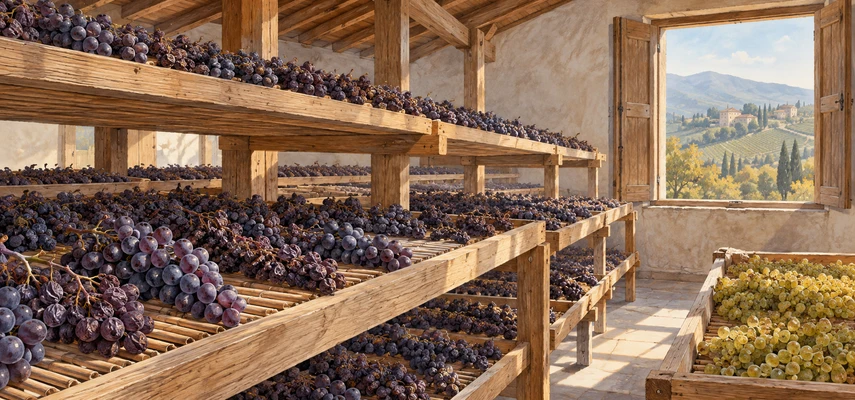

A Veneto red can be fresh and relatively light, concentrated and powerful, or deliberately sweet. Some of those wines begin with similar grape varieties. The difference lies partly in what happens between vineyard and fermentation: fresh fruit, dried fruit and a second contact with used grape skins aren’t interchangeable materials.
For Diploma study, compare Valpolicella, Amarone, Recioto and Ripasso as production routes before treating them as a ladder of increasing prestige. Then bring Soave into the picture. Its Garganega-based whites show that Veneto’s interest extends beyond dried red grapes, and that a familiar name can contain considerable variation in site and ambition.
Locate the Veronese examples within Veneto
Veneto is northeastern Italy’s broad regional setting. The Valpolicella consorzio places its appellations in the foothill belt around Verona, distinguishing the Classico area, Valpantena and the wider production area. Valleys, slopes and accessible lower sites don’t provide identical growing conditions.
Soave lies east of Verona, with an historic hill area and wider production zones. The Soave appellation account distinguishes Soave, Classico and Colli Scaligeri, as well as separate Soave Superiore and Recioto di Soave frameworks. Classico identifies a delimited historic origin; it isn’t a synonym for traditional winemaking or a promise that every bottle is superior.
These Veronese examples don’t exhaust Veneto. Other regional still and sparkling wines need their own grapes and specifications. A production method learned from Amarone shouldn’t be applied to every regional red, just as a Soave label doesn’t describe the whole white-wine programme of northeastern Italy.
Explain vineyard conditions before the drying room
Temperature affects growth, ripening and acid retention. Sunlight supports photosynthesis and modifies bunch conditions. Elevation, exposure, airflow and local water influences affect particular sites. A warmer lower parcel may help ripening in a cool season, while a cooler exposed hill can offer a different balance in a hot year.
Water availability depends on rainfall, rooting, soil depth and drainage. Nutrient availability influences vigour and crop balance. The Soave soil account describes volcanic-influenced hills alongside calcareous settings and other terrain. Physical water and rooting conditions are useful explanations; basalt doesn’t enter the wine as a compulsory mineral flavour.
Weather creates frost, hail, heat, drought and harvest-rain risks. Downy and powdery mildew and bunch rot require monitoring. Fruit intended for drying must remain suitable through a second vulnerable stage after picking. Starting with damaged grapes and hoping concentration will improve them is a particularly expensive quality strategy.
Vineyard establishment considers access, exposure, drainage, slope stability and training. Planting materials should match variety, vigour, soil and water conditions. Pergola and upright systems both have regional relevance; the appropriate canopy depends on the parcel and intended fruit. Tradition supplies experience, not permission to ignore vine performance.
Nutrient and water management follows observation, analysis and applicable rules. Canopy management balances productive leaf area, airflow and bunch protection. Too much shade can retain moisture, while excessive exposure can increase sunburn. Harvest timing balances flavour, sugar, acidity, health and style, with intact suitable bunches particularly important for drying.
Hazard management includes erosion control, secure access and appropriate frost precautions. Pest and disease management combines monitoring, canopy measures and justified interventions. Separating fruit for fresh-wine and drying programmes creates useful options, but selection reduces the quantity available for each. A large crop isn’t automatically a large supply of suitable Amarone material.
Begin with fresh-fruit Valpolicella
Corvina, Corvinone and Rondinella are important reference grapes for the red programme, alongside other permitted varieties under the particular specification. Don’t repeat the old assumption that Molinara must always appear in the blend. The ministry-published Ripasso specification illustrates the regulated blend rather than one compulsory historical recipe.
Winemaking approaches begin with the target style. Careful grape transportation limits crushing, heating and oxidation. Reception should separate origin, maturity, health and intended use. Processing and pressing affect yield and phenolic material. A fresh Valpolicella may emphasise lively fruit and a relatively early drinking window without being a failed attempt at Amarone.
Alcoholic fermentation decisions include yeast, temperature, nutrition and cap management. Extraction and pressing should suit skin and seed maturity, concentration and desired tannin. Longer contact can add substance or unnecessary hardness. Malolactic conversion and subsequent maturation influence acidity, texture and microbial considerations, but more wood isn’t a universal improvement.
Blending eligible lots can build balance and consistency. A fresh wine can be complete at moderate weight, while a broader wine can still lack integration. Judge fruit, acidity, tannin and finish together before rewarding a bottle for being darker or more alcoholic.
Follow appassimento into Amarone and Recioto
Appassimento dries selected grapes after harvest, reducing water and changing the material available for fermentation. Suitable rooms, airflow, bunch condition and careful monitoring matter. Drying isn’t merely leaving grapes in a hot room until the desired weight disappears; excessive heat, destructive rot and uneven drying can compromise the result.
The Amarone production specification hosted by the consorzio describes suitable drying environments and restrictions on heat-assisted dehumidification. Environmental control may support the process within its conditions. Neither completely uncontrolled drying nor any available industrial drying method is automatically the legal or qualitative ideal.
Concentrated must can challenge yeast through high sugar and increasing alcohol. Fermenting much of that sugar produces Amarone’s characteristically powerful dry direction; retaining substantial sugar creates Recioto’s different sweet balance. These aren’t simply two ages of the same wine. Nor does the word dry require Amarone to contain literally zero residual sugar.
Maturation needs to integrate the actual wine. Large or small wood, vessel age, oxygen exposure and duration can affect fruit, tannin and aroma. Legal ageing requirements set minimum conditions, not a universal period after which every wine reaches perfect balance. Concentration and a high price don’t guarantee decades of positive development.
Recioto della Valpolicella needs effective control of retained sugar and stability. A successful sweet wine balances its richness with fruit, acidity, alcohol and persistence. It shouldn’t be downgraded merely because Amarone is drier, or upgraded simply because the grapes became more concentrated.
Explain Ripasso through a second contact
Valpolicella Ripasso involves refermentation of suitable wine on the grape residues from Amarone and/or Recioto production. The resulting contact can increase alcohol, extract and phenolic substance while changing texture and flavour. It isn’t equivalent to making all the wine directly from a fresh batch of dried grapes.
The ministerial specification treats the operation, eligible materials and resulting quantities as controlled production. This makes the process more precise than a casual blend of finished Valpolicella and Amarone. A producer still has to match the base wine to the material and monitor the result; extra richness can overwhelm a wine rather than improve it.
Compare a fictional fresh Valpolicella with its proposed Ripasso lot. If the base has vivid fruit but limited concentration, substantial additional phenolics and alcohol may unbalance it. Trials and careful selection provide a stronger argument than assuming any second contact guarantees a better commercial tier.
Give Soave and Garganega a separate white-wine explanation
The Soave grape account identifies Garganega as the main variety, with at least 70% required for Soave DOC and permitted contributions from Trebbiano di Soave, Chardonnay and limited other varieties under the rules. Garganega can support fresh whites, more concentrated matured wines and the drying route used for Recioto di Soave.
Pre-fermentation clarification adjusts solids for the intended white fermentation. Must adjustments require analysis and legal permission. Alcoholic fermentation choices include yeast, nutrition, temperature and vessel. A fresh white may prioritise aroma protection, while a more concentrated lot can support another texture and maturation plan. One variety doesn’t compel one cellar recipe.
Malolactic conversion may be avoided where preserving a particular acid profile is desirable. Lees maturation can build texture without obvious new-oak flavour. Blending eligible white lots can improve balance or consistency while retaining valid origin claims. A restrained floral or orchard-fruit profile shouldn’t be penalised for lacking Amarone’s intensity.
Soave Superiore has its own production specification. Don’t assume every ambitious hill wine must choose that designation, or that its DOCG status automatically establishes greater sensory quality than every Soave DOC. Producer, site, season and the actual bottle still need assessment.
Preserve the chosen style and verify the label
Post-fermentation clarification removes unwanted suspended material. Stabilisation considers protein, tartrate and microbial risks where appropriate. Finishing adjustments, sulfur dioxide and filtration should fit analysis, retained sugar and distribution. A sweet Recioto requires sound control of refermentation; dry wines remain vulnerable to spoilage and oxidation.
Packaging and closures should protect youthful aroma or intended development. Wine transportation requires suitable temperature and handling. Expensive drying and maturation work cannot reverse heat damage after bottling. Judge the condition of the glass before assigning every unusual aroma to appassimento.
International and EU protection frameworks, national Italian law and local appellation specifications interact. A geographical indication ties a place to defined production conditions. DOC and DOCG sit within the PDO framework; PGI/IGT wines and wines without GI make other claims. Using the same varieties or drying method elsewhere doesn’t grant protected Amarone or Soave identity.
Industry associations such as the consorzi work on protection and promotion alongside public authorities and control bodies. Classico, Valpantena, Superiore and Riserva have specific meanings within their applicable rules. They aren’t interchangeable quality adjectives. A Veneto notice from March 2026 published proposed specification changes; a proposal alone doesn’t establish that every new condition is already operative.
Explain the business behind the different routes
Supply depends on harvest, suitable drying fruit, selection, recovery and allocation between programmes. Demand differs between fresh Valpolicella, fuller Ripasso, Amarone, sweet Recioto and Soave. Costs include vineyard labour, drying space, environmental control, losses, cellar work, maturation and inventory. Drying reduces liquid recovery, while longer stockholding delays revenue.
Legislation affects production, claims and destination compliance. Currency exchange changes an importer’s landed cost without changing wine quality. Importing adds freight and intermediary costs. Retail needs clear style information; HoReCa buyers require staff who can explain sweetness, alcohol and drinking context. Direct-to-consumer sales can retain revenue but require hospitality and fulfilment. Mature and emerging markets contain varied customers rather than one preference for bigger wine.
A grower may supply fruit, an estate can coordinate vineyard and cellar, and a winery provides production capacity. A merchant sources wine or grapes; a broker connects parties without necessarily owning stock. A virtual winery contracts production under its brand, while a custom crush facility supplies agreed production services. These are business-model comparisons, not claims that every model is equally prevalent throughout Veneto.
A cooperative can share equipment, expertise and market access. A conglomerate may coordinate businesses and channels. Selection standards and inventory risk matter more than a simple ownership-based quality ranking. Wine brands can lead with appellation, producer, variety or style, each requiring a credible promise.
Marketing concepts begin with a target customer and useful proposition. Marketing options include comparative tastings, restaurant education, tourism and clear digital explanations. The five Ps connect product, price, place, people and promotion. Explaining production helps customers choose between styles; ranking every wine by how far its grapes dried obscures what makes a fresh wine successful.
Compare the evidence here with northeastern Italy as a regional case, then apply the regional comparison framework to the comparison. Compare growing conditions, production decisions, style, quality and the commercial reasons for price. Establish the differences rather than assuming that one familiar name must be better.
Original Diploma practice
These original questions and indicative points are teaching material, not official WSET questions or marking allocations.
Question 1: compare three production routes
Explain why fresh Valpolicella, Amarone and Recioto need different production decisions despite using related regional grape resources.
Indicative points: selection, drying, recovery, fermentation, sweetness, balance and cost.
Outline answer: Fresh fruit supports one fermentation route; dried fruit supplies a more concentrated and challenging must. Fermenting more sugar raises alcohol, while retaining sugar creates another palate and stability requirement. Selection, drying losses and inventory influence cost. Neither increasing concentration nor reducing sweetness automatically establishes higher quality.
Question 2: evaluate a Ripasso proposal
A fictional producer assumes every light base wine will improve through substantial contact with Amarone residues. Assess the proposal.
Indicative points: base fruit, eligible material, fermentation, alcohol, phenolics, integration and market.
Outline answer: Verify legal eligibility and evaluate the base wine before treatment. Additional alcohol and phenolics can support one lot and overwhelm another. Trial the operation, monitor stability and judge the final balance. A recognised process name doesn’t guarantee a better wine or sufficient selling price.
Question 3: assess a Soave quality shortcut
A buyer automatically awards every Soave Superiore a higher quality grade than every Soave Classico. Evaluate the claim.
Indicative points: category, origin, site, producer, concentration, balance and ageing.
Outline answer: Verify what each label establishes, then assess the actual wine. Different legal conditions don’t eliminate producer and vintage variation. Judge integration, complexity and desirable persistence. Further ageing requires retained fruit and structure, rather than DOCG initials or a hill address alone.
Analytical tasting preparation: compare Veneto methods
The official Diploma specification, PDF page 26, includes very good Soave or Soave Classico; acceptable or good Valpolicella or Valpolicella Classico; very good or outstanding Amarone; and good or very good Valpolicella Ripasso within its essential northeast Italian programme. The same programme’s other essential whites concern Trentino-Alto Adige or Friuli-Venezia Giulia. Acceptable or good Bardolino is optional; Recioto can be an additional teaching comparison rather than an invented essential row.
Propose suitable wines and write full systematic descriptions blind. Compare sweetness, acidity, alcohol, body, tannin where relevant, fruit, dried-fruit character, development and finish. Justify quality through balance, concentration, complexity and desirable persistence. Assess bottle-ageing suitability separately through retained fruit, structure and development. These are proposed selections, not actual tastings, automatic grades or examination predictions.











