










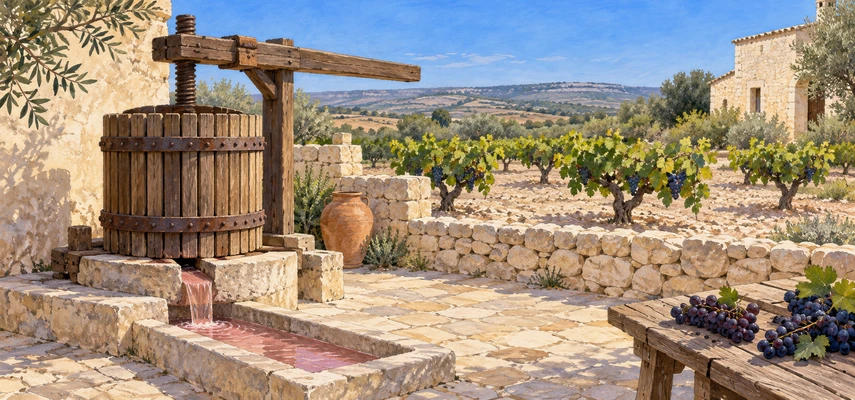

Southern Italy isn’t one large vineyard waiting for more sunshine. Puglia’s early-ripening Primitivo can reach substantial sugar while Basilicata’s Aglianico is still working towards suitable flavour and tannin maturity. Negroamaro adds another red and rosato story, with different sites and production choices again.
The useful Diploma comparison connects those differences to decisions. Ask how a grower retains freshness, how a winemaker manages extraction, and how a producer finances a wine held before sale. Warmth, old vines and a famous grape can support an explanation, but none of them supplies a quality grade on its own.
Locate Puglia beyond the heel of the boot
Puglia occupies Italy’s southeastern side, extending through plains, plateaux and coastal areas rather than a single flat hot zone. Primitivo di Manduria draws on a defined area around Taranto and Brindisi. The Manduria consorzio’s territory account describes calcareous-influenced and sandy settings, with bush-trained vines among the region’s references.
Gioia del Colle offers a separate Primitivo setting on the inland Murgia. The Puglia government’s appellation account distinguishes its protected identity from Manduria. An inland elevated parcel can experience different temperatures and water conditions from a lower coastal one; don’t turn that useful comparison into a guarantee that every Gioia wine is lighter than every Manduria.
Negroamaro is particularly important in Salento, including Salice Salentino. Its name doesn’t require the wine to taste unpleasantly bitter, just as Primitivo doesn’t mean primitive winemaking. Farther north, Castel del Monte Nero di Troia Riserva supplies another protected red identity. Puglia also makes whites and rosati, so two familiar red grapes shouldn’t erase the wider regional picture.
Explain Puglia’s fruit and vineyard decisions
Primitivo’s relatively early ripening can help it accumulate sugar quickly. UC Davis’s grape research account establishes its relationship with Zinfandel and Croatian Crljenak Kaštelanski. Shared varietal identity doesn’t mean every clone, vineyard or finished wine behaves identically. Uneven ripeness and berry condition still need assessment before selecting a picking date.
Temperature affects growth, ripening and acid retention. Sunlight supports photosynthesis, but excess bunch exposure can increase sunburn and dehydration. Water availability depends on rainfall, soil depth, drainage and rooting. Nutrient availability influences vigour and crop balance. A shallow dry parcel and a deeper water-retaining one can require different management even when both carry the same appellation.
Weather creates frost, hail, heat, drought and harvest-rain risks. Downy and powdery mildew and bunch rot remain possible, especially when wet conditions coincide with susceptible fruit. Severe drought can impair vine function, while shrivelling can raise sugar without an equivalent gain in fresh flavour. More concentrated must isn’t always a better starting material.
Vineyard establishment considers access, exposure, drainage and the intended training system. Planting materials should match variety, soil and water conditions. Alberello bush vines can suit some sites and production aims, while upright systems offer different canopy and mechanisation possibilities. Vine age, training shape and low yields each need a causal explanation rather than serving as ready-made quality badges.
Nutrient and water management follows observation and analysis within applicable rules. Canopy management balances productive leaves, airflow and bunch protection. Harvest timing balances flavour, sugar, acidity, phenolic maturity and health. Hazard management includes appropriate frost precautions and erosion control where relevant. Pest and disease management combines monitoring, canopy measures and justified interventions; a warm region still needs a disease plan.
Separate dry, sweeter and rosato programmes
The Primitivo di Manduria DOC specification and Primitivo di Manduria Dolce Naturale DOCG are distinct frameworks. The DOC name doesn’t mean every wine contains zero residual sugar, while the sweet DOCG is a specific identity rather than a generic upgrade for any ripe Primitivo. Check the actual category and analysis before describing a bottle as dry or sweet.
Negroamaro can serve red and rosato styles. The ministry’s 2026 Salice Salentino file provides a current reference for categories and composition; an older blend table may not cover later changes and transitions. Colour alone doesn’t establish sweetness. A rosato can be deliberately structured and gastronomic without needing the extraction of a red intended for maturation.
Winemaking approaches begin with those targets. Careful grape transportation limits crushing and unwanted fermentation in warm conditions. Reception should separate varieties, origins, health and ripeness. Processing and pressing affect yield and phenolic pickup, with skin-contact time and pressing decisions influencing a rosato’s colour and texture.
Pre-fermentation clarification adjusts solids for a juice-fermented wine. Must adjustments require analysis and legal permission. Alcoholic fermentation decisions include yeast, temperature and nutrient management; high-sugar Primitivo material can create a demanding fermentation rather than an effortless route to richness. A producer seeking retained sweetness needs an intentional stability plan, not an unexplained stuck fermentation.
Extraction and pressing should suit skin maturity and the intended structure. Malolactic conversion and subsequent maturation should fit acidity and balance. A fruit-led Negroamaro red may need a different cap-management and oak programme from a concentrated Primitivo. Lees maturation can add texture to a suitable white or rosato, but prolonged contact needs monitoring rather than automatic stirring.
Finishing adjustments, sulfur dioxide and filtration depend on analysis and stability needs. Blending eligible lots can improve balance while maintaining entitlement. Post-fermentation clarification removes unwanted solids; stabilisation considers protein and tartrate risks. Microbiological safeguards should fit analysis, retained sugar and distribution. Packaging and closures should protect the intended drinking period, and wine transportation requires suitable temperature management. Those last steps matter particularly when freshness is part of the sales promise.
Locate Basilicata’s Vulture vineyards separately
Basilicata lies west of Puglia, with varied inland terrain and small coastal areas. Its principal Diploma reference is the Vulture area in the north, around an extinct volcanic massif. The Aglianico consorzio identifies late-ripening Aglianico as the central grape. Don’t move Vulture into Campania because Taurasi uses Aglianico too.
Elevation and inland exposure can make the growing season quite different from a low-lying southern coastal site. The Basilicata chamber’s Superiore specification describes the seasonal contrast of dry summers and wetter autumn-to-spring conditions. Volcanic-influenced materials form part of the physical setting, not a compulsory smoky aroma or a guarantee that every parcel drains identically.
Aglianico can combine substantial acidity and tannin with fruit capable of supporting maturation. The relevant question is whether the skins and seeds reached suitable maturity while the fruit retained balance. Waiting for softer tannin can expose bunches to autumn weather; picking early to avoid that weather can leave a different structural problem. A calendar date alone can’t resolve the trade-off.
Explain Vulture’s vineyard and cellar choices
In Vulture, temperature affects ripening and acid retention through elevation, aspect and inland seasonal variation. Sunlight supports the leaves, with exposure and canopy shade modifying bunch conditions. Water availability follows rainfall, rooting and soil properties; nutrient availability affects vigour and crop load. Weather brings frost, hail, heat, drought and autumn rain. Monitor downy mildew, powdery mildew and rot even where summer conditions are dry.
When establishing a vineyard, assess drainage, slope access, erosion and variety suitability. Choose healthy planting materials and rootstocks suited to water and soil conditions. Manage nutrients and water from observation and analysis, and keep enough canopy for late ripening while allowing airflow. Picking decisions weigh flavour, acid, sugar, phenolic maturity and health. Combine suitable frost and erosion precautions with monitored pest and disease interventions rather than assuming elevation removes hazards.
The cellar approach starts with the desired drinking window. Move grapes promptly in suitable containers; at reception, sort and separate origin, ripeness and health. Destemming, crushing and pressing influence the material available for extraction. Juice clarification has a limited role in conventional red fermentation on skins, while any must adjustment depends on analysis and the specific rules, not a regional presumption.
Choose yeast, fermentation temperature and cap management to extract attractive fruit and tannin. Press fractions can provide useful structure or excessive harshness. Malolactic conversion and later maturation should improve balance and stability. Lees handling, wood size, barrel age and storage duration need to suit the actual wine; a hard young Aglianico doesn’t become excellent simply because it remains in oak longer.
Before bottling, assess permitted finishing adjustments, sulfur dioxide and filtration. Combining eligible lots may improve balance without changing origin or varietal entitlement. Clarify where needed after fermentation and evaluate tartrate stability; protein instability is generally a more prominent concern for whites than a conventional red programme. Microbial safeguards depend on analysis, any retained sugar and distribution. Select packaging and closures for the intended development, then protect the wine from freight heat.
Read the two regions’ law and economics together
International and EU protection frameworks, national Italian law and local appellation specifications interact in both Puglia and Basilicata. Industry associations such as the consorzi promote origin and help explain rules. A geographical indication ties place to prescribed conditions. DOC and DOCG sit within the PDO framework; PGI/IGT wines have separate entitlements, while wines without GI cannot borrow protected names.
The Basilicata chamber’s legal directory distinguishes Aglianico del Vulture DOC from Aglianico del Vulture Superiore DOCG. Superiore and Riserva conditions need the actual specification, not rules borrowed from Taurasi. Likewise, Puglia’s Primitivo, Negroamaro and Nero di Troia categories don’t share one blend or ageing requirement. These labels supply production information rather than a cross-regional tasting score.
Supply depends on healthy fruit, eligible vineyards, crop level and wine retained for maturation. Demand differs between fresh rosato, accessible reds and structured cellar selections. Costs include labour, selection, temperature control, barrels where used, storage and finance. Legislation affects yields, origin and release; currency exchange changes export returns. Puglia’s range of scales and Vulture’s more specific late-ripening production context need distinct budgets rather than one southern-Italy cost assumption.
A grower may supply fruit, while an estate can coordinate vineyard and cellar decisions. A broker connects parties; a merchant sources wine or grapes; a winery provides production capacity. A virtual winery contracts production, and a custom crush facility supplies agreed services. A cooperative can share equipment and market access; a conglomerate may coordinate businesses. These are functions to evaluate in each region, not claims that every ownership model dominates locally. Contract terms should allocate sorting standards, origin records and stock risk.
Importing adds freight, compliance and currency exposure. Retail needs clear sweetness and style information; HoReCa buyers require service training for a fresh rosato versus a firm young Aglianico. Direct-to-consumer sales can retain revenue but require hospitality and fulfilment. Mature and emerging markets contain varied customers. Wine brands can lead with grape, place or occasion, with an honest description of the actual bottle.
Marketing concepts begin with a target customer. Marketing options include comparative flights, technical notes and vineyard visits. The five Ps connect product, price, people, place and promotion. A sweet Primitivo, a food-friendly Negroamaro rosato and a structured Vulture red can need different channels and explanations. Their regional interest is strongest when the proposed drinking experience matches the wine delivered.
Compare the evidence here with Sicily as a regional case, then apply the regional comparison framework to the comparison. Compare growing conditions, production decisions, style, quality and the commercial reasons for price. Establish the differences rather than assuming that one familiar name must be better.
Original Diploma practice
These original exercises practise explanation and evaluation. They aren’t official questions, marking schemes or accounts of actual bottles tasted.
Question 1: compare two ripening problems
Compare an early-ripening Primitivo parcel facing heat and dehydration with a Vulture Aglianico parcel approaching a wet autumn harvest.
Reasoned outline: Relate water, canopy, crop load and berry condition to sugar, flavour, acid and phenolic maturity. Compare harvest timing, sorting, transport and fermentation demands. Explain why waiting and concentration can create benefits or risks in different circumstances. Neither more sugar nor a later picking date proves better quality.
Question 2: plan a Negroamaro rosato
A producer proposes extracting a rosato exactly like its darkest red and assuming the pale colour guarantees microbiological stability. Evaluate the plan.
Reasoned outline: Define desired colour, fruit and texture, then compare skin contact, pressing, fermentation and oxygen protection. Assess acidity, sugar, pH, sulfur dioxide and appropriate filtration rather than inferring stability from appearance. Discuss packaging, freight temperature and the intended selling period. A successful rosato needs its own production and distribution plan.
Question 3: assess a protected-name shortcut
A merchant claims every Manduria wine is a sweet DOCG and every Vulture wine follows Taurasi’s ageing rules. Correct the claims and explain the buying implications.
Reasoned outline: Separate Primitivo di Manduria DOC from Dolce Naturale DOCG; distinguish Aglianico del Vulture DOC, Superiore DOCG and Campanian Taurasi. Check actual sweetness, blend entitlement, maturation and vintage conditions. Evaluate storage costs and drinking windows alongside sensory quality. Shared grape names don’t make distinct appellation specifications interchangeable.
Analytical tasting preparation: compare Puglia and Basilicata
The official recommended-sample programme, printed page 23, includes Primitivo or Negroamaro of good or very good quality and Aglianico del Vulture or Taurasi of very good or outstanding quality. Choose Vulture for the Basilicata comparison; Taurasi is the Campanian alternative. A Negroamaro rosato or Dolce Naturale can add useful study contrasts without being mislabelled as a separate compulsory row.
For Puglia and Basilicata, write full systematic descriptions blind. Justify quality through balance, length, intensity and complexity using actual fruit, acidity, texture and maturation evidence. Assess bottle-ageing suitability separately: fruit must support the structure, while retained sweetness needs balance and sound storage. A high-alcohol red isn’t necessarily outstanding, and a tannic red doesn’t automatically have a long future. These are proposed selections and methods, not actual tasting results or official bottle grades.












