










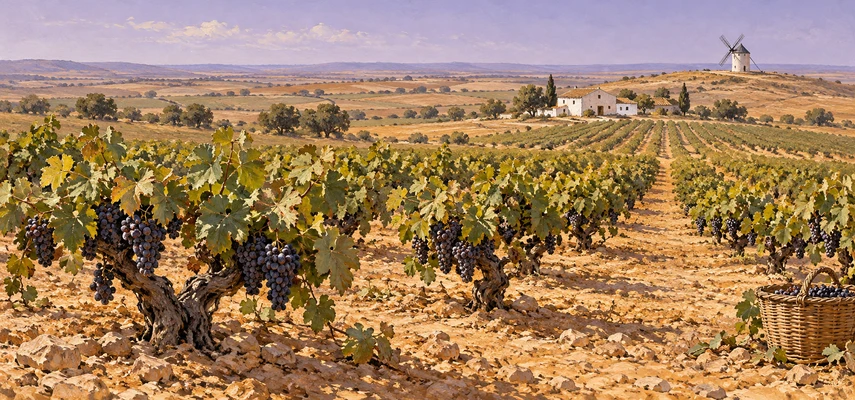

Spain’s Mediterranean and central regions make a poor candidate for a single “hot-climate wine” description. Coastal influence, elevated inland plateaux, steep slate slopes and wind-exposed vineyards create different opportunities. So do Xarel·lo, Garnacha, Cariñena, Bobal, Monastrell and Airén. Their producers aren’t all trying to make the same wine at different prices.
For Diploma study, give each region a clear geographical and varietal identity, then compare the mechanisms. Explain why one site needs particular water management, why one lot suits gentler extraction, or why a fresh white has a different stock cycle from a matured red. A map label is the beginning of the argument.
Catalunya: distinguish slopes, coast and protected names
Catalunya occupies Spain’s northeastern Mediterranean side, with coastal, inland and elevated vineyards. Penedès, Priorat, Montsant and the broader Catalunya designation aren’t interchangeable names. Priorat’s slate-influenced slopes ask different questions from a more accessible Penedès parcel. Administrative territory and individual appellation boundaries need separate reading.
The Catalan wine institute’s Priorat account identifies llicorella, the local slate reference, and the geographical naming system. Garnatxa and Carinyena supply central red identities; other eligible grapes also appear. Steep slopes, difficult access and limited water can restrict crops and raise costs. Slate describes a physical growing environment, not a compulsory flavour extracted from rock.
Penedès’s regional account brings still whites, reds and differing elevations into view, with Xarel·lo among its important white references. Its official site dates its organic direction from the 2025 harvest. Don’t apply that claim to every older bottle, every wine made geographically in Penedès or every Catalan designation. Organic production also doesn’t establish a tasting grade or make all other cellar choices identical.
For Catalunya vineyards, temperature and sunlight vary with sea influence, elevation and exposure. Water availability and nutrient availability depend on rooting, soil depth and drainage. Weather can bring frost, hail, heat, drought and harvest rain; mildew and bunch rot remain possible. Vineyard establishment and planting materials need to fit slope, access and soil. Nutrient and water management, canopy management, harvest timing, hazard management and pest and disease management should connect healthy fruit with its intended style. Priorat’s costly slopes and Penedès’s varied parcels don’t require one universal solution.
Valencia: separate the coastal region from one DO
Valencia needs clarification because the name can refer to a city, province, wider autonomous community or protected wine designation. DO Valencia, Utiel-Requena and Alicante offer different wine identities within the wider eastern Spanish picture. Not every vineyard is low, humid or close enough to the sea to receive the same moderating influence.
The DO Valencia subzone account distinguishes Alto Turia, Valentino, Moscatel and Clariano. Higher inland vineyards differ from warmer maritime settings. Moscatel de Alejandría supplies an important aromatic reference, but aromatic grape character doesn’t establish sweetness by itself. Identify whether the actual wine is dry, sweet or another permitted category.
Bobal in Utiel-Requena gives another useful red and rosado comparison. Its inland terroir account explains why the Mediterranean coast isn’t a sufficient climate description. Colour and structure can support ambitious reds, while selection and handling can create fresher styles. Thick skins or old vines don’t justify extracting everything they can offer.
In Valencia’s varied vineyards, temperature and sunlight affect ripening and exposed-fruit heat; water availability and nutrient availability require parcel-level observation. Weather includes frost at suitable inland sites, hail, heat, drought and harvest rain, while mildew and bunch rot need monitoring. Vineyard establishment considers exposure, drainage and access, and planting materials should fit soil and water conditions. Nutrient and water management, canopy management, harvest timing, hazard management and pest and disease management must suit the chosen site. A refreshing Bobal rosado and a structured inland red may need different picking and extraction plans.
Murcia: explain Monastrell without assuming a coastal recipe
Murcia lies in southeastern Spain, with important inland wine areas. Jumilla, Yecla and Bullas need their own identities. Jumilla’s protected territory also includes municipalities in Albacete, across the Castilla-La Mancha boundary. The council’s municipality account is a useful reminder that wine geography doesn’t always stop at an administrative border.
Monastrell, also known internationally as Mourvèdre or Mataro, gives the area its central red reference. Warm, relatively dry conditions can support ripening, but elevation, water availability and harvest decisions affect balance. The Jumilla terroir account places vineyards within an inland landscape of varied soils and heights. A powerful red needs retained fruit, acidity and integrated tannin, rather than alcohol alone.
For Murcia vineyards, temperature and sunlight create both ripening opportunities and excessive-heat risks. Water availability and nutrient availability depend on rainfall, rooting, soil depth and drainage. Weather can bring drought, heat, hail, frost in vulnerable inland locations and disruptive rain; mildew and bunch rot remain possible when moisture persists. Vineyard establishment and planting materials need to suit the site. Nutrient and water management, canopy management, harvest timing, hazard management and pest and disease management must support vine health and phenolic maturity without assuming drought automatically improves concentration.
Bush-trained vines and surviving old parcels can be valuable references, but training and age don’t establish quality by themselves. Compare crop performance, fruit health and the practicality of working the vineyard. A low yield caused by severe stress can be a problem rather than an achievement. Monastrell’s name doesn’t absolve the producer from making those judgements.
Aragón: give Garnacha several settings
Aragón lies inland in northeastern Spain, with Ebro influences, uplands and foothill settings. Campo de Borja, Calatayud, Cariñena and Somontano shouldn’t be collapsed into one appellation. Garnacha provides a strong red thread across several of them, while other red and white varieties broaden the region’s production.
The Aragonese government’s Calatayud account highlights elevated sites and old Garnacha. Greater height can change ripening and night temperatures while increasing frost or access challenges. The Campo de Borja regional account adds the cold, dry Cierzo wind to the discussion. Air movement may reduce humidity and also increase water loss or physical exposure.
Cariñena is both a place name and a grape reference, but a Cariñena DO wine isn’t necessarily a varietal Cariñena. The DO’s wine account gives Garnacha a substantial role. Somontano supplies a different foothill context and varied local and international plantings. Identify the origin, grape and production aim rather than using one familiar regional grape as a substitute for all three.
Aragón’s vineyard planning connects temperature and sunlight with elevation, aspect and wind. Water availability and nutrient availability depend on rainfall, rooting and soil. Weather can bring frost, hail, heat, drought and harvest rain; mildew and bunch rot still need monitoring. Vineyard establishment considers slope, access and training, while planting materials must fit site conditions. Nutrient and water management, canopy management, harvest timing, hazard management and pest and disease management need to preserve healthy fruit. Difficult old Garnacha parcels can cost more to work without guaranteeing a better bottle.
Castilla-La Mancha: connect plateau conditions and production scale
Castilla-La Mancha occupies a broad central inland area. La Mancha and Valdepeñas are individual protected names within a larger landscape that includes other DOs, estate designations and PGI production. Don’t equate the autonomous community with one enormous appellation, or assume every producer pursues the same volume and price.
Airén gives the white discussion an important starting point, with Tempranillo, often called Cencibel, central to many reds. Other eligible varieties expand the range. The La Mancha specification published in September 2025 places production within a continental setting and defines the protected wine’s conditions. Airén’s history and scale shouldn’t be used to dismiss a well-made fresh white before tasting it.
For Castilla-La Mancha vineyards, temperature and sunlight influence rapid sugar accumulation, fruit exposure and retained acidity. Water availability and nutrient availability depend on scarce rainfall, soil depth and rooting. Weather can bring frost, hail, heat, drought and harvest rain, with mildew or bunch rot possible when conditions allow. Vineyard establishment considers access, spacing and training; planting materials need to suit the water regime. Nutrient and water management, canopy management, harvest timing, hazard management and pest and disease management should fit the intended wine. Mechanisation can reduce labour costs where terrain and training allow, while fruit still needs prompt, careful handling.
Large-scale grape and wine businesses can support efficient processing and broad distribution. Smaller selected-parcel programmes face different cost and sales questions. Neither scale automatically decides sensory quality. Traceability, fruit condition, cellar control and the customer remain useful tests whether a wine fills a supermarket listing or a specialist allocation.
Apply cellar decisions to the five regional contexts
Winemaking approaches begin with the target style. Careful grape transportation limits crushing, oxidation and unwanted fermentation. Reception should separate origins, varieties, health and ripeness. Processing and pressing affect yield and phenolic pickup. Fresh Airén, aromatic Moscatel and Xarel·lo ask different white-juice questions, just as Priorat blends, Bobal, Monastrell, Garnacha and Cencibel need extraction suited to their own material.
Pre-fermentation clarification adjusts white-juice solids for the intended fermentation. Must adjustments require analysis and legal permission. Alcoholic fermentation decisions include yeast, temperature, vessel and nutrient management. Extraction and pressing should suit skin and seed maturity in reds. Malolactic conversion and subsequent maturation should fit acidity, structure and microbial stability. A gentler Garnacha programme can preserve fruit and texture; a firmer Monastrell or Bobal lot doesn’t automatically benefit from maximum extraction.
Lees maturation can build texture in suitable whites, with oxygen and microbiological condition monitored. Vessels vary in size, age and flavour contribution. Blending eligible lots can improve balance while preserving origin and category entitlement. A producer selecting for a fresh commercial white, a structured Priorat red or an aromatic Valencia style needs different evidence of readiness. More oak and more time aren’t universal upgrades.
Finishing adjustments, sulfur dioxide and filtration depend on analysis and stability needs. Post-fermentation clarification removes unwanted material; stabilisation considers protein and tartrate risks. Microbiological safeguards should fit analysis, retained sugar and distribution. Packaging and closures should protect the intended drinking period. Wine transportation requires suitable temperature management, including warm warehouses and final delivery. A carefully managed fermentation can’t compensate for a cooked bottle at retail.
Explain origin, supply and market choices together
International and EU protection frameworks, national Spanish law and local appellation specifications interact. Industry associations such as the regulatory councils communicate and defend origin, while authorised controls establish compliance. A geographical indication links place with prescribed conditions. DO and DOCa/DOQ wines operate within the PDO framework; PGI wines have separate requirements, and wines without GI cannot borrow protected names. Place references, ageing terms and estate designations need their individual conditions rather than a universal quality ladder.
Supply depends on suitable fruit, weather losses, permitted yields and stocks. Demand differs between fresh whites, rosados, accessible reds and specialist old-parcel or geographical wines. Costs include labour, slope access, sorting, temperature control, vessels, storage and finance. Legislation affects sourcing and release choices; currency exchange changes export returns. A difficult Priorat slope, mechanisable La Mancha parcel and carefully coordinated Bobal source expose businesses to different cost structures.
A grower may supply fruit, while an estate can coordinate vineyard and cellar decisions. A broker connects parties; a merchant sources wine or grapes; a winery provides production capacity. A virtual winery contracts production, and a custom crush facility supplies agreed services. A cooperative can share equipment and market access; a conglomerate may coordinate businesses. These are possible functions, not claims of equal prevalence in every DO. Contracts need to reflect actual fruit quality, origin entitlement, stock risk and payment terms.
Importing adds freight, compliance and currency exposure. Retail needs clear style, grape and origin information; HoReCa buyers require service training. Direct-to-consumer sales can retain revenue but add hospitality and fulfilment work. Mature and emerging markets contain varied customers. A recognised Priorat label, unfamiliar Bobal or inexpensive Airén can each need a different explanation of value without a predetermined sensory rank.
Wine brands can lead with producer, place or grape. Marketing concepts begin with a target customer; marketing options include comparative flights, technical notes and vineyard visits. The five Ps connect product, price, people, place and promotion. The useful message explains a wine’s drinking occasion and evidence of quality, rather than asking dry soil, old vines or a dramatic landscape to make the entire sale.
Compare the evidence here with Vinho Verde and the Douro as a regional case, then apply the regional comparison framework to the comparison. Compare growing conditions, production decisions, style, quality and the commercial reasons for price. Establish the differences rather than assuming that one familiar name must be better.
Original Diploma practice
These original exercises practise explanation and evaluation. They aren’t official examination questions, marking schemes or accounts of actual bottles tasted.
Question 1: compare two Garnacha businesses
Compare production and commercial decisions for a steep Priorat source and an accessible Aragón Garnacha parcel intended for a fresher red.
Reasoned outline: Establish the actual varieties, sites, water supply, crop and access. Explain labour, harvest, sorting, extraction, maturation and stocks. Compare customer expectations and origin entitlement without assuming every Priorat needs more oak or every Aragón wine a lower quality grade. The same grape can support different aims when site and production decisions change.
Question 2: evaluate a water-stress claim
A producer in Murcia or Castilla-La Mancha claims that progressively greater drought always improves wine quality. Evaluate the argument and propose a practical response.
Reasoned outline: Distinguish moderate growth restriction from harmful stress, poor ripening, dehydration and yield loss. Consider rooting, soil depth, vine condition, canopy, crop and permitted water management. Link fruit health and balance with cellar decisions and costs. Lower yield caused by damage isn’t automatically useful concentration.
Question 3: assess a regional range proposal
A buyer wants one extraction and maturation programme for all Bobal, Monastrell, Garnacha and Cencibel wines in a new range. Assess the proposal.
Reasoned outline: Compare actual ripeness, skin and seed condition, acidity, tannin and intended drinking period. Explain fermentation, cap management, pressing, blending and vessel choice. Evaluate price, customers and differentiation rather than treating colour or alcohol as the whole quality argument. A consistent range needs sound decisions, not identical recipes.
Analytical tasting preparation: compare Mediterranean and inland material
The official recommended-sample programme, printed page 23, includes a Priorat blend dominated by Garnacha and Cariñena at very good or outstanding quality, plus Monastrell from any DO at good or very good quality. Its optional Spanish choices include Bobal at good quality, old-vine Garnacha at good or very good quality, and Vino de la Tierra or Vinos de Pago at very good or outstanding quality. Select actual qualifying bottles; those terms don’t themselves award the grades. Airén, Xarel·lo or Moscatel comparisons here are additional study choices, not invented compulsory rows.
Write full systematic descriptions blind. Justify quality through balance, length, intensity and complexity using actual fruit, structure and development evidence. Assess bottle-ageing suitability separately, considering retained fruit and likely integration rather than alcohol, vine age or obvious oak alone. These are proposed selections and methods, not actual tasting results or predetermined official bottle grades.












